DbcultAccessing Vault...
6.3/10
Senior Film Conservator
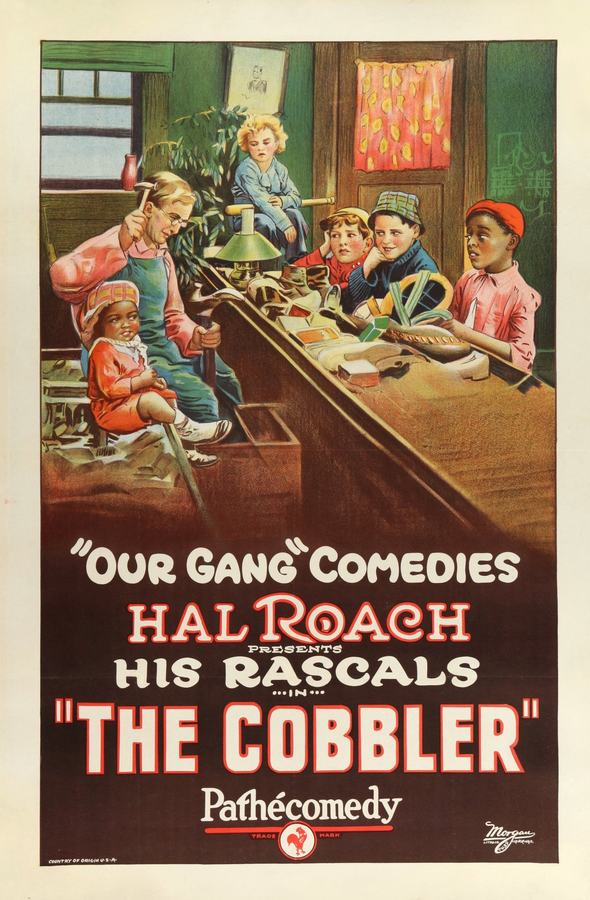
A definitive 6.3/10 rating for a film that redefined the boundaries of cult cinema. The Cobbler remains a cornerstone of transgressive art.
The silent era of cinema often felt like a fever dream of industrial progress colliding with Victorian sensibilities, and nowhere is this more palpable than in the early output of the Hal Roach studios. The Cobbler (1923) serves as a fascinating artifact of this transition, a short film that eschews the grandiosity of epics for the intimate, often shambolic realities of the working class. While contemporary audiences might view the 'Our Gang' series through a lens of nostalgia, this specific entry offers a surprisingly nuanced look at the intersection of age, poverty, and the elusive promise of leisure.
The narrative engine is fueled by a back pension—a concept that, in 1923, carried a weight of socio-economic relief that is perhaps lost on modern viewers. Richard Daniels, playing the titular cobbler, embodies a quiet dignity that stands in stark contrast to the manic energy of the children. His performance is a masterclass in understated exhaustion; every movement suggests a man whose joints have been calcified by decades of repairing the footwear of those more mobile than himself. When the money arrives, it isn't spent on luxury, but on a shared experience—a picnic that represents a temporary escape from the soot-stained reality of the city.
This yearning for the 'outside' is a recurring theme in silent cinema, often explored with more gravity in films like Hungry Hearts. Yet, here, the tone is lightened by the presence of the Rascals. The gang, led by the freckle-faced Mickey Daniels and the ethereal Mary Kornman, acts as a chaotic chorus, their unscripted spontaneity providing a vital counterpoint to the cobbler's methodical world. The way these children interact with the environment suggests a level of directorial freedom that was rare for the time, allowing for a documentary-like glimpse into the play-patterns of the 1920s youth.
The central conflict—the stalling of the car—is a trope that Hal Roach and his writers, H.M. Walker and Roach himself, mined for maximum comedic effect. In the early 20th century, the automobile was a fickle god, a symbol of status that frequently betrayed its owners. The breakdown in The Cobbler isn't just a plot device; it is a character in its own right. The car's refusal to cooperate becomes a canvas for physical comedy that rivals the more sophisticated machinery gags seen in Scenic Succotash.
We see the children attempting to 'help' in ways that only exacerbate the situation. Allen 'Farina' Hoskins, even at this early stage in his career, displays a comedic timing that is nothing short of prodigious. His reactions to the mechanical failure are grounded in a realism that makes the slapstick feel earned rather than forced. Unlike the more stylized performances in The Girl in Number 29, the acting here is visceral. When a child falls or a tool is dropped, there is a sense of genuine gravity at play.
H.M. Walker’s intertitles deserve special mention. Walker was the unsung hero of the Roach lot, providing the linguistic wit that complemented the visual mayhem. In The Cobbler, his titles bridge the gap between the mundane and the absurd. They provide a narrative voice that feels like a cynical yet warm-hearted uncle narrating the disaster. This balance of tone is difficult to achieve; too much sentimentality and the film becomes cloying, too much cynicism and it loses its heart. The film manages to navigate this narrow path, much like the delicate emotional balancing act found in Divorce and the Daughter.
The cinematography, though limited by the technology of the era, captures the sun-drenched California landscapes with a clarity that evokes a lost world. The contrast between the dark, cramped cobbler’s shop and the wide-open (if unreachable) fields of the picnic grounds serves as a visual metaphor for the characters' aspirations. This use of space is reminiscent of the location work in The Pageant of San Francisco, where the environment itself dictates the emotional stakes of the scene.
To watch The Cobbler today is to witness the birth of a comedic language. The tropes established here—the group dynamic, the adult foil, the inanimate object as an antagonist—would be refined over the next two decades of the 'Our Gang' franchise. However, there is a rawness in this 1923 version that is often missing from the later, more polished talkies. There is no moralizing here, no forced lesson about the importance of sharing. There is only the immediate, desperate, and hilarious struggle to get a car moving so that a group of people can eat sandwiches in the grass.
The inclusion of Gaylord Lloyd (brother of the legendary Harold Lloyd) and Katherine Grant adds a layer of professional polish to the ensemble. Their presence reminds us that while the children were the stars, the success of these shorts relied on a foundation of seasoned performers who understood the rhythm of the gag. This ensemble approach is what separates a Roach comedy from the more star-centric vehicles like Sex or Pauline.
One cannot discuss this film without acknowledging the sheer physicality of the production. The children aren't just 'acting' annoyed by the car; they are climbing over it, under it, and through it. The dirt on Mickey’s face and the genuine frustration in Jackie Condon’s eyes suggest a production that was as much a playground as it was a film set. This authenticity is what has allowed the series to endure while other silent comedies, such as Silent Years, have faded into obscurity.
The film’s climax—or lack thereof—is a brilliant subversion of expectations. In a more conventional narrative, the car would eventually roar to life, and we would see the happy group enjoying their picnic. But The Cobbler understands that the comedy is in the journey, not the destination. The stalling is the point. The struggle is the story. This philosophical lean toward the process over the result is a hallmark of the best silent-era shorts, providing a level of depth that rivals more 'serious' works like The Life Mask.
In comparing the film to its contemporaries, one might look at The Summer Girl for its treatment of seasonal leisure, but The Cobbler feels more grounded in the grit of everyday life. It doesn't offer the escapism of The Lion and the Mouse or the melodrama of Greater Love Hath No Man. Instead, it offers a mirror to the small-scale frustrations that define the human experience.
Ultimately, The Cobbler is a testament to the power of simple storytelling. It doesn't need complex plot twists or high-concept premises. It relies on the universal appeal of a group of underdogs trying to catch a break. Whether it's the cobbler trying to enjoy his pension or the kids trying to enjoy a day out, the film taps into a primal desire for joy in the face of adversity. It is a work of effervescent charm, a brief but potent reminder of why the 'Our Gang' shorts became a cornerstone of American cinematic history.
For those who appreciate the nuances of silent comedy, this film is a mandatory viewing. It captures a specific moment in time—a moment of transition for the industry and for society. It is as much a historical document as it is a comedy, offering a window into a world of dusty roads, hand-cranked engines, and the timeless, raucous laughter of children. It stands alongside Hard Knocks and Love Taps as a pinnacle of early ensemble humor, and its influence can still be felt in the DNA of modern situational comedy. Even when compared to the darker themes of Des Goldes Fluch or the floral sentimentality of Hearts and Flowers, this little short about a broken-down car and a group of hopeful picnickers remains a vibrant, living piece of art.
IMDb 7.3
1929
Community
Log in to comment.