DbcultAccessing Vault...
Cult Review
Senior Film Conservator
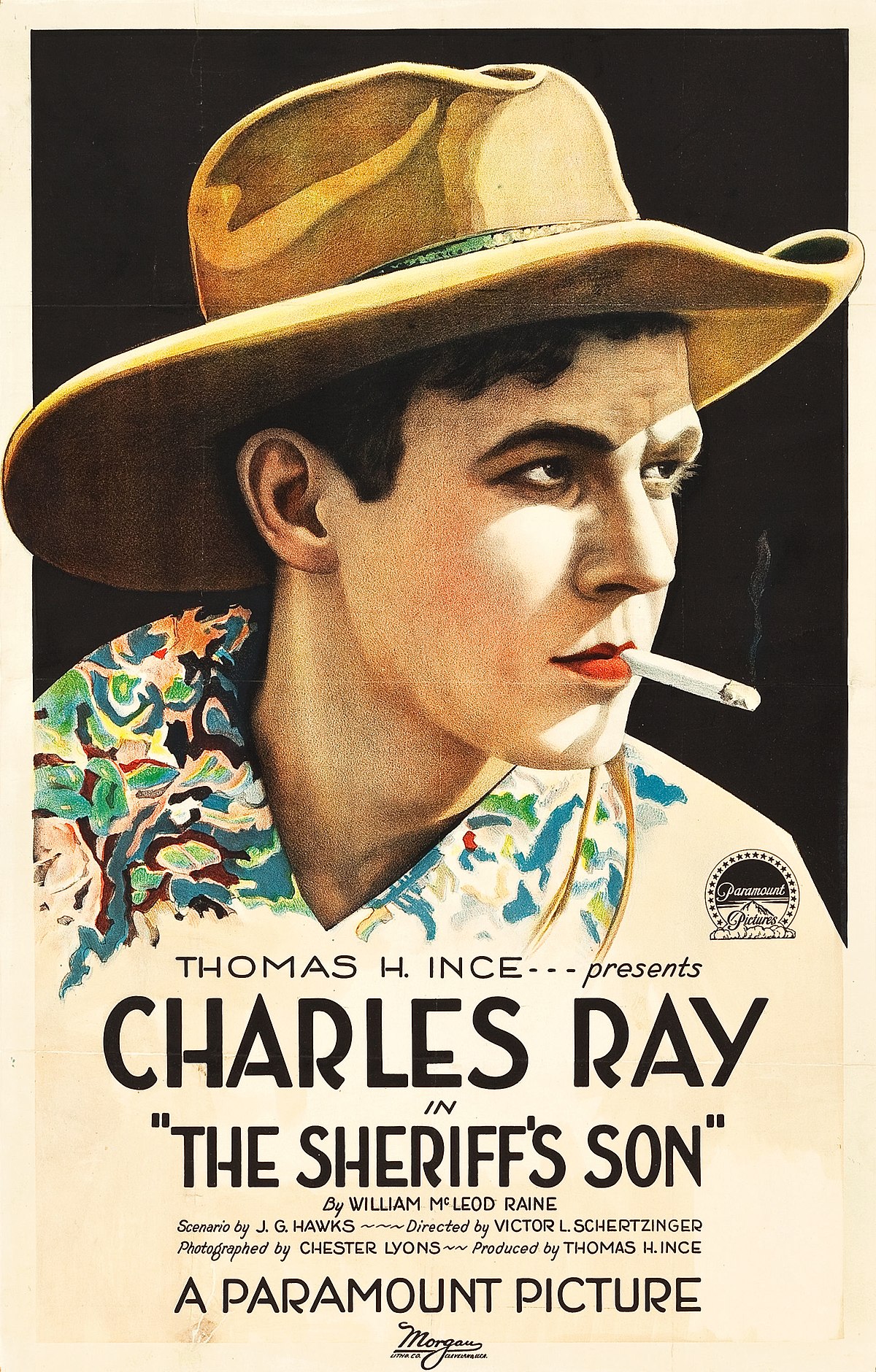
In the sprawling tapestry of early cinematic Westerns, where larger-than-life heroes often strode with an almost mythical certainty, 'The Sheriff's Son' (1919) presents a nuanced counter-narrative, one that delves into the profound chasm between perceived character and inherent truth. This silent era gem, helmed by the inimitable Charles Ray, transcends mere genre tropes, offering a poignant examination of reputation, self-discovery, and the arduous journey toward authentic valor. It’s a film that quietly challenges the prevailing notions of masculinity in the rugged frontier, proposing that courage isn't always a thunderous declaration but often a quiet, determined resolve that emerges when circumstances demand it most.
The narrative fabric of 'The Sheriff's Son' is woven with a poignant exploration of societal perception, specifically how the judgments of a community can shackle an individual, even one destined for greatness. Our protagonist, Royal Beaudry, portrayed with a captivating blend of earnestness and latent strength by Charles Ray, is the son of the town’s esteemed Sheriff, a man whose very name likely evokes images of unwavering authority and steadfast bravery. Yet, Royal himself is burdened by a pervasive reputation for being a coward, a label that clings to him like a burr, tainting every interaction and casting a long shadow over his potential. This isn't merely a superficial slight; it penetrates the very core of his existence, influencing even the woman he holds dear, the lovely character played by Seena Owen, who, like many others, struggles to see past the veneer of timidity to the true spirit within.
Charles Ray’s performance as Royal Beaudry is, without hyperbole, the pulsating heart of this film. Ray, known for his portrayals of country bumpkins and earnest, often underestimated young men, brings a singular authenticity to Royal. He doesn't play Royal as overtly weak, but rather as a young man who is perhaps introspective, perhaps misunderstood, and certainly burdened by the weight of expectation and misjudgment. His 'cowardice' isn't a lack of spirit, but perhaps a lack of the boisterous, aggressive posturing that often defined heroic figures of the era. This subtle distinction is crucial. Ray imbues Royal with an underlying decency and a quiet dignity that makes his eventual transformation all the more compelling. One can observe the internal conflict etched across his face, the longing for acceptance, and the quiet pain of being perpetually misjudged. It’s a masterclass in silent acting, conveying volumes with a glance, a posture, a hesitant gesture. Unlike the more overtly heroic figures in films like The Lamb and the Lion, Ray's Royal represents a different kind of strength, one that germinates from within rather than being projected outwardly.
The brilliance of J.G. Hawks and William MacLeod Raine's screenplay lies in its patient cultivation of this character arc. They don’t rush Royal’s redemption; instead, they allow the pressure of his reputation to build, creating a palpable tension that resonates with the viewer. The audience is invited to empathize with Royal’s plight, to question the superficiality of judgment, and to anticipate the moment when his true character will inevitably shine through. This narrative strategy elevates 'The Sheriff's Son' beyond a simple tale of good versus evil, transforming it into a character study of considerable depth.
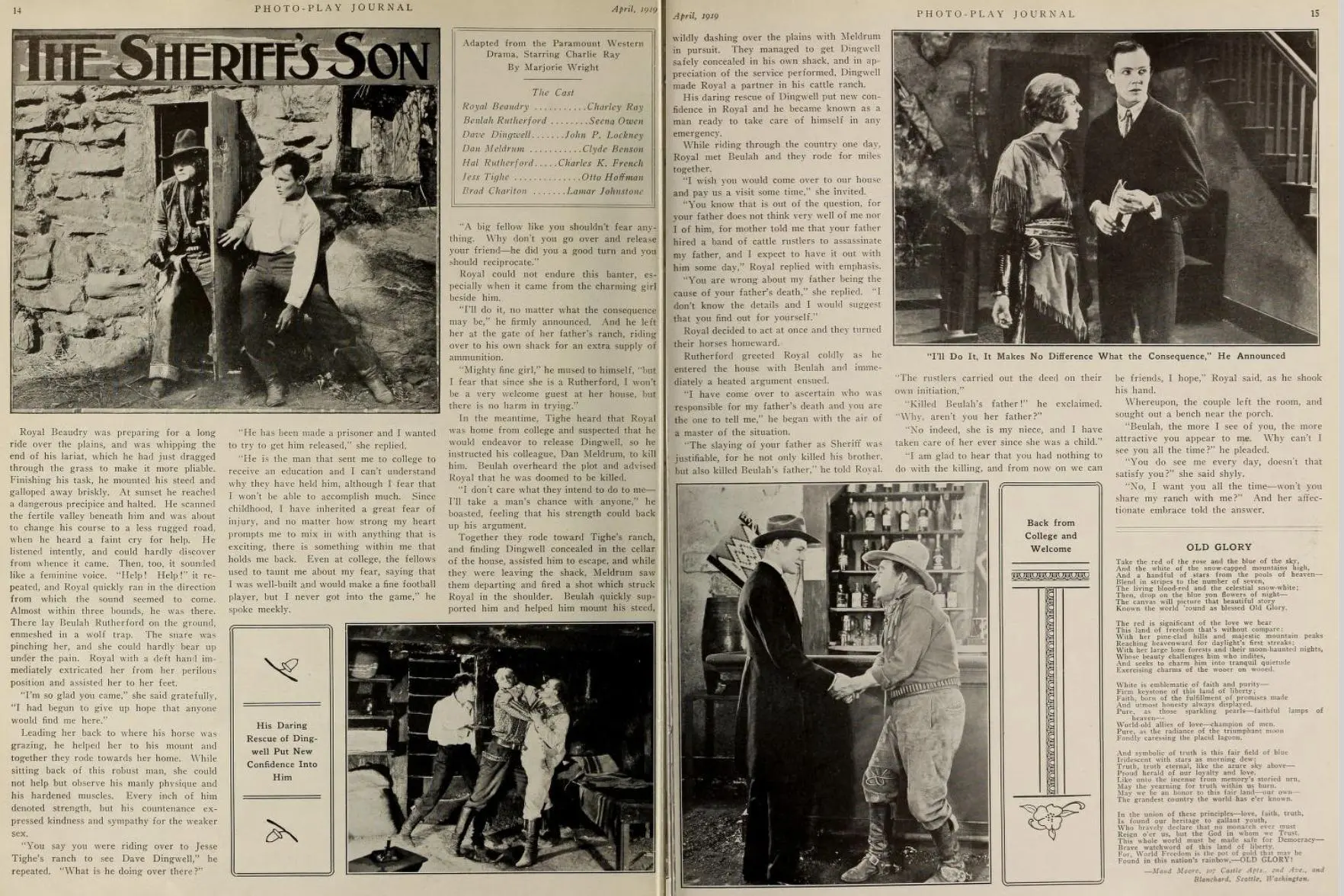
The plot thickens with the kidnapping of his father's trusted friend, an event that serves as the crucible for Royal's metamorphosis. This isn't merely a random act of villainy; it's a direct challenge to the established order, a threat that demands a response. And it is here, in the face of genuine peril and the need to protect the innocent, that Royal's latent heroism ignites. The stakes are profoundly personal: his father's reputation, the safety of a valued individual, and perhaps most importantly, his own self-worth and the chance to prove himself to the woman he loves. Seena Owen's character, though not given the same narrative weight as Royal, plays a crucial role as both a symbol of his desire for acceptance and a potential motivator for his actions. Her initial skepticism, though painful for Royal, underscores the pervasive nature of his reputation and makes his ultimate triumph all the more satisfying. Her eventual recognition of his bravery is the emotional payoff that Royal, and indeed the audience, has been longing for.
The supporting cast, while perhaps less prominent than Ray, contributes significantly to the film's texture. Charles K. French as Sheriff Beaudry embodies the stoic, burdened father figure, his silent disappointment in his son a powerful undercurrent throughout the early acts. Otto Hoffman, Lamar Johnstone, Buck Jones, J.P. Lockney, and Clyde Benson fill out the world, providing the necessary moral compass or villainous threat that drives the narrative forward. Buck Jones, a rising star in Westerns, likely brought a certain rugged authenticity to his role, even if it was in a supporting capacity, subtly foreshadowing his future iconic status. The interplay between these characters, particularly the tension between the Sheriff and his son, adds layers of emotional complexity that elevate the film beyond a simple adventure yarn.
As a product of the silent era, 'The Sheriff's Son' relies heavily on visual storytelling, and in this regard, it largely succeeds. The cinematography, though perhaps not as groundbreaking as some of the more avant-garde films of the period, effectively captures the expansive landscapes of the American West, providing a grand backdrop for the personal drama unfolding. The use of natural light and carefully composed shots helps to establish mood and convey emotion without the need for dialogue. The pacing, a critical element in silent films, is skillfully managed, building suspense gradually during the kidnapping and subsequent rescue attempts, culminating in a satisfying climax. The film understands the power of the lingering shot, the subtle facial expression, and the dynamic action sequence to propel the narrative forward and engage the audience. One might draw parallels to the visual clarity and moral explorations found in The Other Half, which also used visual cues to convey societal strata and personal struggle.
Themes of societal judgment and the struggle against preconceived notions are powerfully explored here, echoing similar sentiments found in other character-driven dramas of the era. Films like The Price of a Good Time or The Secret Orchard often grappled with characters fighting against the constraints of reputation or past mistakes. 'The Sheriff's Son' specifically hones in on the inherent unfairness of a judgment based on superficial observations rather than genuine character, making Royal's eventual triumph a victory not just for himself, but for anyone who has ever felt misunderstood. This universal resonance is part of the film's enduring appeal.
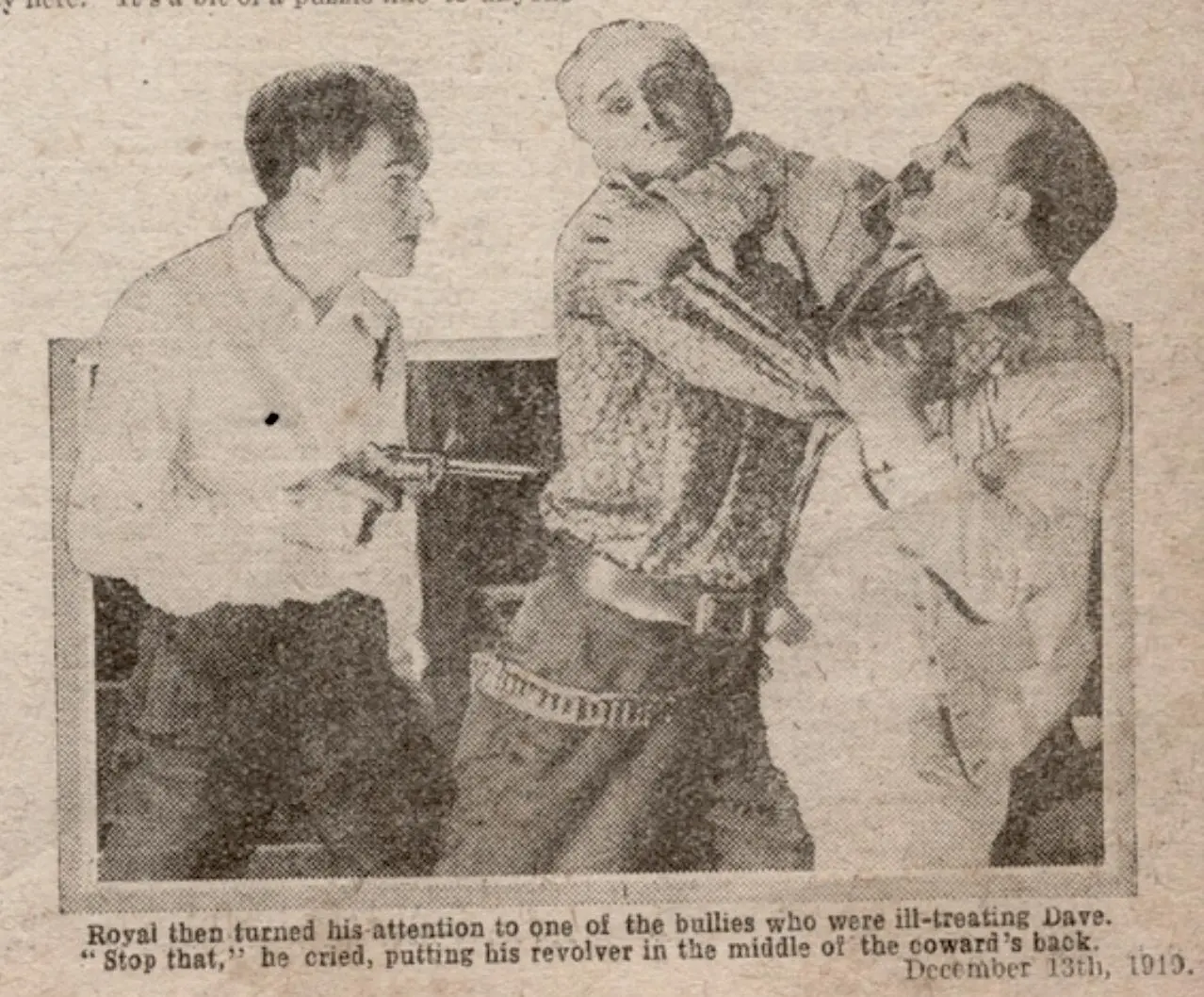
The climax of 'The Sheriff's Son' is not merely an action sequence; it is the definitive moment of Royal's self-actualization and the shattering of the community's erroneous perception. His daring rescue of his father's friend is not a reckless act of aggression but a calculated, brave maneuver, demonstrating intelligence and fortitude that had previously gone unrecognized. It is through this crucible of danger that Royal truly comes into his own, proving that genuine heroism often lies not in bluster, but in quiet determination and unwavering resolve when it matters most. This narrative arc of a character overcoming internal and external obstacles to achieve redemption is a timeless one, seen in various forms across cinematic history, from the personal growth in My Little Boy to the more dramatic transformations in films like The Brass Check. Royal’s journey is particularly resonant because it speaks to the quiet heroism that often goes unnoticed until dire circumstances force its emergence.
The film’s portrayal of the kidnappers, while perhaps lacking the nuanced villainy of later cinematic antagonists, serves its purpose effectively. They are the clear and present danger, the external force that necessitates Royal’s heroic intervention. Their presence underscores the lawlessness of the frontier, a common theme in Westerns, and provides a stark contrast to the nascent order represented by the Sheriff. The struggle between these forces of chaos and order is a fundamental aspect of the genre, and 'The Sheriff's Son' utilizes it to great effect, framing Royal’s personal journey within this larger, archetypal conflict. The underlying tension of the frontier, where justice often had to be carved out by individuals, is palpable throughout.
'The Sheriff's Son' remains a compelling watch not just for its historical significance as a silent Western, but for its enduring thematic relevance. It reminds us that appearances can be deceiving, that true courage often manifests in unexpected ways, and that the journey to self-acceptance and the earning of respect is a challenging but ultimately rewarding one. Charles Ray’s sensitive portrayal of Royal Beaudry elevates the film beyond a simple adventure, cementing its place as a thoughtful character study within the often-simplistic world of early Westerns. It's a testament to the power of silent cinema to convey complex emotions and intricate narratives through purely visual means. Much like how The Girl with the Champagne Eyes explored the complexities of female identity, 'The Sheriff's Son' delves into the multifaceted nature of male heroism.
The film serves as a fascinating artifact of its time, showcasing the storytelling sensibilities and performance styles prevalent in the late 1910s. For cinephiles and historians alike, it offers valuable insights into the evolution of the Western genre and the star power of actors like Charles Ray. While it might not possess the grand scale of some epic Westerns, its intimate focus on a single character's journey makes it uniquely powerful. Its legacy lies not in spectacular set pieces, but in its nuanced exploration of human nature and the quiet triumph of the underdog.
In conclusion, 'The Sheriff's Son' is far more than a period piece; it is a timeless narrative about the arduous path to proving one's worth in the face of skepticism. It champions the idea that true strength lies not in the absence of fear, but in the decision to act despite it, and that the most profound transformations often occur when an individual is pushed to their absolute limits. It's a film that resonates because it speaks to the universal human experience of striving for recognition and overcoming the judgments of others, ultimately finding courage within oneself. It stands as a quiet but powerful testament to the enduring appeal of a well-told story, driven by compelling characters and universal themes, proving that even a century later, its message remains as potent and relevant as ever. Its gentle subversion of Western archetypes makes it a noteworthy entry in the annals of early American cinema, a film that merits rediscovery and appreciation for its subtle yet profound impact.
IMDb —
1927
Community
Log in to comment.