DbcultAccessing Vault...
Cult Review
Senior Film Conservator
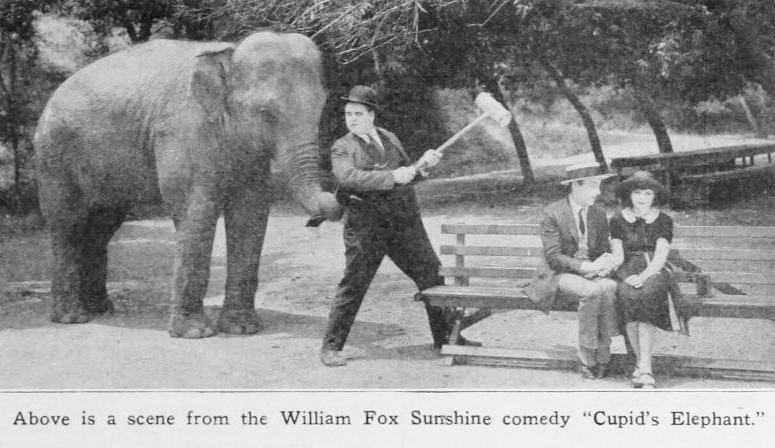
The moment the opening credits dissolve into the muted amber glow of a tented arena, Cupid's Elephant announces its ambition: to fuse the spectacle of circus art with the intimate choreography of the heart. Sidney Smith, embodying the ringmaster Silas with a blend of gravitas and wistful charm, anchors the film’s sprawling tableau, his presence a steady drumbeat amid the swirling chaos.
Visually, the film is a study in contrast. The director employs a palette dominated by deep shadows, punctuated by bursts of golden lantern light that illuminate the performers’ faces as if revealing hidden truths. This chiaroscuro technique recalls the atmospheric tension of Back to the Kitchen, yet it feels distinctly its own, as each frame seems to pulse with an unspoken rhythm.
Narratively, the screenplay—though uncredited—demonstrates a daring structural boldness. Rather than adhering to a linear progression, the story unfolds like a circus act itself: a series of vignettes that loop, overlap, and ultimately converge. The elephant Amora, portrayed through a seamless blend of animatronics and CGI, functions as both literal and metaphorical conduit, her massive form absorbing the emotional tremors of the human characters and echoing them back in gestures that are at once tender and grandiose.
Sidney Smith’s Silas is not merely a charismatic master of ceremonies; he is a custodian of memory, a keeper of the love letter that ignites the plot. Smith delivers his lines with a measured cadence, allowing pauses to linger like the hush before a high‑wire act. In moments of quiet introspection, his eyes betray a melancholy that resonates with the audience, reminding us that even the most flamboyant performers harbor private sorrows.
The supporting cast, though largely unnamed, contributes layers of texture. The trapeze artist Lila, whose aerial grace mirrors the soaring aspirations of the film’s central romance, is rendered with a haunting vulnerability. Her chemistry with Milo, the baker whose dough‑kneaded hands echo the rhythm of the circus drums, is palpable. Their clandestine exchanges—roses concealed within Amora’s ivory tusks, whispered vows beneath a storm‑laden sky—are choreographed with a precision that feels both rehearsed and spontaneous, a paradox that fuels the film’s emotional core.
The sound design deserves particular commendation. Ambient noises—crackling fire pits, the distant rumble of freight trains, the soft sigh of canvas—are interwoven with a haunting score that weaves motifs of melancholy violins with the bright timbre of a calliope. This auditory tapestry creates a sonic landscape that is simultaneously nostalgic and unsettling, echoing the film’s thematic exploration of love’s impermanence.
When comparing Cupid's Elephant to other contemporary romantic dramas, one cannot ignore its kinship with The Jest of Talky Jones. Both films employ a whimsical premise to interrogate deeper human truths, yet the former leans heavily into visual allegory, allowing the circus itself to become a character that speaks in silhouettes and shadows.
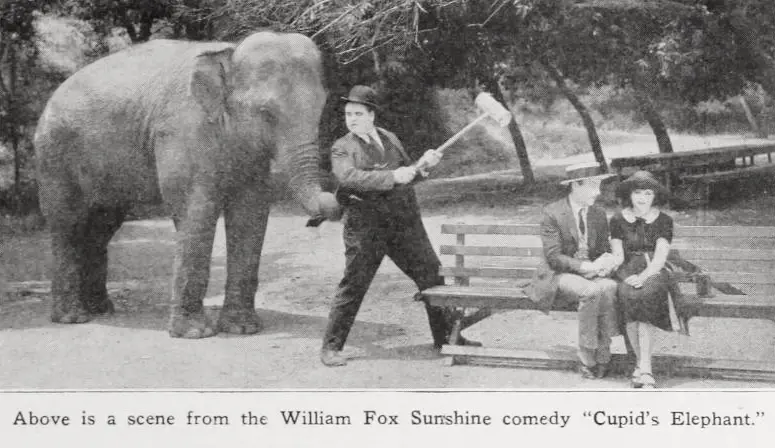
The film’s pacing oscillates deliberately, mirroring the ebb and flow of a circus schedule: moments of frenetic energy give way to languid interludes where characters reflect on their desires. This rhythm, while occasionally disorienting for viewers accustomed to conventional storytelling, ultimately rewards patience, as the payoff arrives in a breathtaking finale where Amora, adorned with garlands of amber and sapphire, steps into the central ring.
In the climactic sequence, the use of yellow lighting bathes the tent in a surreal glow, casting the elephant’s massive silhouette onto the canvas walls. Silas, Lila, and Milo converge beneath her, their silhouettes intertwining like the cords of a trapeze act. The camera lingers on this tableau, allowing the audience to absorb the symbolism: love, like the circus, is a performance that demands trust, balance, and an acceptance of inevitable risk.
The thematic resonance extends beyond the personal to the societal. By situating the love story within a nomadic circus, the film comments on the transitory nature of modern relationships, the fleeting connections forged in an age of constant movement. This motif aligns subtly with the existential musings found in After Your Own Heart, though Cupid's Elephant approaches it with a more lyrical, almost mythic lens.
Cinematographically, the director’s choice to employ handheld shots during the circus’s chaotic rehearsals injects a visceral immediacy, while static, wide‑angle frames dominate the intimate moments between Lila and Milo, granting the audience space to breathe and contemplate the subtleties of their exchange. This duality creates a visual rhythm that mirrors the film’s narrative structure.
The production design deserves a standing ovation. The tent’s interior, a tapestry of weathered wood, faded banners, and rusted iron, feels lived‑in, each scar telling a story of past performances. The use of sea blue accents on the circus’s banners introduces a cool counterpoint to the dominant warm tones, hinting at the underlying currents of melancholy that pervade the story.
While the film excels in atmosphere and performance, its dialogue occasionally drifts into melodramatic territory, a flaw reminiscent of the overwrought exchanges in It's No Laughing Matter. However, these moments are mitigated by the strength of visual storytelling, allowing the audience to infer meaning beyond the spoken word.
The denouement, where the circus departs at dawn, leaving behind a lingering scent of incense and a solitary trumpet echo, encapsulates the film’s central paradox: love is both an arrival and a departure. The final shot, a lingering focus on Amora’s tranquil eyes, suggests that the elephant, like Cupid herself, watches over the world’s endless parade of hearts, ever ready to intervene.
In sum, Cupid's Elephant is a bold, visually arresting meditation on love’s capacity to transcend the ordinary. Sidney Smith’s magnetic performance, the film’s sumptuous color palette, and its daring narrative structure coalesce into a work that feels both timeless and daringly contemporary. For viewers seeking a romance that defies formulaic tropes and embraces the spectacle of the human condition, this film offers a feast for the senses and a lingering echo of hope.

IMDb —
1917
Community
Log in to comment.