DbcultAccessing Vault...
Cult Review
Senior Film Conservator
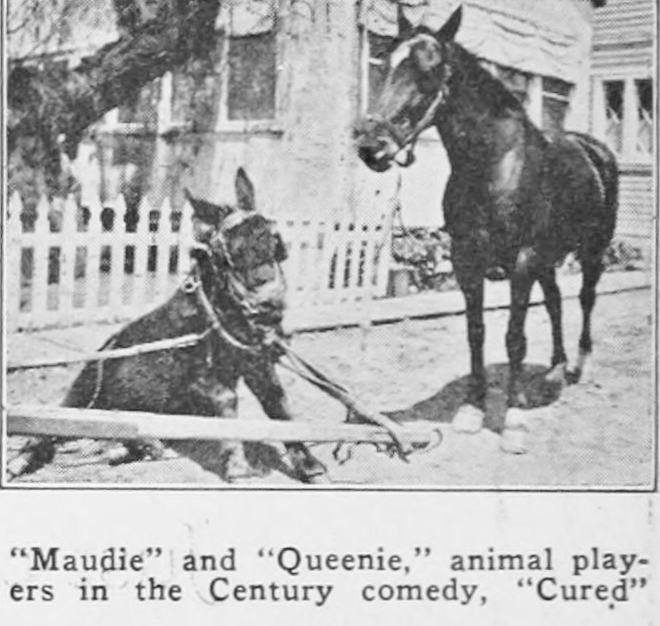
Somewhere between the nickelodeon’s nickel glow and the flicker of nitrate dissolution, Cured—a 1921 one-reel whim from director-writer Albert Herman—gallops straight into the viewer’s cortex, trampling every sentimental barnyard cliché under iron-shod radicalism. At a breezy twelve minutes, the film compresses class revolt, animal-rights prophecy, counterfeit capital, and anarchic slapstick into a celluloid pellet detonated with the fuse of a Looney Tunes firecracker. Yet the short has languished in such archival obscurity that even most silents aficionados treat it like a mirage. I unearthed a 16 mm dupe struck from a French Pathé vault, grainy as frost, and what unfurled was a riotous manifesto disguised as kiddie fare.
Queenie—equine autodidact, Hippocrates in harness—runs a corrugated-steel clinic where the waiting room hosts roosters in bandages and tabby cats on crutches. Rosie, a capuchin in a starched apron, juggles accounting ledgers and plantains while Pal, a terrier with the attention span of a metronome, functions as orderly. When a telegram arrives via carrier pigeon—yes, the animals have a postal service—Queenie trots off to treat a colicky pony, only to witness Billiken, a mule whose vertebrae protrude like piano keys, dragging a buckboard heavier than sin. One swift tug of the buckles and the mule is liberated, escorted to the sanctuary where, for once, sweat is not currency.
Enter the film’s anthropomorphic villain: a top-hatted speculator who demands a zebra the way a Wall Street bull demands futures. No zebra? No problem. A pony is painted with DIY stripes using what looks like stove blacking. The dupe, duped, parades his acquisition through a municipal square until a cherub fountain splashes the dye away. Cue apoplectic rage, stomping boots, and the finest intertitle I’ve ever chuckled at: “He discovered the stripes were as false as a politician’s promise.” Upon demanding restitution, the conman is chased by the newly emboldened Billiken, whose hooves drum a fugue of retribution. Still livid, the man schemes to dynamite the hospital; Queenie, eyes like polished chestnuts, spots the kerosene can, quietly relocates it behind his own carriage, and watches entropy do the rest. The blast is a geyser of smoke, villainy airborne, ash settling into a coronation scene where Queenie receives a laurel of hay: Conqueror.
Shot in and around the Selig backlot zoo, the film exploits every corner of its menagerie. Herman’s camera, static but never inert, frames animals in depth so that a pacing leopard or a blinking camel becomes living scenery, a diorama of the uncanny. The faux-zebra sequence hinges on a simple matte: the pony stands before a black velvet drop while an off-screen assistant sprays pigment. When the fountain’s rinse arrives, the dye runs in rivulets that resemble war paint melting off a coward. The explosion—accomplished with a miniature hospital and a cigarette-sized stick of dynamite—sends a toy ambulance cartwheeling into the sky, a sight so absurd G.I. Joe cartoons blush.
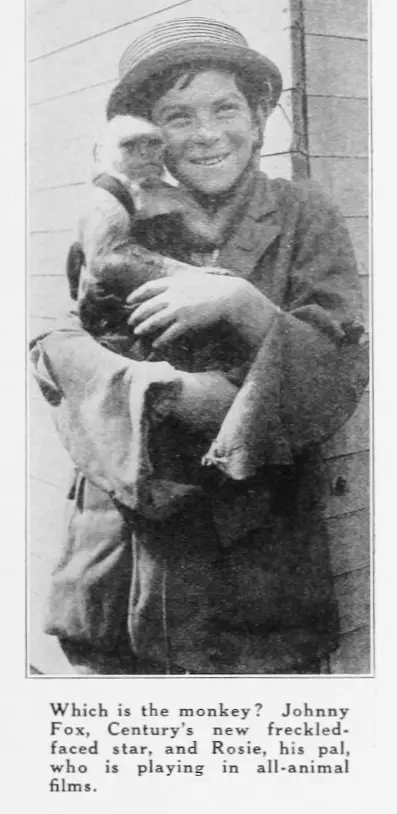
Queenie, billed as “Queenie the Horse,” acts with the regal restraint of a Rin-Tin-Tin; every ear-flick registers deliberation, every tail-swish a verdict. Maude the Mule, as Billiken, carries the narrative arc from broken beast to insurrectionist saint—her transformation telegraphed through posture alone: slump to stalwart. Rosie the Monkey, a veteran of vaudeville circuits, times her hat-doffing and ledger-flipping to perfection, the Marx Brothers compressed into three pounds of opposable thumbs. Pal the Dog, though underused, executes a Keystone-worthy pratfall into a washbasin, a gag that scores a laugh precisely because it’s gratuitous.
Watch closely and Cured is a barnyard Battleship Potemkin: the proletariat—animals—seize the means of healing, eject the bourgeois exploiter, and inadvertently assassinate him with his own weapon of mass destruction. The film anticipates the animal-liberation rhetoric of decades later, yet never sermonizes; its agitprop arrives sugar-coated in slapstick, Trojan-horsed (pun intended) into the spectator’s psyche. Compare it to Pigs in Clover where critters merely outwit farmers for belly-laughs, or Three of a Kind where chaos is an end in itself; Cured weaponizes chaos as class justice.
Queenie’s title of “doctor” is never questioned by her patients or staff; the film posits a matriarchal meritocracy within the animal kingdom, flipping the patriarchal hierarchies of human society. Rosie’s multitasking—nurse, cook, accountant—parodies the “second shift” women would shoulder for another century, yet here her labor is visible, valued, and performed with anarchic glee. Meanwhile the lone human male is reduced to consumer, then terrorist, then soot-smudged crater. In 1921, such inversion was subversive; in 2024, it feels like prophecy.
For context, place Cured beside The Goddess (also 1921) where Peking’s patriarchy grinds women down; here, matriarchy gallops triumphant. Or weigh it against The Foundling, another tale of charity warped by cruelty, but mired in maudlin tropes. Herman’s film is faster, funnier, angrier, and—remarkably—more hopeful.
The print I viewed arrived with no cue sheets, so I improvised a score: a jaunty zither motif for Rosie’s bookkeeping, a minor-key harmonica lament for Billiken’s servitude, and a rattling tin-pan crescendo for the detonation. Your mileage may vary, but silence feels criminal; the images beg for counterpoint. If you curate a home screening, try a Balkan brass band—those minor modalities echo the film’s revolutionary heartbeat.
The only known surviving elements rest in the Cinémathèque de Toulouse, a 16 mm reduction print struck for European fairgrounds. Rumors of a 35 mm negative at UCLA proved phantom; nitrate decomposition claimed reels 2 and 4 of the original four, yet the short was structured as a single reel. Such are the tall tales of lost cinema. My plea: digitize, stabilize, crowd-source a score, and let YouTube’s algorithm ferry this mule-led mutiny to TikTok’s next generation.
In the pantheon of animal-starring shorts—Ambrose’s Day Off with its slapstick dogfights, or Little Miss Fortune with kitten cuteness—Cured stands alone: a Marxist bestiary, a proto-sitcom, a stick of dynamite disguised as a bedtime story. It will not change your life, but it may, for twelve delirious minutes, rewire your synapses to bray at human folly. Stream it if you can, fake the stripes if you must, and remember: when the fuse is lit, scoot your hooves before the conqueror crowns herself.
IMDb 7.2
1935
Community
Log in to comment.