DbcultAccessing Vault...
Cult Review
Senior Film Conservator
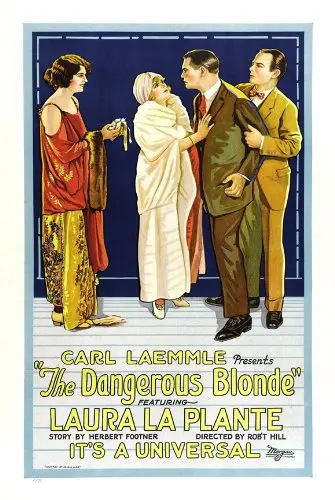
Stepping back into the annals of early cinema, one often encounters narratives that, despite their age, resonate with a surprising contemporary relevance. Such is the case with 1924’s The Dangerous Blonde, a film that, even in its silent grandeur, speaks volumes about female agency, societal pressures, and the intricate dance of morality. Directed by a keen eye for dramatic tension and brought to life by a cast navigating the nascent art of screen acting, this picture, penned by Hulbert Footner and Hugh Hoffman, presents a compelling tableau of familial loyalty pushed to its very limits. It’s a fascinating artifact, not merely for its historical significance, but for its audacious plotting and the nuanced performances that underpin its melodramatic façade. In an era where storytelling relied solely on visual cues and the power of suggestion, The Dangerous Blonde manages to weave a tale of intrigue that feels remarkably modern in its psychological underpinnings, challenging the simplistic hero-villain dichotomy often prevalent in its contemporaries.
The narrative unfurls with a delicate yet potent crisis. Colonel Faraday, a figure of presumably unblemished reputation, finds himself ensnared in a classic blackmail scheme, his past indiscretions manifesting in a series of compromising letters penned to an adventuress named Yvette. The very fabric of his standing, his honor, and perhaps even his family’s future hangs precariously in the balance. It is into this breach that his daughter, Diana, portrayed with captivating complexity by the luminous Laura La Plante, steps forward. Her mission is not one of brute force or overt confrontation, but a far more intricate, psychologically charged endeavor: to recover these damning missives through sheer cunning and strategic manipulation.
Diana, far from being a passive damsel, is presented as an active agent, a woman capable of wielding her charm and intelligence as formidable weapons. Her chosen target is Gerald Skinner, Yvette’s partner in this nefarious enterprise. Diana’s method is one of calculated vampirism, a deliberate seduction designed to disarm Skinner and gain access to the precious letters. This portrayal of a woman using her allure not for personal gain or frivolous romance, but for the protection of her family’s honor, immediately elevates Diana beyond typical silent film heroines. It hints at a subversive streak, a willingness to transgress conventional gender roles to achieve a righteous, albeit morally ambiguous, end. The tension inherent in this setup is palpable: will Diana succeed in her delicate game of cat and mouse, or will her calculated risks backfire?
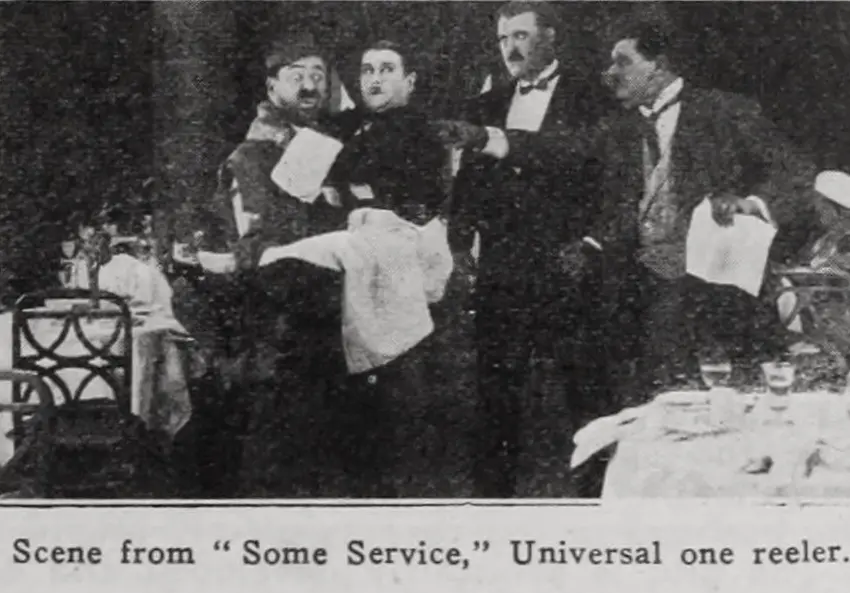
The carefully constructed plan, however, is thrown into disarray by the tempestuous arrival of Royall Randall, a football hero whose affections Diana had previously, and perhaps unwisely, spurned. His entrance, fueled by a potent cocktail of bruised ego and romantic pique, transforms a tense, whispered negotiation into a boisterous, public spectacle. Randall, indignant at being stood up, bursts into the cafe where Diana is executing her delicate operation, igniting a fight that shatters the fragile equilibrium. This sudden eruption of masculine, unrefined energy into Diana’s world of subtle intrigue is a pivotal moment. It’s an almost comedic collision of different dramatic registers, yet it serves a crucial narrative purpose. In the ensuing chaos, through a stroke of blind luck and brute force, Randall inadvertently accomplishes Diana's objective, recovering the letters that were the subject of her elaborate scheme. This twist underscores a fascinating theme: sometimes, the most sophisticated plans can be derailed, or even completed, by the most unexpected and unrefined forces.
The ensemble cast of The Dangerous Blonde, under the direction of a craftsman adept at eliciting emotion without dialogue, delivers performances that are both expressive and economical. Laura La Plante, as Diana, is undoubtedly the film’s radiant core. Her portrayal is a masterclass in silent film acting, conveying a spectrum of emotions – determination, vulnerability, cunning, and perhaps a hint of conflicted morality – through nuanced facial expressions and precisely choreographed gestures. She embodies the titular ‘dangerous blonde’ not as a femme fatale in the traditional sense, but as a woman dangerous to those who underestimate her intellect and resolve. Her 'vamping' of Skinner is not merely a seductive display; it’s a strategic performance, a testament to her character’s depth and agency. La Plante’s ability to convey complex inner turmoil with such grace is a primary reason the film remains compelling.
Edward Hearn, as Colonel Faraday, projects the gravitas and vulnerability required of a man facing public disgrace. His silent pleas and expressions of paternal concern effectively communicate the stakes involved without a single spoken word. Margaret Campbell's role, while perhaps smaller, contributes to the film's social tapestry, adding another layer to the world Diana inhabits. Eve Southern, as Yvette the adventuress, embodies the shadowy antagonist with a convincing blend of allure and menace. Her silent sneers and calculating glances are enough to establish her as a formidable, if morally bankrupt, opponent. She is the catalyst for the entire plot, a woman who understands the power of secrets and wields them with ruthless efficiency.
Philo McCullough, as Gerald Skinner, serves as the unwitting pawn in Diana's game. His performance deftly balances his character's complicity in Yvette's scheme with his susceptibility to Diana's charms. He’s not a purely evil figure, but rather a man swayed by opportunity and easily manipulated, making him a more interesting target for Diana’s machinations. Frederick Cole, as Royall Randall, provides the necessary jolt of unbridled, impulsive energy. His character is a stark contrast to Diana's cool calculation, embodying a more traditional, if somewhat naive, brand of heroism. His boisterous interruption, while initially a hindrance, ultimately becomes the unexpected resolution. The supporting cast, including Arthur Hoyt, Rolfe Sedan, and Dick Sutherland, each contribute to the bustling atmosphere of the cafe scene and the broader world of the film, adding texture and believability to the unfolding drama.
The cinematic language of 1924, devoid of synchronous sound, necessitated a heightened reliance on visual storytelling, and The Dangerous Blonde exemplifies this art form. The use of intertitles, far from being mere plot exposition, often served as narrative punctuation, delivering key dialogue or advancing the story with succinct elegance. However, the true brilliance of silent film lay in its ability to communicate through gesture, mise-en-scène, and the subtle interplay of light and shadow. The director's use of close-ups on La Plante's face, for instance, allows the audience to delve into Diana’s internal struggles, her moments of doubt, and her flashes of resolve, creating an intimacy that transcends the lack of spoken words. The cinematography, while perhaps not groundbreaking for its time, effectively establishes mood and atmosphere, from the clandestine corners of the cafe to the more formal settings of Colonel Faraday’s world.
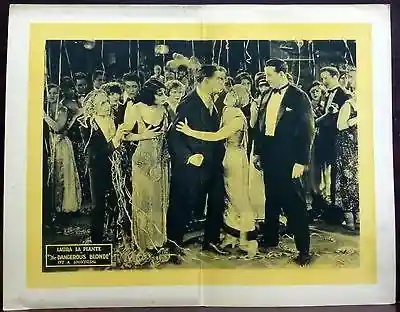
The pacing of the film, a critical element in maintaining audience engagement without dialogue, is skillfully managed. The initial setup builds tension with a deliberate slowness, allowing the audience to grasp the gravity of Faraday’s predicament and Diana’s audacious plan. The scene in the cafe, however, erupts with a sudden dynamism, showcasing a shift in tempo that mirrors the chaos unfolding on screen. The fight itself, a common trope in melodramas of the era, is choreographed to be both exciting and pivotal, serving as the dramatic climax that resolves the primary conflict. This careful modulation of pace demonstrates a sophisticated understanding of narrative rhythm, a testament to the filmmakers' craft.
Furthermore, the film’s visual style contributes significantly to its thematic depth. The costuming of Diana, for example, would have been carefully chosen to reflect her 'dangerous' allure, her ability to captivate and manipulate. The stark contrast between the sophisticated, sometimes decadent settings associated with Yvette and Skinner, and the more traditional, respectable environments of the Faraday household, subtly underscores the moral conflict at the heart of the story. The interplay of these visual cues transforms what could have been a straightforward melodrama into a more complex exploration of character and circumstance.
The screenplay, credited to Hulbert Footner and Hugh Hoffman, deserves considerable attention for its intricate construction. Footner, a prolific writer known for his detective novels and mysteries, brings a keen sense of suspense and psychological intrigue to the plot. The premise of blackmail, the calculated seduction, and the unexpected intervention are all hallmarks of a well-crafted mystery narrative. Hoffman, likely contributing to the cinematic adaptation, would have been instrumental in translating Footner's literary vision into a compelling visual story, understanding the unique demands of the silent medium. Their collaboration results in a story that is not only engaging but also rich in character motivation and dramatic irony.
The script’s strength lies in its ability to complicate the protagonist’s morality. Diana is not merely a virtuous heroine; she employs morally ambiguous tactics for a noble cause. This complexity adds layers to her character, making her more relatable and intriguing than a purely idealized figure. The writers skillfully build suspense, allowing the audience to question whether Diana's plan will succeed, and then subverting expectations with Randall's accidental heroism. This narrative unpredictability is a testament to their storytelling prowess, keeping the audience on the edge of their seats even without spoken dialogue.
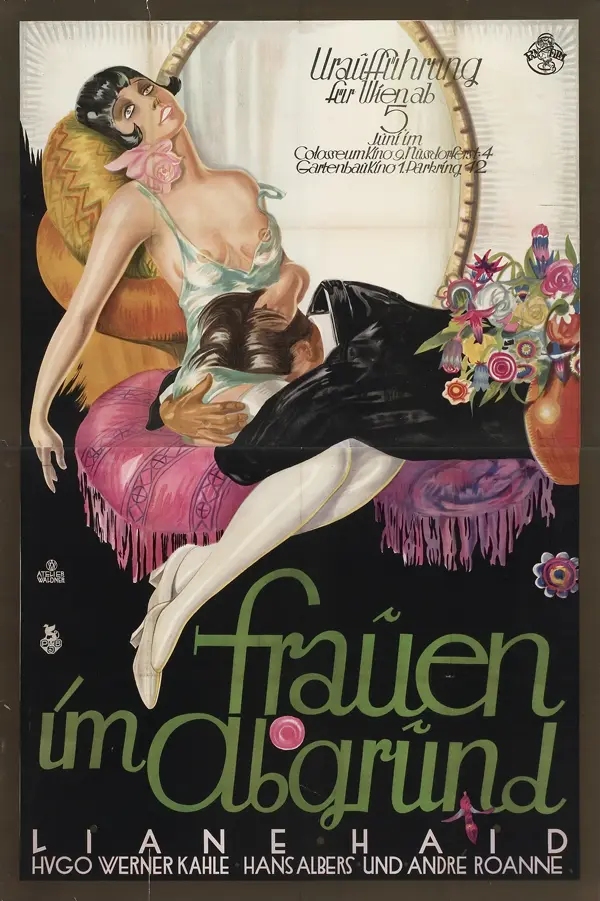
Released in 1924, The Dangerous Blonde emerges from a vibrant period in cinematic history, an era often referred to as the Golden Age of Silent Film. This was a time of rapid innovation, where filmmakers were constantly experimenting with new techniques and narrative forms. The year 1924 itself was prolific, seeing the release of diverse films ranging from the epic adventure of The Mutiny of the Elsinore to the social commentary of Salvation Nell, and the more lighthearted fare like An Eskimotion Picture. The Dangerous Blonde sits comfortably within this landscape, offering a compelling drama that leverages popular tropes of the time – the femme fatale (or rather, the woman who *acts* like one for a cause), the hero, the blackmailer – while infusing them with a certain psychological depth.
Compared to the grand historical sweeps of films like Ashes of Vengeance, The Dangerous Blonde operates on a more intimate, personal scale, focusing on familial honor and individual cunning rather than vast conflicts. Yet, it shares with these larger productions a commitment to dramatic tension and character-driven stakes. Its exploration of a woman navigating a morally complex world might draw parallels to the spirited heroines found in films like Diane of the Follies, where female characters often defied societal expectations. However, Diana's motivations in The Dangerous Blonde feel particularly acute, driven by a direct threat to her family rather than personal ambition or romance, setting her apart from a more frivolous 'follies' girl.
The film’s portrayal of the ‘adventuress’ Yvette also reflects contemporary societal anxieties and fascinations with women who operated outside conventional norms, a theme seen in various forms across global cinema of the time, from the German Expressionist dramas like Prinzessin Tatjanah or Um eines Weibes Ehre, to American melodramas. The film's strength lies in its ability to take these familiar elements and synthesize them into a coherent, thrilling narrative that keeps the audience captivated until its resolution. It serves as a valuable document of how silent cinema could expertly craft suspense and character without the aid of spoken dialogue, relying instead on the universal language of visual storytelling and emotional expression.
In retrospect, The Dangerous Blonde stands as a testament to the enduring power of silent film. It’s a film that, despite the passage of a century, still manages to engage and entertain, offering a window into the narrative sophistication possible in the pre-sound era. Laura La Plante’s performance alone is worth the viewing, showcasing her remarkable talent and magnetism. The film’s themes of honor, deception, and unexpected heroism remain perennially relevant, demonstrating that the core elements of compelling storytelling transcend technological advancements.
While it may not possess the sprawling scope of an epic or the profound social commentary of a landmark drama, The Dangerous Blonde delivers precisely what it promises: a thrilling, character-driven melodrama with a clever plot and memorable performances. It reminds us that the 'dangerous' aspect of its title refers not only to the precarious situation but also to the potent, often underestimated, strength of its female protagonist. For enthusiasts of silent cinema, or anyone interested in the evolution of cinematic storytelling, this film is a delightful discovery, a vibrant piece of history that continues to shine with its own unique, compelling light. It’s a compelling argument for the enduring artistic merit of films from an era too often relegated to mere historical curiosity, proving that genuine artistry knows no temporal bounds.
IMDb —
1931
Community
Log in to comment.