DbcultAccessing Vault...
Cult Review
Senior Film Conservator
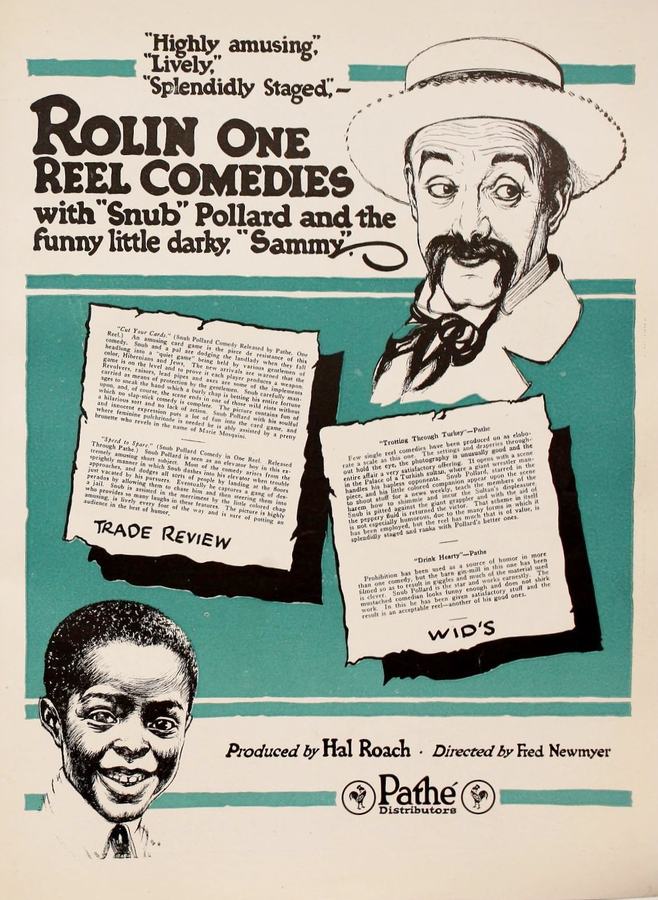
Hal Roach’s two-reel honeymoon with chaos, Cut the Cards, lands like a shaken bottle of bootleg seltzer: pop, hiss, giggle, stain on your Sunday best.
There is no prologue, no pastoral overture—only the instant combustion of character economics. Snub Pollard’s lantern jaw juts into frame first, a pickax of comic arrogance, followed by Eddie Boland’s gangly grace, limbs signing IOUs in mid-air. Together they form a binary star of insolvency, orbiting Marie Mosquini’s beleaguered matron whose boardinghouse creaks under the moral weight of their debt. The plot, thinner than a gambler’s last cigarette, is less narrative than Newtonian law: every gag demands an equal and opposite reaction, usually delivered via flying custard or collapsing banister.
Watch how cinematographer H. L. Cronjager frames the hallway like a trench: deep, diagonal, destiny measured in doorframes. The camera never dollies, yet space compresses through sheer velocity of bodies; furniture migrates, rent-free, across the axis like shell-shocked soldiers.
Mosquini’s performance is the film’s stealth ace. Where Snub mugs and Eddie pratfalls, she economizes—a raised eyebrow equals eight reels of melodrama. Her ledger becomes fetish object, surrogate child, weapon. In one sublime cut, she kisses the scarlet figures goodnight, then slams the book shut; the intertitle, minimalist dagger, reads “Sleep tight, arithmetic.”
Slapstick historians often chart evolution from knockabout to character comedy. Cut the Cards refuses that teleology; it is both fossil and neon sign. The first reel obeys Sennett physics: kicks, trips, trousers around ankles. Midway, however, the gags pivot into social burlesque. A poker game erupts in the parlor—no money, only IOUs. Each hand escalates the stakes: the house keys, the house cat, the house ghost (a bedsheet with eyeholes, gambler’s guilt incarnate). The sequence lampoons the credit economy a full decade before the Crash, making this 1920 trifle feel like a prophecy written on a stock ticker.
Compare the poker melee to The Coiners’ Game, where forgery carries noir gravitas. Here counterfeiting is a custard pie—absurd, edible, consequence fleeting. Yet the laughter sticks in the craw once you realize every player bets with someone else’s future.
Ernest Morrison—Sunshine Sammy to the initiated—threads the anarchy with reaction shots so precise they feel like editorial commentary. His bellboy is part Greek chorus, part insurance assessor, eyes calculating damage faster than the audience. Morrison, a Black child star in a lily-white ensemble, weaponizes the double consciousness W. E. B. Du Bois theorized: he watches the white folks gamble away property that was never really theirs, and his smirk says welcome to the club.
Modern viewers may flinch at the racial semaphore of 1920, yet Morrison owns every frame. When he finally pockets the ultimate IOU—a promise that the house will someday be his—the gag flips from slapstick to reparations fantasy, delivered with a wink so quick it feels like subliminal activism.
There is no musical cue sheet surviving, so each screening becomes collaboration with the present. I project it with a jaunty Erik Satie loop—Gnossienne No. 1—and the marriage is uncanny: same poker-faced melancholy, same skeletal gaiety. Others prefer a brisk ragtime, but the film’s DNA accommodates both funeral dirge and carnival organ. Silence, after all, is the most versatile instrument.
Listen between the sprockets and you’ll hear the sawdust of On the Night Stage, the honky-tonk piano of The Bugler of Algiers, the oceanic hush of The Treasure of the Sea. Each Roach production converses with its siblings across the vaults of time.
The boardinghouse is no mere backdrop; it is a bellows inhaling absurdity, exhaling splinters. Note the wallpaper—fleur-de-lis repeating like a compulsive gambler’s mantra. By reel two, those fleurs morph into aces and spades, hand-drawn by the animator’s grease-pencil directly on the print. Live-action and graffiti intermingle, predating the Fleischer brothers’ Koko the Clown integrations by months. The gag is so casual you might miss it, yet it heralds cinema’s future: reality bending to doodle.
Stairs sag, floorboards yaw like trapdoors, the front door revolves so fast it becomes a merry-go-round. When the structure finally implodes—rafters folding like losing poker hands—the debris forms a perfect heart around our evicted heroes. Even destruction loves a laugh.
Marie Mosquini’s landlady is neither shrew nor angel; she is capitalism’s middle management, maternal only when the books balance. In one throwaway gag she tucks two mannequins into bed—Snub and Eddie’s effigies—then charges them rent. The image is chilling: affection commodified, motherhood monetized. Compare her to the eponymous heroine of An Innocent Adventuress, who flees ledgers altogether. Mosquini stays, fights, wins—yet the victory tastes of iron, not sugar.
For decades Cut the Cards survived only in 9.5 mm Pathescope excerpts, spliced into children’s birthday reels. A nitrate print surfaced in 1989 in a Valenciennes attic, fused with Jes’ Call Me Jim. Preservationists separated the emulsions like conjoined twins; the scars remain, flickers of turquoise where chemistry wept. These scars are now part of the film’s patina, evidence that cinema is a river you cannot step into twice, not even to fetch a lost hat.
Modern comedians owe it a debt they never signed. The slow-burn collapse of a shared living space? Withnail & I tips its whisky. The poker game where dignity is currency? Every Seinfeld bottle episode shuffles the same deck. Even the landlady’s ledger reincarnates as Larry David’s spite store receipts.
Watch Cut the Cards for the acrobatic limbs, stay for the quiet revolutions: property as punchline, childhood as spectator, silence as symphony. When the iris closes on that two of spades, you realize the house never belonged to anyone; it’s a card trick dealt by history, and we are all non-paying boarders in time’s boardinghouse.
Deal yourself in—just don’t bet the rent.
IMDb 5.9
1916
Community
Log in to comment.