DbcultAccessing Vault...
Cult Review
Senior Film Conservator
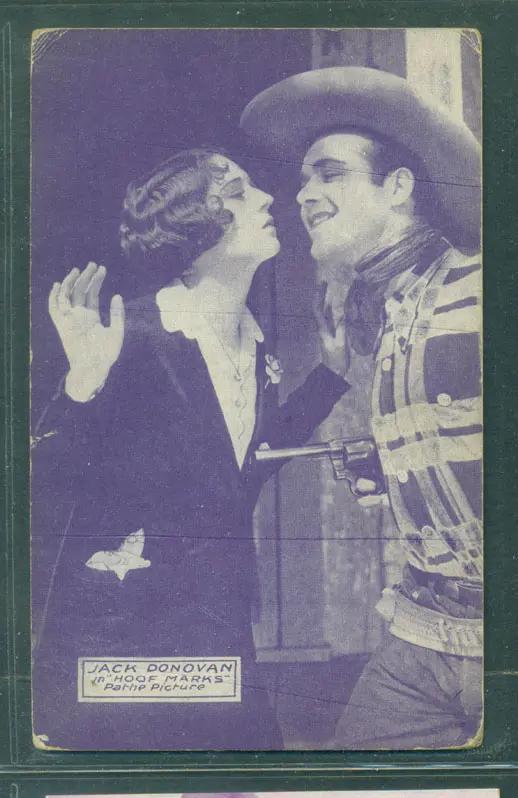
Is Hoof Marks, a silent Western from an era long past, worth watching today? Short answer: yes, but with significant caveats that demand a particular kind of viewer. This film is a fascinating historical artifact, offering a window into the foundational storytelling of American cinema, but it requires patience and an appreciation for the medium's nascent forms.
It's a film for cinephiles, historians, and those with a genuine curiosity for the origins of the Western genre, especially those who can forgive technical limitations for narrative ambition. This film is decidedly NOT for viewers seeking modern pacing, complex character arcs, or high-fidelity visuals; it’s an exercise in cinematic archaeology, not contemporary entertainment.
The narrative engine of Hoof Marks is as straightforward as a prairie horizon: a battle for land, legacy, and justice, all tied to the literal and symbolic 'hoof marks' left by a formidable, wild stallion. Peggy O'Day, as Elara Vance, embodies the archetypal Western heroine – resilient, independent, and fiercely protective of her homestead. Her ranch, more than just property, feels like a living character, a symbol of the untamed spirit of the West that the film strives to capture.
The pacing, typical of its time, is deliberate, almost meditative in its initial setup. Scenes are held longer than a modern audience might expect, relying on the actors' exaggerated expressions and gestures to convey emotion and intent. This isn't a flaw, but a characteristic of silent cinema, demanding a different kind of engagement from the viewer. The film builds its tension not through rapid-fire edits, but through sustained glances, slow reveals, and the accumulating weight of impending conflict.
Joseph Anthony Roach's screenplay, even through the lens of early cinema, demonstrates a clear understanding of genre tropes, employing them with an earnestness that feels both familiar and foundational. The introduction of Edward Cecil's 'The Rider,' whose malevolence is foreshadowed by those distinctive hoof prints, is particularly effective. It's a clever device, allowing a tangible, recurring symbol to represent an abstract threat, building suspense long before his true identity is fully unveiled. This kind of symbolic storytelling, though simple, lays groundwork for countless Westerns to follow, from The Eye of Envy to even later, more complex narratives.
Silent film acting is a unique art form, and the cast of Hoof Marks navigates its demands with varying degrees of success. Peggy O'Day is undoubtedly the anchor, delivering a performance rich in expressive physicality. Her wide, pleading eyes and determined stance speak volumes without a single intertitle, particularly in moments of distress when 'The Rider's' machinations threaten her livelihood. She conveys Elara’s vulnerability and strength in equal measure, making her a protagonist easy to root for.
Edward Cecil, as 'The Rider,' leans into the broader, more theatrical style common to villains of the era. His performance is less nuanced, more archetypal – a sneering, imposing presence whose every gesture screams villainy. While it lacks the subtlety we might expect today, it serves the narrative purpose, clearly delineating good from evil. It's a performance that reminds us of the roots of cinematic villainy, often relying on overt menace rather than psychological depth.
William Steele's Silas Thorne, the mysterious drifter, is perhaps the most intriguing. Steele employs a more restrained approach, letting his character's quiet intensity and a certain world-weariness define him. His subtle shifts in expression, particularly when observing Elara or the titular hoof marks, suggest a hidden backstory that adds a layer of depth to the otherwise straightforward plot. It’s a performance that hints at the evolving complexity of leading men in cinema, moving beyond simple heroism to something more enigmatic.
The cinematography in Hoof Marks, while limited by the technology of its time, effectively captures the vastness and rugged beauty of the Western landscape. Wide shots of galloping horses across expansive plains are a recurring motif, emphasizing the freedom and danger inherent in the setting. There’s a raw, almost documentary-like quality to some of the outdoor sequences, particularly the chase scenes, which, despite their age, retain a certain kinetic energy.
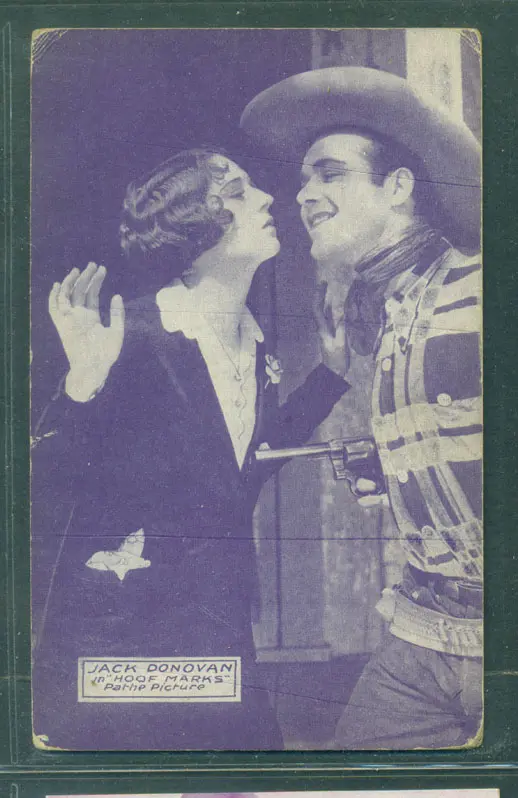
The director (uncredited in the provided details, but a critical hand nonetheless) demonstrates a solid grasp of visual storytelling. The framing often isolates characters against the imposing backdrop of nature, underscoring their struggles against forces larger than themselves. There’s a particular shot where Elara stands alone, silhouetted against a setting sun, that powerfully communicates her isolation and resilience. It's a simple shot, but incredibly effective, a testament to the power of composition even in early cinema.
However, the film occasionally struggles with interior scenes, where lighting can be flat and static, sometimes diminishing the impact of close-up performances. This is a common challenge for silent films, and while Hoof Marks doesn't always overcome it with innovative solutions, it doesn't detract significantly from the overall experience. The strength lies in its ability to leverage the natural grandeur of its setting, allowing the landscape itself to become a character, much like in A Son of Erin.
The tone of Hoof Marks is earnest and adventurous, oscillating between moments of genuine peril and the quiet determination of its heroes. There's an underlying sense of moral clarity, typical of the era's Westerns, where good and evil are starkly defined. The film doesn't delve into moral ambiguities; it presents a world where justice is fought for and ultimately, expected to prevail. This straightforward morality is, for me, one of its greatest strengths – a comforting simplicity in a complex world.
As a silent film, the original viewing experience would have been accompanied by live musical accompaniment, often improvised or based on cue sheets. Without that, modern viewers experience it differently. However, the film's visual rhythm and the dramatic emphasis of the actors are designed to carry the emotional weight, allowing an imagined score to fill the gaps. The lack of a fixed, original score means that each viewing can be a slightly different experience, depending on the accompaniment, or the viewer's own internal soundtrack, a unique aspect that films like My Hero! also share.
This film works because it distills the essence of the Western genre into its purest form. It offers a clear, compelling conflict and showcases early cinematic techniques in a way that is both educational and surprisingly engaging. The performances, particularly Peggy O'Day’s, are a masterclass in silent film acting, conveying deep emotion without dialogue.
This film fails because its pacing can feel glacially slow by modern standards, and the broad theatricality of some performances might alienate viewers accustomed to more naturalistic acting. The technical limitations of the era, while charming to some, can be a hurdle for others.
You should watch it if you have an interest in film history, the evolution of the Western, or simply want to experience a foundational piece of cinema without the distractions of sound and dialogue. It’s a journey back in time. It works. But it’s flawed.
Hoof Marks is more than just a relic; it’s a robust example of early Western filmmaking that, despite its age and inherent limitations, still offers genuine insight into the birth of a genre. It demands a specific kind of engagement, a willingness to meet the film on its own terms, rather than imposing modern expectations. If you approach it with curiosity and an open mind, you'll find a surprisingly engaging tale of frontier resilience and justice.
"While not a film for everyone, Hoof Marks is an essential viewing for understanding the foundational grammar of the American Western. It’s a testament to the power of visual storytelling when dialogue was not yet an option, proving that sometimes, the most profound narratives are etched not in words, but in the dust itself."
It’s a film that reminds us that even at its earliest stages, cinema was capable of crafting compelling myths. It's not a casual watch, but for the right audience, it's a deeply rewarding one. Don't expect a thrilling rollercoaster, but a steady, contemplative ride through cinematic history. It's a film that deserves to be seen, not just remembered.
IMDb 6.5
1928
Community
Log in to comment.