DbcultAccessing Vault...
6.3/10
Senior Film Conservator

A definitive 6.3/10 rating for a film that redefined the boundaries of cult cinema. Daddies remains a cornerstone of transgressive art.
The 1924 cinematic artifact Daddies represents a fascinating intersection of post-war social anxiety and the burgeoning sophistication of the American domestic comedy. Directed with a deft hand that balances the farcical with the sentimental, the film serves as a vigorous examination of the masculine psyche when confronted with the unvarnished vulnerability of childhood. Unlike the grim moralistic weight found in The Guilty Man, Daddies opts for a lighter, albeit equally probing, touch in its navigation of social responsibility.
At the heart of the narrative lies a quintet of men whose identity is predicated entirely on their exclusion of the feminine and the familial. Their 'anti-matrimony club' is not merely a social convenience but a psychological barricade against the changing tides of the early 20th century. Claude Gillingwater, whose screen presence often oscillated between the cantankerous and the deeply empathetic, delivers a performance of remarkable nuance. His portrayal of the quintessential bachelor is a study in performative stoicism, a facade that begins to fissure the moment the first orphan crosses the threshold.
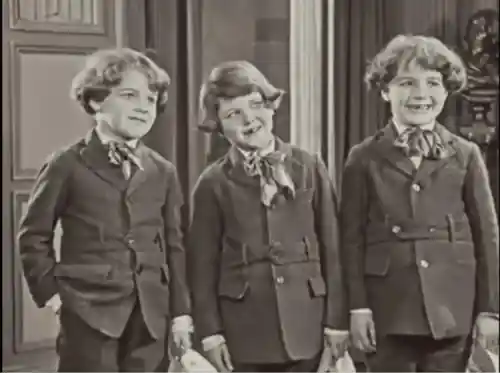
The screenplay, penned by John L. Hobble and Julien Josephson, utilizes the orphans as more than mere plot devices; they are agents of chaos that expose the inherent absurdity of the men's pact. This subversion of the domestic space recalls the thematic undercurrents of Forget Me Not, where the presence of a child acts as a catalyst for profound character transformation. In Daddies, however, the transformation is played for its rhythmic comedic potential, utilizing the physical space of the bachelor pad to highlight the incongruity of bottles, diapers, and toys amidst the leather-bound books and decanters of scotch.
The inclusion of Mae Marsh in the cast elevates the film beyond the realm of standard silent comedy. Marsh, a veteran of D.W. Griffith’s more expansive epics like Hearts of the World, brings a grounded, luminous quality to the screen. Her interaction with the bachelors provides the necessary emotional ballast, preventing the film from drifting into pure caricature. The chemistry between the disparate cast members—ranging from the seasoned Willard Louis to the youthful exuberance of the child actors—creates a multi-generational tapestry that was quite progressive for its time.

Visual storytelling in Daddies is marked by a clear, uncluttered aesthetic that prioritizes character movement and facial expression. The lighting, often warm and inviting in the scenes of burgeoning domesticity, contrasts sharply with the austere, shadow-heavy framing of the initial club meetings. This visual evolution mirrors the internal thawing of the protagonists. While it lacks the haunting atmospheric tension of The Phantom, it possesses a structural integrity that ensures the humor never undermines the genuine pathos of the orphans' plight.
One cannot overlook the satirical edge directed at the 'New Woman' era. The bachelors' fear of marriage is depicted as a comical form of cowardice, a refusal to engage with the complexities of a society moving away from Victorian rigidity. The film suggests that true masculinity is not found in the isolation of the club, but in the messy, demanding labor of caretaking. This thematic resonance is echoed in films like Mr. Dolan of New York, which similarly explores the intersection of urban identity and personal redemption.

The pacing of the film is remarkably modern. The transition from the bachelors' smug self-assurance to their frantic, sleep-deprived attempts at childcare is handled with a rhythmic precision that rivals contemporary sitcoms. Yet, beneath the laughter, there is a persistent interrogation of what it means to belong. The orphans, having lost their biological families, find a makeshift sanctuary that is arguably more honest than the traditional structures they were intended for. This exploration of 'found family' is a precursor to many modern cinematic tropes, yet Daddies handles it without the cloying sentimentality that often plagues the genre.
The cinematography by the uncredited but clearly skilled crew captures the essence of the 1920s interior design, turning the bachelor's home into a character in its own right. As the film progresses, the set decoration changes—a subtle but effective way to track the narrative's emotional arc. The use of intertitles is sparse but punchy, allowing the physical comedy of actors like Harry Myers and Otto Hoffman to carry the narrative weight. This reliance on visual wit is what separates a masterpiece like Daddies from more pedestrian efforts of the era.
When compared to the rugged naturalism of Where the North Begins, Daddies feels like a refined chamber piece. It doesn't need the vast vistas of the wilderness to explore the human condition; the confines of a nursery are more than sufficient. The film’s ability to extract profound truths from a seemingly simple premise—men forced to care for children—is a testament to the strength of its writing and the conviction of its ensemble.
In the final analysis, Daddies is a vibrant, essential piece of silent cinema that transcends its temporal origins. It is a work that speaks to the perennial struggle between the desire for autonomy and the inescapable pull of human connection. For the modern viewer, it offers a window into a world that, while visually different, grappled with the same fundamental questions of duty, love, and the definition of a home. It remains a sparkling example of how comedy can be the most effective vehicle for social critique and emotional revelation.

IMDb 7.7
1935
Community
Log in to comment.