DbcultAccessing Vault...
Cult Review
Senior Film Conservator
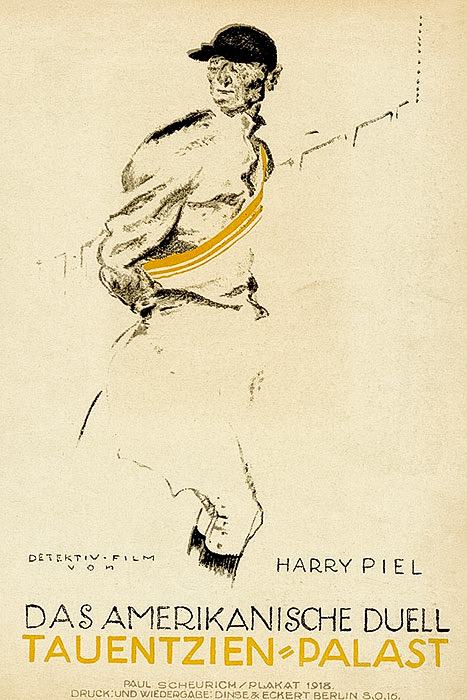
Stepping into the flickering, monochrome world of Das amerikanische Duell is akin to unearthing a forgotten treasure map, each frame a meticulously drawn clue leading to a thrilling, albeit silent, escapade. Harry Piel, the undisputed maestro of German silent-era action, not only directs but also stars as the indomitable Jack Hiller, a character who embodies the very essence of daring and quick-wittedness. This film, a testament to Piel's narrative acumen and directorial flair, plunges viewers into a whirlwind of intrigue, where secret societies, ancient artifacts, and transatlantic chases coalesce into a cinematic experience that, even a century later, retains a surprising visceral punch. It’s a compelling journey through the shadowy corridors of espionage and high adventure, a genre Piel himself largely defined for his contemporary audience.
The brilliance of Das amerikanische Duell lies not just in its audacious stunts, which were groundbreaking for their time, but in its intricate plotting. Piel, as both writer and director, constructs a narrative that, while relying on the familiar tropes of good versus evil, elevates them through meticulous pacing and character development. Jack Hiller is not merely a strongman; he possesses a keen intellect, often outsmarting his adversaries through cunning rather than brute force alone. This nuanced portrayal adds layers to what could otherwise be a two-dimensional hero, making his victories feel earned and his perils genuinely suspenseful. The film manages to maintain a relentless tempo, a characteristic hallmark of Piel's work, ensuring that the audience remains captivated from the opening credits to the climactic resolution.
Aruth Wartan, as the nefarious Dr. Silas Thorne, delivers a performance that is both chilling and captivating. His portrayal of the mastermind behind the 'Order of the Crimson Hand' is a masterclass in silent film villainy. Wartan communicates Thorne's malevolence and calculated intelligence through subtle gestures, piercing gazes, and a palpable air of aristocratic menace. He avoids the pitfalls of melodramatic overacting, instead opting for a more restrained yet utterly effective depiction of evil. His presence on screen is formidable, providing a worthy antagonist to Piel's heroic Hiller, and their intellectual sparring forms the backbone of the film's tension. The dynamic between them is not simply a physical one; it's a clash of ideologies and methodologies, making their eventual confrontation all the more satisfying.
Esther Carena, in the role of Elara, Professor Kroll's daughter, brings a vital spark of vulnerability and resilience to the proceedings. Her character is more than just a damsel in distress; she is an intelligent woman caught in extraordinary circumstances, often displaying her own courage and resourcefulness. Carena’s expressive face conveys a wide range of emotions, from fear and despair to defiance and hope, grounding the fantastical elements of the plot in human emotion. Her abduction serves as the primary catalyst for Hiller’s relentless pursuit, providing a strong emotional core to the high-stakes adventure. Without her, the film might risk becoming a mere parade of stunts; with her, it gains a poignant human dimension that elevates the overall narrative.
Adolf Wenter, as Thorne's formidable henchman, provides a stark physical threat. Wenter's imposing stature and grim demeanor make him a truly intimidating presence, a silent, relentless force of nature. He is the perfect foil for Hiller’s agility and wit, embodying the brute strength and unwavering loyalty that often characterize the villain's right-hand man in such narratives. His confrontations with Hiller are particularly well-staged, showcasing a blend of physical prowess and dramatic tension that keeps audiences on the edge of their seats. The casting here is impeccable, each actor perfectly embodying their archetype while still imbuing them with unique characteristics.
The cinematography of Das amerikanische Duell is remarkably sophisticated for its era. Piel, alongside his cinematographer, employs a variety of techniques that enhance the storytelling, from dynamic camera movements during chase sequences to evocative close-ups that highlight the emotional intensity of key moments. The use of light and shadow is particularly masterful, creating a noir-like atmosphere in the urban settings and an ominous grandeur in the wilderness scenes. The editing is crisp and propulsive, maintaining a brisk pace that keeps the audience engaged, a stark contrast to some of the more languid narratives of contemporary silent films. This film demonstrates an advanced understanding of visual storytelling, proving that silent cinema was far from simplistic.
The set pieces and locations are another highlight. From the opulent, yet sinister, interiors of Thorne's secret lair to the bustling, gritty portrayal of New York docks, the film transports the viewer across different worlds. The climax, set in a remote, untamed wilderness, provides a stark and dramatic backdrop for the titular 'American Duel.' This setting choice is inspired, allowing for a more primal and isolated confrontation, stripping away the urban complexities for a raw test of survival and wit. The attention to detail in the production design is commendable, lending an air of authenticity to the fantastical plot and immersing the audience fully in Hiller’s perilous journey.
Piel's direction shines brightest during the action sequences. He orchestrates exhilarating chases, daring escapes, and intense hand-to-hand combat with a remarkable clarity and dynamism. Unlike some films of the period where action could feel clunky or static, Piel's approach is fluid and exciting. He understands how to build tension visually, allowing the audience to fully grasp the stakes of each perilous situation. The 'American Duel' itself is not merely a physical fight but a complex series of traps and counter-moves, a true battle of wits that showcases Hiller's ingenuity as much as his physical prowess. This methodical approach to action choreography sets Das amerikanische Duell apart from many of its contemporaries.
Comparing Das amerikanische Duell to other action-adventure silent films provides valuable context. While films like The Flying Torpedo (1916) might have offered early thrills with mechanical ingenuity, Piel’s film elevates the human element, focusing on the individual’s struggle against a more organized, insidious threat. The grand scale of the pursuit and the intricate nature of the villain's plot in Das amerikanische Duell feel more akin to later espionage thrillers, demonstrating Piel's forward-thinking approach to the genre. It's less about the spectacle of technology and more about the spectacle of human ingenuity and resilience.
The film also deftly avoids the overt sentimentality that could sometimes bog down narratives of the era, such as seen in some adaptations like Jane Eyre (1921), which, while excellent in its own right, operated on a different emotional register. Das amerikanische Duell maintains a taut, purposeful tone, allowing moments of emotional connection to feel earned rather than forced. Even the romantic subplot between Hiller and Elara is handled with a subtlety that feels remarkably modern, never overshadowing the primary narrative of adventure and intrigue. This balance is crucial for maintaining the film's relentless pace and focus.
One might draw parallels between the clandestine 'Order of the Crimson Hand' and other shadowy organizations found in silent thrillers, though Piel’s creation feels particularly well-defined and menacing. Unlike the more abstract threats in films like The Doom of Darkness (1916), Thorne's order in Das amerikanische Duell possesses a tangible structure and a clear, malevolent objective, making them a more formidable and believable adversary. This specificity enhances the sense of peril and gives the audience a clear target for their apprehension.
The cultural implications of the 'American Duel' concept are also intriguing. While the film is German, the inclusion of an 'American' challenge suggests a fascination with the perceived rugged individualism and high-stakes gambling associated with American frontier narratives, or perhaps a nod to the burgeoning popularity of American action cinema. This cross-cultural fusion adds an interesting layer to the narrative, making the specific form of the duel feel unique and exotic within the European setting. It’s a clever way to imbue the climax with a distinct flavour that stands out.
The performances are uniformly strong, a testament to Piel's ability to elicit compelling portrayals from his cast. Aruth Wartan’s Dr. Thorne, for instance, is a character whose intelligence is almost as terrifying as his ruthlessness. He is not a one-dimensional villain but a complex figure driven by a clear, albeit morally bankrupt, vision. This depth in villainy is crucial for elevating the stakes and making Hiller's triumph feel genuinely hard-won. The subtle nuances in Wartan’s expressions betray a mind constantly calculating, always several steps ahead, making him a truly formidable opponent.
Even minor characters contribute significantly to the rich tapestry of the film, each playing their part in propelling the intricate plot forward. There are no superfluous roles; every individual serves a purpose, whether to provide a crucial piece of information, create an obstacle, or offer a momentary respite from the relentless tension. This tight narrative construction speaks volumes about Piel’s skill as a storyteller, ensuring that every element contributes to the overall coherence and impact of the film. It's a masterclass in economical storytelling, where every moment counts.
The film’s enduring appeal also lies in its pioneering spirit. Piel was a trailblazer, pushing the boundaries of what was possible in silent cinema, particularly in the realm of action and adventure. His influence can be seen in countless subsequent films, both within Germany and internationally. Das amerikanische Duell is not just an entertaining film; it is a significant historical document, showcasing the ingenuity and creativity of filmmakers during a pivotal era of cinematic development. It stands as a testament to the power of visual storytelling before the advent of synchronized sound.
The pacing of the film is particularly noteworthy. It maintains a relentless forward momentum, rarely allowing for lulls or unnecessary diversions. This constant drive is essential for an adventure film, keeping the audience on the edge of their seats, eager to see what peril Hiller will face next and how he will ingeniously escape. The narrative unfolds with a breathless urgency that is infectious, making the almost two-hour runtime feel considerably shorter. It is a testament to the editor's skill and Piel's directorial vision that the film never drags.
Furthermore, the thematic undercurrents of the film, such as the struggle against global conspiracies and the triumph of individual courage, resonate even today. These universal themes elevate Das amerikanische Duell beyond a mere escapist adventure, imbuing it with a timeless quality. It speaks to the eternal human desire for justice and the enduring appeal of a hero who stands against overwhelming odds. The film taps into archetypal narratives that continue to captivate audiences across generations and cultures.
The film’s legacy is perhaps not as widely recognized as some other silent classics, but it undeniably holds a significant place in the history of German cinema and the action genre as a whole. It serves as a potent reminder of Harry Piel’s singular vision and his ability to craft narratives that were both thrilling and intellectually engaging. For enthusiasts of silent cinema, or anyone interested in the genesis of the modern action film, Das amerikanische Duell is an essential viewing experience, a film that continues to surprise and entertain with its audacious spirit and meticulous craftsmanship. It's a vibrant echo from a bygone era, proving that great storytelling transcends the boundaries of sound.
In conclusion, Das amerikanische Duell is a tour de force of silent action-adventure, a film that showcases Harry Piel at the zenith of his creative powers. Its intricate plot, compelling performances, cutting-edge cinematography, and relentless pacing combine to create a cinematic experience that is both historically significant and immensely entertaining. It stands as a testament to the enduring power of visual storytelling and the timeless appeal of a hero's journey against formidable odds. This film is a must-see for anyone wishing to explore the rich tapestry of early 20th-century cinema, offering a glimpse into a period of extraordinary innovation and daring. The sheer audacity of its ambition, coupled with its flawless execution, makes it a truly remarkable piece of cinematic art, deserving of far wider recognition and appreciation in the modern era.
IMDb 5.5
1935
Community
Log in to comment.