DbcultAccessing Vault...
Cult Review
Senior Film Conservator
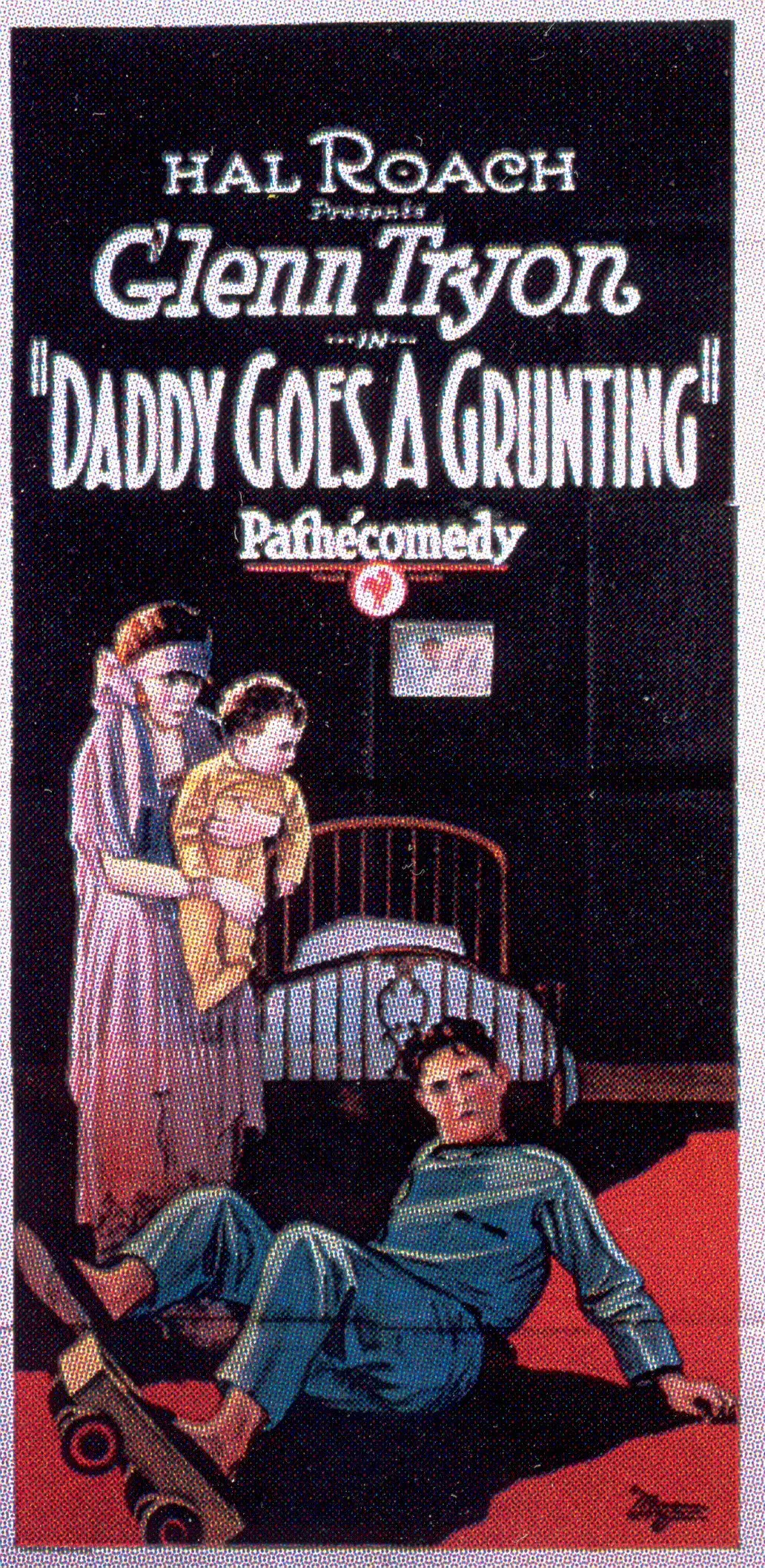
Is 'Daddy Goes a Grunting' worth watching today? Short answer: yes, but with significant historical context. This early 20th-century silent comedy is a fascinating artifact for cinephiles and historians of domestic farce, but it will likely test the patience of modern casual viewers.
It's a film best suited for those with a keen interest in the evolution of comedic storytelling, the nuances of early cinematic technique, and the socio-cultural reflections found within nascent filmmaking. Conversely, if you're seeking fast-paced contemporary humor, complex character development, or an experience unburdened by the conventions of a bygone era, 'Daddy Goes a Grunting' is decidedly not for you.
This film works because of its foundational slapstick energy and the surprisingly timeless premise of a man forced into domestic responsibility.
This film fails because its humor is often broad to the point of tedium for a modern audience, and its resolution leans into deeply conventional gender roles that feel dated.
You should watch it if you appreciate the historical lineage of comedy and don't mind a slower, more visually driven narrative devoid of dialogue.
'Daddy Goes a Grunting' stands as a curious, sometimes frustrating, yet ultimately insightful snapshot of early 20th-century comedic sensibilities. Its premise, a complaining husband left to his own devices, is as old as marriage itself, and the film mines this fertile ground for every possible sight gag and farcical mishap. While the execution feels undeniably antiquated, there's an undeniable charm in watching the seeds of modern domestic comedy being sown.
The film’s central conflict, the husband’s ineptitude when confronted with the realities of home life, resonates even today, albeit through a highly exaggerated lens. It’s a simple story, stripped down to its bare essentials, proving that even a century ago, the battle of the sexes and the perils of weaponized incompetence were ripe for comedic exploration. The film doesn't preach; it merely observes, then amplifies, the chaos.
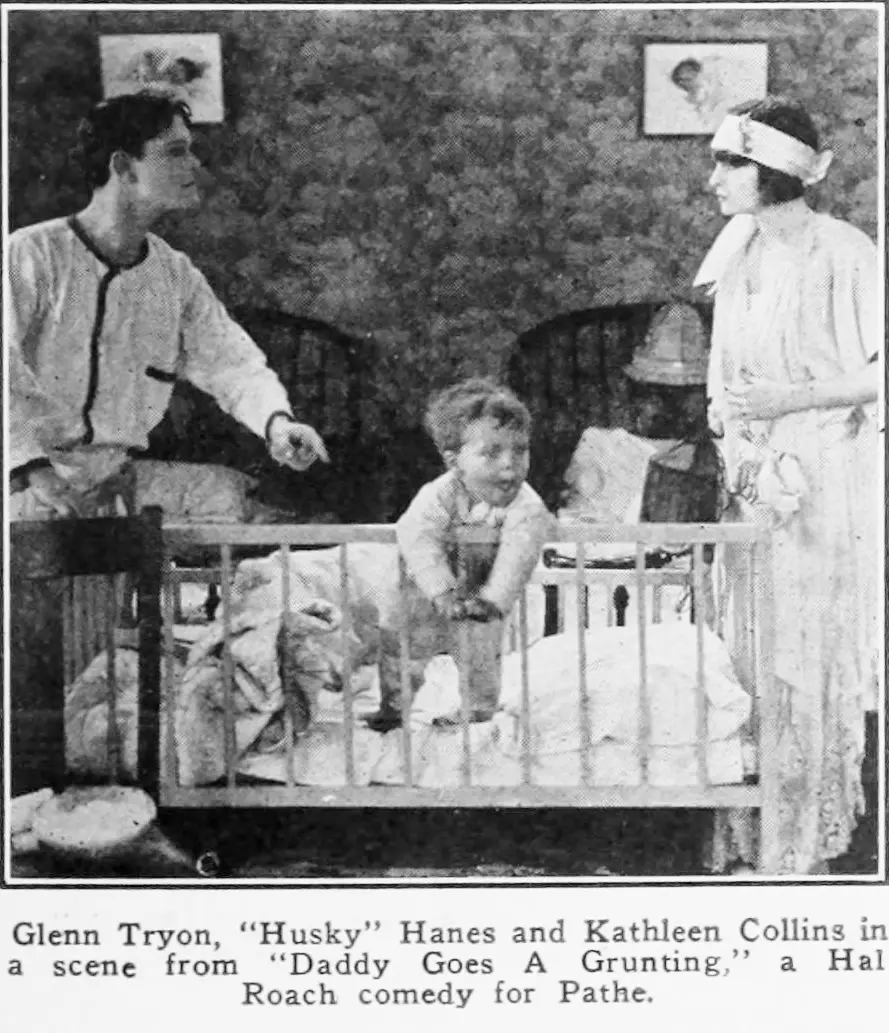
Glenn Tryon, as the titular 'Daddy,' carries the bulk of the film's comedic weight, and his performance is a fascinating study in silent film acting. His initial grumbling, conveyed through exaggerated facial expressions and slumped posture, quickly gives way to panicked flailing once his wife, played by Kathleen Collins, makes her strategic exit. Tryon’s physical comedy is broad, a necessity in the silent era, but it’s remarkably effective in conveying his character’s escalating despair.
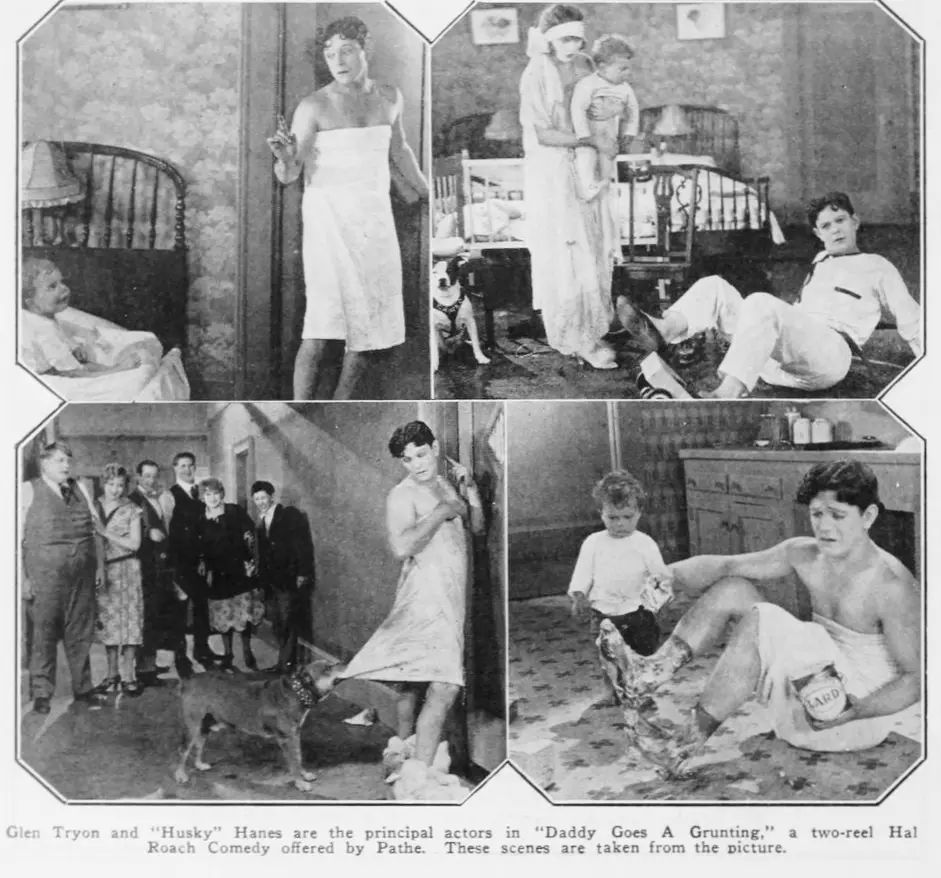
Consider the scene where he attempts to bathe the baby. Tryon’s movements are a whirlwind of clumsy gestures, his eyes wide with a mixture of confusion and terror. The moment he scalds his feet in the boiling water is a prime example of silent era overacting, yet it elicits a genuine wince, followed by a laugh at the sheer absurdity. It’s a testament to his commitment that even without dialogue, the audience understands the depth of his character's domestic ineptitude.
Kathleen Collins, while having less screen time, plays her role with a subtle, knowing smirk that subtly underpins the entire comedic setup. Her character is the architect of the husband's comeuppance, and her quiet confidence contrasts sharply with Tryon's bombast. It's not a performance of grand gestures, but one of calculated restraint, making her eventual return feel earned rather than simply inevitable. Jackie Hanes, as the baby, is, of course, a scene-stealer through sheer, unadulterated cuteness and unwitting participation in the chaos.
The direction in 'Daddy Goes a Grunting' is typical of its era: straightforward and functional, prioritizing clear storytelling through visual gags. The camera largely remains static, allowing the actors and the carefully constructed sets to convey the narrative. There's a particular wide shot of the cluttered house after the wife's departure that effectively communicates the overwhelming task now facing the husband, a silent testament to the domestic anarchy he has inherited.
Pacing, for a modern viewer, can feel agonizingly slow in places. The setup, establishing the husband’s complaining nature, takes its time. However, once the wife leaves, the film shifts gears, accelerating into a rapid-fire succession of mishaps. This ebb and flow, from deliberate character establishment to frantic slapstick, is a hallmark of early comedy. It allows the audience to fully grasp the husband's initial personality before plunging him into the crucible of comedic suffering.
The film doesn't rush its jokes; it lets them breathe, allowing the physical reactions of Tryon to land with full impact. This deliberate pacing contrasts sharply with the rapid-fire editing and quick cuts prevalent in modern comedies. It forces the viewer to engage with the visual storytelling on its own terms, a discipline many contemporary films eschew.
Cinematography in 'Daddy Goes a Grunting' is utilitarian, focusing on clarity and ensuring the physical gags are visible. The lighting is bright and even, typical of the period, designed to illuminate every detail of the action without complex shadows or artistic flourishes. This simplicity ensures that the audience's attention is squarely on the performers and their antics.
The film relies heavily on visual gags, a necessity for silent cinema. From the husband fumbling with socks to the chaotic bath scene, every comedic beat is communicated through action and reaction. The boiling water incident, for instance, uses a clever cut to show the steam, then a reaction shot of Tryon's face, followed by his frantic attempts to cool his feet. It’s an effective, if simple, sequence of shots that tells the story without a single intertitle.
While it lacks the sophisticated camera movements or intricate set designs of later eras, the film's visual language is perfectly suited to its comedic intent. It’s raw, direct, and unpretentious. One could even argue that this lack of visual distraction allows the pure, unadulterated physical comedy to shine through, a technique that modern filmmakers often forget in their pursuit of spectacle. Comparing it to the more elaborate set pieces in a film like Tillie's Punctured Romance highlights the varying approaches to visual storytelling even within the same era.
Yes, 'Daddy Goes a Grunting' is worth watching, particularly for specific audiences. It offers a valuable glimpse into the origins of domestic comedy.
It showcases the foundational elements of slapstick that would influence generations of comedians. The performances, especially Tryon's, are energetic and illustrative of silent film acting. Its historical significance alone makes it a compelling watch for film scholars.
However, be prepared for a viewing experience that requires patience. The humor is broad. The pacing is deliberate. The gender politics are undeniably dated. It's a film that demands you meet it on its own historical terms.
While some might dismiss 'Daddy Goes a Grunting' as mere historical curiosity, I contend it offers a surprisingly candid, if caricatured, look at the inherent anxieties of traditional masculinity facing domesticity. The husband's grumbling isn't just a character trait; it feels like a primitive defense mechanism against a world he perceives as demanding too much.
The film's true genius isn't its slapstick, but its almost anthropological study of weaponized incompetence, long before the term existed. The wife's 'running away' isn't an act of malice, but a shrewd, almost scientific, experiment to force a shift in her husband's perspective. It's a surprisingly sophisticated psychological experiment wrapped in a comedic package.
I'd also argue that the film, despite its dated resolution, inadvertently highlights the societal pressures placed on women in that era. The wife's only recourse to change her husband's behavior is a dramatic, disruptive act. It's a subtle, perhaps unintentional, commentary on the limited agency women often had within traditional marital structures, using comedy to mask a deeper truth. It works. But it’s flawed.
'Daddy Goes a Grunting' is more than just a relic; it's a foundational text in the comedic canon. While its humor and social commentary are firmly rooted in its time, there's an undeniable educational value and sporadic bursts of genuine, unadulterated slapstick fun to be found. It’s an interesting watch. For those willing to adjust their expectations and appreciate the film for what it is – an early, earnest attempt at domestic farce – it offers a rewarding, if occasionally challenging, viewing experience.
It won't be everyone's cup of tea, and it certainly won't elicit the same belly laughs as a modern blockbuster comedy. However, as a window into cinematic history and the enduring power of a simple, well-executed gag, 'Daddy Goes a Grunting' grunts its way into a respectable, if niche, recommendation. Just don't expect it to change your life; expect it to show you how far we've come, and how some things, like a grumpy dad, never truly change.
IMDb —
1936
Community
Log in to comment.