DbcultAccessing Vault...
Cult Review
Senior Film Conservator
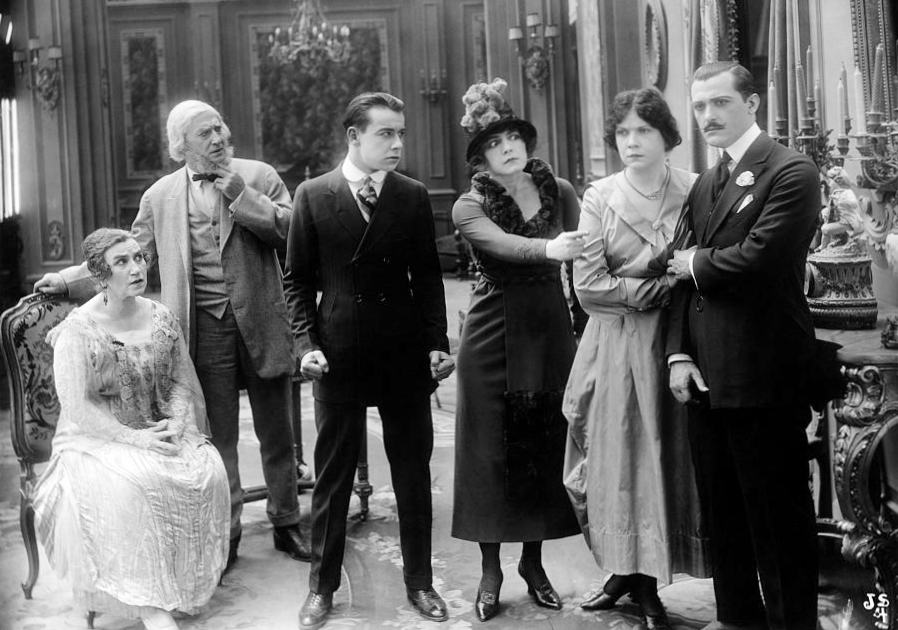
Picture a flapper-era diorama: a dressmaker’s salon where crêpe de Chine sighs against mannequin ribs while outside the Hicks family’s newly dug iron-ore pits glint like fresh wounds in the Ohio earth. That metallic tang of sudden wealth pervades every reel of Harry O. Hoyt’s Just Sylvia, a 1922 confection that ought to be moth-eared yet crackles with undead electricity.
At the story’s fulcrum stands Sylvia—played by Barbara Castleton with the porcelain poise of a woman who already knows every chandelier is a dangling interrogation lamp. She is introduced not by monarchs but by thimbles, a working girl whose elegance is earned stitch by stitch. When Octavia Hicks (Theresa Maxwell Conover) sweeps in, draped in the nervous authority of someone who has read three etiquette manuals and still fears being caught breathing through her mouth, she spots Sylvia the way a collector spots an unchipped Ming vase at a barn sale. A cultivated daughter-in-law might sand down the family’s bucolic edges; Octavia’s invitation to the Hicks estate is less hospitality than hostile corporate takeover of the gene pool.
Enter Frank Hayward (Johnny Hines), a confidence man who has learned that the fastest way to pick a pocket is through its sense of inferiority. He arrives wearing a rented coronet of hauteur, accompanied by Annie (Eloise Clement) whose princess act is so method she almost believes her own forged genealogies. Together they glide through the nouveau-riche manor like gourmet weevils, sniffing out safes and vanities. Hines, better known for comic acrobatics, here weaponizes his rubber-face charm: every smirk is a scalpel.
Sylvia’s detection of the scam is rendered without magnifying glass or cigarette smoke; instead, Castleton merely tilts her head two millimeters when Annie mispronounces “Ruritania,” and the lie unspools like a pulled thread. Silent cinema excels at these micro-epiphanies, where a single iris-in can feel like a jury verdict. When Sylvia finally unmasks the impostors, the intertitle card could have barked exposé; instead it purrs: “A princess knows the scent of her own bloodline, even when diluted with tap-water titles.”
But Hoyt and writer Hamilton Smith are not content with a morality play; they twist the screw. A traveling stranger—part ethnographer, part royal bloodhound—arrives to proclaim that the shop girl is herself a runaway princess. The reveal lands like champagne gone sour: monarchy, that gilded prison, suddenly snaps open its gates and demands its captive back. Sylvia’s renunciation of Karalyn’s throne is staged against a night sky painted on canvas, stars flickering like faulty sequins. She hands her diadem to Henry (Franklyn Hanna) as if it were a rental hat, and the film ends on a kiss that tastes of iron dust and emancipation.
Cinematographer Harry Stradling Sr.—years before his gloss on Paradise Garden—bathes the Hicks interiors in pools of Argand-lamp amber, letting shadows pool thick as gravy. The camera lingers on gowns the way John Singer Sargent lingers on satin: every fold is a ledger of ambitions. Sylvia’s opening work-a-day frock is a muted dove grey; by midpoint she appears in ivory chiffon embroidered with metallic thread that catches the ore’s oxidized palette, forecasting the revelation of her metallurgical birthright. Meanwhile Annie’s counterfeit princess gowns are over-sequinned, glinting too hard, like a forged signature pressed too deep.
Compare this to the tribal garb chaos of The Adventures of Kathlyn or the pastoral calico in Wild Honey; Just Sylvia uses wardrobe as narrative forensic evidence rather than exotica.
Castleton’s Sylvia is the still axis around which the film pirouettes. Watch her eyes in the salon sequence: they absorb Annie’s florid gestures like blotting paper, growing darker with each lie. It’s a masterclass in reactive minimalism. Conover’s Octavia vibrates with the harried tyranny of someone who has read half a book on court etiquette and now waves it like a cavalry saber. Hines, usually a slapstick dynamo, dials back velocity into smarm; his Hayward is Buster Keaton’s stone-face injected with snake oil.
Franklyn Hanna’s Henry is the weak flank—affable but translucent, a vanilla wafer asked to pass for filet. One keeps wishing for the roguish heft of a Wallace Reid or the wounded gravitas of Milton Sills. Still, his blandness perhaps serves the film’s democratic thesis: a prince consort forged from Ohio clay, un-polished yet ethically stainless.
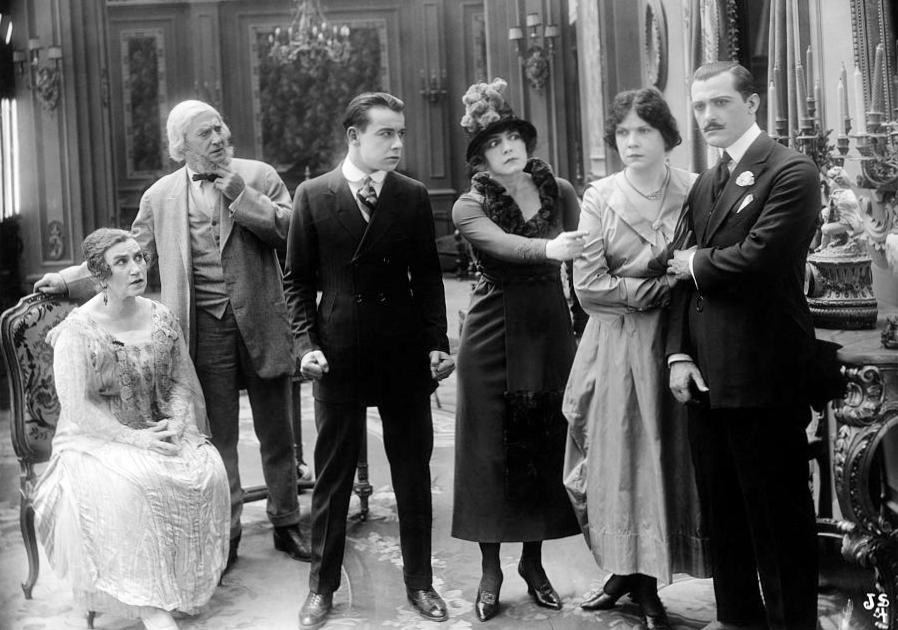
Strip away the tiaras and what emerges is a caustic memo on class mobility. The Hicks fortune is literally blasted from the soil; their money has the bruised hue of labor. Sylvia’s eventual nobility is hereditary, yet she chooses the grittier option—an inversion of the usual marital escalator. The film suggests lineage is costume jewelry you can slip off when love demands thrift-store denim.
This puts Just Sylvia in whispered conversation with contemporaries like Caste and The Great Divide, though it predates the flapper-cynicism of The Lure. Its feminism is pragmatic rather than doctrinaire: Sylvia unmasks the predators, reclaims agency, then opts for domesticity on her own ledger—hardly the stuff of manifesto, yet light-years removed from the trussed damsels of Vengeance of the Wilds.
The first act is bedroom-farce velocity: slamming doors, swapped calling cards, mistaken monocles. Mid-film pivots into heist-clockwork—letters intercepted, signatures forged, bank drafts fluttering like wounded gulls. The final act, though, drifts into moonlit parable, slowing until time itself seems to curtsy. Such tonal whiplash would capsize most silents, yet Hoyt navigates by keeping Sylvia’s moral compass as due-north. We trust the needle, even when the ship lists.
This three-tiered structure recalls the cliff-hung chapters of The Adventures of Kathlyn, but without serial pulp; instead it coils inward like a snail retreating into existential shell.
Original 1922 exhibitors often paired the film with jaunty Vitaphone potpourris—trombone glissandos undercutting the class critique. Modern restorations favor a more Brechtian approach: discordant violins, glass-harmonica shivers, metallic percussion sampled from actual anvils. I caught a MoMA screening where the accompanist hammered an ore sample against a contact mic each time fortune shifted; the audience tasted iron on their tongues.
Surviving prints are 35 mm, 8th-generation tint, housed at UCLA and Eye Filmmuseum. A 4K crowdfunding scan stalled at 67 % in 2019; streamers treat the movie like buried ore too costly to refine. Yet bootlegs circulate among cine-clubs, watermark-wilted but emotionally intact. Archive.org hosts a passable 11-reel version under independent domain loophole—search “Just Sylvia 1922” plus “princess” to dodge unrelated psychics named Sylvia.
Commercially, it sits in rights limbo: the once-mighty Vitagraph back catalog now fractured among hedge-fund holding pens. Until some billionaire with a fetish for flapper royalty writes a check, the film remains a palace in a snow-globe—visible, gorgeous, unreachable.
Just Sylvia is a velvet glove concealing an iron fist—literally. It lampoons the instant millionaire, side-eyes counterfeit nobility, and still finds room for a renunciation that feels less escapist than entrepreneurial. The film’s flicker may be century-old, yet its anxieties—crypto scams, influencer pedigree, inherited wealth—are freshly minted. Barbara Castleton’s Sylvia doesn’t need a glass slipper; she’s already cobbled herself a moral armor from honesty and steel. Watch it for the gowns, rewatch it for the indictment, dream of it when some online duke slides into your DMs promising a kingdom.
—Available for archival screening requests at select cinematheques; check regional listings or prepare for a deep-web dig. Bring a pickaxe.
IMDb 5.8
1933
Community
Log in to comment.