DbcultAccessing Vault...
6.7/10
Senior Film Conservator

A definitive 6.7/10 rating for a film that redefined the boundaries of cult cinema. Dagfin remains a cornerstone of transgressive art.
Is 'Dagfin' worth watching today? Short answer: yes, but with significant caveats that demand a specific kind of viewer. This 1926 German silent film is a fascinating, if sometimes frustrating, relic that offers a window into the narrative ambitions of its era, making it a compelling watch for cinephiles and historians, but likely a challenging one for casual audiences.
It’s a film that asks for patience, rewarding those who lean into its melodramatic heart and complex, sometimes convoluted, plot mechanics. For those with a genuine interest in the evolution of German cinema or the silent era's bold storytelling, 'Dagfin' offers a rich, if imperfect, experience. However, if you're seeking the taut pacing and streamlined narratives of modern thrillers, or if silent film conventions are generally a barrier, this might not be your entry point.
'Dagfin' plunges us into a world of romantic escapism only to quickly submerge it in a murky pool of suspicion and manipulation. The setup, featuring Lydia Boysen finding new love with Dagfin Holberg amidst the serene backdrop of a Swiss winter resort, promises a straightforward romance. But the arrival of Axel Boysen, Lydia's ex-husband, immediately poisons the well, introducing a layer of sinister intent that sets the stage for the film's central mystery.
The murder of Axel Boysen is the catalyst, propelling the narrative into a whodunit where the primary suspects are the lovers themselves. This mutual suspicion, a compelling emotional hook, quickly gives way to Dagfin's noble, if perhaps naive, act of self-sacrifice. He takes the blame, believing he is protecting Lydia, but this decision opens the door to the film's most complex and arguably most problematic character: Sabi Bey.
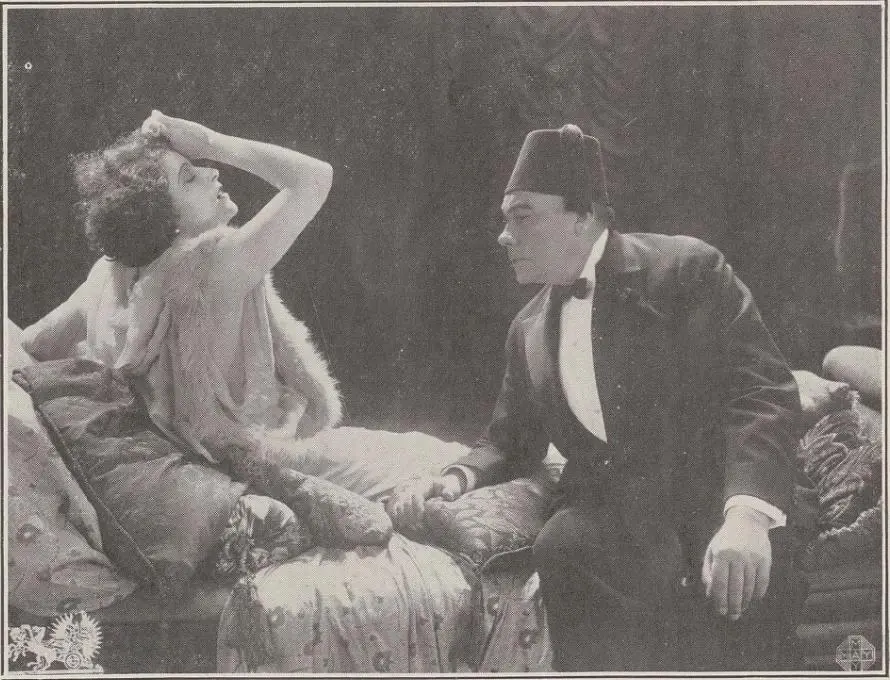
Sabi Bey, introduced earlier as a wealthy Turkish man Axel tried to set Lydia up with, emerges as a Machiavellian puppet master. His promise of aid to Dagfin, contingent on Lydia's companionship, transforms the narrative from a simple murder mystery into a high-stakes game of emotional blackmail and political maneuvering. The film's audacity in integrating a character with a backstory involving massacres and assassination attempts into what ostensibly began as a romantic thriller is remarkable, if not entirely seamless.
The pacing of 'Dagfin' is undeniably uneven. The initial romance feels somewhat rushed, a whirlwind against the snowy landscape. The murder and subsequent investigation, while central, don't always maintain a consistent tension. Instead, the film often leans into its melodramatic elements, drawing out scenes of emotional anguish and moral quandary. The shift to Sabi Bey's castle in Germany, and the unexpected proximity of Dagfin's hiding place, feels less like organic plot development and more like a convenient contrivance to keep the central lovers physically separate but emotionally tethered.
The film's ambition often outstrips its execution, yet there's a certain charm in its willingness to tackle such a sprawling, intricate tale. It's a lot. Perhaps too much. But it never shies away from its own dramatic impulses.
The final act, with Sabi Bey's desperate suicide and deathbed confession, ties up the loose ends with a speed that almost betrays the elaborate setup. While the resolution provides closure, it feels somewhat abrupt, a quick release after a prolonged build-up of tension and moral compromise. It works. But it’s flawed.
The success of any silent film hinges heavily on its actors' ability to convey emotion and narrative through gesture, expression, and physicality. 'Dagfin' benefits from a cast that largely understands this imperative, though some performances stand out more than others.
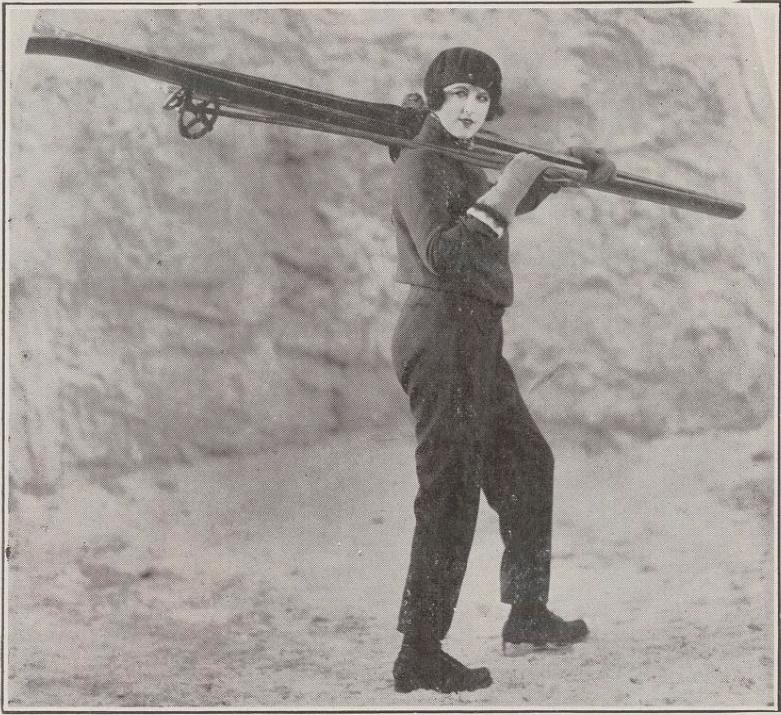
Mary Johnson as Lydia Boysen carries much of the film's emotional weight. Her portrayal of a woman caught between love, suspicion, and desperate sacrifice is earnest and often compelling. From the initial joy of new love to the profound despair of her predicament with Sabi Bey, Johnson's expressions are clear, if occasionally bordering on the overwrought – a common stylistic trait of the era. One particular scene where she silently grapples with the implications of Dagfin's confession showcases her ability to convey complex inner turmoil without a single word.
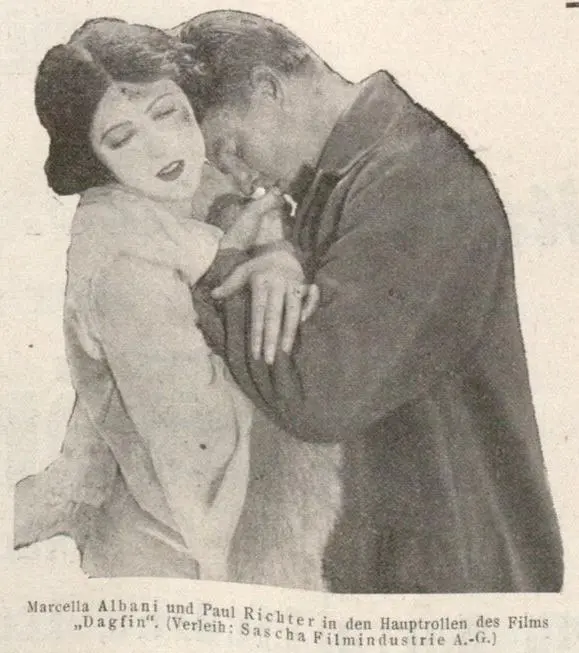
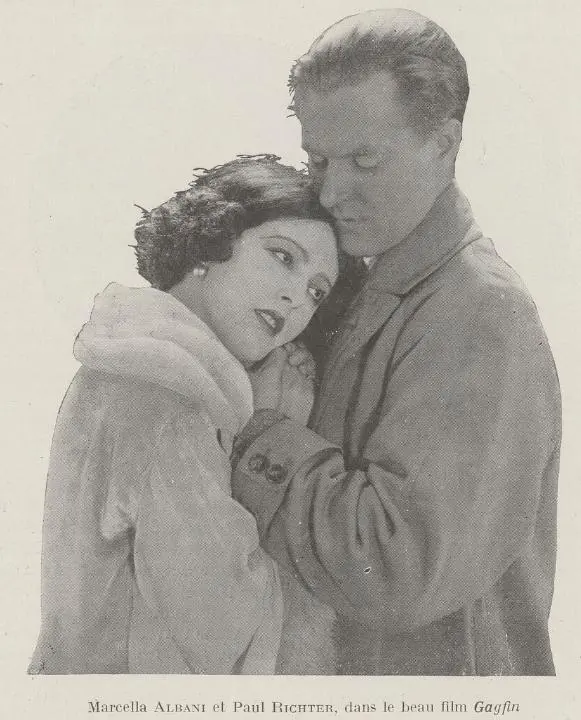
Paul Richter, as the titular Dagfin Holberg, embodies the heroic, self-sacrificing lover with a certain earnest charm. His physicality as a ski instructor translates well into moments of decisive action and emotional vulnerability. While his character is somewhat less complex than Lydia's, Richter imbues Dagfin with a steadfastness that anchors the romantic core of the story. His silent anguish when he takes the blame for Axel's death is palpable.
However, it is Ernst Deutsch as Sabi Bey who truly commands attention. Deutsch delivers a masterclass in silent film villainy, imbuing Sabi Bey with a chilling blend of sophistication, menace, and underlying vulnerability. His eyes, in particular, convey a depth of calculation and desire that is genuinely unsettling. The way he manipulates Lydia, his subtle gestures of power, and his ultimate descent into despair are all handled with remarkable nuance. He doesn't just play a villain; he crafts a character who is both repellant and tragically human. His performance elevates every scene he is in, making the character far more memorable than his narrative function might suggest.
The supporting cast, including Hedwig Wangel and Marcella Albani, provide solid contributions, though their roles are less developed. Tilly's infatuation with Dagfin, for instance, serves primarily as a minor complication rather than a fully realized subplot. Overall, the ensemble manages to keep the emotional stakes clear, even when the plot occasionally veers into the labyrinthine.
'Dagfin' benefits from competent direction and cinematography that, at times, achieve genuine artistry. Joe May, a prolific director of the era, demonstrates a strong grasp of visual storytelling, utilizing the contrasting environments to great effect. The initial scenes in the Swiss winter resort are beautifully captured, with the stark white of the snow providing a clean, almost ethereal backdrop for the burgeoning romance. The wide shots of the alpine landscape imbue the early moments with a sense of freedom and possibility.
The transition to Sabi Bey's castle in southern Germany marks a distinct shift in tone and visual style. The interiors are opulent, yet often claustrophobic, reflecting Lydia's entrapment. The use of shadow and intricate set design creates an atmosphere of intrigue and looming danger, a stark contrast to the open expanses of the Alps. This visual dichotomy is one of the film's most effective tools in conveying its shifting moods and power dynamics.
The film employs a range of camera techniques common to the era, including expressive close-ups to highlight emotional intensity and well-composed medium shots for dialogue (via intertitles) and character interaction. While it doesn't push the boundaries of cinematic innovation in the same way some contemporaries like Greed or Les Vampires did, it maintains a consistently high level of visual quality. There's a particular shot of Sabi Bey observing Lydia from a distance within his grand castle that perfectly encapsulates his predatory nature and her isolated vulnerability.
However, some of the directorial choices regarding pacing can feel a little ponderous by modern standards. Certain scenes linger perhaps too long, relying heavily on the actors' facial expressions to convey meaning without the aid of quicker cuts or dynamic camera movement. This is a common characteristic of silent cinema, but in 'Dagfin,' with its intricate plot, a tighter edit might have served the mystery aspect better.
For those who appreciate the unique challenges and rewards of silent cinema, 'Dagfin' is absolutely worth seeking out. It offers a fascinating glimpse into the narrative ambition of 1920s German film, unafraid to weave together multiple genres and complex character arcs. It's a film that demands your full attention, rewarding it with moments of compelling drama and a standout performance from Ernst Deutsch.
However, for a casual viewer accustomed to the rapid-fire editing and explicit dialogue of contemporary films, 'Dagfin' might prove a test of patience. Its melodramatic sensibilities and occasionally unwieldy plot can feel dated, and the silent film conventions, while masterful for their time, might be a hurdle. It’s not a film I would recommend as an introduction to silent cinema unless the viewer has a pre-existing interest in the period's specific brand of storytelling.
Ultimately, its value lies in its historical significance and its bold, if imperfect, storytelling. It’s a testament to the creative drive of its creators, who sought to tell grand, sweeping stories without the benefit of spoken dialogue. It's a film that earns its place in the archives, and for the right audience, it can still resonate powerfully today.
'Dagfin' is a complex, often compelling, artifact of German silent cinema. It’s a film that swings for the fences, attempting to blend a passionate romance with a thrilling murder mystery and a dash of political intrigue. While it doesn't always hit a home run, its sheer ambition is admirable, and its successes are significant enough to warrant attention.
For the dedicated cinephile, it offers a rich tapestry of period acting, striking visuals, and a narrative that, despite its flaws, keeps you engaged. Ernst Deutsch's performance alone is reason enough to seek it out. It's not a perfect film, and its pacing and plotting can be challenging, but it’s a powerful reminder of the artistic daring of the silent era.
It’s a film that asks for your patience, and largely, it earns it. Dagfin is a testament to silent film's capacity for grand storytelling, even when that story occasionally trips over its own intricate feet.
Ultimately, 'Dagfin' is a film that rewards curiosity and a willingness to engage with its particular historical and stylistic context. It's a journey into a bygone cinematic era, filled with passion, betrayal, and a surprisingly dark heart. It’s a solid watch for the discerning viewer, a valuable piece of cinematic history that still holds power, even if it feels like a product of its time.
IMDb —
1916
Community
Log in to comment.