DbcultAccessing Vault...
6.2/10
Senior Film Conservator
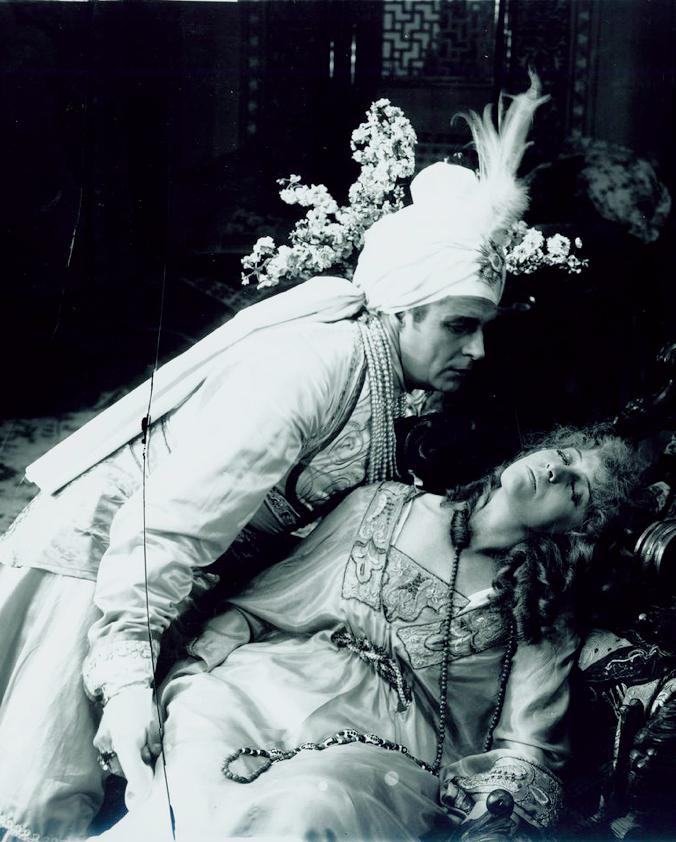
A definitive 6.2/10 rating for a film that redefined the boundaries of cult cinema. Maharadjahens yndlingshustru II remains a cornerstone of transgressive art.
In the annals of early cinematic storytelling, few narratives dared to intertwine the allure of the exotic with the subtle tremors of political intrigue quite like Maharadjahens yndlingshustru II. This silent era gem, a sequel that deepens the already complex relationship between power and passion, casts a long, fascinating shadow over its contemporaries. At its heart lies a meticulously crafted world where the Maharaja of Baghalpur reigns supreme, his dominion not merely geographical but extending to the very affections of a European woman named Gul. Her presence, far from being a simple romantic entanglement, is portrayed as a profound act of conquest, a symbolic victory that emblazons the Maharaja's influence across cultural divides. The film masterfully navigates this delicate balance, presenting Gul not just as a beloved sweetheart, but as a living testament to the Maharaja's formidable power and his capacity for grand, almost theatrical, gestures of possession. This narrative choice, so rich in its implications, immediately sets the stage for a drama that transcends mere romance, delving into the very essence of imperial might and personal desire.
The very title, Maharadjahens yndlingshustru II, immediately signals a continuation, suggesting a pre-existing saga of Gul's journey into the Maharaja's orbit. This isn't a fledgling romance; it's an established, potent bond, steeped in history and perhaps, a lingering sense of the unconventional. The Maharaja, portrayed with an authoritative gravitas, likely by an actor of Gunnar Tolnæs's caliber, is not a character to be underestimated. His 'conquest' of Gul speaks volumes about his character: a man accustomed to having his desires fulfilled, whose will shapes his environment. This isn't just about love; it's about prestige, about demonstrating a unique capability to bridge worlds, to command allegiance and affection from beyond his traditional sphere. The silent film medium, with its reliance on visual cues and grand gestures, would have amplified the Maharaja's commanding presence, making his every move, every glance, a declaration of his absolute authority. His court, therefore, becomes not just a backdrop, but a living extension of his personality – opulent, perhaps decadent, and utterly under his control. The film, through its visual storytelling, would have immersed the audience in this world of exotic splendor, making the Maharaja's power almost palpable. One might draw parallels to the powerful, often enigmatic figures found in films like The Soul Master, where a protagonist's extraordinary influence becomes a central dramatic force, dictating the fates of those around them. The Maharaja's affection for Gul is a carefully curated spectacle, a testament to his unique standing in a world that often fetishized the 'other'.
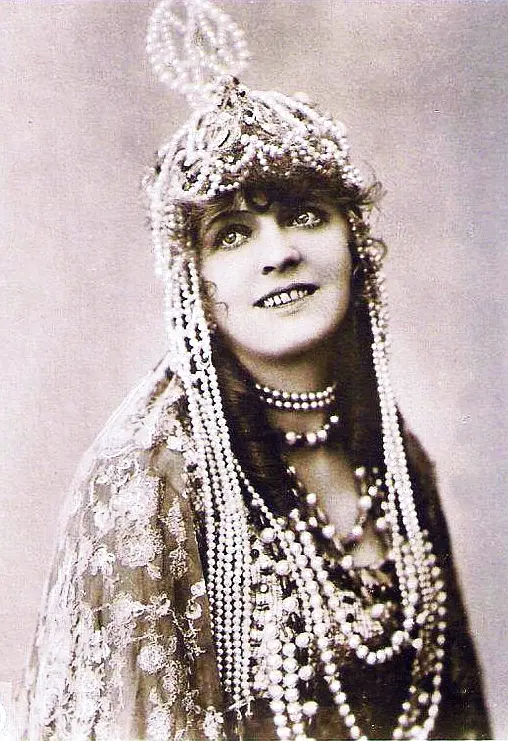
Gul, the European woman at the epicenter of this narrative, is a figure shrouded in a fascinating ambiguity. Her portrayal, likely brought to life with nuance by Johanne Fritz-Petersen, would have been critical in defining the film's thematic depth. Was she a willing participant in this grand romance, or a captive of circumstance, her 'conquest' a more literal interpretation? The silent screen, with its emphasis on facial expressions and body language, would have allowed Fritz-Petersen to convey a complex inner world – perhaps a blend of devotion, longing, melancholy, or even a subtle defiance. Her status as the Maharaja's 'sweetheart' implies a deep emotional connection, yet her European heritage positions her as an outsider, a bridge between two vastly different cultures. This inherent tension fuels much of the film's dramatic potential. Her character undoubtedly carries the burden of expectation, both from the Maharaja and from the court itself, becoming a symbol of both the Maharaja's power and the perceived exoticism of the West. Films of this era often explored the precarious positions of women in society, and Gul's situation resonates with narratives found in works like The Woman Pays or A Woman's Experience, which often depicted female characters navigating challenging social landscapes and the consequences of their choices or circumstances. Gul's narrative is thus not merely a romantic subplot; it is a commentary on cultural assimilation, agency, and the very nature of love under the gaze of imperial power. Her story is a silent testament to the complexities of identity when transplanted into a world that is both captivating and potentially constraining.
The introduction of Armine Robert, the young finance advisor, injects a potent dose of intrigue and suspense into the narrative. His 'anxiety' to know everything about the romance and Gul is far more than mere curiosity; it hints at a deeper, more calculated agenda. Robert, likely played by an actor like Axel Boesen, embodies the classic archetype of the meddling, yet seemingly indispensable, figure whose presence threatens to unravel established orders. Is he a loyal servant, genuinely concerned for the Maharaja's financial or political stability, or is he a cunning opportunist, seeking to exploit the Maharaja's affections for Gul for his own gain? His investigative impulse suggests a keen intellect, perhaps even a Machiavellian streak, that sees the romantic liaison not as a private affair, but as a potential vulnerability or leverage point within the court's power structure. The film's silent nature would have amplified the visual storytelling of Robert's scrutiny – his furtive glances, his intense expressions, his calculated movements – creating a palpable sense of impending revelation. His character serves as the catalyst for conflict, the human embodiment of the external pressures and internal conspiracies that often plague powerful figures. One can draw parallels to the intricate deceptions and probing investigations found in films like Officer 666, where mistaken identities and hidden motives drive the plot forward with relentless tension. Robert's presence transforms the romantic drama into a full-blown political thriller, where every secret held, every truth uncovered, has far-reaching consequences for the Maharaja, Gul, and the stability of Baghalpur itself. His role is not simply to observe, but to actively participate in the shaping of destiny, making him a formidable and unpredictable force.
The success of Maharadjahens yndlingshustru II hinges significantly on its mastery of silent film aesthetics. This era of cinema demanded a profound understanding of visual storytelling, where elaborate sets, expressive performances, and dramatic lighting conveyed narratives without spoken dialogue. The depiction of Baghalpur would have been a spectacle in itself – opulent palaces, richly adorned costumes, and exotic landscapes, all designed to transport the audience into a world far removed from their own. The use of intertitles, carefully crafted by writers like Marie Luise Droop, Alfred Kjerulf, and Chempakaraman Pillai, would have provided crucial narrative beats and emotional insights, guiding the viewer through the intricate plot. The performances, particularly from leads like Gunnar Tolnæs and Johanne Fritz-Petersen, would have relied on exaggerated yet nuanced facial expressions and gestures, communicating love, fear, suspicion, and longing with striking clarity. The cinematography would have played a vital role, utilizing close-ups to capture intimate emotions and wide shots to establish the grandeur of the setting and the scale of the drama. Such visual techniques were paramount in creating an immersive experience, allowing the audience to feel the weight of the Maharaja's power, the vulnerability of Gul, and the cunning of Armine Robert. The silent film's ability to transcend language barriers through universal emotions and visually compelling narratives is precisely what makes films like this enduring. It's a testament to the power of pure cinema, where every frame, every movement, every shadow contributes to the overarching story. The film's visual narrative would have been a vibrant tapestry, weaving together human emotion with the exotic allure of its setting, much like other visually driven narratives of the time such as The Primal Lure, which often capitalized on dramatic backdrops to enhance their tales of passion and adventure.
Examining Maharadjahens yndlingshustru II through a contemporary lens inevitably brings forth discussions of cultural representation and orientalism, themes prevalent in many early 20th-century European films depicting non-Western societies. The portrayal of Baghalpur as an 'exotic' locale and Gul as a 'conquered' European woman speaks to a particular colonial gaze that romanticized and, at times, stereotyped Eastern cultures. While the film likely aimed for spectacle and dramatic engagement, it also inadvertently reflects the prevailing attitudes of its time regarding power dynamics between East and West. The Maharaja, while powerful, is still framed within a narrative that emphasizes his fascination with, and acquisition of, something 'European'. This dynamic is fascinating because it offers a historical snapshot of how different cultures were perceived and depicted in popular media. The writers, Marie Luise Droop, Alfred Kjerulf, and Chempakaraman Pillai, themselves a diverse group, would have navigated these perceptions, perhaps subtly challenging or reinforcing them within the confines of the popular narrative. Chempakaraman Pillai's involvement, in particular, suggests a potential for a more nuanced perspective, perhaps an insider's touch that could temper the more overt orientalist tropes. This film, therefore, serves not only as a piece of entertainment but also as a cultural artifact, offering insights into the societal anxieties and fascinations of its creation period. It invites us to consider how narratives shape perceptions and how the 'other' is brought to life on screen. The film's ability to provoke such thought, even decades later, underscores its lasting cultural significance beyond its immediate dramatic impact. It's a reminder that even seemingly straightforward tales of romance and intrigue are often deeply embedded in the cultural fabric of their origins, offering a rich ground for critical exploration.
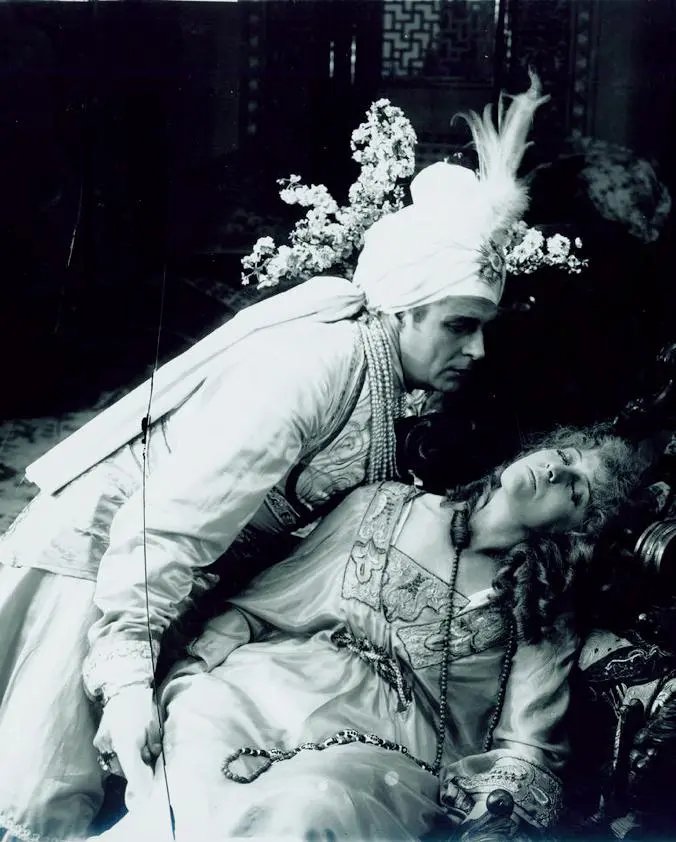
The cast of Maharadjahens yndlingshustru II, featuring talents such as Gunnar Tolnæs, Johanne Fritz-Petersen, Axel Boesen, Frederik Jacobsen, Lilly Jacobson, Aage Hertel, Carl Worm, and Carl Lauritzen, would have been instrumental in bringing this intricate story to life without the aid of spoken dialogue. Gunnar Tolnæs, a prominent figure of the silent screen, would have imbued the Maharaja with a regal bearing and perhaps a hint of underlying vulnerability, making his possessive affection for Gul both formidable and tragically human. His commanding presence would have anchored the film, projecting authority and passion through every gesture. Johanne Fritz-Petersen, as Gul, would have faced the challenge of conveying a complex emotional landscape – love, longing, isolation, and perhaps a quiet strength – primarily through her eyes and subtle body movements. Her ability to project an inner world, despite the external spectacle, would have been key to making Gul more than just a symbol. Axel Boesen, as Armine Robert, would have excelled in portraying the calculating finance advisor, using expressions of feigned innocence or veiled ambition to drive the film's suspense. The supporting cast, including Frederik Jacobsen and Lilly Jacobson, would have contributed to the vibrant tapestry of the court, each character adding a layer of authenticity and intrigue to the Maharaja’s world. Their collective efforts, a symphony of expressions and movements, would have elevated the narrative beyond a simple plot, transforming it into a compelling human drama. The ability of these actors to communicate profound emotions and intricate motivations through such a restrictive medium is a testament to their skill and the enduring power of silent cinema. Their performances, even without audible dialogue, would have resonated deeply, creating characters that felt real and stakes that felt genuinely high. This collaborative artistic endeavor ensures that the emotional core of the film remains vibrant, allowing the audience to connect with the characters on a visceral level, despite the passage of time and the evolution of cinematic language. The success of the film's dramatic tension and emotional depth rests squarely on their shoulders, a silent chorus of compelling human experience.
The screenplay, a collaborative effort by Marie Luise Droop, Alfred Kjerulf, and Chempakaraman Pillai, is a testament to the intricate narrative construction required for silent films. Each writer likely brought a unique perspective to the project. Marie Luise Droop's involvement suggests a potential for strong character development and emotional depth, given her prolific career in early cinema. Alfred Kjerulf's contribution might have focused on structuring the dramatic tension and pacing, ensuring the plot unfolded with compelling momentum. Chempakaraman Pillai's presence is particularly intriguing; as an Indian nationalist and intellectual, his insights could have lent a layer of authenticity or, conversely, a critical subtext to the portrayal of the Maharaja's court and the European presence within it. This blend of perspectives is crucial for a story that navigates cultural divides and power dynamics. Their combined talents would have been responsible for crafting not just the plot points, but also the emotional arcs, the character motivations, and the underlying themes that give the film its enduring resonance. The challenge in silent film writing is to convey intricate details and psychological nuances through visual cues and concise intertitles, a task that demands precision and imaginative storytelling. The writers would have had to envision the film's aesthetic, guiding the director and actors in how to visually communicate the narrative's complexities. This collaborative synergy between script and screen is what ultimately elevates a silent film from a series of moving images to a profound cinematic experience. Their work ensured that every twist, every turn, and every unspoken emotion was clearly communicated, drawing the audience deeper into the Maharaja's world and the precarious position of Gul. The careful construction of the narrative, with its blend of romance, intrigue, and cultural commentary, is a hallmark of their collective vision, making Maharadjahens yndlingshustru II a richly layered work that rewards close examination.
Ultimately, Maharadjahens yndlingshustru II stands as a fascinating artifact of its era, a film that deftly blends exotic romance with political intrigue. It explores the intoxicating allure of power, the complexities of cross-cultural relationships, and the subtle dangers of unchecked curiosity. The film's enduring appeal lies in its ability to tell a story that is both specific to its time and universally resonant in its themes. The Maharaja's possessive love, Gul's enigmatic position, and Armine Robert's probing investigations create a triangular dynamic that keeps the audience captivated. It's a testament to the power of silent cinema to transcend the absence of spoken dialogue and communicate profound human experiences through visual artistry and compelling performances. The narrative, while seemingly focused on a singular romance, expands to touch upon broader issues of sovereignty, cultural interaction, and personal agency. It's a film that demands engagement, inviting viewers to interpret the unspoken, to delve into the motivations hidden beneath the surface. For those interested in the rich history of cinema, particularly the silent era, this film offers a unique window into a world of grand spectacle, intricate plotting, and deeply felt emotions. Its legacy is not just in its historical context but in its ability to continue sparking conversation about the nature of power, love, and the enduring human desire for knowledge, even when that knowledge threatens to dismantle carefully constructed realities. The film remains a captivating exploration of human nature, demonstrating how silent narratives can speak volumes about the intricate dance between personal desires and geopolitical forces, cementing its place as a significant contribution to early cinematic art.
IMDb —
1932
Community
Log in to comment.