DbcultAccessing Vault...
Cult Review
Senior Film Conservator
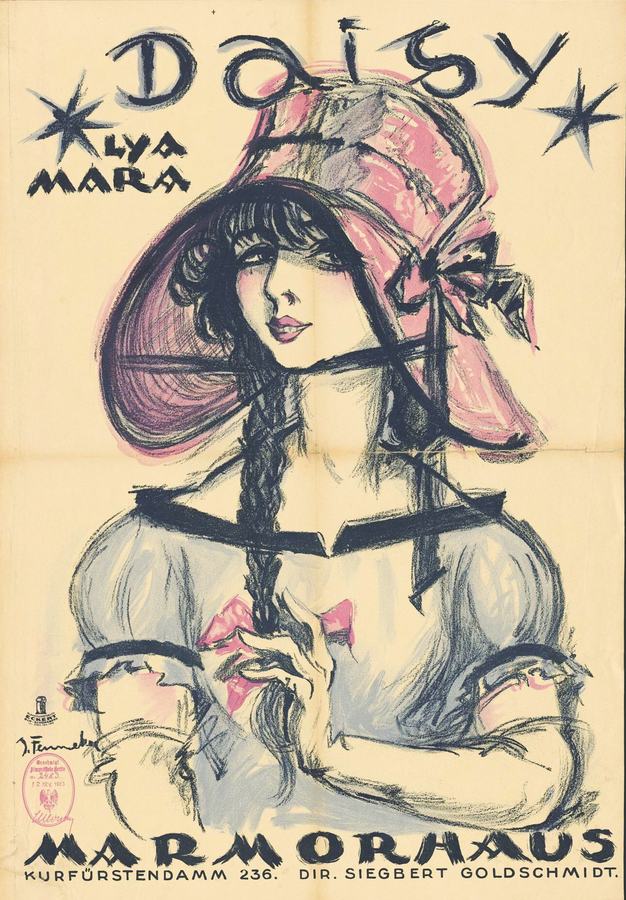
Daisy. Das Abenteuer einer Lady emerges as a forgotten jewel of silent cinema, its narrative a labyrinthine dance between societal expectations and individual yearning. Lya Mara, in her most indelible role, embodies the paradox of a woman constrained by her station yet unshackled by her spirit. The film’s opening sequence—a close-up of Daisy’s gloved hand releasing a caged bird—sets the tone for a story where freedom is both a metaphor and a literal pursuit. This is not merely an adventure; it is an odyssey of self-realization, rendered in the stark, poetic language of early 20th-century film.
The screenplay, by Fanny Carlsen and Harry Etting, avoids the didacticism of many contemporaneous works. Instead, it allows its themes to resonate through subtext and visual allegory. Daisy’s journey across treacherous landscapes—literal and figurative—mirrors her psychological evolution. A standout sequence sees her navigating a sunken cathedral, its crumbling arches a testament to forgotten grandeur. The parallel between architectural decay and societal stagnation is subtle yet profound, a commentary on the impermanence of power structures. This layer of meaning elevates the film beyond mere escapism, situating it within the broader discourse of modernist cinema.
Alphons Fryland’s portrayal of the conflicted nobleman opposite Daisy is a masterclass in restrained emotion. His character’s internal struggle—between duty to family and love for Daisy—is conveyed through micro-expressions that crackle with subtext. A pivotal scene in a storm-lashed carriage, where the two share a charged silence as thunder rumbles, exemplifies the film’s reliance on nonverbal storytelling. The use of negative space—Daisy’s silhouette against a moonlit window—becomes a visual motif for her isolation in a world that seeks to define her.
The film’s technical achievements are equally noteworthy. Hans Schüren’s cinematography transforms mundane settings into epic tableaux; a market square becomes a cacophony of color and movement, while a desolate moor takes on mythic proportions. The editing, though occasionally abrupt by modern standards, enhances the sense of urgency in Daisy’s plight. One sequence, a chase through a labyrinth of mirrors, uses double exposures to suggest the multiplicity of identity—a concept far ahead of its time. These visuals, coupled with an evocative score that blends string quartets with ambient natural sounds, create an immersive experience that lingers long after the credits roll.
Comparisons to The Dazzling Miss Davison are inevitable, given both films’ focus on female protagonists defying societal norms. However, Daisy diverges in its quieter, more introspective tone. While The Dazzling Miss Davison leans into operatic extravagance, Daisy opts for understated elegance. Similarly, its thematic resonance with Die Frau ohne Seele is unmistakable—both explore the tension between autonomy and entrapment—but Daisy’s narrative is more grounded in realism, its horrors born of human failings rather than supernatural forces.
The supporting cast, particularly Adolphe Engers as the duplicitous aristocrat, adds depth to the film’s moral complexity. His manipulative charm is offset by a sinister edge, making his eventual downfall both satisfying and tragic. The chemistry between Engers and Lya Mara crackles with unspoken history, their interactions laced with a tension that feels both performative and authentic. This dynamic elevates the film from a straightforward adventure to a nuanced study of power and vulnerability.
One cannot overlook the film’s pacing, which, while deliberate, may test the patience of modern viewers accustomed to brisk narratives. Yet this measured tempo serves the story’s thematic concerns, allowing moments of quiet introspection that contrast with the film’s climactic bursts of action. A subplot involving a coded letter and a clandestine meeting in a library—shot in stark close-ups—highlights the film’s affinity for intellectual intrigue. These elements, though secondary to Daisy’s arc, enrich the narrative tapestry.
The film’s ending, a bittersweet resolution where Daisy chooses exile over compromise, is both a triumph and a tragedy. It rejects the conventional happy endings of the era, instead offering a poignant meditation on the cost of authenticity. The final shot—a close-up of Daisy’s eyes, reflecting the horizon—invites interpretation, leaving the audience to ponder whether her journey is truly over or merely a prelude to another adventure.
In the pantheon of silent films, Daisy. Das Abenteuer einer Lady holds a unique place. Its synthesis of visual poetry, psychological depth, and narrative ambition makes it a worthy companion to The Flight of the Duchess, though it distinguishes itself through a more intimate scale. The film’s legacy lies not in its novelty but in its timelessness—a testament to the enduring power of stories about women reclaiming their agency. For contemporary audiences, it is a reminder that the struggle for self-determination is as urgent now as it was a century ago.
Ultimately, Daisy. Das Abenteuer einer Lady is more than a relic of its era; it is a film that transcends its time. Its themes of individuality, resilience, and the quest for meaning resonate with modern viewers, while its craftsmanship invites repeated viewings. For cinephiles and casual watchers alike, this film is an invitation to explore the shadows and light that define the human experience.
IMDb 4.8
1935
Community
Log in to comment.