DbcultAccessing Vault...
Cult Review
Senior Film Conservator
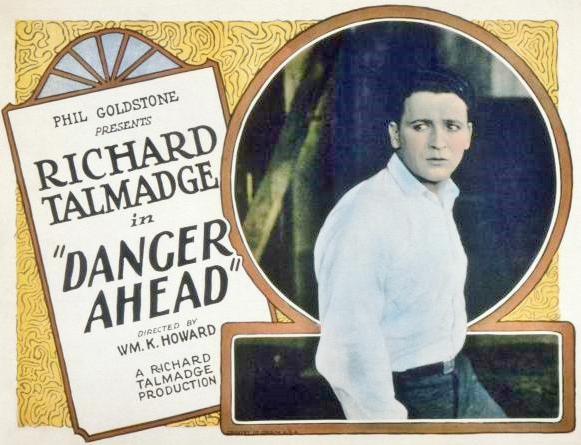
The opening sequence of Danger Ahead thrusts the audience into a chiaroscuro of violence and confusion. Bruce Randall, portrayed with kinetic vigor by Richard Talmadge, is violently ejected from his own threshold by Mortimer, a would‑be thief whose motives are as shallow as the puddles that collect on the manor’s stone steps. The ensuing scuffle leaves Randall bloodied, his consciousness slipping like sand through a clenched fist. The police, quick to draw conclusions, declare him dead, and the somber procession of his burial proceeds under a pall of misapprehension. This early misdirection establishes a thematic preoccupation with the fragility of identity—a motif that reverberates throughout the film’s narrative architecture.
The amnesiac wanderer trope, though not novel, receives a fresh infusion of kinetic energy in this production. Talmadge’s physicality compensates for the character’s mental void; his gait, a blend of staggered uncertainty and latent determination, mirrors the internal disarray of a man untethered from his past. The cinematography, employing low‑key lighting and stark shadows, accentuates his disorientation, casting his silhouette against the night‑black backdrop like a specter seeking its own reflection. This visual metaphor is amplified when the two duplicitous lawyers—sleek, serpentine figures—first encounter him, their eyes glinting with predatory intent.
Fred R. Stanton and Helene Rosson embody the archetype of the unscrupulous legal duo, their polished veneer concealing a vortex of avarice. Their scheme—to employ the amnesiac as a stand‑in to infiltrate the Randall estate and abscond with the fabled pearls—unfolds with a calculated elegance reminiscent of the machinations in Bringing Home Father. Their dialogue, laced with double‑edged humor, underscores a cynical worldview where law becomes a weapon rather than a shield. The lawyers’ manipulation of identity raises unsettling questions about the malleability of self when confronted with external greed.
Lois Scott delivers a performance that is both tender and steely, embodying a widow whose grief is palpable yet whose resolve remains unbroken. Her interactions with the impostor are suffused with a bittersweet yearning; each glance, each hesitant touch, is a desperate attempt to resurrect a love presumed lost. The chemistry between Scott and Talmadge oscillates between tentative familiarity and wary suspicion, creating a tension that propels the narrative forward. The director’s decision to linger on her solitary moments—her silhouette framed against the amber glow of a lone candle—imbues the film with an emotional gravitas that transcends its silent format.
The film’s visual palette is a study in chromatic symbolism. Dark orange (#C2410C) permeates the interior scenes of the Randall mansion, casting a warm yet ominous hue over the opulent furnishings, suggesting both wealth and the lurking danger of hidden motives. Yellow (#EAB308) punctuates moments of revelation—most notably when the pearls catch the light, their brilliance a visual metaphor for truth breaking through deception. Sea blue (#0E7490) dominates the exterior night shots, evoking a sense of cold isolation that mirrors Bruce’s internal exile. This triadic color scheme, deftly woven into the mise‑en‑scene, enhances the emotional resonance of each tableau.
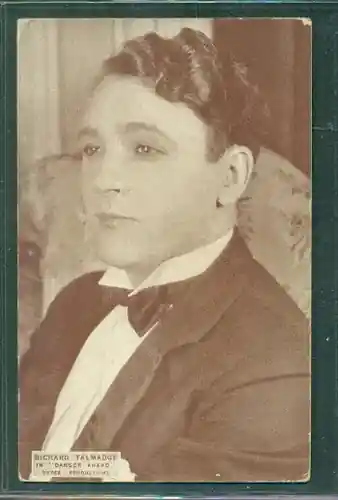
As the narrative crescendos, Bruce’s fragmented memories coalesce like shards of a shattered mirror. The moment of recognition—triggered by the faint scent of Mrs. Randall’s favorite lavender tea—serves as an exquisite narrative pivot. The ensuing confrontation with the lawyers is choreographed with a balletic brutality; punches are exchanged amidst the glittering pearls, each strike reverberating with the weight of reclaimed identity. Talmadge’s athleticism shines here, his physical prowess translating into a visceral representation of the hero’s triumph over both internal and external adversaries.
When juxtaposed with contemporaneous works such as The Enchanted City and Trouble (1922), Danger Ahead distinguishes itself through its deft interweaving of amnesia, deception, and redemption. While many silent dramas of the early 1920s relied heavily on melodramatic excess, this film balances spectacle with psychological nuance, offering a layered exploration of how memory shapes moral agency.
Keene Thompson’s screenplay provides a scaffold of intrigue, yet it is the director’s visual storytelling that elevates the material. The use of long takes—particularly the lingering shot of the mansion’s grand staircase—creates an atmosphere of looming dread. Moreover, the strategic placement of intertitles, rendered in a crisp, serif typeface, offers just enough exposition without disrupting the film’s kinetic rhythm. The supporting cast, including J.P. Lockney as the beleaguered butler and David Kirby as the bumbling constable, inject moments of levity that prevent the narrative from descending into unrelenting darkness.
At its core, Danger Ahead interrogates the fluidity of selfhood. Bruce’s journey from oblivion to self‑recognition underscores a philosophical premise: that identity is not solely a product of external acknowledgment but also an internal reclamation of memory. The film suggests that redemption is attainable when one confronts the shadows of the past, a notion that resonates with modern audiences attuned to narratives of personal reconstruction.
Though largely eclipsed by more celebrated silent epics, Danger Ahead endures as a testament to the era’s capacity for narrative ingenuity. Its influence can be traced in later noir classics where protagonists grapple with fragmented recollections—an echo of Bruce’s plight. For cinephiles seeking a glimpse into the evolution of thriller conventions, this film offers a rich tapestry of visual flair, thematic depth, and performative vigor.
In summation, Danger Ahead is a compelling amalgam of suspense, emotive performance, and stylistic bravura. The interplay of dark orange opulence, yellow illumination of truth, and sea‑blue nocturnal melancholy creates a visual symphony that underscores the narrative’s emotional stakes. Richard Talmadge’s embodiment of a man stripped of memory yet driven by an innate sense of justice, coupled with Lois Scott’s poignant portrayal of a grieving spouse, renders the film a resonant study of love’s resilience against deception. For scholars and enthusiasts alike, this work warrants revisitation, not merely as a relic of silent cinema but as a vibrant exploration of identity’s reclamation amidst peril.
IMDb —
1919
Community
Log in to comment.