Summary
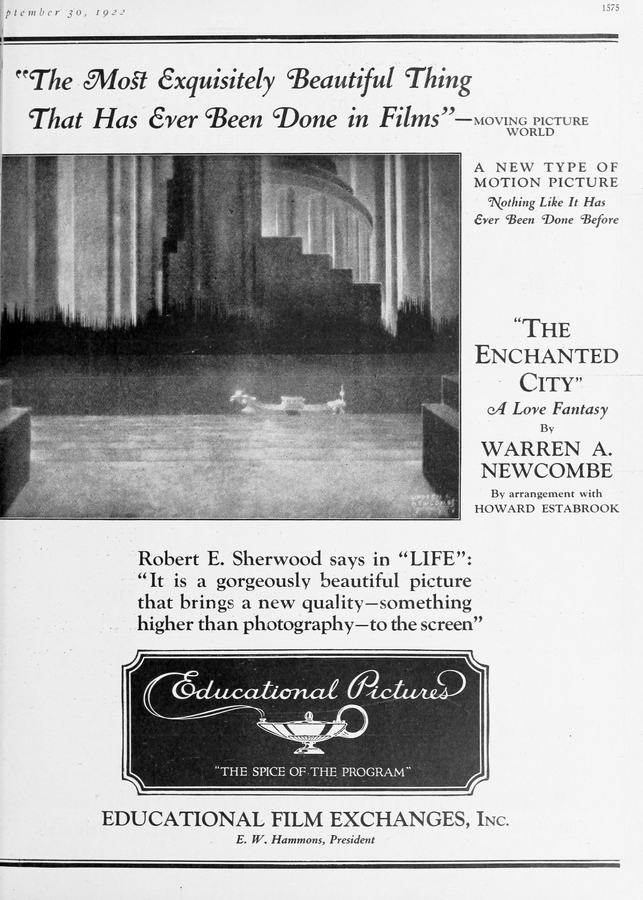
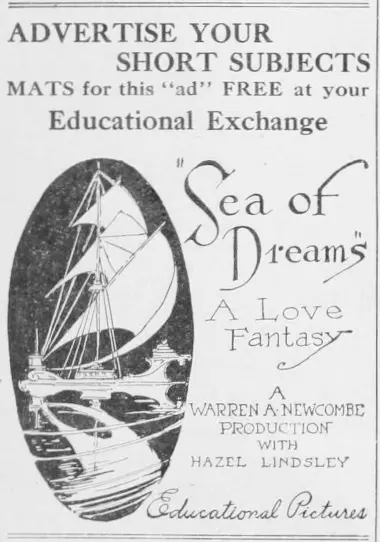
Amid the flickering chiaroscuro of an unnamed metropolis that seems to inhale sepia and exhale mercury, a lone lens-wanderer—part flâneur, part ghost—threads together half-remembered boulevards and sodium-lit arcades through a hand-cranked camera. Each shutter snap births a tableau vivant: a mannequin’s porcelain forearm dissolving into wet asphalt, a top-hated commuter frozen mid-stride beside a tramline that loops like Möbius ribbon, a child’s paper boat set ablaze inside a public fountain whose waters run uphill in reverse time. The city itself performs, pirouetting between seasons within a single montage—cherry petals storming winter gaslights, August sweat turning to January rime on shop-window typography. Warren Newcombe, the sole credited visage, appears refracted: now as silhouette, now as cracked mirror, now as silhouette again, his face erased by superimposed trolley cables that sketch new cartographies across his absent grin. There is no spoken syllable; instead the soundtrack is a metronomic heartbeat of projector clatter, punctuated by the wet pop of photographic flashbulbs. Narrative propulsion arrives as visual syncopation: images rhyme, clash, resurrect. A cathedral nave floods with milk, the liquid draining to reveal the same space converted into a subterranean ballroom where dancers wear masks of urban maps. A cigarette burn on frame four becomes the sunrise that illuminates frame four-hundred. Lovers kiss in negative exposure, their teeth glowing black, their pupils halos; the kiss ends with a cut to a demolition crew who raze the very wall on which their shadow still lingers. The film’s terminus is neither closure nor epiphany but a vertiginous zoom into a glass negative of the night sky: every star is a punctured pinhole through which the city’s next day leaks in, suggesting the loop begins anew the instant it ends.
An artistic free-form exercise in storytelling using stylized photographic images juxtaposed in rhythmic variation.
Review Excerpt
"
Picture a city that refuses to sit still for its own portrait—one that wriggles free of every photographic plate, leaving only after-images scorched onto your corneas. The Enchanted City is that rare cinematic ouroboros: a film whose tail is forever disappearing into its mouth, a Möbius strip spun from silver halide and urban longing. Warren Newcombe, credited onscreen simply as "The Witness," never speaks; he doesn’t need to. His body is the sprocket hole through which the metropolis projects ..."