DbcultAccessing Vault...
Cult Review
Senior Film Conservator
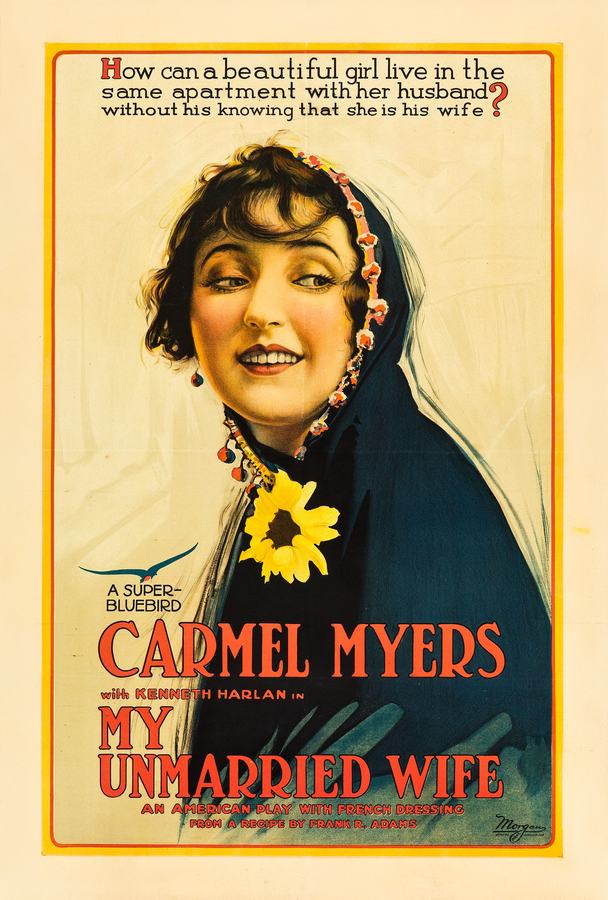
In the burgeoning landscape of early 20th-century cinema, few narratives managed to balance the scales of melodrama and psychological depth as effectively as My Unmarried Wife. Directed by George Siegmann and penned by the formidable duo of Doris Schroeder and Frank R. Adams, this 1918 Bluebird Photoplay serves as a fascinating artifact of an era where the visual medium was learning to articulate the invisible nuances of the human heart. The film operates on a premise that is both archaic and timeless: the notion that we are often blindest when our eyes are wide open.
Kenneth Harlan portrays Phillip Smith with a visceral vulnerability that avoids the histrionic traps many silent actors fell into during the late 1910s. When we first encounter Smith, he is the quintessential struggling artist—an impoverished novelist whose primary currency is his imagination. The explosion that robs him of his sight is not merely a plot device for physical disability; it is a metaphorical stripping of his identity. Without his eyes, he cannot write; without his writing, he ceases to exist in his own mind. This existential crisis provides the fertile soil from which the film’s complex romantic web grows.
Carmel Myers, an actress of immense range who would later grace classics like Madame Butterfly, brings a nuanced duality to the role of Mary Cunningham. Mary is the quintessential 'Bluebird' heroine—virtuous yet possessed of a daring agency. Her decision to lie to Phillip about a fictitious inheritance to fund his surgery is a fascinating ethical quagmire. Is love built on a foundation of deception ever truly pure? The film doesn't shy away from this question, though it wraps it in the comforting shawl of 1918 romanticism. Mary’s sacrifice is twofold: she gives him his sight, and she gives him his freedom, agreeing to a divorce whenever he desires. It is a transactional marriage that lacks the carnal or social benefits usually associated with the institution, making it a 'marriage of the mind' long before it becomes a marriage of the flesh.
The separation following the surgery allows the film to transition into its second act, where the irony of Phillip’s situation becomes palpable. He becomes a famous writer—a man who observes the world for a living—yet he remains utterly ignorant of the woman who saved him. This thematic thread of 'unseeing' is a common trope in silent cinema, often explored in works like Trilby, where the external appearance and internal reality are constantly at odds. However, My Unmarried Wife handles it with a lighter, more domestic touch.
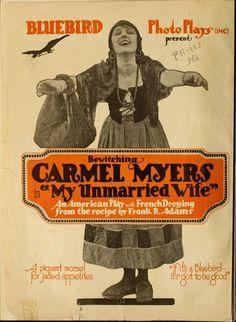
The film takes a daring turn when Mary decides to win Phillip back by disguising herself as 'Molly,' an Italian domestic worker. This plot point is where modern audiences might feel a slight friction, as the 'ethnic disguise' was a frequent, if problematic, trope of the era. Yet, within the context of the story, Myers uses the persona of Molly to bypass Phillip’s intellectual defenses. As the sophisticated Mrs. Smith, she was a ghost; as the vivacious, earthbound Molly, she becomes an indispensable presence in his home. This masquerade allows Mary to observe her husband in his 'natural habitat,' creating a dynamic reminiscent of the playful deceptions found in A Million for Mary.
The cinematography, though limited by the technology of 1918, makes excellent use of light and shadow to distinguish between Phillip’s period of darkness and his return to the world of the living. The domestic spaces in the second half of the film are framed with an intimacy that underscores the growing bond between the 'master' and the 'maid.' It is a testament to the direction that the audience remains invested in this ruse, cheering for Mary to reclaim a heart that, by rights, should have been hers from the start.
Comparing My Unmarried Wife to other contemporary works like My Little Boy or When Baby Forgot, one notices a distinct emphasis on the restorative power of the domestic sphere. While films like The Good Bad-Man dealt with the rugged morality of the West, this film focuses on the interiority of the urban professional. Phillip Smith’s journey is one of ego-death and rebirth. His initial desire to end his life when he loses his sight reflects a hyper-masculine obsession with utility; he believes that if he cannot produce, he has no value. Mary’s intervention reframes his value through the lens of being loved, rather than being useful.
The writing by Doris Schroeder is particularly sharp. Schroeder was a prolific screenwriter who understood the pacing required for silent features. She avoids the narrative stagnation that often plagued early features, ensuring that the transition from the bleak hospital room to the opulent home of the famous author feels earned. The dialogue intertitles are used sparingly but effectively, allowing the visual performances of Harlan and Myers to carry the emotional weight. This is a far cry from the more static presentations seen in The Commanding Officer, showing a clear evolution in cinematic storytelling.
The climax of the film, where Molly reveals herself as Phillip’s wife, is a masterclass in silent film catharsis. The shock on Harlan’s face is not just the surprise of the reveal, but the sudden realization of his own superficiality. He fell in love with a 'maid' while ignoring the 'wife' who had sacrificed everything for him. This irony is the film’s strongest point. It suggests that Phillip’s physical blindness was merely a precursor to his spiritual blindness. By the time the credits roll, the audience is left with the impression that Mary is the true visionary of the pair.
In the broader context of 1918 cinema, a year that gave us diverse works like With Hoops of Steel and the gritty realism of The Toilers, My Unmarried Wife stands out for its psychological intimacy. It doesn't rely on grand spectacles or sweeping vistas. Instead, it finds its drama in the flicker of a candle, the touch of a hand, and the elaborate costumes of a woman trying to find her way back into her husband’s life. It shares a certain stylistic DNA with Little Lady Eileen in its portrayal of feminine ingenuity and the complexities of social status.
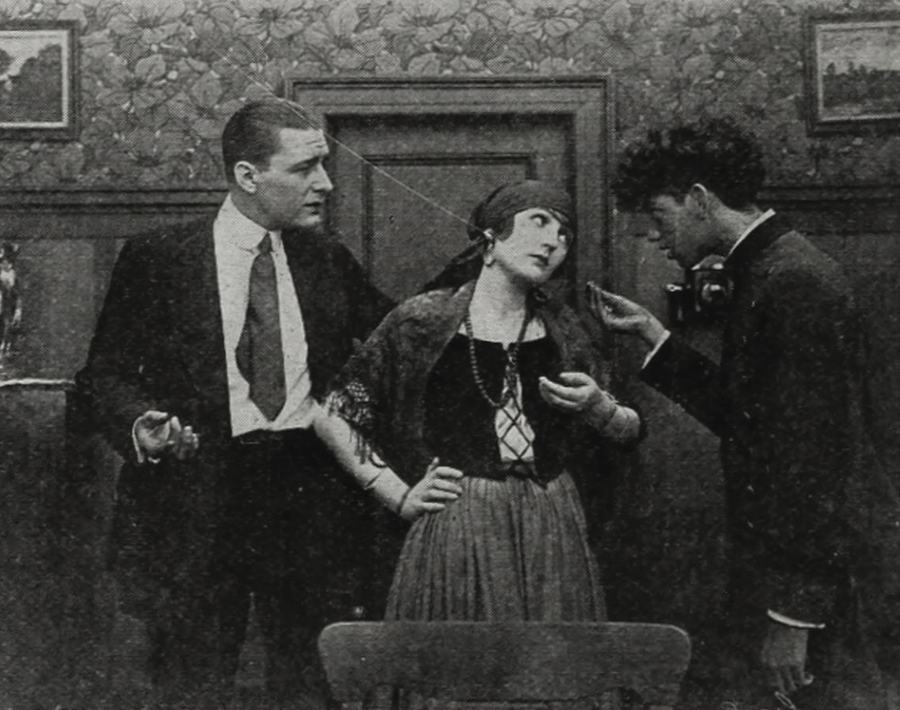
While My Unmarried Wife may not be as frequently discussed as the epics of Griffith or the comedies of Chaplin, its contribution to the romantic drama genre is undeniable. It showcases Carmel Myers at the height of her early powers, proving she was far more than just a beautiful face in the background of a D.W. Griffith set. Her ability to play two distinct versions of the same woman—one a stoic, heartbroken nurse and the other a lively, flirtatious domestic—is a feat that many modern actors would struggle to replicate with such sincerity.
The film also serves as a reminder of the fragility of the silent film era. Like The Marconi Operator or the obscure U kamina, these stories often risk being lost to the sands of time. Yet, the themes of My Unmarried Wife remain strikingly relevant. In an age of digital avatars and curated identities, the story of a woman who must hide her true self to be truly seen by the man she loves resonates with a peculiar, haunting frequency. It is a film that demands to be viewed not just with the eyes, but with the empathy of one who has also known the darkness of being misunderstood.
For those exploring the depths of early 20th-century film history, this title is an essential stop. It lacks the cynicism of later noir but possesses a narrative complexity that elevates it above the standard 'weepies' of its day. Whether you are a fan of the technical evolution seen in The Outlaw's Revenge or the cultural curiosities like The Hayseeds' Melbourne Cup, there is something profoundly human in My Unmarried Wife that transcends its 1918 origins. It is a testament to the idea that love is the ultimate restorer of sight, and that sometimes, we must lose everything we know to finally see everything we have.
Critic's Rating: 8.5/10
A sophisticated, emotionally resonant drama that utilizes the trope of blindness to explore the deeper intricacies of romantic identity. Carmel Myers is a revelation, and the film’s pacing remains surprisingly modern for a century-old production.
IMDb 5.8
1922
Community
Log in to comment.