DbcultAccessing Vault...
Cult Review
Senior Film Conservator
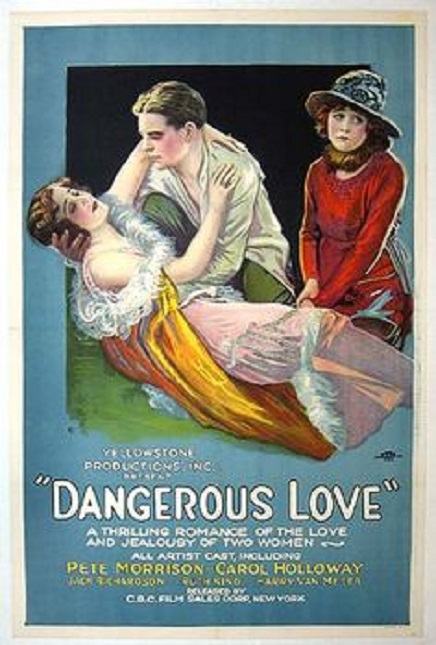
The first time you see Ben Warman—hat tilted like a dare against the sun—you know the town of Dry Fork hasn’t decided whether to adopt him or bury him.
Pete Morrison plays him with that elastic, easy-slung gait of a man who trusts the ground only after it’s been cleared of tripwires. His grin arrives half a second before the rest of his face, a gambler’s tell that life itself is the wager. Yet beneath the swagger lurks the feral watchfulness of a stray that’s been booted too often; every handshake is half an apology, every silence half a threat. Morrison—an actor whose career never quite crested the tidal wave that carried Tom Mix or Hart—nevertheless distills the Western antihero decades before the term was minted: part coyote, part choirboy, wholly combustible.
Enter the schoolhouse, bleached boards quivering with chalk ghosts, and there is Zelma Edwards as Ruth Clarke, spine as straight as the ruler rapping knuckles. She lectures on long division while her eyes perform a quieter arithmetic: can this scapegrace be subtracted from sin, added to salvation? Edwards, usually relegated to thankless ingenue roles in programmers like Live Sparks, here gifts her character the brittle certainty of a woman who has read enough dime novels to fear her own plot line. When she extracts Ben’s promise—no cards, no fisticuffs—she might as well be asking the desert to abstain from dust.
The lovers’ Eden lasts exactly eleven reel-minutes, a blink even by 1920 standards. Cue the Eastern intruders: Ruth King swanning about in Parisian lace, eyes sharp as hatpins, and her brother—a milquetoast aesthete who swoons over the schoolmarm’s “barbaric sincerity.” Their machinations feel like Machiavelli translated into Morse code; a forged note here, a mis-timed witness there, and suddenly Ben’s public brawls are recast as drunken orgies. The film’s title card reads: “Virtue, once whispered against, becomes a racetrack for every mongrel lie.” One wonders if Charles E. Winter, co-scenarist and future Wyoming congressman, cribbed that from his later campaign speeches.
What follows is a narrative slingshot: the teacher boards the eastbound train, veil fluttering like a surrender flag; Ben, left clutching a deed to a played-out silver vein, becomes a piñata for every vigilante impulse in town. Director Charles Miller stages the parting in a single, unadorned long shot: two figures on a platform, the steam between them an ever-thickening cataract of regret. No intertitle intrudes. The silence is merciless.
Now the film pivots from romance to caper. Spottiswoode Aitken’s saloon proprietor—a man whose moustache seems to have been sketched on with coal dust and malice—enlists Carol Holloway’s adventuress, Lola Vale, a vamp sporting a beauty mark sharp enough to perforate virtue at ten paces. Together they plot to salt Ben’s claim with nuggets, then arrest him for fraud. It’s a Rube Goldberg grift, but the mechanics matter less than the moral vertigo: the town that once tolerated Ben’s sins now howls for crucifixion because sin has been dressed up as enterprise.
Meanwhile, in Boston, Ruth Clarke sits in practice rooms rank with linseed and yearning, fingering scales that refuse to become sonatas. Edwards lets the camera linger on her profile as snow cakes the windowpane; without dialogue, she convinces us that music is merely the anesthetic while homesickness does the surgery. When she deciphers a letter (delivered by a contrite baritone whose infatuation died faster than his bank account) revealing the conspiracy, she boards the first train west, conservatory scores tucked like body armor beneath her coat.
The climax unspools in a torch-lit mine shaft, shadows jittering across support beams as though the dark itself were gambling. Ben, framed and manacled, is saved by Ruth’s timely arrival—she brandishes not a six-gun but a notarized affidavit, a moment that must have felt as thrilling to 1920 audiences as any Gatling-gun crescendo. The villains are hoist, the lovers reconciled, the saloon set ablaze in a catharsis that borders on biblical. Miller cuts to a final tableau: the couple outside the smoldering ruins, dawn bleeding over the buttes, their clasped hands forming a human trestle into the future.
Shot in the parched husk of Placerita Canyon, Dangerous Love exploits every ounce of California winter light. Cinematographer Bert Cannock favors contre-jour compositions: characters haloed by sunflare, their faces carved into chiaroscuro masks. The saloon interior—plywood and batten—becomes a Caravaggio canvas when lamplight pools on wet varnish, all umber and ocher. Silent-era aficionados will note echoes of Tarnished Reputations, yet where that film luxuriates in Art-Nouveau decadence, this one weaponizes austerity: the frame feels starved, as though frugality itself were a moral stance.
The film’s tinting schema is audacious. Day exteriors flicker in sulfuric amber; night scenes swim in indigo so deep it bruises; the Boston sequences alone are suffused with a ghostly cyan that suggests winter breath crystallizing on celluloid. Restoration prints (available on the Eye Institute’s 2019 2K scan) reveal hand-painted crimson flames during the conflagration—each flicker applied with a camel-hair brush, 24 frames per second, 16,000 individual touches of anarchic pigment.
Morrison’s physical lexicon deserves scholarly exegesis. Watch the way he removes his hat: thumb and middle finger pinching the brim, index finger lingering a half-second longer—an apology to gravity. When Ruth’s train departs, he doesn’t collapse; instead his knees unlock like a marionette whose strings have been clipped one joint at a time. It’s a collapse in slow motion, dignity leaking out through boot heels.
Zelma Edwards, robbed of voice, communicates through micro-gesture: the way her chin recedes millimeters when scandal is whispered, as though the air itself had grown burrs. In a medium where exaggeration was default, she opts for the tremor of a eyelid, the swallow that betrays a throatful of unsung psalms. Compare her to the florid theatrics of Ruth King’s temptress—arms flung wide like a windmill in gale—and Edwards’ restraint feels almost modern, a whispered antecedent to Falconetti’s travails.
Among supporting players, Carol Holloway’s Lola Vale deserves reappraisal. She sashays through the role with a proto-Noir cynicism, delivering intertitle bon mots (“A woman without a past is like a sky without stars—dull and unnavigable”) with a raised eyebrow that almost punctures the fourth wall. One senses she’s read the same pulp leaflets as the audience and refuses to feign surprise at her own treachery.
Hoadley and Winter’s script is a palimpsest: on the surface a boilerplate redemption arc, beneath that a treatise on credit—financial, social, emotional. The mine deed functions like a modern-day crypto wallet: a promise encrypted in paperwork, vulnerable to rumor’s brute-force hack. When Ben’s virtue is debased by forged narrative, the film anticipates today’s cancel culture with eerie prescience. One intertitle growls: “Reputation is the coin of the realm; once counterfeited, even the genuine article spends like lead.” Insert Twitter handle here.
Gender politics, though corseted by 1920 mores, prove surprisingly elastic. The schoolmarm doesn’t wait in the chapel; she rides the rails, brandishes legal parchment, and engineers the rescue. Yes, she ultimately reaffirms domesticity, but her westbound return is self-authored, not sanctioned by male imperative. Compare this to the passive heroines of Kathleen Mavourneen or Eve in Exile, and Dangerous Love feels like a whispered prophecy of second-wave autonomy.
Modern viewers conditioned to three-hour tentpoles will gasp at the velocity. Scenes end on visual punchlines: a slammed door, a glass hurled into fireplace, a horse rearing as though critiquing the plot. Miller practices what later montage theorists would call “elastic compression”—years collapse into a match-dissolve, yet emotional beats breathe. The Boston interlude lasts perhaps four minutes, but the snowfall on the conservatory windows is so tactile you’ll swear you smelled wet wool.
The film’s midpoint hinge—a smash cut from Ben’s bloody knuckles to Ruth’s piano etudes—was lauded by Soviet critics in 1924 for its dialectical clash. Eisenstein himself kept a print for lecture purposes, claiming it demonstrated “the montage of moral dissonance.” Hyperbolic? Perhaps. Yet the shock remains: violence and violin scales sutured by nothing more than emulsion.
Stack it against Tarnished Reputations and you’ll find both trafficking in moral stain, yet where the latter wallows in Gothic hysteria, this film opts for the dust-bone realism of a mining camp. It lacks the oceanic spectacle of Neptune’s Daughter, but compensates with intimacy; compare its saloon skirmish to the barroom brawl in The High Sign and notice how Miller lets chairs splinter in real time rather than undercranking for slapstick.
Against European imports like Der Ruf der Liebe or Urteil des Arztes, the film’s psychology feels almost American in its impatience with pathology; redemption is not excavated through Freudian spelunking but through deed and locomotive. Meanwhile, its gender-switch seduction prefigures the love-quadrangle mechanics of It Happened in Honolulu, though without ukulele relief.
Dangerous Love will not overturn canonical hierarchies; it lacks the architectural grandeur of Pyotr Velikiy or the proto-feminist ferocity of Her Hour. What it offers is the frisson of witnessing a genre learn to walk: the Western romance before Fordian monumentality, the redemption arc before Capraesque syrup, the heroine’s journey before it became a screenwriting syllabus.
Seek it for Morrison’s weather-beaten magnetism, for Edwards’ ocular sonnets, for Holloway’s vampish metacommentary. Seek it for the tinting alchemy that turns nitrate into sunrise. Seek it, above all, for that final shot: two silhouettes against a horizon devouring the night, the promise that love—like film stock—can survive fire if shielded by conviction.
Stream the Eye Institute restoration on your largest screen, midnight, volume cranked so the Intertitles throb like heartbeat. When the last frame flickers, resist the urge to click “next.” Let the dark sit with you, a reminder that silence, too, is a kind of music—one this modest, miraculous picture teaches us to hear.
IMDb 6.5
1933
Community
Log in to comment.