DbcultAccessing Vault...
Cult Review
Senior Film Conservator
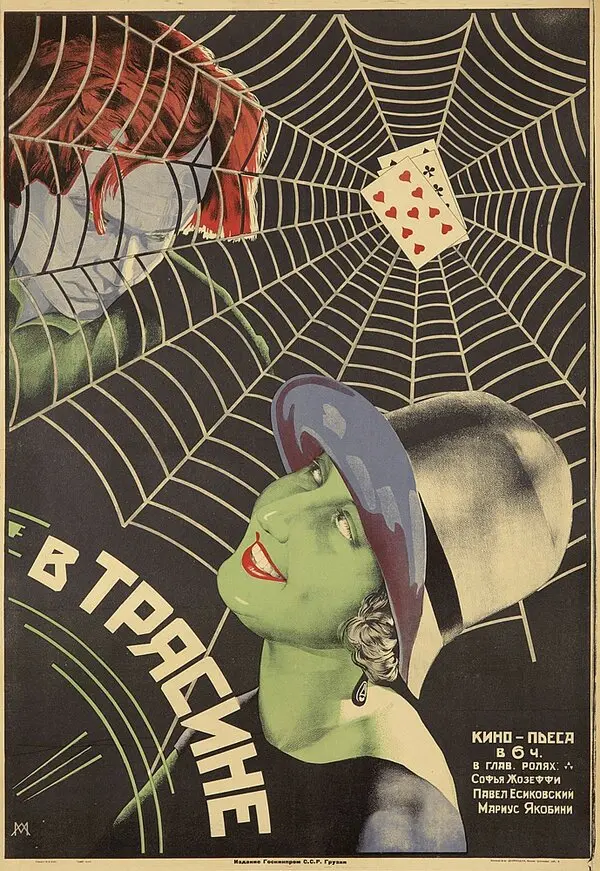
Is Gaplangva worth watching today? Short answer: Yes, but only if you are prepared for a relentless, grim exploration of human frailty. This film is not for those seeking light entertainment or a redemptive arc. It is specifically for viewers who appreciate the raw, jagged edges of early Soviet-era social realism and those interested in how silent cinema translated internal psychological rot into external visual cues.
Gaplangva is a vital piece of cinematic history for those interested in the evolution of psychological drama. It provides a rare look at the social anxieties of the 1920s through the lens of addiction. While it lacks the polish of modern blockbusters, its raw emotional honesty makes it a compelling, if difficult, watch.
1) This film works because it rejects the romanticization of the 'tortured artist' or the 'glamorous gambler,' choosing instead to show the sweaty, claustrophobic reality of addiction.
2) This film fails because the second act relies heavily on repetitive casino sequences that, while thematic, can feel stagnant to a modern audience used to faster narrative progression.
3) You should watch it if you are a student of film history, a fan of Georgian cinema, or someone who finds beauty in the tragic breakdown of the human spirit.
Nikoloz Shengelaia does not treat gambling as a hobby; he treats it as a terminal illness. From the opening frames, the casino is presented not as a place of luxury, but as a predatory organism. The way the camera lingers on the faces of the players—Marius Jakobini and Konstantin Lavretski in particular—reveals a level of desperation that feels uncomfortably modern. There is a specific moment when Apolon looks at the state money in his care, and the camera zooms in with a jarring intensity. It’s not just money to him; it’s a temporary reprieve from the crushing weight of his own failures. It works. But it’s flawed.
The relationship between Vasili and Apolon is the dark heart of the film. They are two sides of the same coin: the intellectual who thinks he can outsmart the system and the bureaucrat who thinks he can cheat it. When Apolon is finally hauled away to prison, the film doesn't offer a dramatic climax. Instead, it offers a hollow silence. This is where the film distinguishes itself from other crime dramas of the era, such as Söhne der Nacht, 1. Teil: Die Verbrecher-GmbH. While that film focuses on the mechanics of the underworld, Gaplangva is obsessed with the internal collapse of the individual.
Shengelaia’s direction is surprisingly aggressive. He uses shadows not just for aesthetic flair, but to suggest the encroaching darkness in Vasili’s mind. The cinematography captures the smoke-filled rooms of the casino with a grit that makes you feel the grime on the characters' skin. Unlike the more polished Bismarck or the patriotic fervor of For the Freedom of the World, Gaplangva feels intimate and invasive. It wants you to feel the heat of the gambling table and the cold of the prison cell.
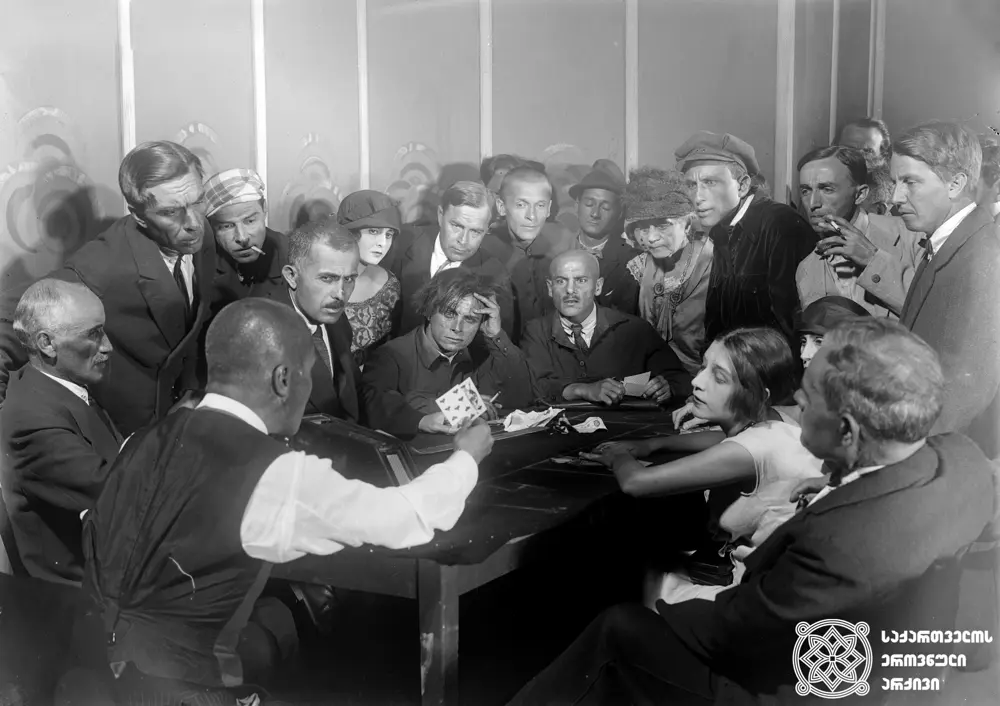
The acting style is another point of interest. In many silent films, like Jungle Woman or Hands Up, the performances can lean toward the theatrical. Here, Marius Jakobini delivers a performance rooted in physical deterioration. His posture changes as the film progresses; he literally shrinks under the weight of his despair. It is a masterclass in silent storytelling that doesn't rely on exaggerated pantomime.
The title itself, often translated as 'The Embezzler,' carries a heavy social weight. In the context of 1927, stealing 'state money' wasn't just a crime; it was a betrayal of the collective. This adds a layer of tension that might be lost on modern viewers who see embezzlement as a white-collar victimless crime. In Gaplangva, Apolon’s theft is a death sentence for his social standing and his soul. The film handles this with a gravity that rivals the moral dilemmas found in God's Country and the Law.
However, the film isn't just a propaganda piece about state loyalty. It’s too cynical for that. It critiques the very nature of a society that allows such desperation to fester. The scenes where Vasili wanders the streets after Apolon’s arrest are some of the most haunting in the film. He is a ghost in his own life. This existential dread is far more sophisticated than the simple moral fables like The Fox and the Crow or the sentimentalism of A Kentucky Cinderella.
No film is perfect, and Gaplangva suffers from the limitations of its time. The middle section drags. We see the cycle of winning and losing repeated one too many times. While this effectively mirrors the monotony of addiction, it tests the patience of the viewer. There are moments where you want the plot to move forward, but the film insists on lingering in the misery. It’s a bold choice, but one that makes the film feel longer than its runtime suggests.
Comparatively, films like Northern Lights or The Return of Mary manage their pacing with more traditional narrative beats. Gaplangva is experimental in its bleakness. It refuses to provide the 'peaceful scenes' one might find in Midst Peaceful Scenes. Instead, it offers a jagged, uncomfortable experience that leaves a bitter aftertaste. It is a film that demands your full attention and offers very little comfort in return.
Pros:
- Exceptional use of lighting and shadow to convey psychological states.
- A brave, non-judgmental look at the mechanics of addiction.
- Strong performances that transcend the limitations of silent film acting.
- A unique historical perspective on 1920s Georgian life.
Cons:
- The narrative can feel overly bleak and oppressive.
- Some secondary characters, like the women played by Sofia Jozeffi and Maria Tenazi, are not given enough screen time to fully develop.
- The final act feels slightly rushed compared to the slow burn of the beginning.
Gaplangva is a brutal, essential piece of cinema that refuses to look away from the wreckage of a broken life. It lacks the charm of Smith's Baby or the whimsical nature of La p'tite Lili, but it possesses a raw power that those films lack. It is a film about the consequences of choice and the gravity of loss. While it isn't 'fun' to watch, it is deeply rewarding for those who value honesty in storytelling. Nikoloz Shengelaia created a work that serves as a warning, a eulogy, and a psychological profile all at once. It is a hard watch, but a necessary one for anyone serious about the history of the medium. It doesn't just show you a tragedy; it makes you live in it. Final thought: The casino wheel is a circle, but the lives it consumes are a straight line to the bottom.
IMDb —
1923
Community
Log in to comment.