DbcultAccessing Vault...
Cult Review
Senior Film Conservator
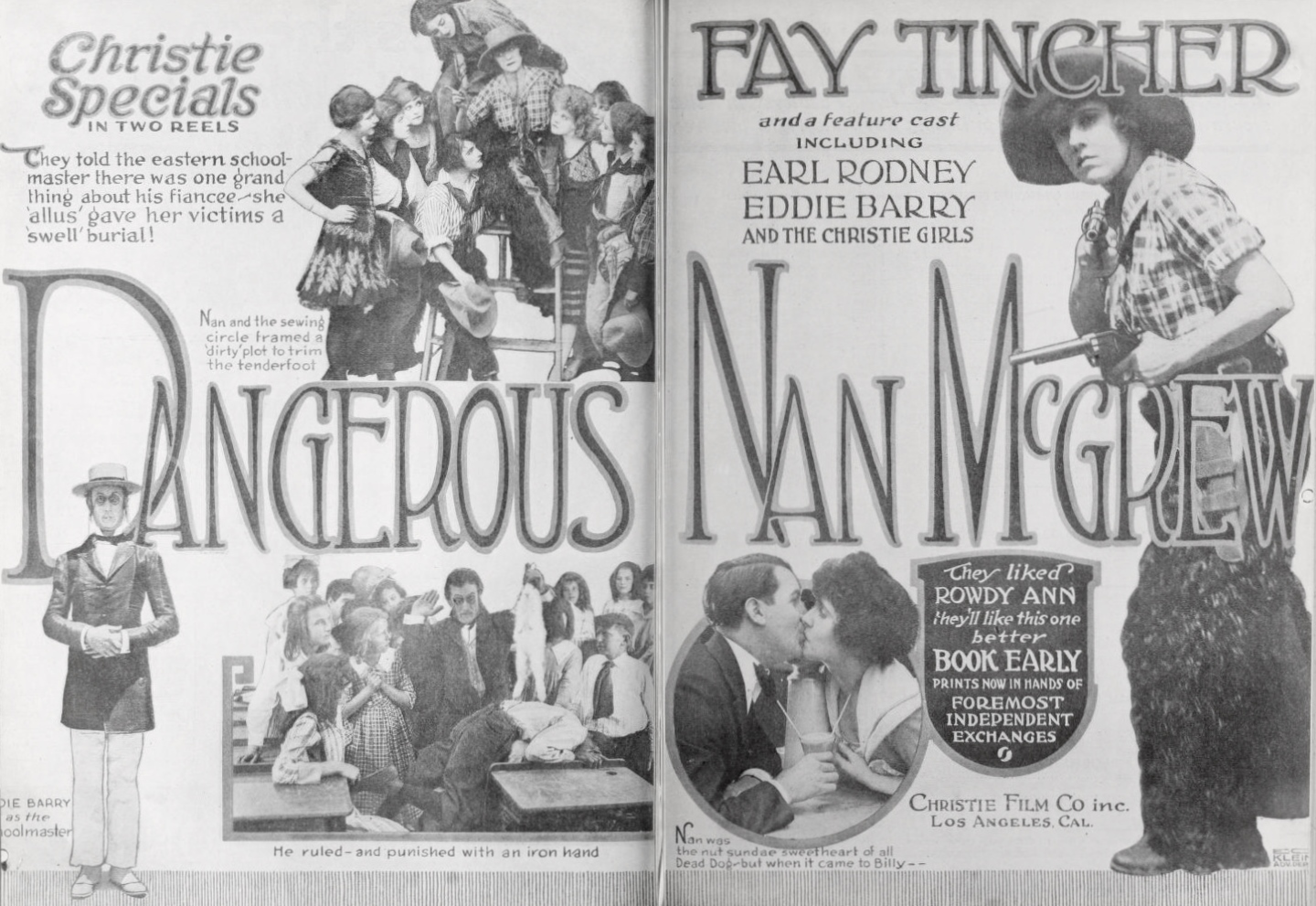
To witness Dangerous Nan McGrew is to step into a volatile crucible of early 20th-century comedic innovation. Released during a period when the Western genre was beginning to solidify its own tropes, Al Christie’s production—starring the incomparable Fay Tincher—functions less as a straightforward cowboy yarn and more as a sophisticated deconstruction of frontier mythology. Tincher, known for her gum-chewing, brash persona, brings a kinetic energy to the screen that rivals the physical prowess seen in contemporaries like Harold Lloyd in From Hand to Mouth. However, where Lloyd often played the victim of circumstance, Tincher’s Nan is the architect of her own chaos.
The premise is a classic exercise in the 'inheritance obstacle' trope, a narrative device frequently employed in silent cinema to force disparate social classes into uncomfortable proximity. We see echoes of this forced-marriage tension in films like Marriage, yet here, the stakes are filtered through the lens of slapstick absurdity. Nan is not a damsel in distress; she is a businesswoman of the beverage variety, navigating the rough-and-tumble environment of Dead Dog with a nonchalance that suggests she has seen it all. Her love for Billy is a grounding element, but the arrival of the letter from New York introduces a conflict that is as much about cultural clashing as it is about fiscal survival.
Tom Ricketts delivers a performance of exquisite fragility as Hezekiah, the New England schoolteacher. His character serves as the ultimate foil to the rugged, unfiltered environment of the West. In many ways, his arrival mirrors the thematic concerns of Common Ground, where the collision of vastly different moral landscapes provides the primary dramatic engine. Hezekiah is a man of books and boundaries, stepping into a world that, at least in Nan’s fabricated version, has neither.
The brilliance of the script by Scott Darling and Maie B. Havey lies in Nan’s decision to 'rejuvenate the wildness' of the town. This is a fascinating meta-commentary on the film industry itself. By 1919, the 'Wild West' was already becoming a curated performance for Eastern audiences. Nan is essentially acting as a film director within the film, staging gunfights and lawlessness to satisfy a specific stereotype. It is a precursor to the psychological manipulation seen in more serious works like The House of Lies, though here the goal is comedy rather than tragedy. She understands that Hezekiah’s Fear is her greatest ally.
The cinematography and staging in the sequence where Nan rides her horse up the steps and into the bar are remarkably advanced for the era. This isn’t just a stunt; it’s a character statement. It represents the total intrusion of the 'wild' into the semi-civilized space of the saloon. The use of space in early Christie comedies often prioritized clarity of movement, ensuring that the audience never missed a beat of the escalating hysteria. This clarity is something often lacking in more convoluted plots like Intrigue, where the visual storytelling can sometimes be overshadowed by its own complexity.
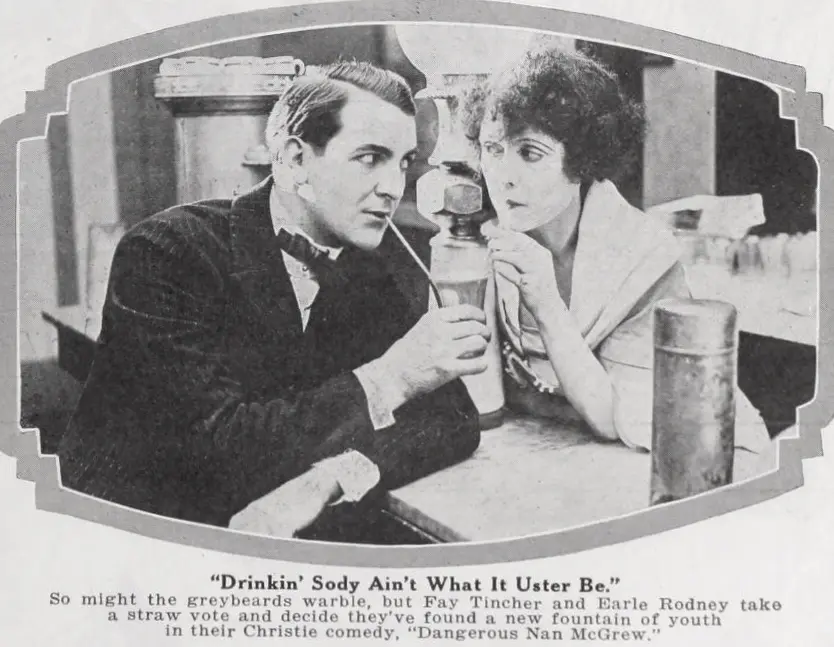
The supporting cast, including Bob Kortman and Earle Rodney, populate Dead Dog with a gallery of grotesques and archetypes that heighten the sense of Hezekiah’s displacement. There is a palpable sense of 'otherness' in the way the townsfolk interact with the schoolteacher. This isn't the refined world of The Evangelist; this is a world where survival is a matter of grit, or at least the appearance of it. The film plays with the idea of 'finishing' a person—not in the sense of Finishing Mary, where social graces are polished, but in the sense of breaking a person’s spirit entirely.
The turning point occurs when Billy, perhaps fueled by a genuine sense of jealousy or simply caught up in the momentum of Nan’s scheme, begins to 'shoot up the place' for real. This shift from staged violence to actual peril is handled with a deftness that keeps the tone firmly in the realm of comedy, even as the bullets fly. It’s a masterclass in tension release. Just as Nan and Hezekiah are poised to say "I do"—a moment that feels as heavy as a scene from Her Bitter Cup—the intrusion of the real world shatters the illusion.
Hezekiah’s flight is the ultimate punchline. His desperate sprint for the train, catching the observation platform as it departs for the East, is a symbolic rejection of the American frontier. He is not a hero; he is a survivor of a culture shock he was never equipped to handle. In this regard, the film serves as a humorous counterpoint to the earnest patriotism found in Her Country's Call. In Dead Dog, the call of the country is loud, messy, and terrifying.
Fay Tincher’s performance in Dangerous Nan McGrew deserves more modern recognition. She possessed a unique ability to play 'tough' without losing her comedic timing. Unlike the more ethereal stars of the era, Tincher felt grounded, real, and slightly dangerous. Her Nan McGrew is a woman who understands the transactional nature of her world. She is willing to play the part of the wild woman, but she never loses sight of the soda fountain queen who just wants to marry her Billy and keep her inheritance. It’s a performance of layers, even within the confines of a short-form comedy.
Comparing this to the high-seas antics of Yachts and Hearts, or The Opium Smugglers, one can see how Christie Comedies were diversifying their settings while keeping the core focus on character-driven absurdity. Whether on a yacht or in a dusty saloon, the central theme remains the same: the disruption of social norms through extreme circumstances. Even when looking at something as fantastical as Aladdin and the Wonderful Lamp, the human element—the desire for something more and the lengths one will go to get it—is the universal thread.
From a technical standpoint, the film benefits from the tight editing typical of the Christie studio. There is no wasted motion. Each gag builds upon the last, creating a cumulative effect that leads to the frantic finale. The titles are punchy and contribute to the characterization, particularly in the way they juxtapose Hezekiah’s formal speech with the vernacular of Dead Dog. This linguistic clash is as much a part of the comedy as the physical pratfalls. It reminds one of the dramatic weight of language in Hamlet, Prince of Denmark, though here the 'to be or not to be' is replaced by 'to wed or to run.'
The film also touches upon the theme of loyalty, much like the bond explored in With Hoops of Steel. Billy’s intervention, while chaotic, is ultimately an act of devotion to Nan, even if it nearly gets them all killed. It is this underlying sincerity that prevents the film from becoming a mere exercise in cruelty toward the hapless Hezekiah. We root for Nan because her goal is relatable, and we laugh at Hezekiah because his rigidity is so ill-suited to the world he has entered.
There is a subtle satire at play regarding the way the East viewed the West. By having Nan 'put on a show' for her cousin, the film mocks the expectations of the 'civilized' world. Hezekiah expects danger, so Nan gives him a caricature of it. This commentary on social expectation is a recurring theme in silent cinema, often used to bridge the gap between different segments of the audience. It provides a level of sophistication that elevates Dangerous Nan McGrew above the standard slapstick fare of the time.
In the end, the film is a testament to the versatility of the silent medium. It manages to tell a complete, engaging story with complex character motivations and high-concept humor in a relatively short runtime. It doesn't need the existential angst of We Should Worry to make an impact; it simply uses the tools of comedy to explore the timeless themes of love, money, and the lengths we go to for both.
For any student of film history or fan of classic comedy, Dangerous Nan McGrew is an essential watch. It showcases a star at the height of her powers and a studio that knew exactly how to tickle the funny bone of a post-war audience. It is a vibrant, dusty, and utterly delightful piece of celluloid history that proves, once and for all, that you should never underestimate a soda fountain queen with a plan.
The legacy of Fay Tincher remains a beacon for female-led comedy, demonstrating that a woman could be the center of the action, the source of the jokes, and the master of her own fate. Nan McGrew didn't just survive Dead Dog; she conquered it, one sarsaparilla and one staged gunfight at a time.
IMDb 5.3
1934
Community
Log in to comment.