DbcultAccessing Vault...
Cult Review
Senior Film Conservator
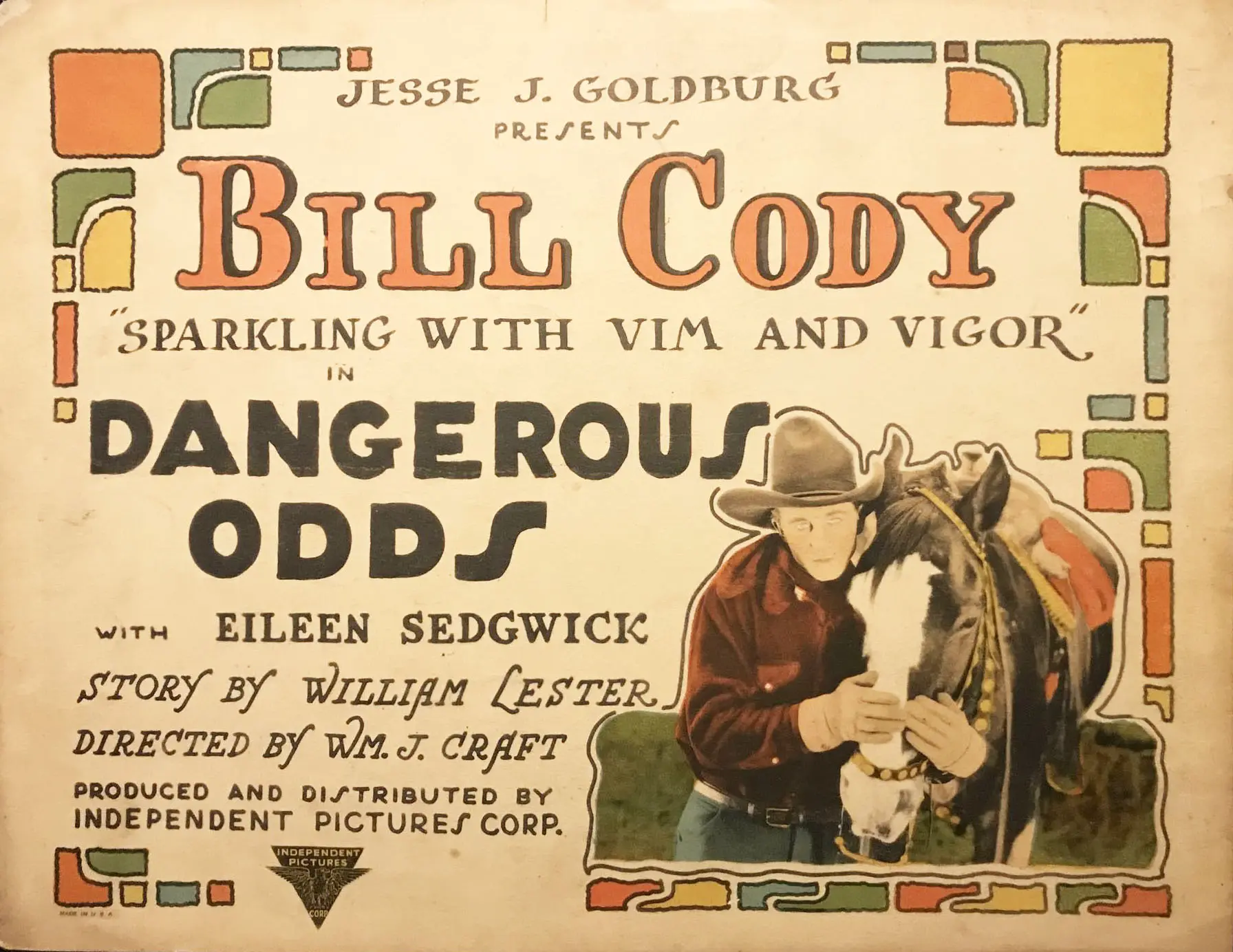
Is Dangerous Odds worth watching today? Short answer: Yes, but only if you are a dedicated student of silent-era stunt work or a Western completist. It is not for the casual viewer who requires a complex narrative or modern pacing.
This film is specifically for those who find beauty in the raw, unpolished kinetic energy of early 20th-century B-Westerns. It is absolutely not for anyone who struggles with the theatricality of silent acting or the predictable tropes of the 'damsel in distress' era.
1) This film works because of Bill Cody’s physical presence and the genuine danger apparent in the practical horse stunts.
2) This film fails because the plot is a wafer-thin excuse for the action, lacking the emotional depth found in contemporaries like The Half Breed.
3) You should watch it if you want to see the foundational building blocks of the Hollywood action hero before the industry became sanitized.
If you are looking for a masterpiece of silent storytelling, you won't find it here. However, Dangerous Odds is worth watching for its historical value as a 'transitional' Western. Unlike the more philosophical approach seen in The Alaskan, this film focuses on the visceral thrill of the chase. It’s a lean, mean, 1920s actioner that prioritizes movement over subtext. For fans of the genre, seeing Bill Cody in his prime is a treat that outweighs the repetitive nature of the script.
Bill Cody was never the most nuanced actor of his generation. He lacked the soulful eyes of a Valentino or the comedic timing of a Lloyd. But in Dangerous Odds, he proves why he was a bankable star. He has a way of occupying the frame that feels grounded. When he mounts a horse, it isn't a staged movement; it’s an extension of his body.
Take the scene where Cody’s character first encounters the villains at the ranch gate. There is a specific way he shifts his weight and adjusts his hat that communicates more than any title card could. It’s a masterclass in silent-era 'tough guy' posturing. He doesn't need to scream to show he's the hero. He just exists.
Compare this to the performance of Claude Payton, who plays the antagonist with a level of sneering villainy that feels almost operatic. The contrast between Cody’s stoicism and Payton’s expressive malice creates a dynamic that keeps the middle act from sagging too far into boredom. It’s simple, but it’s effective. It works. But it’s flawed.
Before William Berke became a prolific director and producer, he was honing his craft as a writer on films like this. You can see the seeds of his later efficiency here. The pacing of the final twenty minutes is relentless. While the first half of the film suffers from some clunky exposition, the climax is a well-oiled machine of editing and stunt coordination.
The horse race is the standout sequence. In an era before CGI or sophisticated safety rigs, the speed you see on screen is real. There is a moment where Cody’s horse takes a corner so sharply that the dust obscures the camera, and for a second, you forget you’re watching a century-old movie. It feels dangerous. It feels immediate. This is where Berke’s writing shines—knowing exactly when to stop talking and let the horses run.
Eileen Sedgwick was a veteran of the serial format, and her experience shows. While the script relegates her to the standard 'love interest' role, she brings a certain spark to the ranch scenes. She isn't just a trophy to be won; she has a frantic energy that matches the stakes of the plot.
However, the film’s biggest flaw is its inability to give her anything meaningful to do during the climax. She becomes a spectator to her own fate. This is a common issue with films of this era, such as The Mysterious Stranger, where female characters are often catalysts rather than agents of change. It’s a frustrating limitation that prevents the film from reaching a higher tier of quality.
The cinematography in Dangerous Odds is functional rather than poetic. It lacks the expressionistic shadows of The Golem or the artistic ambition of Mania. Instead, it uses wide, flat shots of the California landscape to emphasize the isolation of the characters.
There is a brutal simplicity to the way the camera tracks the riders. It doesn't try to be clever with angles. It just stays on the action. This lack of artifice is actually one of the film’s strengths. It feels like a documentary of a performance rather than a constructed piece of cinema. The lighting is harsh, the costumes are dirty, and the world feels lived-in.
When placed alongside other films of the mid-20s, Dangerous Odds feels like a working-man's movie. It doesn't have the high-concept intrigue of The Power God or the social commentary of something like The Midnight Girl. It is content to be a Western, and nothing more.
There is a certain honesty in that. It doesn't pretend to be high art. It is the 1925 equivalent of a summer blockbuster—designed to entertain for an hour and then be forgotten. While it lacks the whimsical charm of His Wooden Wedding, it makes up for it with sheer, unadulterated grit.
One surprising element of Dangerous Odds is the 'acting' of the horses. In many modern films, horses are just props. Here, the camera treats them with the same reverence as the human leads. There is a scene where Cody’s horse reacts to a gunshot that feels genuinely unscripted and terrifying. The bond between the man and the animal is the only emotional anchor the film truly has. Without that connection, the movie would fall apart. It is the most 'human' part of the film, ironically.
Dangerous Odds is a fascinating relic. It isn't a masterpiece, and it won't change your life, but it is a vital piece of the Western puzzle. It captures a moment in time when the West was still a fresh memory for many audience members, and the heroes were defined by what they could do with their hands and their horses.
"Dangerous Odds is a testament to the era of the 'everyman hero'—rough, tumble, and remarkably sincere in its simplicity."
If you can get past the dated gender roles and the simplistic 'good vs. evil' narrative, there is a lot to admire here. It’s a fast-paced ride that reminds us why the Western became the dominant American myth. It’s not perfect, but it’s real. And in today’s world of digital perfection, that reality is worth a look.
IMDb 6.2
1919
Community
Log in to comment.