DbcultAccessing Vault...
Cult Review
Senior Film Conservator
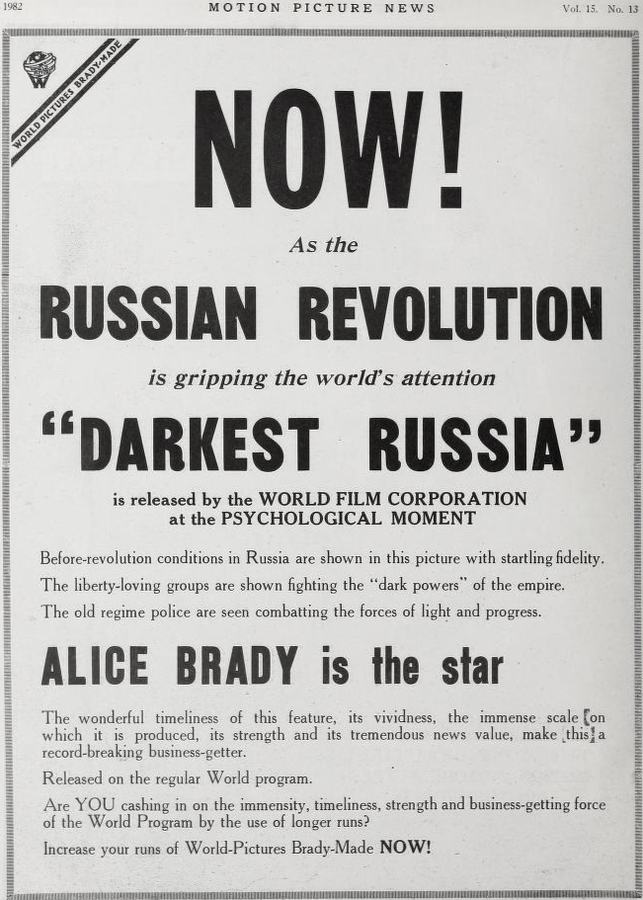
A single violin string snaps in the hush of a gilded ballroom; the reverberation is enough to fracture an empire—or at least to expose the hairline cracks in a dynasty already hemorrhaging legitimacy. Such is the inciting incident of Darkest Russia, a 1917 seven-reel fever dream whose very title now reads like prophecy filmed on the eve of Romanoff collapse.
Let us dispense, briskly, with synopsis: Ilda Barosky, a conservatory phenom whose father has been reduced to a statistic of tsarist pogroms, is commanded to perform “God Save the Czar” at the betrothal gala of Alexis Nazimoff—scion of one of Saint Petersburg’s bluest bloodlines—to Olga Karischeff, daughter of the scheming Minister of Police. The violinist’s refusal is less a political act than an autonomic spasm of grief; the lash she receives across her shoulder blades is the empire’s reflex in return. From that point the narrative hurtles like a sledge over ice: public humiliation, clandestine rescue, broken engagement, administrative revenge, lovers manacled to a prison-bound sled, the white hypnosis of Siberia, a midnight escape, a dawn firing squad, a parchment of absolution fluttering down like an angel’s landing card.
Yet plot mechanics feel almost incidental once the film’s temperature takes hold. Directors J. Gratten Donnelly and Sidney R. Ellis—aided by scenario sorceress Frances Marion—stage oppression as a kind of reverse hagiography: every institutional visage, from father-confessor to father-tsar, is peeled back to reveal something carnivorous. The camera lingers on the ceremonial scourge so long that the cat-o’-nine-tails becomes a character in its own right, its braids whispering promises of historical recurrence.
Shot largely in the depth of winter on the back-lots of Fort Lee, New Jersey, the picture turns its budgetary constraints into baroque poetry. Frost is sprayed onto pine boards, yet the shiver feels contagious. Cinematographer Herbert Barrington favors low-key chiaroscuro: faces half-drowned in tenebrous pools, eyelights glinting like bayonets. When the story shifts to the Siberian wastes, the tinting schema mutates from imperial amber to cadaverous cyan, as though the film itself were asphyxiating.
Inside the Karischeff ballroom, chandeliers cascade like frozen waterfalls; each crystal facet refracts a miniature tyrant, multiplying autocracy into infinity. Against that ostentation, the lovers’ later campfire becomes a chapel of long shadows, the flicker of reds and yellows suggesting both perdition and transfiguration. You half expect Sergei Eisenstein to step from the wings and applaud the dialectic.
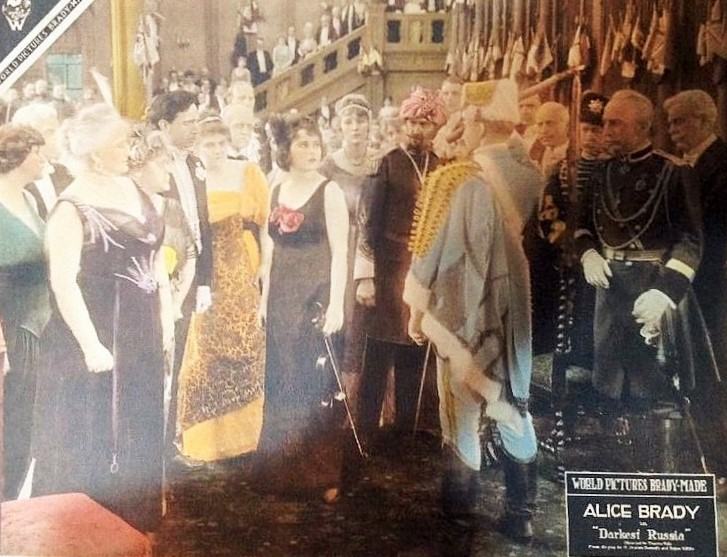
Boris Korlin’s Alexis is all cheekbones and culpability—a porcelain soldier cracked by empathy. Watch how his shoulders retreat inside his uniform tunic once filial duty collides with erotic devotion; the body itself stages a coup against bloodline programming. Opposite him, Lillian Cook’s Ilda is less ingenue than incandescent wound. Her violin miming is uncanny—fingers strike the fingerboard with the percussive precision of a typist translating trauma into Morse. The moment she lifts her bow in deliberate silence, the hush lands harder than any fortissimo could.
Alice Brady, as the jilted Olga, exudes predatory boredom; she toys with a Fabergé egg the way a bored cat toys with a still-breathing sparrow. Jack Drumier’s Count Nazimoff undergoes the film’s sole arc of repentance, and the actor lets it leak through micro-gestures: a blink that lasts half a second too long, a thumb rubbing a signet ring as though trying to erase ancestral insignia.
Frances Marion’s intertitles, mercifully preserved in the 2018 MoMA restoration, drip with double-entendre. When the minister snarls, “Order is the music of the state,” the line vibrates beyond its diegetic moment, pre-echoing twentieth-century totalitarian aesthetics. The demand that a Jewess glorify, in the key of C-major, the very regime that orphaned her is sadism disguised as etiquette; her refusal, therefore, is art itself biting the gloved hand that beats it.
Compare this to the contemporaneous Stolen Goods, where anti-Semitism appears only as a throwaway slur; here it is the engine. The script weaponizes assimilation’s limits: Ilda has mastered Tchaikovsky yet cannot master survival; Alexis can dismantle an engagement but cannot dismantle an infrastructure engineered to devour difference.
Though released during the transitional twilight of silent cinema, Darkest Russia was conceived with a through-composed score—now lost—by Joseph Carl Breil. Contemporary trade sheets describe “a symphonic skein leitmotifing Ilda’s theme against a corrosive brass hymn for the regime.” Modern festival screenings usually pair the film with either Shostakovich’s Chamber Symphony (whose Jewish themes bleed seamlessly into the narrative) or a new improvisation by the Alloy Quartet. Either way, the violin’s absence on the soundtrack during the whipping scene—the conductor holds the orchestra in a fermata as the lash falls—turns violence into an obscene concerto of wind, flesh, and gasping crowd.
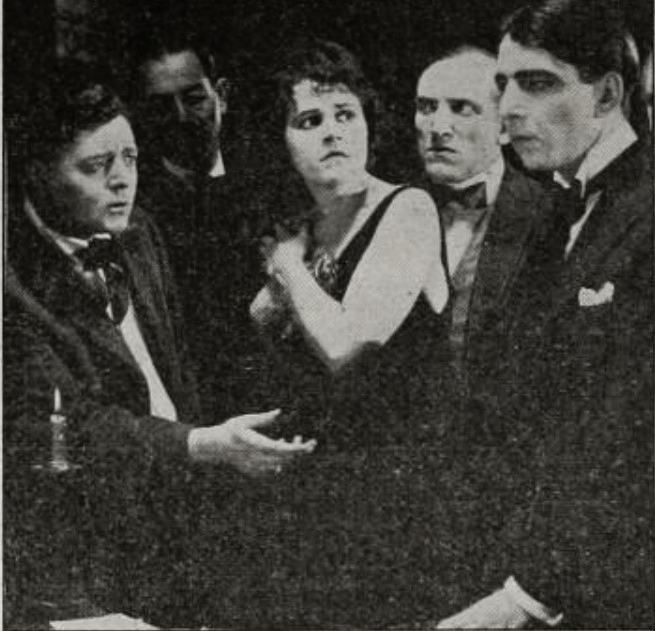
Notice the blocking of the scourge tableau: male courtiers encircle the platform like a panopticon in evening dress, while ladies avert their gaze behind ostrich-feather fans whose quivering crests mimic arousal. The spectacle converts Ilda’s body into parchment; each welt writes a syllable of imperial law. Yet the film refuses to grant the onlookers the aesthetic distance their voyeurism craves. The camera angle is low, from Ilda’s perspective, so that every descending strap breaks the fourth wall and lands, metonymically, on the spectator’s retina.
It is difficult, in 2024, to watch this without invoking Foucault or the viral videos of state brutality; but even in 1917 viewers reportedly exited Boston’s Majestic Theatre shouting “Shame!” at the screen. One wonders whether the movie’s eventual ban in Imperial Russia stemmed less from its critique of autocracy and more from its unmasking of the erotic charge latent in punishment.
Once the narrative train lurches past the Urals, the film’s visual grammar mutates. Interiority is externalized: breath fog, icicle daggers, the hush of snow that swallows footfalls and screams with democratic indifference. The lovers’ escape across the steppe is cross-cut with Orthodox priests ringing funeral bells whose bronze tongues glint like bullet casings. Nature, here, is neither benevolent nor hostile; it is simply the canvas on which ideology stages its gulags.
Compare this to the Alpine exteriors of The Heart of a Child, where landscape serves as redemptive mirror; in Darkest Russia the tundra is a Nietzschean void that returns only the echo of one’s ethical choices. When the lovers collapse into each other’s frost-bitten arms, desire is less erotic than thermal: to share body heat is to conspire against the empire’s attempt to quantify human worth in degrees Celsius.
Modern screenwriting manuals would excoriate the deus-ex-machina arrival of Count Nazimoff’s pardon. Yet within the moral cosmology of 1910s melodrama such interventions are not failures of craft but grace notes in a theology where redemption must appear gratuitous or not at all. The pardon arrives on a sled drawn by horses whose breath forms halos—Orthodox iconography sneaking into Judaic narrative. Significantly, the Count’s signature is blotched; the ink has frozen mid-stroke, suggesting that absolution, like everything else in the empire, is subject to climatic veto.
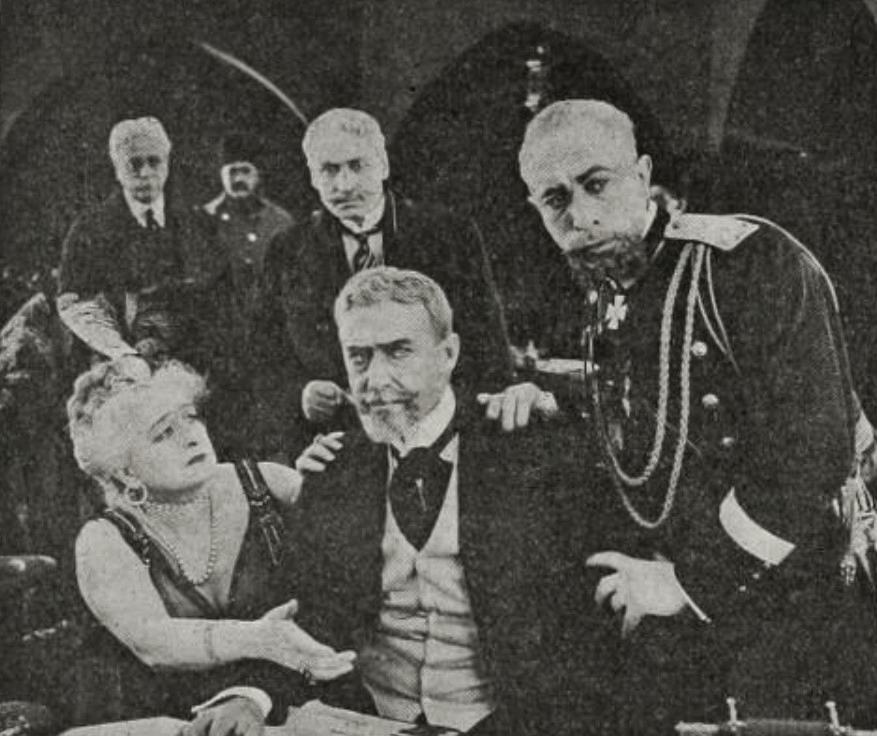
Curiously, the final intertitle withholds a marriage promise: “And they returned to the city that once denied them—together.” The absence of nuptial certainty feels radical for its era, implying that survival itself is the sacrament. Compare this closure to the marital crescendo of The Betrothed; here the film refuses to domesticate its trauma into a wedding banquet.
Variety’s 1917 notice dismissed the film as “Tsarist tear-mongering,” while Moving Picture World praised its “unflinching gaze upon autocratic cruelty.” The picture did robust business in Eastern seaboard cities with large immigrant populations, but prints vanished after the 1919 Red Scare raids—many cans seized under suspicion of Bolshevik propaganda. For decades, historians knew it only through production stills: Ilda’s silhouette against snow, Alexis brandishing a saber against moonlight. The 2018 4K restoration, constructed from a 35mm nitrate print discovered in a Parisian basement, reintroduced the film to a generation fluent in #MeToo and refugee crises. Suddenly, the whipping scene was no antique barbarity but a template for every video of authority unmasked.
At the 2022 Pordenone Silent Film Festival, the screening concluded with a five-minute standing ovation—rare for a rediscovery. Critics compared its urgency to Vendetta and A Victim of the Mormons, but those parallels feel wan. Where those films weaponize prejudice for suspense, Darkest Russia weaponizes history for empathy.
The restored edition is streaming on Criterion Channel in 2K, accompanied by the Mont Alto Motion Picture Orchestra’s haunting score. A 4K UHD disc is slated for release this December, replete with an audio essay by historian Dr. Anya Bernstein contextualizing Jewish persecution under Nicholas II. Archival cinephiles should note the alternate happy-ending variant intended for Argentine distribution, in which Ilda is revealed to be the long-lost Romanoff cousin—an appendix included in the Blu-ray’s supplementary disc.
For those hunting original memorabilia, a lobby card featuring the scourge scene sold last year at Heritage Auctions for $3,200; given the film’s rising canonical status, prices are unlikely to recede. Just ensure your morbid curiosity does not replicate the very voyeurism the film indicts.
Great art often arrives disguised as disposable melodrama, only to shed its chrysalis decades later when history loops back on itself. Darkest Russia is such a specimen: a film that begins as a love story and ends as an X-ray of state violence, a violin concerto where every note is a scar. To watch it now is to understand that the lash once wielded by tsarist thugs has merely changed hands; the snow still drinks blood, and somewhere a musician is still being ordered to play the anthem of her executioners. The refusal to bow—bow either in music or in submission—remains the single most radical act available to the human spirit. That the film captures this refusal in amber, without the anesthesia of a happy marriage, secures its place among the essential moral documents of early cinema.
IMDb —
1934
Community
Log in to comment.