DbcultAccessing Vault...
Cult Review
Senior Film Conservator
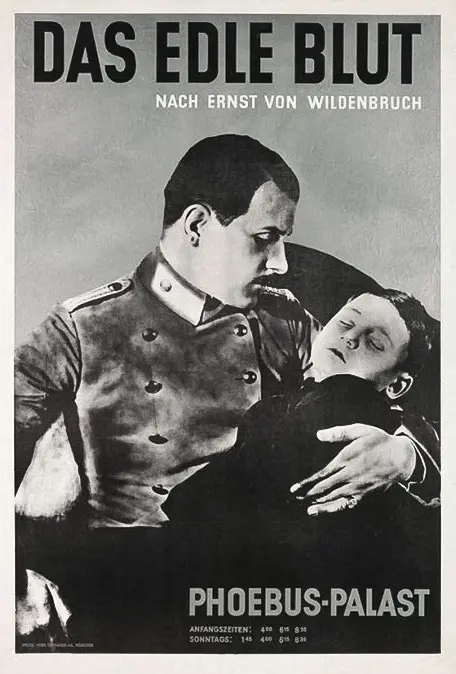
Is this film worth watching today? Short answer: Yes, but only if you appreciate the slow-burn psychological weight of early German silent cinema. It is not a film for those seeking fast-paced action or lighthearted escapism.
This film is for historians of the silent era and fans of Ernst von Wildenbruch’s literature. It is definitely NOT for viewers who find 1920s pacing tedious or those who require a happy ending to feel satisfied.
1) This film works because it captures the crushing weight of Prussian social expectations with a visual language that feels claustrophobic and inevitable.
2) This film fails because its central conflict—a dispute over a bird—can feel melodramatic and disproportionate to modern audiences who don't share the 19th-century obsession with 'honor.'
3) You should watch it if you want to see how silent cinema used lighting and facial expressions to convey complex internal shame without the need for dialogue.
To answer directly: yes, for the right audience. If you are looking for a masterpiece of early German storytelling, this is a significant entry. It provides a window into a culture that prioritized the collective 'noble blood' over the individual's sanity. Unlike more adventurous silent films like The Mutiny of the Bounty, which focuses on external rebellion, Das edle Blut is an internal collapse.
The film requires patience. It asks you to sit with the discomfort of two brothers who love each other but are being forced into a mold that will eventually break them. It’s a tragedy in the truest sense. It works. But it’s flawed by its own adherence to the source material’s rigid morality.
The direction by the uncredited or disputed hands involved in this production (often attributed to the era's standard studio system) leans heavily into the starkness of the military academy. The cinematography doesn't try to be flashy. Instead, it uses the hard lines of the uniforms and the cold stone of the barracks to tell the story. There is a specific scene where Hans stands at attention while his brother Leopold weeps; the contrast in their posture tells you everything you need to know about their future. It is a visual representation of a dying way of life.
Hanna Ralph delivers a performance that is surprisingly grounded. While many actors in 1923 were still leaning into the theatrical 'over-acting' of the stage, Ralph uses her eyes to convey a sense of impending doom. She represents the maternal link that is being severed by the military machine. It’s a performance that rivals the emotional depth seen in I Remember, albeit in a much darker context.
The most controversial element of the plot is the siskin—the small bird that becomes the center of the brothers' fallout. To a modern viewer, the idea that a pet could lead to such a catastrophic end feels absurd. However, in the context of the film, the bird represents innocence. When that innocence is 'betrayed' or lost, the brothers have nothing left to hold onto but their cold, noble duty.
There is a brutal simplicity to the way the bird's fate is handled. The camera lingers on the empty cage, a shot that feels modern in its minimalism. This isn't just about a bird. It's about the death of childhood. It's about the moment these boys stop being brothers and start being soldiers. It is a devastating transition to watch.
When compared to other films of the era like A Son of Erin, which deals with themes of heritage and identity, Das edle Blut is far more cynical. It doesn't offer the romanticized view of 'the homeland' or 'the family.' Instead, it suggests that the very things we are told to be proud of—our blood, our rank, our honor—are the things that will ultimately destroy us.
Even a film like The Eye of Envy deals with the destructive power of jealousy, but Das edle Blut elevates this to a systemic level. The jealousy between the brothers is nurtured by a system that demands competition and perfection. It is a critique of the German psyche of the early 20th century, whether the filmmakers intended it to be or not.
The pacing is, admittedly, a challenge. There are long stretches where very little 'happens' in terms of plot, but everything is happening in terms of tone. The film builds a sense of dread that is hard to shake. The use of intertitles is sparse, allowing the imagery to carry the weight. This is a bold choice for 1923, and it mostly pays off.
However, the third act feels rushed. After such a careful buildup, the resolution happens with a suddenness that leaves the viewer slightly reeling. It’s as if the film realized it was running out of time and decided to sprint to the finish line. This creates a jarring experience, but perhaps that is the point. Tragedy often happens in a flash, leaving a lifetime of regret in its wake.
Pros:
- Strong, restrained performances by the lead cast.
- Excellent use of shadow and space to create a somber atmosphere.
- A deep, philosophical exploration of honor vs. humanity.
Cons:
- Pacing can feel glacial in the second act.
- The ending feels somewhat abrupt.
- The source material's values may alienate contemporary viewers.
Das edle Blut is a difficult film to love, but an easy one to respect. It doesn't try to please the audience. It presents a world that is cold, rigid, and ultimately fatal to the sensitive soul. While it lacks the sheer imaginative power of the era's big-budget epics, it possesses a psychological grit that stays with you. It is a quiet tragedy that screams about the dangers of institutionalized 'honor.' It is a relic, yes, but a sharp and stinging one. If you can get past the 1923 sensibilities, there is a powerful story here about the cost of being 'noble.'
IMDb 6.1
1931
Community
Log in to comment.