DbcultAccessing Vault...
Cult Review
Senior Film Conservator
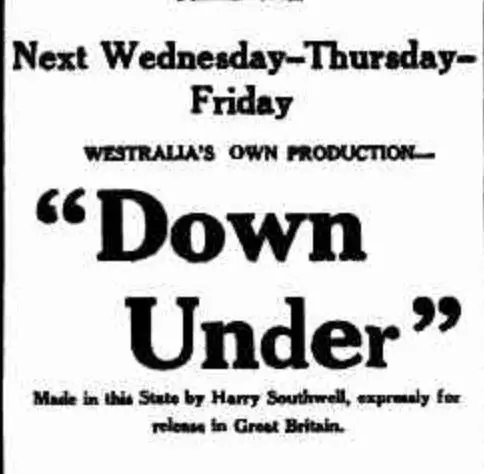
Is Down Under a forgotten treasure or a deservedly lost relic? Short answer: It is a relic, but one with jagged, fascinating edges that demand the attention of any serious student of early cinema.
This film is for the cinematic archaeologist and those who find beauty in the unpolished origins of national filmmaking. It is absolutely not for anyone who requires modern pacing, high-fidelity visuals, or a coherent, fast-moving plot.
This film works because it leans into the terrifying emptiness of the Australian landscape, using the environment as a psychological weight rather than just a backdrop.
This film fails because its narrative structure is frequently interrupted by technical limitations and a lack of fluid editing, making the story feel more like a series of connected vignettes than a cohesive whole.
You should watch it if you want to witness the birth of the 'Outback' as a character in cinema, or if you are tracking the evolution of the bushranger myth through the lens of early 20th-century creators.
For the average moviegoer, the answer is a firm no. The experience of watching Down Under today is less about entertainment and more about historical observation. However, for those who have explored the more polished works of the era, such as A Gentleman of Leisure, seeing the raw, almost amateurish energy of Southwell's production provides a necessary contrast.
It is a film that demands patience. It asks you to look past the grain and the static camera to see the ambition underneath. If you can do that, there is a certain visceral power in seeing Nancy Mills navigate a role that feels surprisingly modern in its stoicism. It works. But it is flawed.
Down Under is significant because it represents the struggle of independent Australian filmmakers to establish a voice independent of Hollywood and British influence. It uses local landscapes and local themes to create a narrative that felt authentic to its audience in 1927. The film serves as a bridge between the early bushranger shorts and the more sophisticated dramas that would follow in the sound era.
The most striking element of Down Under is not the script or the acting, but the dirt. Southwell captures the Australian bush with a lack of sentimentality that was rare for the time. In many silent films, such as The Lure, the setting can feel like a painted stage. Here, the heat and the dust feel tangible.
Consider the scene where the protagonist wanders into the scrubland. The camera remains stationary for an uncomfortably long time. This isn't a stylistic choice meant to be 'meditative' in the modern sense; it feels like a limitation of the equipment. Yet, that stillness creates a sense of entrapment. You feel the isolation. It is a moment where the technical flaws of 1927 production actually enhance the thematic weight of the story.
The lighting is equally harsh. There is no attempt to soften the edges of the performers. Nancy Mills, in particular, is often shot in high-contrast natural light that emphasizes the weariness of her character. It is a far cry from the soft-focus glamour found in Mirandy Smiles. This film is interested in the grit.
Harry Southwell was a man of immense ambition, but his reach often exceeded his grasp. In Down Under, he attempts to balance a personal drama with a grander statement on the Australian identity. The direction is heavy-handed. Every movement is exaggerated, which is typical for the era, but Southwell lacks the grace found in contemporary European works like Sein letzter Trick.
However, there is a surprising boldness in how he handles the film's climax. He doesn't shy away from the darker implications of his characters' choices. While a film like The Splendid Crime might lean into a more structured, moralistic ending, Southwell allows a certain level of ambiguity to linger. It is a brave choice for a film produced in a conservative cinematic climate.
The editing is where the film truly struggles. Transitions are jarring. One moment we are in a tense standoff, and the next, we are watching a title card that explains away five minutes of action. It breaks the immersion. It reminds you that you are watching a construction, not a reality. This lack of flow is why the film feels significantly longer than its actual runtime.
Nancy Mills is the standout here. In an era where female roles were often relegated to the 'damsel' or the 'shrew,' Mills brings a quiet intensity to her performance. She uses her eyes effectively, conveying a sense of dread that the script doesn't always articulate. Her performance is much more grounded than what we see in The Mating, where the theatricality can be overwhelming.
Southwell, as the lead, is less successful. He is prone to the 'grand gesture' style of acting that has aged poorly. Every emotion is broadcast to the back of the theater. When he is angry, he is VERY angry. When he is sad, he is DEVASTATED. It lacks the nuance required to make his character truly sympathetic. You find yourself watching his performance rather than believing his character.
The chemistry between the two is functional but cold. This actually works in the film's favor. The relationship feels like one born of necessity rather than passion. They are two people clinging to each other in a storm. This lack of warmth makes the eventual tragedy feel more inevitable and less like a scripted plot point.
We must discuss the state of the film itself. Like many productions from this period, Down Under has suffered from time. The print quality is inconsistent. This adds an accidental layer of surrealism to the viewing experience. Shadows bleed into the characters, and the sky often appears as a white, featureless void. It is ghost-like.
Compare this to the animated fluidity of El apóstol. While that film was pushing the boundaries of what could be shown, Down Under is struggling just to show what is there. This technical struggle is a metaphor for the film's own narrative. The characters are struggling to exist in a world that doesn't want them, just as the film is struggling to be seen through the haze of age.
The pacing is glacial. There are long stretches where nothing of consequence happens. We watch characters walk. We watch them stare. We watch them sit. In a modern context, this is agonizing. In a historical context, it reflects the reality of the time. Life in the bush was slow. The film doesn't lie about that.
Pros:
- Authentic use of location that predates the 'Ozploitation' movement.
- A strong, understated performance by Nancy Mills.
- Historically significant as an early independent Australian production.
- Avoids the easy, happy endings of its contemporaries.
Cons:
- Pacing that borders on the stationary.
- Technical degradation makes some scenes difficult to parse.
- Over-the-top acting by Harry Southwell.
- Narrative reliance on title cards to bridge massive plot holes.
Down Under is a difficult film to love, but an easy one to respect. It lacks the charm of Cupid's Brand or the technical polish of Nobody's Wife, but it possesses a rugged honesty that those films lack. It is a document of a time when Australian cinema was trying to find its legs, stumbling through the dust to find a story worth telling.
If you approach it as a piece of entertainment, you will be disappointed. If you approach it as a time capsule, you will find a haunting, dust-covered window into a lost world. It is a clunky, slow, and often frustrating experience. But it is also a vital piece of the puzzle. It isn't a masterpiece. It's something more interesting: a brave failure that paved the way for everything that came after.
IMDb —
1925
Community
Log in to comment.