DbcultAccessing Vault...
Cult Review
Senior Film Conservator
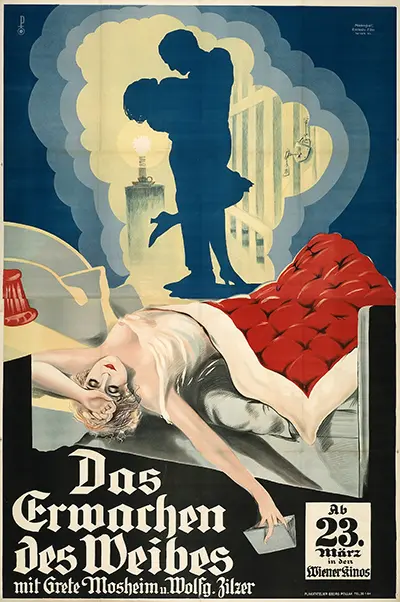
No, not for most viewers. 'Das Erwachen des Weibes' is a film primarily for dedicated silent cinema enthusiasts or those with a specific academic interest in German filmmaking of the early 1920s. It struggles to hold attention with a narrative that feels both overextended and dramatically inert in places. Casual viewers seeking an engaging story or a visually dynamic experience will likely find it a tough sit.
It’s a film that demands patience, offering sparse rewards for those accustomed to modern narrative rhythms. While it possesses moments that hint at the expressive power of silent film, these are often buried under a general lack of urgency and a reliance on melodramatic tropes that feel dated, not charmingly antique.
'Das Erwachen des Weibes' offers a curious case study in early German directorial choices. Fred Sauer, working with writers Curt Thomalla and Walter Wassermann, struggles to translate a potentially compelling theme into visually dynamic storytelling. The camera often feels static, observing scenes rather than actively participating in their emotional unfolding. There are moments, particularly in the interior scenes, where the interplay of light and shadow hints at the more celebrated expressionist works to come, but these are inconsistent. A sequence featuring Barbara von Annenkoff in a dimly lit drawing-room, her face half-obscured, manages to convey a sense of brooding introspection. It's a fleeting success. More often, the visual language is functional, almost rudimentary, failing to elevate the dramatic material. The exterior shots, when they appear, are often perfunctory, serving merely as scene-setters rather than contributing to the film's atmosphere. This isn't a film that relies on striking iconography or innovative camera work. It's too content to let the actors do the heavy lifting, often to its detriment.

The film's central 'awakening' feels more imposed than organically earned, a narrative contrivance rather than a genuine emotional arc.
The performances in 'Das Erwachen des Weibes' are a mixed bag, characteristic of the silent era's transition from stage to screen. Barbara von Annenkoff, in the titular role, navigates the challenge of conveying complex emotions without dialogue, relying on broad gestures and pronounced facial expressions. At her best, as in a scene where she silently confronts a letter, her movements carry a certain weight, a palpable sense of internal conflict. Wolfgang Zilzer, often cast in more nuanced roles later in his career, here delivers a performance that leans heavily into theatrical villainy. His sneers and posturing are clear, perhaps too clear. It’s hard to feel any real threat from such transparent evil. Harry Lamberts-Paulsen and Frieda Lehndorf provide solid, if unremarkable, support, embodying their stock characters with predictable earnestness. What's often dismissed as primitive acting in silent films, the sheer scale of the expressions, actually possesses a raw, almost operatic power that modern, understated acting often lacks. Here, however, it frequently veers into the unintentionally comical, undermining any genuine dramatic tension.
The narrative of 'Das Erwachen des Weibes' unfolds with a languidness that demands considerable patience. The story, even with its seemingly straightforward premise of a woman's self-discovery, takes an inordinate amount of time to reach its pivotal moments. Intertitles, while necessary, feel numerous and often redundant, repeating information that the visuals or performances should have conveyed. There's a particular sequence, approximately midway through, where the protagonist's indecision is drawn out across several scenes of quiet contemplation and repetitive interactions that add little to her character development or the plot's progression. This kind of padding is detrimental. It feels like the filmmakers were stretching a slender concept to feature length, rather than exploring its depths. The emotional beats, when they arrive, often lack impact because the journey to them has been so protracted and uneventful. The film could have benefited immensely from a tighter edit and a more disciplined approach to storytelling, pushing the drama forward instead of allowing it to stagnate.
'Das Erwachen des Weibes' is a film that, for all its historical context, struggles to justify its existence as anything more than an academic curiosity. Its title promises a dramatic internal shift, a profound revelation, but the execution delivers a meandering, often dull experience. While there are moments where the silent performances shine, or a composition briefly captures an evocative mood, these are too few and far between to sustain interest. It's a film that demands an almost scholarly detachment to appreciate, as its dramatic weaknesses are too pronounced for casual viewing. For those not already deeply invested in the niche of early German silent films, this 'awakening' will likely feel more like a prolonged slumber. It's not a lost gem; it's a piece of history, and sometimes history is merely an artifact, not a living work of art.

IMDb 5.5
1920
Community
Log in to comment.