DbcultAccessing Vault...
Cult Review
Senior Film Conservator
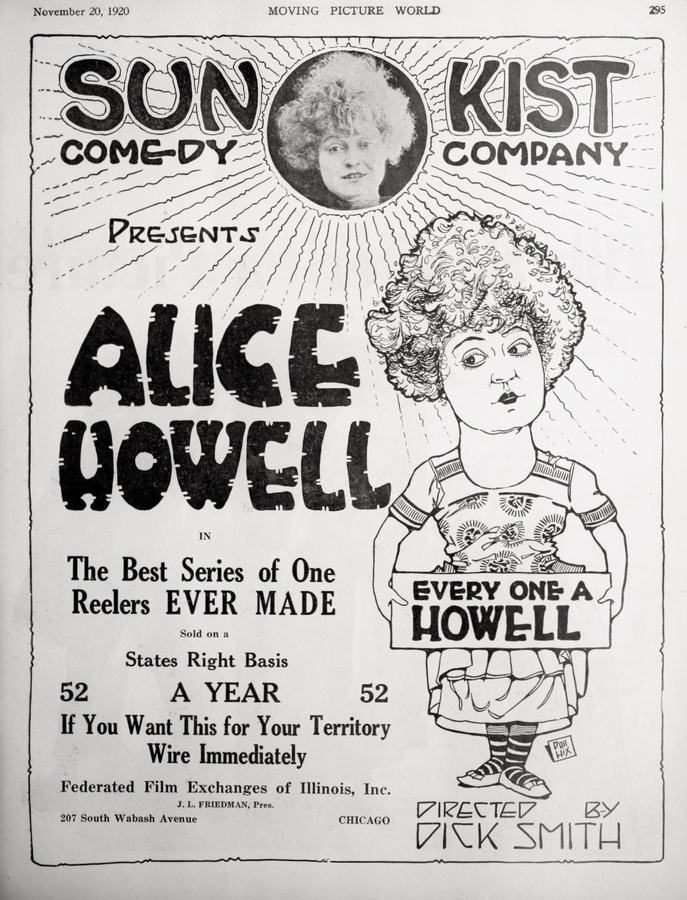
Imagine, if you dare, a world where Cupid carries a ledger instead of a bow. That is the world Who Chose Your Wife? gleefully detonates. Alice Howell—eyes spinning like slot-machine cherries—plays a nameless debutante whose marital fate is passed around like a hot penny. Each prospective mate arrives pre-packaged with a price tag: one brings railroad bonds, another a monocle and a mustache waxed to lethal points, a third nothing but an appetite. The film’s three-reel sprint feels like watching a dowry-themed roller derby shot at 18 fps, every frame winking at the spectator: you’re next.

The picture opens on a parlor that reeks of cabbage and respectability. Aunts with hat-pin weaponry haggle over dowries while the uncle—played by a walrus-mustached Oliver Hardy prototype—counts banknotes with the solemnity of a priest distributing communion. Enter Alice, already a blur: she trips over a footstool, somersaults, and lands in a gentleman’s lap. Cue iris-in, cue subtitle: “Love at first collision.” The gag is antique, yet the velocity is modern; the camera inches closer, as if acknowledging that the true star is the transaction, not the kiss.
Director-writer (name lost to nitrate fire) stages each scene like a cartoon panel: exaggerated diagonals, door-slamming rhymes, and a running motif of hats—top hats, bonnets, bowlers—swapped, stolen, or stomped. The hat becomes a stand-in for identity; when Alice finally dons a newsboy cap, she briefly escapes the marital meat market, only to be yanked back by a gendarme who mistakes her for a pickpocket. The law, too, is in on the joke.
Scholars often pigeonhole silent comedy as apolitical pratfall. Yet beneath the custard pies, Who Chose Your Wife? stages a scalding critique of commodified femininity. Each time Alice changes hands, a ledger page flutters into frame: “One bride, slightly soiled, 20% markdown.” The intertitle font—thin, serpentine—mirrors the fine print of a contract. Even the film’s own runtime (a brisk 26 minutes) feels like a bid to auction her off before anyone notices the cracks.
Compare this to The Checkmate (1915), where the heroine’s agency is checkmated by a single moral misstep. Here, Alice’s “sin” is existence; her only pawn move is to bolt. The camera rewards her rebellion with a rare close-up: eyes wide, mouth a perfect O, the moment both erotic and existential. It lasts perhaps eight frames—half a second—but it burns longer than any intertitle.
Shot mostly in medium-wide to accommodate Howell’s full-body contortions, the film occasionally ruptures into vertiginous Dutch angles—especially when the dowry chest is opened, revealing not jewels but IOUs. The camera tilts 15 degrees, enough to make the viewer physically lean, as though the frame itself is sliding toward capitalism’s abyss. Meanwhile, the editing rhythm mimics a moon-mad metronome: two-shot, punchline, iris-out; repeat. The result is a cinematic staccato that anticipates modern TikTok pacing a century early.
“The film’s true romance is between capital and chaos; Alice is merely the ring that changes fingers.”
Restoration geeks will swoon over the 2023 4K scan. The nitrate bloom—those champagne-like flecks—has been conserved, not erased, so every scratch glimmers like a scar. Tinting follows emotional logic: amber for parlor avarice, cyan for the rooftop escape, rose for the fleeting moment Alice imagines love untainted by ledger ink. The soundtrack, a new ragtime pastiche by Monica Barra, swaps player-piano clichés for discordant banjo and typewriter clacks. Each keystroke lands like a gavel.
Forgotten today, Howell was once hailed as “the female Chaplin.” Her gait—knees swiveling like a marionette with cut strings—owes more to vaudeville than to Method. Yet within the manic exterior beats a minimalist: a raised eyebrow conveys more pathos than a thousand tears. In one gut-punch moment, she peels off her engagement ring, drops it into a beggar’s tin, and the beggar hands her a flower in return. No intertitle intrudes; the exchange lasts three seconds, but it reframes the entire narrative: what if the only exit from the market is radical generosity?
Compare her to the heroines of Where Love Is or The Light of Happiness, who find redemption in sacrine deathbed conversions. Howell refuses to die—she simply pirouettes into the next reel, garter belts flashing like semaphore flags spelling “I OWE YOU NOTHING.”
Spoilers are farce in a film whose plot is a Möbius strip. Still, the finale deserves dissection. Alice, cornered at the altar, produces a toy cannon—yes, a miniature Civil War relic—lights the fuse with her veil, and blasts the wedding party into a snowstorm of rice. The last frame freezes on her face: soot-smudged, grinning, free. Or is she? A final intertitle sneaks in: “Next week: Who Chose Your Husband?” The joke lands like a shove, reminding us that escape is merely a sequel away.
Contrast this with the bitter closure of Vendetta or the pastoral embrace of Way Outback. Here, closure is a capitalist myth; the film refuses to grant it, opting instead for a loop that anticipates Palm Springs by a hundred-plus years.
In an era of dating-app algorithms auctioning affections quicker than a swipe, Who Chose Your Wife? feels less like artifact and more like prophecy. Its silent scream against transactional intimacy resonates louder in a world where romance is gamified and personal data is the new dowry. Watch it on a phone, and the hats swirl like push notifications; watch it projected, and the rice blast mirrors the confetti of targeted ads.
Critics hunting for Bechdel-bait may scoff that Alice’s conversations revolve around suitors. Yet the film’s very form—its refusal to let her voice be pinned by dialogue—grants her a subversive silence. She speaks in pratfalls, in property destruction, in the carnivalesque dismantling of patriarchal real estate. That, arguably, is louder than words.
Is the film flawless? Negative. Its gags recycle minstrel-era tropes—blink and you’ll miss a cringe-inducing caricature in the backdrop. Its pacing, breathless at 26 minutes, leaves zero room for emotional oxygen. Yet its imperfections are the very cracks through which its radicalism leaks. Like the best satire, it tickles until you taste blood.
So, who chose your wife? The film’s genius is that it poses the question, then burns the questionnaire. In the ember-light, Alice Howell winks at us across a century, daring us to imagine a ceremony without price tags, a kiss without interest compounding daily. Until then, we remain—like her—trapped in the next reel, rice in our hair, laughter caught between throat and wound.
Rating: 4.5/5 nitrate scars
IMDb —
1931
Community
Log in to comment.