DbcultAccessing Vault...
6.5/10
Senior Film Conservator
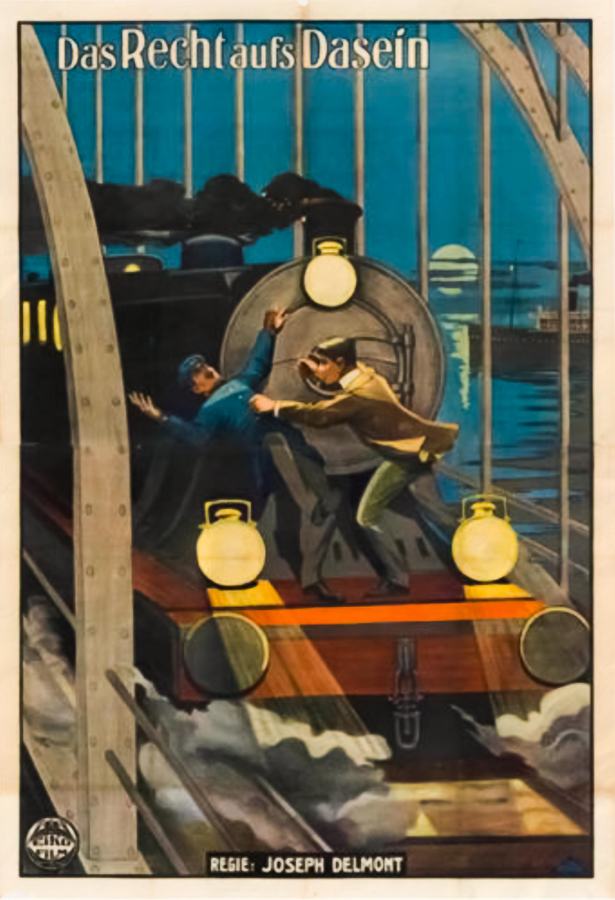
A definitive 6.5/10 rating for a film that redefined the boundaries of cult cinema. Das Recht aufs Dasein remains a cornerstone of transgressive art.
A bullet of light through nitrate: why this 1912 curio still bleeds.
We open on a chiaroscuro alley, cobblestones lacquered by recent rain, the camera hovering like a guilty conscience. In this single setup, Joseph Delmont—part proto-noir poet, part social pamphleteer—compresses the entire moral engine of Das Recht aufs Dasein: the right to exist, not merely biologically but juridically, emotionally, ontologically. The ex-convict—never named, a Kafkaesque touch that predates Kafka’s screen adaptations—embodies post-carceral phantasmagoria; every doorway is a potential trap, every Samaritan impulse a landmine.
Amnesia, that soap-opera darling, here becomes a scalpel dissecting identity politics. When the physician lifts the woman’s eyelid and sees only a galaxy of unmoored neurons, the film whispers: memory is the only passport society accepts.
Joseph Delmont’s direction favors languid medium shots interrupted by staccato close-ups—eyes, handcuffs, a rosary—so that tension metastasizes in the cuts themselves. Compare this to the panoramic moral certainties of From the Manger to the Cross or the tableaux pugilism of The Corbett-Fitzsimmons Fight; Delmont is closer to the feverish interiority of The Student of Prague, yet steeped in proletarian sweat rather than gothic mysticism.
Fred Sauer’s ex-convict carries the stooped shoulders of a man perpetually ducking under invisible blades; his gait is a sonnet of caution. In the physician’s office, forced to assist the very woman whose accusation could hang him, Sauer modulates between furtive glances and sudden bursts of surgical efficiency—every scalpel handed is a confession, every bandage a plea. Opposite him, the actress playing the amnesiac (credited only as “die Frau,” another anonymity dagger) navigates the thin line between terror and infantile wonder; her fingers flutter like trapped sparrows when the chloroform mask approaches.
Watch the moment she regresses into a childlike humming—Delmont holds the shot until the film itself seems to forget it’s fiction. It’s a precursor to the psychological implosions in Les Misérables, yet without Hugo’s safety net of providence; here, grace is optional equipment.
Shot in Berlin’s Staaken studios on a budget that wouldn’t cover the chariot wheels of Quo Vadis?, the film transforms thrift into aesthetic dogma. Walls are painted a bruised teal that photographs as abyssal black; a single gaslamp provides all key lighting, so faces emerge as if exhumed. The physician’s office—white tiles veined with cracks—echoes the antiseptic terror later exploited by Dante’s Inferno, yet here the hell is bureaucratic, not theological.
Delmont repeatedly frames the ex-convict through doorframes within doorframes, a Russian-doll entrapment that prefigures the bureaucratic labyrinths of Der Eid des Stephan Huller. Each composition asks: how many thresholds must a man cross before he is no longer defined by the last one he exited?
The plot’s hinge—amnesia—could have devolved into melodramatic coincidence, yet the script weaponizes it as socio-philosophic inquiry. When the woman cannot identify her rescuer-turned-presumed-assailant, the legal system’s hunger for narrative closure collides with the fragility of empirical evidence. The physician, ostensibly a healer, morphs into a proto-detective, and the clinic becomes courtroom. Compare this moral vertigo to the miscarriage of justice in Les Misérables, Part 1: Jean Valjean; both films indict society’s addiction to easy binaries, but Delmont refuses the balm of a saintly bishop’s mercy—there is no candlestick of absolution here.
Instead, the film’s climax stages a coup de théâtre: the ex-convict, certain the woman’s returning memory will seal his fate, prepares to flee once more. Yet as her pupils dilate with recognition—not of his face but of his earlier kindness—she utters a single word, “Bleib,” (“stay”). In that instant, memory and morality realign; the right to exist is no longer granted by jurisprudence but by interpersonal witness. It’s a cinematic shiver matched only by the transcendent finales of The Redemption of White Hawk or the sacrificial tableaux of Life and Passion of Christ.
Produced in 1912, two years before the guns of August rewrote global ethics, Das Recht aufs Dasein anticipates the existential hangover of the Weimar Republic. The dread of arbitrary arrest, the porous membrane between citizen and pariah, the suspicion that social contracts are printed on rice paper—all prefigure the street-corner angst of later films like The Last Days of Pompeii or the class fury of Germinal; or, The Toll of Labor.
Yet Delmont’s film is not a prophecy but a mirror held to Wilhelmine Germany, where penal reform lagged behind psychiatric innovation. The physician’s office, bristling with galvanometers and Rorschach-like inkblots, is a battleground between positivist science and the atavistic retributivism of the police. The ex-convict’s body—tattooed, catalogued, surveilled—becomes text upon which competing discourses inscribe authority.
Though many prints are lost, surviving intertitles display a linguistic economy worthy of Rimbaud: “Guilt is a garment sewn by the beholder.” Delmont eschews exposition, instead deploying aphorisms that detonate after the cut. The scarcity of titles intensifies the visual storytelling, aligning the film with the sculptural silence of Dingjun Mountain rather than the chatty moralizing of What Happened to Mary.
Contemporary exhibitors often paired the film with live piano improvisations in minor keys—some surviving cue sheets recommend Schubert’s “Der Leiermann” to underscore the ex-convict’s exile. The contrast between Schubert’s ice-road melancholy and the flickering image invests the narrative with a metaphysical chill, turning each projected frame into a kind of X-ray of the soul. In revival screenings, post-rock ensembles have used looping guitars to similar effect, proving the film’s emotional palette is genre-agnostic.
Directors from Lang to Hitchcock owe an unacknowledged debt to Delmont’s paranoid chases; the amnesiac woman prefigures the unreliable subjectivities of film noir, while the physician’s ethical ambiguity fertilized the soil for later mad-doctor tropes. When you watch The Prisoner of Zenda swap identities or Fantômas: In the Shadow of the Guillotine evade capture, you’re tasting trace elements of this 1912 bloodstream.
No complete 35 mm print is known to survive; the Bundesarchiv retains a 1920s 9.5 mm abridgment, Dutch intertitles, French tinting—an archeological palimpsest. Yet even in truncated form, the film’s moral centrifuge spins. Recent 2K scans reveal hairline scratches that look like lightning across the ex-convict’s cheek—imperfections turned stigmata. Streamers specializing in archival oddities occasionally rotate a 68-minute restoration; if you glimpse it, surrender to the flicker, let the emulsion speak its Braille of shadows.
Das Recht aufs Dasein argues that existence is not an axiom but a negotiation, renewed each time one human being truly sees another. In an era when algorithms assign risk scores and mugshots circulate like trading cards, Delmont’s century-old cri de cœur feels eerily present. The film offers no manifesto, only a question inked in silver halide: if society robs you of your narrative, can another’s gaze—fragile, fallible—return your right to be? The ex-convict, wiping iodine from his palms, does not answer; he simply stays, and in that staying writes the only reply that matters.
Verdict: A lacerating poem of identity amnesia, morally richer than most prestige miniseries today. Seek it, even in fragments; its silence will follow you home.
IMDb 6.1
1932
Community
Log in to comment.