DbcultAccessing Vault...
6.6/10
Senior Film Conservator
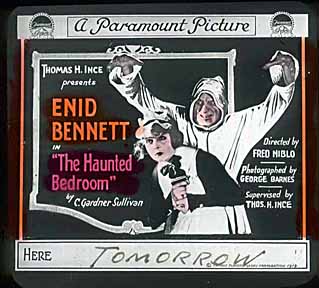
A definitive 6.6/10 rating for a film that redefined the boundaries of cult cinema. The Haunted Bedroom remains a cornerstone of transgressive art.
Stepping back into the annals of early cinema, one often finds narratives that, despite their technological limitations, resonate with an enduring power. The Haunted Bedroom, a gem from the silent era, is precisely such a film. It’s a testament to the potency of visual storytelling and the human inclination towards mystery, even when expressed through the exaggerated gestures and dramatic intertitles characteristic of the period. This isn't just a simple ghost story; it's a fascinating exploration of perception, deception, and the tenacious spirit of a woman determined to unearth truth, no matter how unsettling.
At its heart, the film introduces us to Betsy Thorne, portrayed with a compelling blend of pluck and vulnerability by Dorcas Matthews. Betsy isn't your typical damsel in distress; she's a New York journalist, a profession that, even in the early 20th century, demanded a certain mettle. Her journey takes her from the urban sprawl to the hushed, almost oppressive atmosphere of a Virginia estate, shrouded in the ominous whispers of a disappearance. Daniel Arnold, the estate's scion, has vanished, and the local rumor mill is churning with tales of spectral visitations. It's a classic setup for a Gothic mystery, yet director Fred J. Balshofer, working from C. Gardner Sullivan's intricate screenplay, imbues it with a distinct energy that keeps the viewer captivated.
Betsy's initial foray into the Arnold household is a masterclass in journalistic subterfuge. Disguising herself as a maid, she infiltrates the very core of the mystery, gaining an unparalleled vantage point into the lives of those touched by Daniel's absence. This strategy immediately elevates Betsy beyond a passive observer, casting her as an active agent in a world often dominated by male protagonists. It’s a subtle nod to the burgeoning independence of women during this period, a theme that, while not overtly political, is certainly palpable in Betsy’s audacious actions. The estate itself becomes a character, its grand, decaying architecture a silent witness to the unfolding drama, its shadows concealing as much as they reveal.
Within these walls, Betsy encounters the principal players in this domestic tragedy. There's Dolores Arnold, Daniel's sister, played by Enid Bennett, whose performance conveys a poignant mixture of grief and a fragile hope. Her relationship with Dr. James Dunwoody, portrayed by William Conklin, adds a layer of romantic tension, a common trope of the era that nevertheless feels sincere here. Conklin brings a certain gravitas to the role, making Dunwoody a figure of quiet strength and concern. Then there's Roland, Dunwoody's son, whose presence, embodied by Jack Nelson, introduces a vital element of suspicion. Nelson's portrayal is nuanced, allowing for Roland to be both a potential ally and a looming threat, keeping the audience guessing about his true intentions. This ensemble, under Balshofer's direction, navigates the delicate balance of melodrama and genuine suspense with commendable skill.
The film truly ratchets up the tension when the supposed supernatural elements begin to manifest. Betsy, despite her professional cynicism, is visibly shaken by the appearance of a ghostly figure emerging from the chapel. The scene is crafted with a simplicity that belies its effectiveness; the silent film's reliance on visual cues and an audience's imagination makes the apparition all the more unsettling. Dorcas Matthews's visceral reaction – a raw, unfeigned scream – is a pivotal moment, humanizing Betsy and grounding the fantastical elements in a relatable fear. This outburst leads to her temporary confinement, a plot device that serves to isolate her further, amplifying the sense of peril and the urgency of her mission. It's a classic move in the suspense playbook, forcing the protagonist to rely on her wits and resourcefulness when all conventional avenues are closed.
The following night, Betsy's indomitable spirit shines through. Escaping her room, she once again confronts the spectral presence, this time in the eerie solitude of the graveyard. This repeated encounter solidifies her resolve, transforming her initial fear into a burning desire for answers. It's a crucial turning point, moving the narrative from a passive observation of haunting to an active pursuit of its source. Her subsequent investigation is a thrilling display of deductive reasoning and sheer audacity. She meticulously examines the chapel, a locus of the strange occurrences, and her persistence is rewarded with a remarkable discovery: a specific sequence of chords played on the chapel organ unlocks a hidden passage. This reveals a secret world beneath the seemingly placid surface of the estate, leading to a forgotten tomb. The ingenuity of this plot point, conceived by C. Gardner Sullivan, highlights a cleverness often overlooked in silent film narratives, proving that intricate mysteries were not exclusive to later eras of cinema.
The climax of The Haunted Bedroom is a masterful unraveling of the mystery. Betsy, with courage as her only companion, ventures into the subterranean passage, confronting the 'ghost' head-on. The revelation is both shocking and deeply human: the spectral figure is, in fact, Daniel Arnold himself, not a supernatural entity, but a man driven to derangement. This twist is classic Gothic literature, where the true horror often resides not in the ethereal, but in the psychological depths of human depravity and madness. Furthermore, Betsy uncovers an even more profound secret: Daniel is not merely a troubled individual, but an international forger, a criminal sought by the law. This final layer of deception transforms the domestic mystery into one with far-reaching implications, adding a satisfying complexity to the narrative. The film, in its conclusion, expertly ties together all the disparate threads, leaving no stone unturned in its pursuit of clarity.
The performances across the board, while adhering to the dramatic conventions of silent cinema, are remarkably effective. Dorcas Matthews as Betsy Thorne is a revelation, embodying a nascent form of the strong female lead that would become more common in later decades. Her expressive eyes and precise gestures convey a wide range of emotions, from fear to fierce determination. Lloyd Hughes, Harry Archer, and Otto Hoffman, though in supporting roles, contribute significantly to the film's atmospheric density, each adding a brushstroke to the overall canvas of suspicion and intrigue. The film's strength lies not only in its plot but also in its ability to extract compelling performances from its cast, leveraging the unique demands of silent acting to create memorable characters.
From a technical standpoint, The Haunted Bedroom showcases the sophisticated craftsmanship prevalent in early 20th-century filmmaking. The cinematography, though black and white, effectively utilizes shadow and light to create a palpable sense of dread and mystery. The confined spaces of the estate, the dark passages, and the moonlit graveyard are all rendered with an artistry that enhances the narrative's Gothic undertones. Intertitles, the silent film's spoken dialogue, are used judiciously, providing necessary exposition without bogging down the visual flow. C. Gardner Sullivan's screenplay is particularly noteworthy; his ability to construct a multi-layered mystery, complete with red herrings and a satisfying resolution, speaks volumes about his prowess as a writer during an era when cinematic storytelling was still in its formative years.
Comparing The Haunted Bedroom to other films of its time reveals its unique place within the burgeoning landscape of genre cinema. While it doesn't possess the overt social commentary of a film like Damaged Goods, its exploration of deceit and hidden identities aligns with the psychological depth found in some of the more serious dramas of the period. Its depiction of a strong, independent female protagonist, actively driving the plot forward, echoes the spirit of empowerment seen in films like Runaway Romany, even if their narrative contexts differ vastly. The suspense and investigative elements could also be seen as precursors to more serialized mysteries like The Trail of the Octopus, demonstrating a shared fascination with complex plots and cliffhangers, albeit in a feature-length format.
The film also masterfully plays with the audience's expectations regarding the supernatural. In an era where spiritualism still held a strong cultural sway, the initial presentation of a genuine ghost would have been entirely plausible for many viewers. The eventual reveal that the 'haunting' is a meticulously orchestrated deception, a means to conceal a criminal enterprise, is a clever subversion of these expectations. This narrative technique anticipates later horror and mystery films that would frequently ground their fantastical elements in a rational, human explanation. It's a testament to the film's forward-thinking approach to storytelling, moving beyond simple scares to a more intricate psychological thriller.
The character of Daniel Arnold, though largely unseen until the climax, serves as a powerful focal point for the entire narrative. His descent into derangement and his double life as an international forger add a tragic dimension to the story. It's a stark reminder that the most terrifying monsters are often human, driven by their own desires and madness. The film doesn't shy away from exploring the darker facets of human nature, presenting a world where appearances are deceiving and trust is a fragile commodity. This moral ambiguity, while not as pronounced as in films like The Outlaw and His Wife, which delves into more explicit criminality and moral gray areas, is nonetheless a significant undercurrent in The Haunted Bedroom.
Furthermore, the film's use of the chapel as a central location for both the supposed haunting and the eventual revelation is highly symbolic. Chapels, traditionally places of sanctuary and spiritual solace, are here transformed into a hub of deception and hidden passages. This subversion of sacred space adds another layer of intrigue, suggesting that even the most hallowed grounds can harbor dark secrets. The organ, an instrument typically associated with religious ceremony, becomes the key to unlocking the truth, further emphasizing this clever interplay between the sacred and the profane.
In a broader context, The Haunted Bedroom stands as a compelling example of how silent films, despite their perceived limitations, were incredibly adept at crafting intricate and engaging narratives. They relied heavily on visual metaphors, the expressive power of their actors, and the audience's active participation in deciphering the story. This film, with its detailed plot, well-developed characters, and atmospheric setting, proves that the early cinema was far from simplistic. It laid much of the groundwork for the narrative structures and genre conventions that would define filmmaking for decades to come. Its influence, though perhaps not as overtly celebrated as some of its contemporaries, is undeniable in the lineage of mystery and suspense cinema.
The film's enduring appeal lies in its timeless themes: the allure of the unknown, the pursuit of justice, and the resilience of the human spirit in the face of adversity. Betsy Thorne's journey from skeptical reporter to courageous detective is a narrative arc that continues to resonate. Her character is a beacon of ingenuity and bravery, qualities that transcend the specific historical context of the film. For those interested in the evolution of cinematic storytelling, particularly within the mystery genre, The Haunted Bedroom offers a rich and rewarding viewing experience. It's a reminder that even without spoken dialogue, a compelling story, well-told, can captivate and thrill audiences across generations.
The legacy of silent cinema is often reduced to its most famous examples, but it is in films like this that one discovers the breadth and depth of early filmmaking. It's a world of intricate narratives, powerful performances, and innovative techniques that continue to inspire. The Haunted Bedroom is more than just a historical artifact; it is a vibrant, thrilling piece of cinematic art that deserves a wider audience and a deeper appreciation for its contributions to the mystery genre. It is a testament to the fact that a truly engaging story, coupled with creative direction and compelling acting, can overcome any perceived limitations of its medium. Its layers of intrigue, from the initial disappearance to the final, shocking reveal, make it a standout example of early American cinema's capacity for sophisticated storytelling. The film showcases how a seemingly simple premise can blossom into a complex tapestry of crime, madness, and courageous investigation, leaving a lasting impression long after the final intertitle fades.

IMDb 6.8
1928
Community
Log in to comment.