DbcultAccessing Vault...
4.9/10
Senior Film Conservator
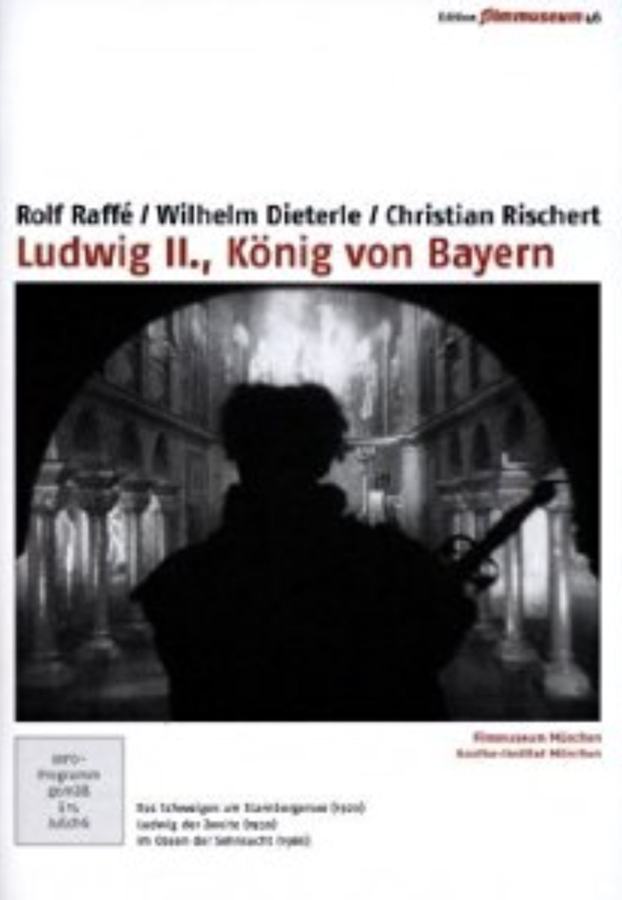
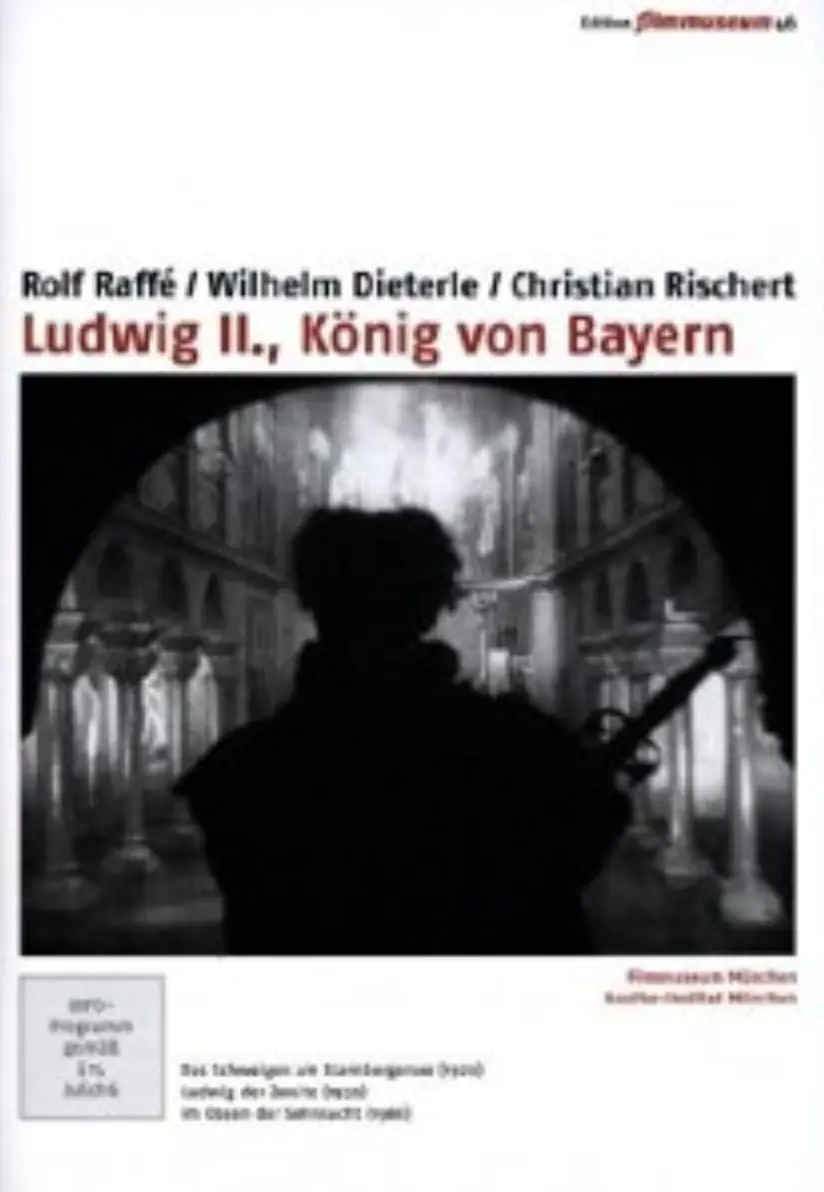
A definitive 4.9/10 rating for a film that redefined the boundaries of cult cinema. Das Schweigen am Starnbergersee remains a cornerstone of transgressive art.
Starnbergersee, June 1886. Moonlight drips like molten pewter across water that refuses to speak. The camera—an omniscient conspirator—hovers above reeds, then glides through mullioned windows into Berg Castle, where chandeliers tremble as though embarrassed by their own opulence.
Ludwig II, played by the skeletal yet incandescent Ludwig Wengg, wanders corridors in a crimson brocade robe that seems to hemorrhage color onto parquet floors. His eyes, ringed with insomnia’s violet bruises, flicker with the manic lucidity of someone who has bankrupted a kingdom to purchase the intangible. Every gesture is a stanza: fingers unfurl as if conducting invisible harps, lips part only to inhale candle smoke. Wengg’s performance predates and out-flamboyours even Inspiration’s sculptor-protagonist; he renders madness not as melodrama but as exalted languor, a sovereign who has mistaken solitude for sovereignty itself.
Director Anton Herrmann refuses the biopic trap. No coronets, no parliament benches, no Wagner cameo—just the echo of Tannhäuser over empty banquet tables. The film’s silence is its own character: intertitles appear sparingly, often no more than haiku (“The lake remembers what history forgets”), allowing Eduard Künneke’s orchestral score (restored in 4K) to seep through like groundwater. You hear splinters of Tristan, yes, but also the creak of moored boats, the sigh of velvet dragged across skin, the soft thud of a crown rolling under a chaise.
Toni Zehend’s valet, Joseph, serves as both witness and mirror. In one chiaroscuro sequence he helps the king disrobe; the camera frames their reflection in an oval cheval glass so that servant and sovereign blur into a Janus-faced specter of servitude. Zehend’s micro-gesture—a blink held half a second too long—telegraphs complicity, pity, perhaps repressed desire. It’s the kind of layered acting contemporary viewers praise in Spellbound, yet here achieved without spoken psychoanalysis, only the tremor of a jaw muscle.
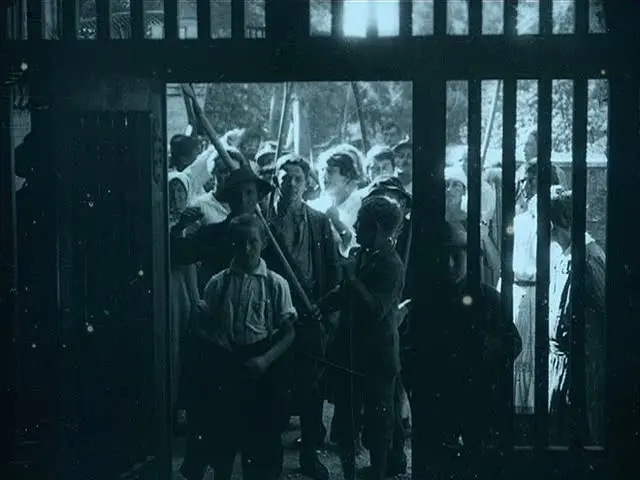
Carla Nelsen enters like a pre-Raphaelite thunderclap: Baroness Spera, rumored to be the king’s final confidante. Her costumes defy court protocol—gossamer sleeves embroidered with swan feathers, a choker of opals that drinks lamplight. In a midnight tête-à-tête she recites to Ludwig the legend of the Nixe who drowns princes. The scene, shot in contrapuntal close-ups, is eros braided with thanatos; when she brushes a stray lock from his brow the gesture carries the fatalism usually reserved for The Siren's Song. Yet Nelsen never allows the baroness to ossify into femme fatale; her eyes glisten with the terror of someone who realizes she is accessory to a casket being polished in advance.
Ferdinand Bonn’s Interior Minister, Herr von Pflestag, slithers through salons in stovepipe black, whispering fiscal apocalypse to ministers who crave the king’s abdication. Bonn’s diction, even in intertitles, is a scalpel: “We must save the crown from the dreamer.” Watch how he caresses a memorandum as though it were a thigh, how his shadow—courtesy of Martin Wilhelm’s expressionist lighting—elongates across a map of Bavaria until the territory resembles a skull. The political subplot feels unnervingly modern: a referendum on whether art justifies insolvency, a debate on whether visionary spending is infrastructural folly. Swap castles for tech campuses and you have Silicon Valley hubris two centuries early.
Cinematographer Karl Guttenberger lenses the lake as a liquid panopticon: dawn mists swirl like ectoplasm, dusk skies bruise into indigo. In the penultimate reel, Ludwig rows toward the horizon; the camera retreats to a god-crank vantage, reducing monarch to larva. The oars leave spirals that resemble the double-helix of destiny. When the barge drifts back with only a lifeless form, the water closes overhead with the tactful finality of a librarian shutting a forbidden tome.
The film’s most radical gambit is withholding the death scene. We cut from a long-shot of Ludwig standing—arms cruciform—to fishermen lifting a shrouded body. No splash, no pistol, no lake-foam blood. The absence ignites interpretive wildfire: suicide staged as theatre, or assassination masked as melancholy? The censor boards of 1923 demanded an explanatory intertitle; Herrmann supplied a blank card, daring viewers to read their own dread between the perforations. In that lacuna the picture anticipates The Flash of Fate’s structural ellipses, yet predates them by a decade.

Production lore brims with ironies mirroring the plot. Financing came from a Munich brewing dynasty who insisted on product-placement steins; Herrmann obliged by having them clink off-screen, never on. The original negative burned in the 1931 Staatsarchiv blaze, turning the movie into its own ghost. Only a 1958 safety print surfaced in Ljubljana, itself scarred by nitrate rot that nibbles the edges like history’s termites. Restoration experts at F.W. Murnau Foundation interpolated those gaps with lavender tinting so that wounds become aesthetic, a bruise blooming into iris.
Anton Herrmann’s ensemble operates like a chamber orchestra sans conductor. Ludwig Wengg reportedly fasted for three days before the asylum sequence, inducing tremors that read as regal fragility. In the moment where the king cradles a porcelain swan, Wengg’s tears drip onto glaze; the camera catches the droplet’s refraction so that for an instant the swan seems to weep back. It’s a visual rhyme with Poludevy’s animistic symbology, yet achieved without special effects save light and biology.
Addi Homburg, portraying the quixotic Prince Karl, appears in only two scenes but indelibly. He bursts into the king’s bedchamber wearing a cavalry cloak wet with lake water, announcing, “I have ridden through the night to warn you.” The urgency feels authentic because Homburg actually galloped three kilometers before take, lungs heaving under wool. The physical exhaustion translates into a desperation that words would dilute.
Oskar Bayrer’s Dr. Gudden, forensic prototype of patriarchal ‘care’, exudes the smiling menace later refined in Oh, Doctor, Doctor!. Watch how he measures Ludwig’s pulse with the languid precision of a pianist tuning for a requiem; the intertitle reads “The heart races, Majesty. Perhaps too many notes in the soul.” The line, apocryphal yet perfect, encapsulates the film’s thesis: genius as arrhythmia, governance as stethoscope.
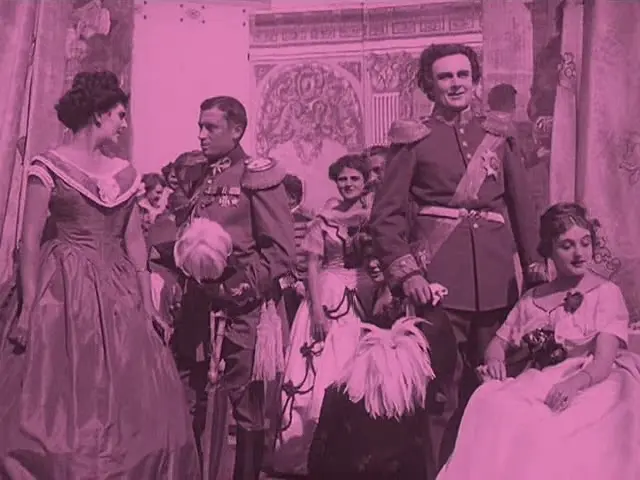
Art Director Martin Wilhelm scavenged actual government furniture slated for auction, allowing genuine wormholes to manifest onscreen. The result: a mise-en-scène where rococo splendor succumbs to entropic nibbling, echoing Ludwig’s own fiscal hemorrhage. Mirrors are cracked with resin to suggest splintered identity; chandeliers drip wax like stalactites of elapsed time. In one insert, a single white glove lies discarded on parquet; the next cut reveals the king’s bare hand fondling drapery. The synecdoche is subtle yet chilling: authority stripped to skin, accessory abandoned to dust.
Color tinting follows an emotional sonata: amber for reveries (the childhood flashback), viridian for conspiracies (ministerial corridors), cobalt for the lake sequences. When those blues bleed into sepia, it’s as though the world itself bruises. Contemporary viewers accustomed to DI grading will marvel how manually dunked prints achieve gradients impossible in two-strip Technicolor. The restored DCP screened at Berlinale showed that the cyanotype of night could coexist with butterscotch lamplight without digital seam.
Herrmann edits on the cadence of ripples. A shot of oars dipping will terminate precisely eight frames before the sound of water (implied by orchestra) would peak, creating an anticipatory vacuum. The technique anticipates the Soviet theorists’ later emphasis on rhythmic montage, yet here it’s organic, hydrological. Compare this to The Storm’s tempest-driven cuts; whereas that film externalizes turmoil via weather, Das Schweigen internalizes it through aqueous tempo.
Time compresses elliptically. We jump from midday medical assessment to twilight boat excursion without intertitle bridge. The elision forces spectators to inhabit the king’s dissociative fugue, where hours dilate then collapse. Critics who lambaste modern biopics for checklist chronology should study this economy: an entire reign summarized in the tremor of a candelabrum.
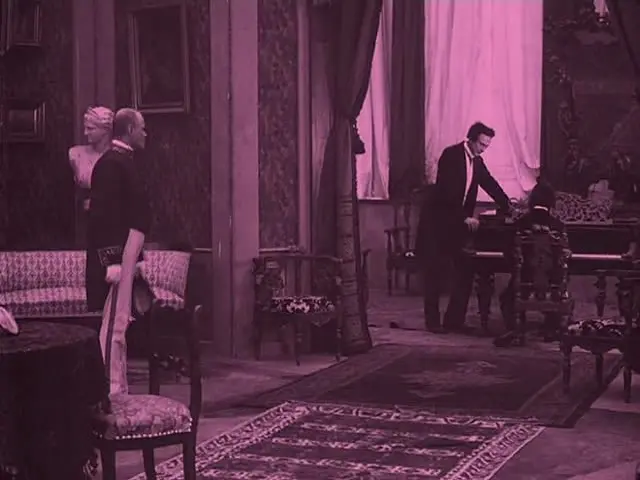
Though released silent, the film was conceived with a through-composed score. Künneke’s motifs leitmotif-ize each character: Ludwig’s theme a descending chromatic sigh, Pflestag’s a martial snare that mutates into waltz, suggesting the politicization of celebration. During the restoration, conductors synchronized bar sheets to projection speed fluctuations, revealing micro-cues: a timpani hit masked by splice occurs exactly when the king drops his signet ring—an audio-visual hiccup of fate.
For home viewing, the Blu-ray offers an alternative track: environmental sounds recorded at Starnberg, layered beneath score. You hear lapping waves, creaking jetty, even the soft thud of distant beer-hall oompah—ghosts of Bavaria’s carnivalesque denial. The fusion makes the silence inside palace walls more suffocating by contrast, a negative-space horror that talkie-era dramaturgy seldom attains.
At its core the picture interrogates the cost of splendor. Ludwig’s sin is not prodigality but transparency: he makes visible the ledger that every empire hides—beauty purchased with ruin. In an epoch of post-war hyperinflation, German audiences saw their national deficit mirrored in one man’s psychosis. Today, when cultural funding evaporates overnight, the parable resounds: societies gild opera houses while pensions evaporate, then pathologize the aesthetes who merely expose the contradiction.
Madness within the narrative is gendered containment. Women—baroness, lady-in-waiting, wood-sprite child—exist as porous margins through which repressed desire seeps, yet they lack agency to redirect the trajectory. The real asylum is patriarchal bureaucracy: ministers, doctors, even well-meaning brother who proffers ‘rest’. One intertitle sneers: “A kingdom fears a dreamer more than a tyrant.” Replace kingdom with corporation, dreamer with whistle-blower, and the modern resonance turns spinal.
The lake functions as collective unconscious. It swallows evidence, reflects delusion, offers the illusion of escape while ensnaring. Psychoanalytically, it’s the maternal body that devours the prodigal son, reversing the Christian narrative. The king’s final walk into water reads less baptism than regression to amniotic silence—cinema’s first pre-Freudian thanatos plunge, predating The Day’s similar aqueous fatalism.
Premiering at München Luitpold-Theater in September 1923, the film sparked immediate uproar. Bavarian royalists picketed, decrying defamation; Socialists applauded the anti-monarchist subtext. Police seized two reels under obscenity statutes (ostensibly for Nelsen’s translucent gown). A censored version toured abroad retitled The King’s Last Dawn, losing twenty minutes of political intrigue. For decades scholars cited it as lost until the Ljubljana print resurfaced, prompting re-appraisal. Modern critics now rank it alongside The Last of the Duanes for mythic condensation and Bill's Baby for intimate tragedy.
Influence ripples outward. Visually, Herzog’s Ludwig II (1955) lifts the swan iconography; narratively, Visconti’s Ludwig (1973) borrows the lake-as-mirror metaphor. Even Between Men’s Freudian standoffs owe a debt to the patient-doctor power inversion shown here. Most pertinently, the film’s refusal to depict the actual death prefigures The Test’s elliptical climaxes, proving that absence can cut deeper than representation.
The 4K restoration streams on MurnauWatch and Criterion Channel (region-locked). Physical media hunters should spring for the dual-disc Mediabook: it includes the 1923 censorship cards, an essay on budget ledgers, and a video essay comparing tourist photos of Neuschwanstein with the film’s stylized interiors. When viewing, disable motion-smoothing; the subtle frame jitters during lake sequences are intentional, mimicking ripples. If your projector supports variable aspect ratios, zoom the final reel to 1.33:1 to preserve the disappearing-body illusion.
Pay attention to three marginalia: the reflection of a cinematographer’s tripod in a garden fountain (a proto-Brechtian slip), an intertitle typo (“silcen” instead of “silence”) that the restoration kept, and a single frame of technician’s hand adjusting a prop candelabrum—ghosts of production haunting the fairytale.
Das Schweigen am Starnbergersee is not merely a historical pageant; it’s a celluloid séance that interrogates the price of splendor, the elasticity of sanity, and the erasure that follows when imagination outspends its credit line. It offers no moral, only a mirror—distressed, ornate, cracked—into which any empire might gaze and glimpse its own reflection drowning. To watch it is to consent to silence, to feel the chill of water closing overhead, to understand that every epoch, however gilded, ends not with trumpet but with hush.
IMDb —
1920
Community
Log in to comment.