DbcultAccessing Vault...
Cult Review
Senior Film Conservator
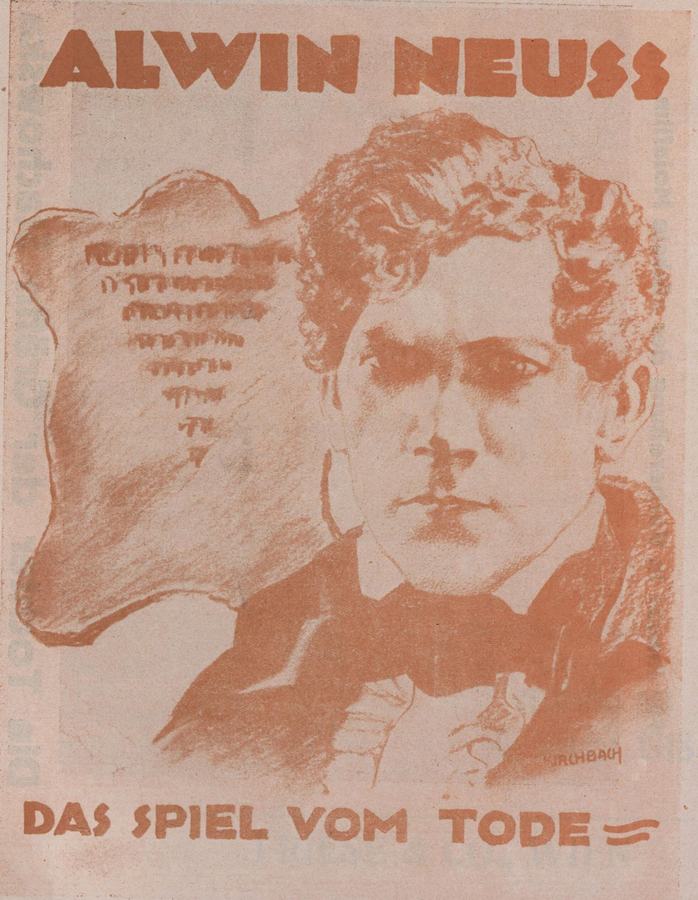
Stepping back into the flickering shadows of early 20th-century German cinema, one encounters a fascinating, often overlooked gem: Das Spiel vom Tode. This is not merely a film; it is a profound philosophical treatise draped in the guise of a gripping melodrama, a cinematic exploration of human frailty and the relentless grip of destiny. The very title, 'The Game of Death,' immediately conjures an atmosphere of high stakes and existential dread, promising a journey into the moral abyss that few films of its era dared to tread with such unflinching gaze. It is a work that, even a century later, resonates with an eerie prescience, probing the timeless questions of choice, consequence, and the seductive allure of forbidden gambles.
The credit for the narrative's profound depth, in part, goes to the illustrious Honoré de Balzac, whose literary genius undoubtedly informed the screenplay penned by Paul Otto. The inclusion of Balzac's name immediately elevates the film beyond a simple potboiler, suggesting a sophisticated engagement with character psychology and societal critique. One can almost feel the echoes of La Comédie humaine in its intricate web of moral dilemmas and the stark portrayal of individuals caught in the machinery of fate. This is where Das Spiel vom Tode truly distinguishes itself, moving beyond mere sensationalism to offer a nuanced study of a soul in crisis. The film's central character, Ernst Wagner, portrayed with compelling intensity by Harry Lamberts-Paulsen, embodies the archetypal Balzacian figure: a man of talent and ambition, yet vulnerable to the cruelties of circumstance and the temptations of a world that values lucre over artistic integrity.
Wagner’s plight is rendered with a tangible sense of desperation. We see a sculptor, his hands meant for creation, forced to consider the destruction of his own moral fabric to save his ailing sister. This familial devotion, a common trope in silent cinema, is here imbued with a raw, almost visceral urgency. The film meticulously establishes the pressures that drive him into the orbit of the clandestine 'game,' where the stakes are not merely financial, but existential. It’s a descent into a shadowy underworld, masterfully crafted to feel both alluring and menacing, a stark contrast to the quiet dignity of Wagner's artistic pursuits. The tension is palpable, a slow burn that draws the viewer into Wagner’s escalating predicament with an almost suffocating intimacy. This intricate character development, so crucial to the film's success, is a testament to the powerful combination of Balzac's narrative sensibility and Otto's screen adaptation.
The performances in Das Spiel vom Tode are, for the most part, a masterclass in silent film acting, leveraging exaggerated gestures and expressive facial work to convey profound inner turmoil. Margarete Ferida, as the enigmatic Lena, is a revelation. Her portrayal is a delicate balance of vulnerability and cunning, creating a character whose motivations remain tantalizingly ambiguous throughout much of the narrative. Is she a victim of circumstances, or a willing participant in the dark machinations that ensnare Wagner? Ferida's eyes, even through the grainy lens of archival footage, convey a wealth of unspoken emotion, hinting at a complex inner life that adds layers of intrigue to her interactions with Wagner. Her presence on screen is magnetic, drawing the viewer into her web of secrets and desires.
Opposing this struggling duo is Alwin Neuß as Baron von Kronberg, the architect of the 'game.' Neuß delivers a chilling performance, embodying the cold, calculating detachment of a man who views human lives as mere pawns in his grand, morbid chess match. His almost reptilian stillness, punctuated by subtle, menacing gestures, projects an aura of impenetrable power and control. Kronberg is not merely a villain; he is a force of nature, an embodiment of the indifferent, almost cosmic, forces that can crush individual aspirations. His interactions with Wagner are less confrontations and more a cat-and-mouse game orchestrated by a master predator. The tension between Neuß’s icy composure and Lamberts-Paulsen’s frantic desperation forms the emotional core of the film, driving its narrative forward with relentless momentum.
The supporting cast also contributes significantly to the film's rich tapestry. Käthe Haack, though perhaps in a smaller role, brings a quiet dignity and pathos to her character, often serving as a moral compass or a symbol of the innocence that Wagner risks losing. Paul Passarge, Lu Synd, Kurt Bobeth-Bolander, and Leo Connard each contribute to the atmospheric tableau, populating the shadowy world of the gambling den and the stark realities of urban life, lending credibility and depth to the film's mise-en-scène. Their collective efforts create a believable, if morally compromised, world for Wagner's tragic journey to unfold.
Visually, Das Spiel vom Tode is a masterclass in silent film aesthetics. The cinematography, while perhaps not reaching the expressionistic heights of later German classics, effectively uses light and shadow to underscore the film’s thematic concerns. The stark contrasts between the impoverished artist's studio and the opulent, yet claustrophobic, gambling salon are particularly striking. Shadows cling to Wagner as his moral compass falters, while the harsh, unblinking light often illuminates Kronberg's cold, calculating gaze. The sets themselves are more than mere backdrops; they are extensions of the characters' psychological states, contributing to the overall sense of foreboding and entrapment.
The pacing, a crucial element in silent film where intertitles carry much of the narrative burden, is expertly handled. The film builds tension gradually, allowing the audience to fully absorb Wagner's mounting desperation and the insidious allure of the 'game.' The editing creates a rhythm that mirrors the protagonist's internal struggle, accelerating during moments of high drama and slowing down for poignant reflections. This deliberate pacing allows for a deeper emotional engagement, preventing the melodrama from feeling superficial. It’s a testament to the director's understanding of how to manipulate the cinematic language of the era to maximum effect, creating an immersive experience that transcends the limitations of its medium.
Placing Das Spiel vom Tode within the broader context of early cinema reveals its unique contributions and thematic parallels. While it predates the full blossoming of German Expressionism, one can discern nascent elements of the movement in its atmospheric gloom and psychological intensity. Its exploration of urban desperation and moral compromise aligns it with films like Oliver Twist (though far darker in tone) in its portrayal of societal undercurrents, or even Her New York in its urban setting, albeit with a dramatically different thematic focus. The film’s focus on the individual's struggle against overwhelming forces, be they societal or internal, finds echoes in the psychological dramas of the period.
The central 'game' itself evokes a lineage of narratives concerned with chance and fate. One might draw a thematic line to films like Gambler's Gold, though Das Spiel vom Tode imbues its gambling with a far more profound, almost spiritual, weight. It's not just about winning or losing money; it’s about the soul's ultimate wager. The sense of impending doom and the protagonist's entanglement in a dangerous web also bear a kinship with films like Flirting with Death, where peril is a constant, palpable presence. However, Das Spiel vom Tode elevates this peril by grounding it in deeply human psychological conflict, moving beyond mere thrills to explore the ethical ramifications.
The film’s portrayal of a powerful, manipulative antagonist like Baron von Kronberg also brings to mind the machinations seen in narratives such as The Murdoch Trial, where individuals are pitted against formidable, often corrupt, systems. Here, however, the system is less legal and more an insidious social construct, a dark societal underbelly that preys on the vulnerable. The narrative's focus on a woman with ambiguous loyalties, like Lena, could also be seen in a lineage of complex female characters, perhaps even hinting at the nuanced psychology of a character found in Hedda Gabler, though their contexts and choices are vastly different. These comparisons serve to highlight Das Spiel vom Tode's position as a significant, albeit perhaps less widely known, contributor to the cinematic discourse of its time.
In its climax, Das Spiel vom Tode delivers a powerful, albeit morally ambiguous, resolution that eschews easy answers. It challenges the audience to confront the difficult truths about human nature and the societal structures that often dictate our fates. The film’s refusal to offer a simplistic 'good versus evil' narrative is one of its most compelling strengths, cementing its status as a work of considerable artistic merit. It leaves a lingering impression, a silent whisper that continues to echo long after the final frame.
For modern viewers, encountering Das Spiel vom Tode is an opportunity to connect with a foundational period of cinematic storytelling. It reminds us of the power of visual narrative, even without spoken dialogue, to convey complex emotions and profound ideas. The film is a testament to the enduring craft of its actors, who communicated entire worlds through their expressions and movements. It stands as a valuable artifact, not just for its historical significance, but for its timeless exploration of the human condition. It prompts reflection on the games we play, the gambles we take, and the ultimate price of our choices. To watch Das Spiel vom Tode is to engage with a piece of cinematic history that speaks volumes, even in its profound silence, a compelling argument for the preservation and appreciation of these early, often forgotten, masterpieces.
Its rich characterizations, particularly the interplay between Ferida's mysterious allure and Neuß's chilling detachment, coupled with Lamberts-Paulsen's raw vulnerability, create a compelling dynamic that keeps the viewer enthralled. The film's meticulous attention to atmosphere and its intelligent adaptation of Balzacian themes elevate it beyond mere genre fare. It becomes a commentary on the societal pressures that can drive individuals to desperate measures, a critique of the moral compromises demanded by a world obsessed with material gain. This nuanced approach, rare for its time, ensures that Das Spiel vom Tode remains relevant, prompting us to consider the 'games of death' that still play out in various forms in our contemporary society. It's a powerful and thought-provoking experience, a journey into the heart of darkness that ultimately illuminates the resilience, and sometimes the downfall, of the human spirit.
The artistic direction, subtle yet impactful, utilizes the limited technological palette of the era to maximum effect. Consider the stark contrast between the bright, almost ethereal light that occasionally bathes Wagner’s studio, symbolizing his artistic purity, and the oppressive, shadowy gloom that pervades Kronberg’s domain. These visual cues are not accidental; they are deliberate choices that reinforce the narrative’s thematic struggle between light and darkness, hope and despair. The costume design, too, plays a crucial role, with Lena’s elegant yet often severe attire hinting at her dual nature, while Kronberg’s impeccably tailored suits signify his power and detachment. Every element on screen is carefully orchestrated to contribute to the film’s overarching mood and message. It’s a masterclass in silent storytelling, where every gesture, every set piece, and every shift in lighting carries significant weight, speaking volumes without uttering a single word. This visual eloquence is what truly allows Das Spiel vom Tode to transcend its historical context and communicate directly with a modern audience, proving that true artistry is timeless.
IMDb 5
1917
Community
Log in to comment.