DbcultAccessing Vault...
Cult Review
Senior Film Conservator
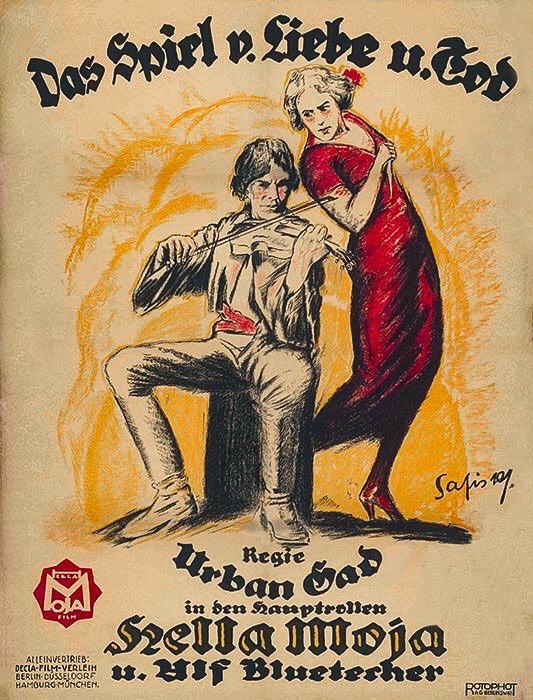
Stepping back into the hallowed halls of early cinema, one often encounters works that, despite their age, possess an undiminished capacity to enthrall and provoke. Urban Gad's Das Spiel von Liebe und Tod stands as a towering testament to this enduring power, a silent film that speaks volumes through its exquisite visual storytelling and the raw emotionality of its performances. Released during a tumultuous period, both historically and artistically, Gad's creation transcends mere historical artifact to deliver a drama of profound human struggle, where the heart’s desires clash violently with the unforgiving realities of class, ambition, and societal expectation. This isn't just a movie; it's a meticulously choreographed dance of fate, a poignant ballet of yearning and despair, masterfully conducted by a director at the zenith of his craft.
Urban Gad, a name synonymous with pioneering cinematic artistry, particularly in his collaborations with Asta Nielsen, here demonstrates a singular command over the medium's nascent language. His direction in Das Spiel von Liebe und Tod is less about grand gestures and more about the subtle interplay of gazes, the eloquent slump of a shoulder, the desperate clench of a hand. Gad understands that in the absence of dialogue, every frame must be imbued with narrative weight, every composition a window into the characters' tumultuous inner worlds. The film unfolds with a deliberate, almost painterly rhythm, each scene meticulously constructed to heighten emotional resonance. He wields light and shadow not merely as tools for illumination but as extensions of the characters' psychological states, casting long, foreboding shadows over moments of impending doom and bathing scenes of fleeting happiness in a soft, ethereal glow. This artistic sensibility elevates the narrative beyond simple melodrama, transforming it into a sophisticated exploration of human fragility and resilience.
At the heart of this compelling drama are the performances, each a masterclass in silent film acting. Julietta Brandt, as the innocent yet resolute Elara, delivers a portrayal of breathtaking vulnerability and strength. Her eyes, often wide with a mixture of hope and trepidation, convey a universe of unspoken feelings. We witness her journey from an aspiring artist, full of youthful idealism, to a woman scarred by the cruelties of a world unwilling to accommodate pure love. Brandt avoids histrionics, instead opting for a nuanced performance that allows Elara's pain, joy, and eventual despair to slowly seep into the audience's consciousness. Her expressive face becomes a canvas upon which the narrative's most profound emotions are etched, making her character's predicament utterly heartbreaking and relatable.
Opposite Brandt, Paul Morgan embodies Julian, the aristocratic lover whose charm is as undeniable as his moral ambiguity. Morgan crafts a character riddled with internal conflict, a man caught between his genuine affection for Elara and the crushing weight of his financial obligations and societal expectations. His performance is a delicate balance of dashing romantic lead and tormented soul. The subtle shifts in his demeanor, from tender devotion to desperate frustration, reveal the layers of a man struggling against forces seemingly beyond his control. Morgan's Julian is not a simple villain or hero but a complex individual whose tragic flaws contribute significantly to the narrative's somber trajectory. The silent struggles he portrays, the internal tug-of-war, are remarkably vivid, drawing the viewer into his agonizing dilemma.
The antagonist, Alf Blütecher as Baron von Kessel, is a figure of imposing authority and chilling calculation. Blütecher eschews overt villainy for a more insidious portrayal of power and entitlement. His Baron is a man accustomed to having his desires met, viewing Elara not as an individual but as an acquisition, a beautiful adornment for his opulent life. The cold, possessive gaze he directs towards Elara is more menacing than any overt threat, conveying a sense of inevitable doom. Blütecher’s performance underscores the film’s critique of a rigid class structure where human emotions are often secondary to wealth and status. His presence alone is enough to cast a pall over the lovers' fleeting happiness, embodying the external pressures that threaten to crush their bond.
Adding another layer of complexity to this intricate web of relationships is Hella Moja as Vivienne, the alluring socialite. Moja’s portrayal is a fascinating study in duplicity and self-preservation. Vivienne is not merely a rival; she is a catalyst, a woman who understands the transactional nature of her world and uses her beauty and cunning to navigate its treacherous currents. Her interactions with Julian are charged with a dangerous allure, offering him a tempting escape from his financial woes, but at a profound emotional cost. Moja’s performance is captivating, her knowing glances and subtle manipulations painting a portrait of a woman who, while perhaps not inherently malicious, is driven by a powerful instinct for survival in a society that offers women limited avenues for power. The interplay between these four central figures forms the emotional core of the film, each actor contributing to a rich tapestry of human drama.
The supporting cast, including Max Ruhbeck, Esther Hagan, and Margarete Frey, though perhaps with less screen time, each contribute essential brushstrokes to the film's broader canvas. Their presence grounds the central drama within a believable social milieu, providing the necessary context for the main characters' struggles and choices. Their subtle reactions and background actions enhance the overall atmosphere, ensuring that the world of "Das Spiel von Liebe und Tod" feels fully realized and populated.
The very title, Das Spiel von Liebe und Tod (The Game of Love and Death), hints at the profound thematic depths explored within. This is a narrative that delves into the merciless game played by fate, where love is a high-stakes wager and death, in its various forms—be it literal demise, the death of hope, or the sacrifice of innocence—is often the ultimate price. Gad meticulously dissects the societal chasm separating Elara's humble artistic world from Julian's aristocratic, yet indebted, existence, and the Baron's unbridled wealth. This class disparity isn't merely a backdrop; it's an active antagonist, a suffocating force that dictates choices and limits freedoms. The film brilliantly illustrates how economic pressures can corrupt even the purest affections, forcing individuals into agonizing compromises that erode their very souls.
The theme of sacrifice permeates every frame. Elara's unwavering devotion, Julian's desperate attempts to secure his future, and the fateful choices made under duress all speak to the profound sacrifices individuals are compelled to make in the face of insurmountable odds. The film questions the true cost of love and happiness, suggesting that sometimes, the pursuit of one necessitates the abandonment of the other. This tragic realism, devoid of easy answers, resonates deeply, making the characters’ plights all the more poignant. The narrative structure, expertly crafted by Urban Gad himself as the writer, ensures that each twist and turn feels organic, leading inevitably towards its devastating conclusion.
Beyond the compelling performances and intricate plot, Das Spiel von Liebe und Tod is a visual feast. Gad’s command of cinematic grammar is evident in every shot. The use of deep focus, when appropriate, allows for multiple layers of narrative information to be conveyed simultaneously, drawing the viewer's eye across the frame. The sets, though perhaps not as lavish as later Hollywood productions, are exquisitely detailed, reflecting the characters' social standing and psychological states. Elara's modest studio, filled with the tools of her craft, contrasts sharply with the Baron's opulent, yet cold, mansion, symbolizing the clash between artistic integrity and material excess. Costuming, too, plays a crucial role, with Elara's simple, elegant attire standing in stark contrast to Vivienne's more elaborate, fashionable gowns, subtly hinting at their differing roles and motivations within society's intricate dance.
The film's pacing is deliberate, building tension through sustained sequences and well-timed intertitles that provide only essential dialogue, allowing the visuals to carry the bulk of the emotional weight. Gad masterfully employs close-ups to emphasize key emotional moments, drawing the audience into the characters' most intimate struggles. The cinematic techniques, while rudimentary by today's standards, are deployed with such thoughtful precision that they create an immersive and emotionally charged experience. Each frame is a testament to the power of visual storytelling, proving that narrative depth does not require spoken words.
In the broader tapestry of silent cinema, Das Spiel von Liebe und Tod holds a significant place. It exemplifies the rich vein of dramatic storytelling prevalent in European cinema of the era, particularly in Germany, which would soon enter its Expressionist phase. While sharing the melodramatic inclinations of many films of its time, Gad’s work distinguishes itself through its psychological depth and refined visual style. One might draw parallels to the societal entrapment depicted in films like The Pitfall, where characters find themselves ensnared by circumstances beyond their control, or the intense, often tragic, romantic entanglements found in works such as La spirale della morte. However, Gad’s film distinguishes itself by its particular blend of high-stakes romance with a biting critique of class rigidity, making the personal drama feel inextricably linked to broader societal failings.
The film's exploration of a woman's agency, or lack thereof, when faced with powerful male figures and economic necessity, also resonates with themes explored in other contemporary works. Unlike the more overt social commentary of a film like Salvation Nell, which foregrounds the struggles of the working class, "Das Spiel von Liebe und Tod" embeds its critique within the personal tragedy of its protagonists, making the societal pressures all the more insidious. The choices Elara faces, between a loveless marriage of convenience and a passionate but doomed romance, are a poignant reflection of the limited options available to women in that era, a theme that echoes in countless dramas from the period, including those exploring the moral dilemmas of characters in films like The Governor's Lady. Gad’s narrative is less about moralizing and more about observing the devastating consequences of these systemic limitations on individual lives.
It stands as a significant precursor to later German cinematic achievements, showcasing an early mastery of character-driven drama and visual expression that would influence generations of filmmakers. The film’s nuanced approach to its characters, avoiding simplistic good-versus-evil dichotomies, allows for a more profound engagement with the human condition. It reminds us that even in an era without spoken dialogue, cinema possessed an incredible power to articulate complex emotional landscapes and societal critiques.
Watching Das Spiel von Liebe und Tod today is not merely an act of historical appreciation; it is an immersive experience that continues to captivate. Its emotional intensity, the compelling performances of its cast—particularly Julietta Brandt and Paul Morgan—and Urban Gad’s masterful direction combine to create a timeless tragedy. The film, much like a beautifully composed symphony, builds to a crescendo of heartbreak, leaving an indelible impression. It is a powerful reminder of the universal struggles of love, loss, and the relentless march of fate, proving that some stories, told with enough artistry and conviction, can transcend the boundaries of time and medium. This silent masterpiece invites us to reflect on the enduring human quest for connection and the often-painful realities that conspire against it, making it a profoundly moving and essential piece of cinematic history. Its quiet power speaks volumes, resonating with the very core of human experience and reminding us that the 'game' of life and death is one we all, in some form, must play.
IMDb —
1927
Community
Log in to comment.