DbcultAccessing Vault...
5.8/10
Senior Film Conservator
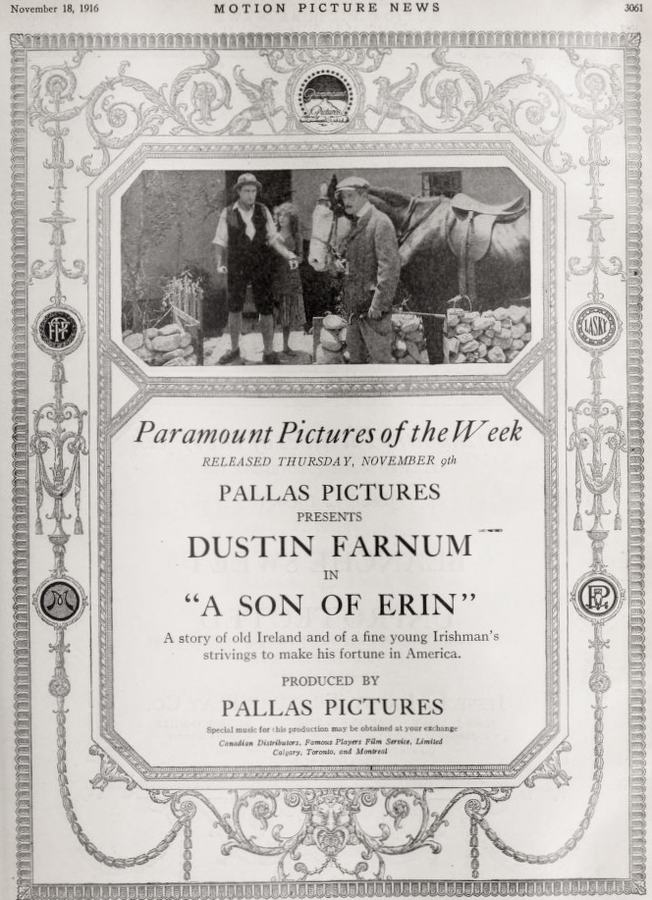
A definitive 5.8/10 rating for a film that redefined the boundaries of cult cinema. A Son of Erin remains a cornerstone of transgressive art.
In the nascent years of the silver screen, few films captured the visceral duality of the immigrant experience with as much gravitas as the 1916 production A Son of Erin. Directed and written by the formidable Julia Crawford Ivers, this work stands as a testament to the sophisticated storytelling that existed long before the advent of synchronized sound. Unlike the more episodic nature of The Adventures of Kathlyn, Ivers opts for a dense, character-driven exploration of sociopolitical evolution. The film is anchored by the titanic presence of Dustin Farnum, whose portrayal of Dennis O’Hara transcends the melodramatic tropes of his era. Farnum brings a mercurial energy to the role, oscillating between the stoic resilience of a laborer and the fiery eloquence of a budding statesman. The film’s aesthetic, characterized by its interplay of naturalistic lighting and meticulously constructed sets, creates an atmosphere of immersive realism that was rare for its time.
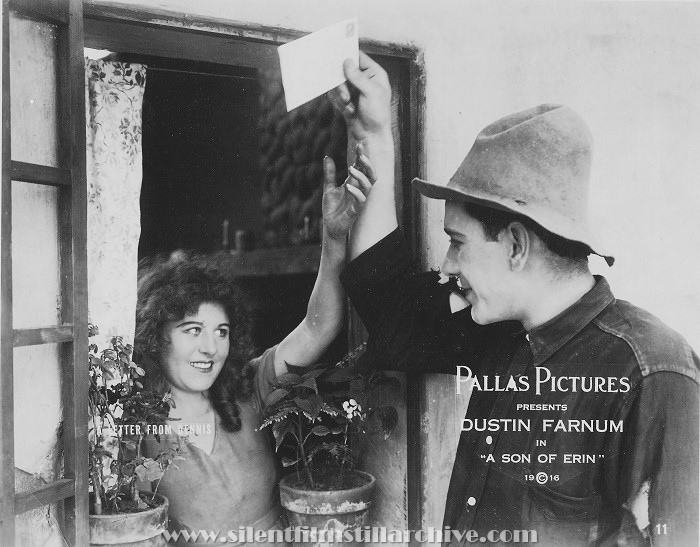
The narrative architecture of A Son of Erin is remarkably modern in its cynicism toward institutional power. We witness O’Hara’s journey not as a simplistic rags-to-riches fable, but as a grueling gauntlet of ethical compromises. This thematic depth mirrors the urban anxieties found in The Country Boy, yet Ivers elevates the stakes by infusing the story with the specific cultural nuances of the Irish diaspora. The supporting cast, featuring stalwarts like Winifred Kingston and Jack Livingston, provides a rich tapestry of archetypes—from the predatory political fixer to the beacon of domestic virtue—each contributing to a world that feels lived-in and dangerously volatile.
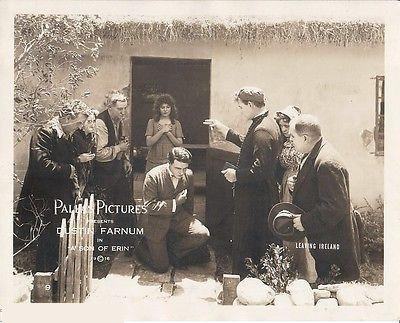
To discuss A Son of Erin without acknowledging the intellectual prowess of Julia Crawford Ivers would be a critical oversight. In an industry that was rapidly becoming a boys' club, Ivers carved out a niche as a storyteller who understood the intersection of personal morality and public duty. Her screenplay avoids the saccharine pitfalls often found in contemporary works like The Common Law, instead opting for a gritty, almost journalistic approach to the political machine. There is a specific precision in how she depicts the betrayal of O’Hara by those closest to him; it is not merely a plot device but a profound commentary on the erosion of traditional values in the face of American industrialism.
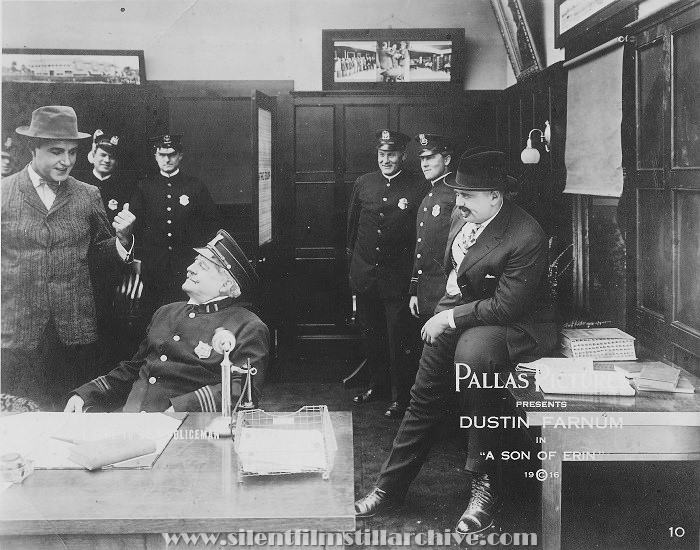
The film’s pacing is deliberate, allowing the audience to marinate in the atmosphere of the tenement districts and the opulent, smoke-filled rooms where deals are brokered. This rhythmic sophistication is a far cry from the frenetic energy of The Red Circle. Ivers uses the camera as an observational tool, lingering on the micro-expressions of her actors to convey depths of emotion that title cards could never fully capture. The sequence where O’Hara first realizes the extent of the corruption surrounding him is a masterclass in visual storytelling, utilizing shadow and composition to reflect his internal fracturing.
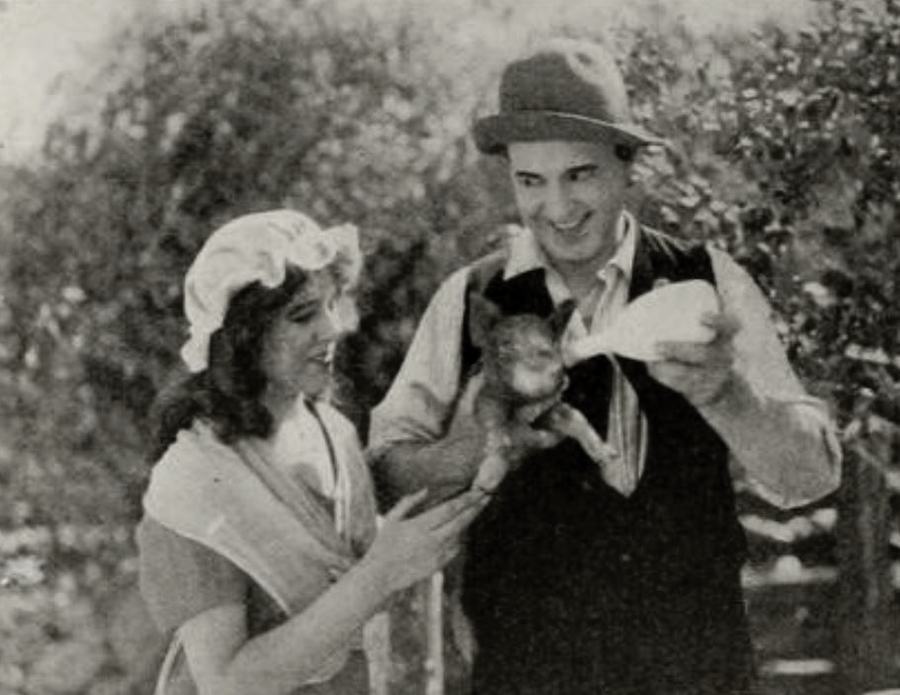
Dustin Farnum was, in many ways, the prototypical American screen hero, yet in A Son of Erin, he deconstructs this very image. His Dennis O’Hara is a man of immense physical power who finds himself increasingly impotent in the face of systemic rot. This performance provides a fascinating counterpoint to the characters seen in Le nabab, where the protagonist's descent is often framed through a lens of aristocratic tragedy. Farnum, by contrast, maintains a proletarian dignity that resonates with the audience’s sense of justice. His chemistry with Winifred Kingston is palpable, providing a romantic core that feels earned rather than forced.
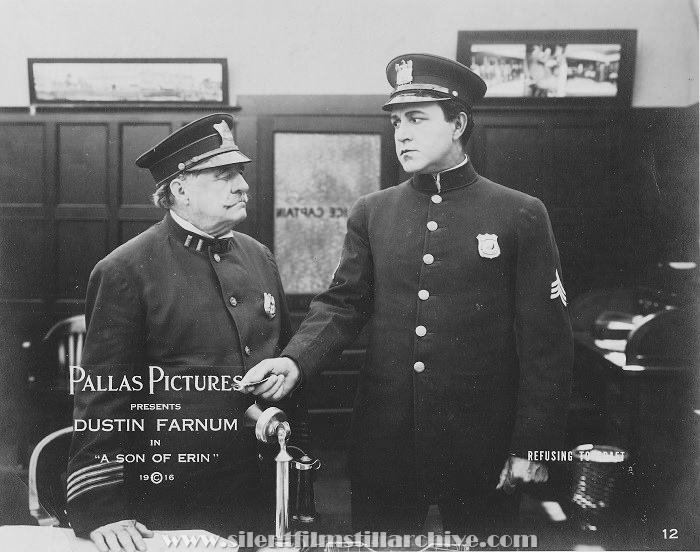
The technical merits of the film, particularly the cinematography by an uncredited but clearly skilled hand, deserve significant praise. The transition from the soft, pastoral tones of the Irish prologue to the harsh, high-contrast lighting of the American metropolis serves as a visual metaphor for O’Hara’s loss of innocence. This use of visual language to support thematic growth is a hallmark of the era's best work, reminiscent of the atmospheric tension found in The Pitfall. The film’s ability to balance these large-scale sociopolitical themes with intimate character beats is what ensures its longevity as a piece of art.
When placed alongside other films of the mid-1910s, A Son of Erin emerges as a surprisingly nuanced piece of social commentary. While What's Bred... Comes Out in the Flesh deals with the inevitability of heritage in a more deterministic fashion, Ivers’ film suggests that while our roots define us, our choices determine our ultimate salvation. The film also avoids the sensationalism found in Voodoo Vengeance or the lighthearted escapism of Pretty Mrs. Smith. Instead, it occupies a middle ground of serious-minded drama that respects the intelligence of its viewers.
The depiction of political corruption in the film is particularly striking. In an era where cinema was often used for blatant propaganda, A Son of Erin offers a more complex view of the democratic process. It acknowledges the necessity of compromise while warning against the total abandonment of one’s principles. This moral complexity is also evident in Sentenced for Life, but where that film focuses on the individual’s struggle against the law, A Son of Erin looks at how the individual can be swallowed by the law itself. The inclusion of characters who represent different facets of the immigrant experience—from the successful but compromised elder to the struggling newcomer—adds layers of verisimilitude that are missing from more simplistic narratives like The Kangaroo.
Ultimately, A Son of Erin is a film about the weight of the past and the uncertainty of the future. The recurring motifs of Irish folklore and music (implied through the intertitles and the rhythm of the editing) serve as a constant reminder of what O’Hara has left behind. This sense of longing is a powerful emotional engine that drives the film forward, distinguishing it from the more plot-heavy El signo de la tribu. The film’s conclusion, which offers a bittersweet resolution rather than a triumphant victory, is a bold choice that reinforces its commitment to realism.
The performances of the supporting cast, including the often-overlooked work of Mabel Wiles and Tom Bates, provide a solid foundation for Farnum’s central arc. The film’s exploration of gender roles, particularly through Kingston’s character, hints at the changing social landscape of the 1910s, a theme further explored in Do Men Love Women?. Even in its more traditional moments, such as the romantic subplots that mirror the sweetness of Cooee and the Echo, there is an underlying sense of melancholy that gives the film its unique flavor. It is a work that demands to be viewed not just as a historical curiosity, but as a vibrant, breathing piece of cinema that captures the soul of a people in transition. The film’s ability to weave together the personal and the political, the local and the universal, makes it a landmark achievement of the silent era. It reminds us that the struggles of a century ago—the fight for identity, the battle against corruption, and the search for home—are the same struggles we face today, albeit in different guises. In the hands of Julia Crawford Ivers and Dustin Farnum, the story of one 'Son of Erin' becomes the story of every individual who has ever dared to dream of a better life in a strange, often hostile land.
IMDb —
1916
Community
Log in to comment.