DbcultAccessing Vault...
Cult Review
Senior Film Conservator
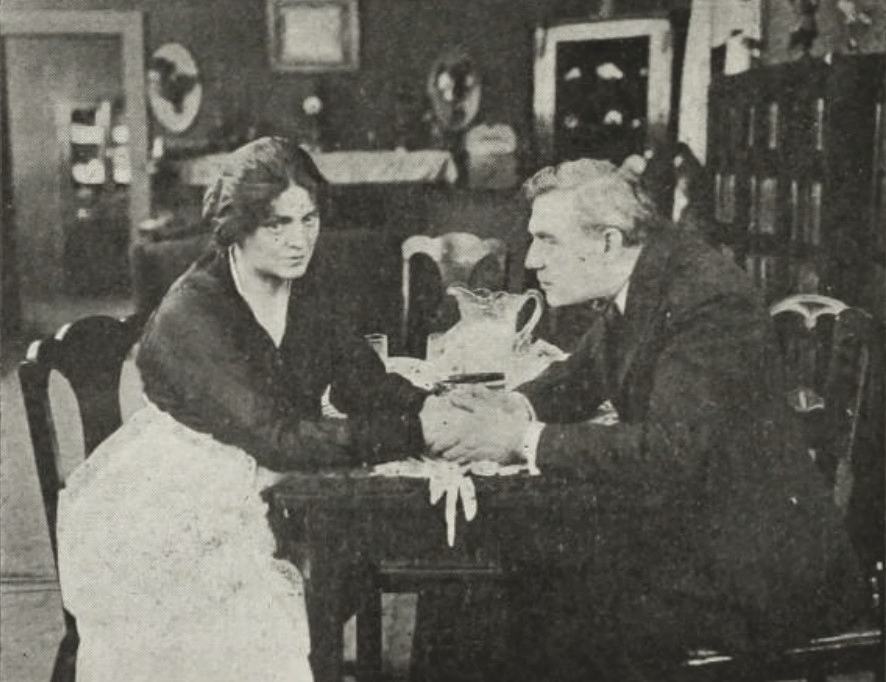
In the nascent era of cinematic storytelling, when narratives unfolded in shimmering monochrome and emotions spoke through exaggerated gesture and poignant intertitle, a film like Life's Whirlpool (1917) emerged as a potent testament to the enduring human spirit amidst relentless adversity. This silent era melodrama, a quintessential product of its time, plunges the viewer into a maelstrom of domestic tyranny, rekindled romance, and ultimately, a gripping quest for justice. Far from being a mere historical curiosity, this picture, penned by the accomplished Lionel Barrymore, showcases a narrative depth and emotional intensity that belies its age, offering a compelling window into the social mores and dramatic conventions that captivated audiences over a century ago. It’s a stark reminder that the fundamental struggles of love, betrayal, and resilience are timeless, echoing through the ages with undiminished force. The film, a powerful example of early American cinema, navigates complex moral landscapes with an unflinching gaze, cementing its place as more than just a historical artifact, but a resonant piece of art.
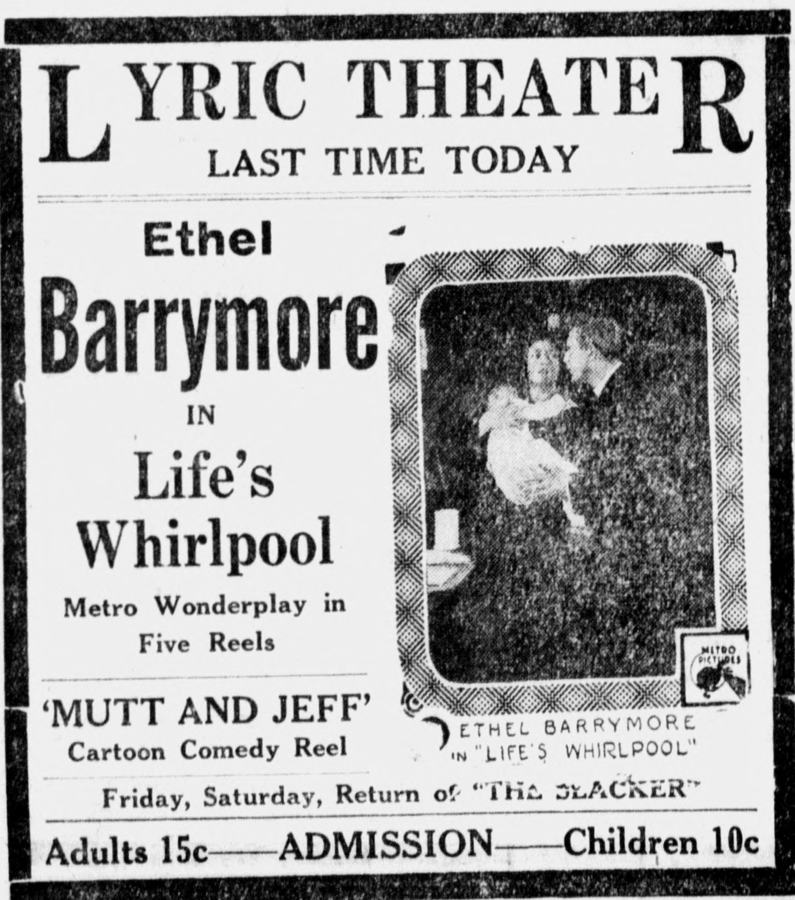
At the heart of this dramatic tapestry is Esther Carey, portrayed with an exquisite blend of fragility and nascent strength by the incomparable Ethel Barrymore. We first encounter Esther as a figure of quiet self-sacrifice, her youthful vitality consumed by the demanding vigil over her ailing father. Upon his passing, a profound isolation engulfs her, leaving her vulnerable to the predations of a society that offered limited avenues for independent women. Her subsequent marriage to John Martin, brought to life with chilling effectiveness by Harvey Bogart, proves not a liberation but a different kind of incarceration. Martin is a man carved from ice, his emotional barrenness a stark contrast to Esther’s yearning for warmth and connection. His neglect is a slow poison, yet it is the insidious venom of his sister, Ruth, played with viperous precision by Ricca Allen, that truly tightens the narrative noose around Esther’s neck. Ruth, accustomed to dominion over her brother’s household, views Esther’s presence as an unforgivable usurpation, orchestrating a campaign of petty cruelties and psychological warfare designed to undermine and isolate the new wife. In this suffocating atmosphere, Esther’s only beacon of light, her sole reason for enduring, is the arrival of her baby, a tender, innocent life that momentarily deflects the encroaching shadows. Barrymore, with her nuanced expressions and eloquent gestures, conveys Esther's mounting despair and the quiet strength brewing beneath her gentle exterior, making her a deeply sympathetic protagonist caught in a web of familial malice and societal expectation. The performance transcends the often-exaggerated stylings of the silent era, imbuing Esther with a genuine, heartbreaking humanity.
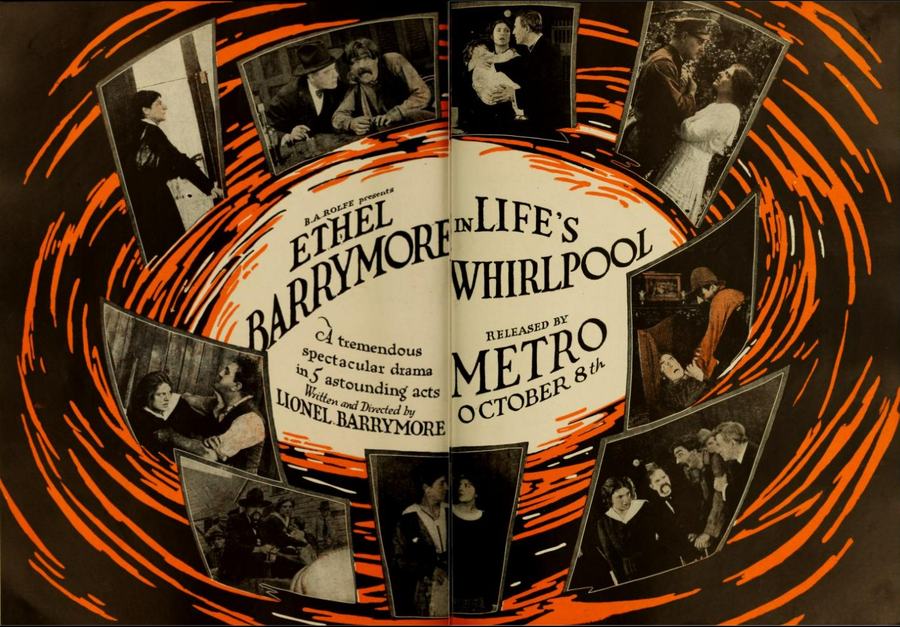
Just as Esther’s existence threatens to become entirely subsumed by misery, a ghost from her happier past materializes in the form of Dr. Henry Grey, portrayed with earnest sincerity by Walter Hiers. Their rekindled affection, a poignant whisper of what might have been, offers Esther a fleeting respite, a reminder of love’s potential warmth in her otherwise frigid reality. The film deftly handles the delicate dance of their renewed connection, emphasizing the purity of their former bond against the backdrop of Esther’s current, untenable situation. However, the rigid societal strictures of the era, coupled with Henry’s own sense of honor, dictate a tragic, if understandable, course of action. Realizing the gravity of their predicament and the impropriety of their affection, Henry makes the ultimate sacrifice, departing for the battlefields of France, a self-imposed exile to preserve decorum and Esther’s reputation. This act of noble renunciation is a cornerstone of melodramatic narrative, resonating with similar themes found in films like Do Men Love Women?, where characters often grapple with impossible romantic choices dictated by circumstance. The Great War, a looming global shadow, thus becomes not merely a historical backdrop but a personal crucible for Henry, transforming his departure into an act of both love and sacrifice, leaving Esther once again adrift, but now with a memory of renewed hope to cling to.
The fragile hope sparked by Henry’s return is cruelly extinguished by the machinations of Ruth. A letter from Henry, intended as a lifeline of solace for Esther, falls into Ruth’s grasping hands. This act of interception is not merely mischievous; it is a calculated, venomous strike, a weapon she wields with devastating precision. Presenting the letter to her brother, Ruth masterfully ignites John’s already volatile temper, transforming his cold indifference into a blazing inferno of rage. The resulting confrontation is brutal, culminating in John’s tyrannical decree that Esther be driven from their home, stripped of her child and her last vestiges of dignity. The scene is a powerful indictment of patriarchal authority and the vulnerability of women within such oppressive domestic spheres, a theme echoed in other silent dramas exploring female subjugation. Ricca Allen’s portrayal of Ruth is chillingly effective, her every glance and gesture exuding a malevolence that makes her a truly detestable antagonist. Her vindictiveness is not merely a plot device but a psychological study of jealousy and control, demonstrating how deeply personal resentments can fuel destructive actions. The film ensures that the audience feels the full weight of Esther’s injustice, amplifying the stakes as she is cast out into an unforgiving world, her fate hanging by a thread.
Just as Esther is cast adrift, the narrative introduces a sudden, violent twist, an act of dark, almost poetic, justice. Dirk Kanst, a farmer whose life and sanity John Martin’s avarice had systematically dismantled, emerges from the shadows. Driven insane by his ruin and consumed by an unholy rage, Kanst infiltrates John’s house, transforming from a victim of John’s cruelty into an instrument of his demise. The strangulation of John Martin is swift and brutal, a stark, visceral moment that shatters the domestic melodrama with a jolt of raw, primal vengeance. Frank Leigh’s portrayal of Dirk Kanst, though brief, is impactful, conveying the desperation and madness of a man pushed beyond his limits. This sudden eruption of violence serves multiple narrative purposes: it removes the primary antagonist, John, from the stage, but also complicates Esther’s already precarious situation, setting the stage for the film’s tense third act. The introduction of Kanst’s revenge adds a layer of social commentary, highlighting the ripple effects of exploitation and the potential for the oppressed to lash out, a theme that finds parallels in films like Trompe-la-Mort, where societal injustices lead to dramatic retribution. The film masterfully uses this shocking event to pivot the story, elevating it beyond a simple tale of domestic woe into a gripping crime drama.
In the aftermath of John Martin’s violent death, Ruth, ever the opportunist, seizes the moment to further her vendetta against Esther. With chilling calculation, she casts suspicion upon the recently banished wife, leveraging Esther’s prior conflict with John to implicate her in the murder. The ease with which Esther is arrested for a crime she did not commit underscores the precarious position of women in society, particularly those already marginalized or perceived as morally compromised. The ensuing courtroom drama, a staple of silent cinema, becomes a crucible for Esther’s innocence, her fate hanging precariously in the balance. The film skillfully builds tension through intertitles and the expressive performances of the cast, particularly Ethel Barrymore, who conveys Esther's despair and quiet dignity under duress. This narrative arc, where an innocent person is wrongly accused and must fight for exoneration, is a powerful and enduring trope, reminiscent of intense legal thrillers of the era like The Third Degree. The injustice is palpable, and the audience is left to yearn for the truth to emerge, highlighting the film’s strong moral compass and its exploration of justice delayed. The ensemble cast, including actors like Alan Hale and Reginald Carrington in supporting roles, contribute to the atmospheric tension of these crucial scenes, painting a vivid picture of a community grappling with a shocking crime.
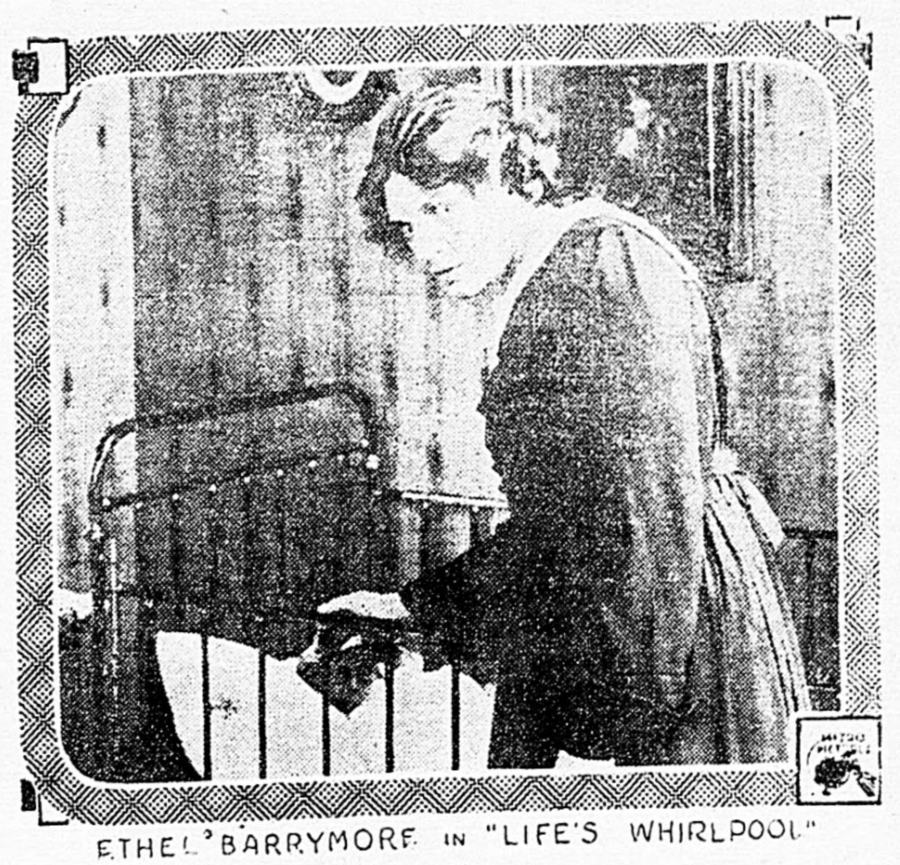
Just when all hope seems lost for Esther, salvation arrives in the form of Detective B. J. Hendrix, portrayed with a calm, methodical intensity by Paul Everton. Hendrix embodies the archetype of the astute investigator, his keen eye for detail and unwavering commitment to truth providing the much-needed counterpoint to Ruth’s malicious fabrications. His pivotal discovery of Dirk Kanst’s battered hat near the library window is a classic cinematic 'eureka' moment, a small but crucial piece of evidence that unravels the entire intricate deception. The subsequent tracing of the hat’s owner to a nearby village and the painstaking process of obtaining Kanst’s confession are handled with a brisk, satisfying pace, characteristic of early detective narratives. This segment of the film serves as a powerful affirmation of justice, demonstrating that even in a world riddled with deceit and personal vendettas, truth can ultimately prevail through diligent investigation. The detective’s role here is not merely to solve a crime, but to restore moral order, liberating Esther from the shadow of false accusation and setting the stage for her hard-won happiness. It's a testament to the enduring appeal of the detective figure in cinema, a force for clarity amidst chaos, much like the investigative narratives in films such as The Mysteries of Myra or What Happened at 22.
With Esther’s name cleared and her innocence unequivocally established, the narrative reaches its emotional crescendo. From the distant, brutal theaters of the Great War, Henry Grey returns, his presence a poignant symbol of hope and endurance. His reunion with Esther is a moment of profound emotional catharsis, a long-deferred embrace that signifies the triumph of love over adversity, justice over malice, and resilience over despair. The film culminates in this poignant tableau of reunited lovers, their happiness made complete not as a naive fantasy, but as a hard-won victory forged in the crucible of immense suffering. It’s a powerful, satisfying conclusion that reinforces the film’s central themes of perseverance and the ultimate vindication of the good. This final act, while adhering to melodramatic conventions, feels earned, providing a resonant sense of closure and emotional fulfillment for the audience who have traversed Esther’s arduous journey alongside her.
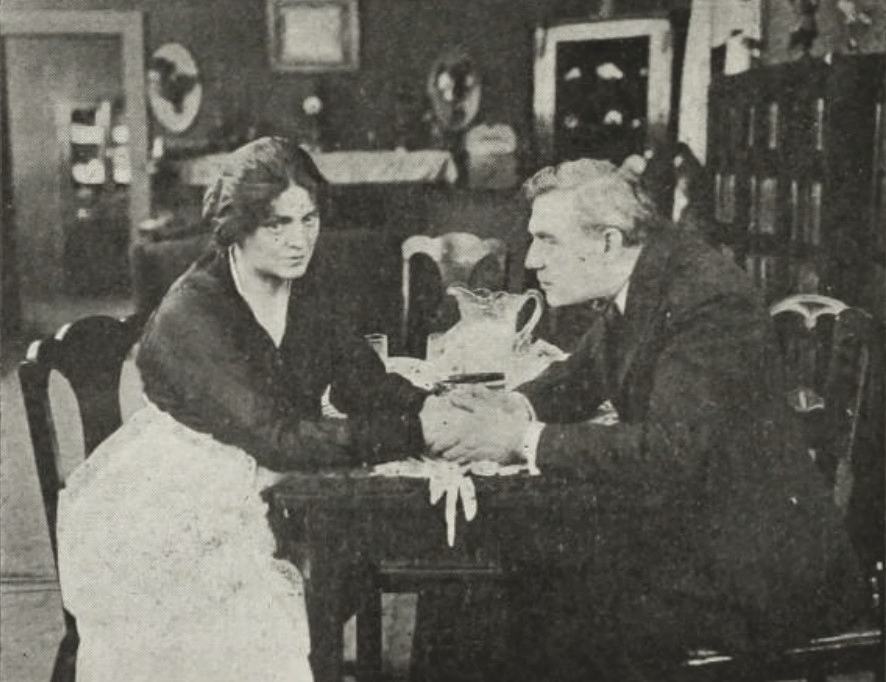
The enduring power of Life's Whirlpool is significantly attributable to the masterful screenplay penned by Lionel Barrymore. His narrative structure is a testament to the sophisticated storytelling present in early cinema, balancing moments of intimate despair with sudden, dramatic shifts in fortune. Barrymore’s writing provides a robust framework for the actors, allowing them to convey complex emotions through the often-stylized medium of silent film. The use of intertitles is judicious, serving to advance the plot and reveal inner thoughts without overwhelming the visual storytelling. The film’s pacing, while deliberate, builds dramatic tension effectively, guiding the audience through Esther’s trials with a compelling rhythm. Visually, the film employs classic silent era techniques, from stark contrasts in lighting to evocative mise-en-scène, all designed to amplify the emotional stakes. The performances, particularly from Ethel Barrymore, are a masterclass in silent acting, relying on expressive physicality and facial nuances to communicate Esther's profound journey. The film’s ability to evoke such strong emotional responses without spoken dialogue speaks volumes about the quality of its writing and the talent of its performers, making it a valuable study in early cinematic art. The attention to detail in character development, even for secondary figures like Dirk Kanst, ensures that the narrative feels rich and multi-layered, transcending simple villainy and heroism to explore the deeper currents of human experience.
Life's Whirlpool, despite its century-old vintage, remains a captivating and emotionally resonant film. It is more than just a historical curiosity; it is a compelling piece of cinema that explores universal themes of injustice, resilience, the complexities of love, and the relentless pursuit of truth. Its melodramatic flourishes are tempered by genuine human emotion and a surprisingly sophisticated narrative, making it a rewarding watch for anyone interested in the foundational years of filmmaking or simply a powerful story well told. The film stands as a testament to the power of silent storytelling and the enduring legacy of its cast and writer. Its exploration of a woman's struggle against societal and personal tyranny, culminating in a hard-won peace, ensures its relevance even in contemporary discourse. For cinephiles and casual viewers alike, Life's Whirlpool offers a poignant glimpse into the dramatic heart of early cinema, reminding us that the human condition, with all its trials and triumphs, has always been the most compelling subject of all. It invites us to consider how far we've come, and how much remains eternally unchanged in the human experience.

IMDb 5.1
1934
Community
Log in to comment.