DbcultAccessing Vault...
Cult Review
Senior Film Conservator
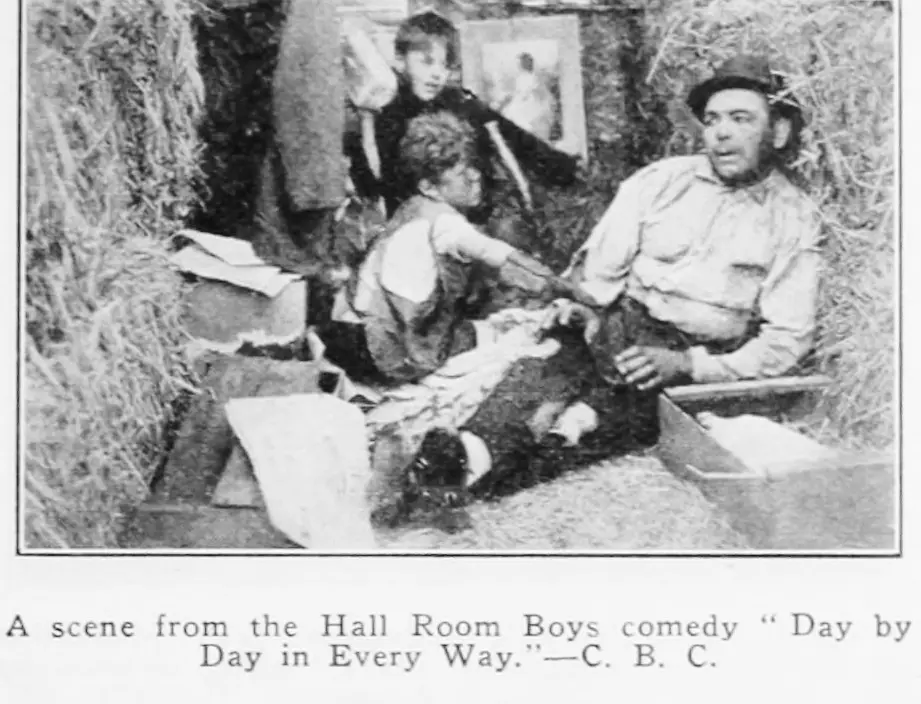
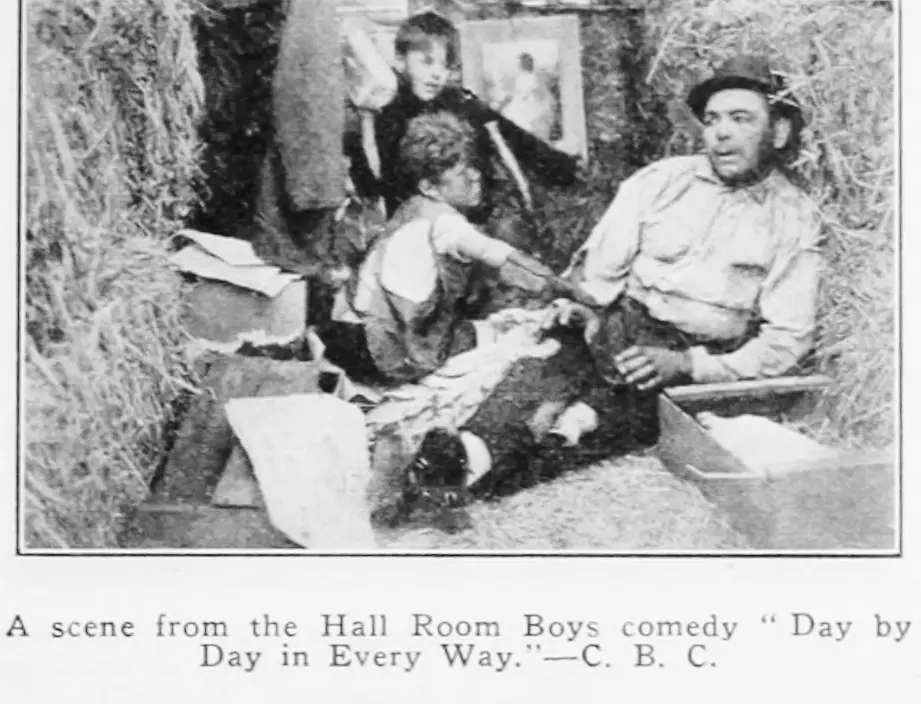
Stepping back into the nascent days of cinematic artistry, one occasionally unearths a forgotten treasure, a celluloid relic that, despite its age, still possesses a vibrant pulse. Jean C. Havez's 1923 comedic endeavor, Day by Day in Every Way, is precisely such a find. In an era where the silver screen was still finding its voice, relying solely on the eloquence of gesture, expression, and the rhythmic cadence of the piano, this film emerges as a testament to the universal power of human aspiration and the delightful absurdity of daily life. It’s a quaint, yet profoundly resonant, piece that reminds us of the roots of physical comedy and the timeless appeal of a good-hearted underdog.
The narrative, a seemingly simple chronicle of one man's relentless pursuit of self-improvement, is imbued with a whimsical spirit that belies its straightforward premise. Our protagonist, Percy Putter, masterfully brought to life by the expressive Joe Moore, is not merely a character but an embodiment of the era's buoyant optimism tempered by an almost preternatural clumsiness. Percy, weary of his mundane existence and a succession of comical misfortunes, resolves to elevate himself, to become a better version of himself, quite literally, 'day by day in every way.' This earnest ambition forms the delightful engine of the film, setting in motion a chain of events that are as predictable in their chaotic outcomes as they are genuinely amusing.
Havez, a writer whose wit often found its sharpest edge in the absurdities of the mundane, constructs Percy's daily regimen as a meticulously planned disaster waiting to happen. Consider the opening sequences: Percy's attempts at vigorous morning calisthenics transform his modest apartment into a veritable battlefield. A stray dumbbell becomes an instrument of domestic destruction, a resistance band a catapult for household items. The precise choreography of these gags, executed with Moore's remarkable physical dexterity, harks back to the foundational principles of slapstick, a genre still very much in its golden age. It’s a comedic tradition that finds parallels in the more elaborate set pieces of contemporaries, though perhaps lacking the grand scale of a Buster Keaton or the intricate engineering of a Charlie Chaplin. Instead, Day by Day revels in the intimacy of its smaller-scale catastrophes, making them all the more relatable.
The film truly shines in its depiction of Percy's earnest endeavors to cultivate new skills. His ill-fated foray into the world of musicality, specifically his attempts to master the banjo, is a particular highlight. The cacophony emanating from his room, a discordant symphony of twangs and groans, invariably draws the ire of his long-suffering landlady and the bewildered glances of his fellow boarders. This recurring gag, building in intensity and comedic timing, perfectly illustrates the film's gentle humor—it’s not malicious, but rather a playful poke at the universal human tendency to overestimate one's latent talents. One might draw a thematic, if not stylistic, comparison to the earnest, if often misguided, artistic pursuits seen in films like The Vermilion Pencil, though the latter delves into more dramatic, high-stakes artistic endeavors.
At the heart of Percy’s ambitious transformation lies his profound, yet unspoken, affection for Miss Clara Belle, the radiant presence behind the counter of the local confectionery. Her quiet elegance and gentle demeanor provide a compelling emotional anchor for Percy's often-chaotic journey. This romantic subplot, a staple of silent cinema, is handled with a delicate touch, emphasizing the purity of Percy's intentions despite his outward ineptitude. However, no hero's journey is complete without a formidable antagonist, and in Day by Day, this role is filled with theatrical aplomb by Bud Jamison as Bartholomew Biggins. Jamison, a veteran character actor known for his imposing physique and gruff screen presence, delivers a performance that is both comically villainous and perfectly suited to the era's archetypes. Biggins is the quintessential foil: pompous, ostentatious, and perpetually attempting to undermine Percy with his ill-gotten wealth and sneering condescension.
The dynamic between Percy and Biggins is a classic comedic rivalry, a David and Goliath struggle where wit and good intentions are pitted against brute force and material advantage. Their interactions, often culminating in some form of public humiliation for one or both, provide many of the film's most robust laughs. George Williams, likely in a supporting role, could have provided a grounding presence, perhaps as an exasperated but ultimately sympathetic figure of authority, observing Percy's shenanigans with a weary sigh. Similarly, the inclusion of Billy Franey, often cast in roles demanding a certain quirky eccentricity, hints at the possibility of inventive contraptions or zany side plots that further complicate Percy's daily grind, echoing the mechanical mishaps found in other early comedies.
The strength of a silent film often lies not just in its central performances but in the nuanced contributions of its supporting cast. While Joe Moore carries the comedic weight with admirable grace, the collective energy of actors like Al Alt, Eddie Barry, Billy Franey, and Sidney Smith would have contributed significantly to the film’s tapestry. These were performers who understood the unique demands of silent acting: the exaggerated gestures, the precise facial expressions, the ability to convey complex emotions without a single spoken word. Each actor, in their smaller roles, would have been instrumental in building the vibrant, bustling world in which Percy Putter’s adventures unfold.
Jean C. Havez, primarily known as a prolific writer for figures like Buster Keaton, demonstrates a clear understanding of comedic pacing and visual storytelling in this directorial effort. The film's gags are not merely isolated incidents but build upon each other, escalating the chaos in a satisfying, logical progression. The camera work, while perhaps not revolutionary for its time, is efficient and effective, serving the narrative without drawing undue attention to itself. It understands that in silent comedy, the human body and its absurd predicaments are often the most compelling spectacle. There’s a directness to the filmmaking that, while perhaps less innovative than The Speed Maniac in its kinetic energy or The Wireless Wire-Walkers in its daring stunts, nonetheless grounds the comedy in relatable, human experience.
The film’s climax, set against the backdrop of a grand charity fundraiser, is a masterclass in comedic escalation. Biggins, in a final, desperate attempt to secure Clara Belle's affections and public acclaim, endeavors to rig a competition or orchestrate a grand, self-serving spectacle. However, fate, or perhaps simply Percy’s inherent knack for accidental heroism, intervenes. Through a series of unintended yet ultimately beneficial acts – perhaps saving a runaway prize animal, inadvertently exposing Biggins’s deceit, or preventing a stage from collapsing – Percy emerges as the unlikely savior of the day. His genuine good nature and persistent, if bumbling, efforts finally win Clara Belle's admiration, not for his manufactured perfection, but for his authentic, resilient spirit.
This resolution, while outwardly a triumph of the underdog, carries a deeper, more poignant message about the nature of self-improvement. It suggests that true growth isn't about adhering to a rigid checklist or achieving an idealized state, but rather about embracing one's quirks, persevering through adversity, and maintaining a kind heart. Percy’s journey from a luckless dreamer to a confident, if still slightly clumsy, hero is deeply satisfying. It's a message that resonates far beyond the confines of the silent era, speaking to the universal human desire for acceptance and belonging.
Released in 1923, Day by Day in Every Way sits at a fascinating juncture in film history. The silent era was reaching its zenith, with sophisticated narrative techniques and increasingly complex characterizations emerging. While not a groundbreaking epic like The Heart of Maryland or a psychological drama like The Witch, it contributes to the vast tapestry of everyday comedies that formed the backbone of popular entertainment. Films like this, often shorter in length and designed for quick consumption, provided audiences with much-needed escapism and laughter amidst the social and economic shifts of the post-World War I period.
The comedic sensibilities, while rooted in physical humor, also exhibit a nascent understanding of character-driven comedy. Percy Putter is not merely a vehicle for gags; he is a character with aspirations, vulnerabilities, and a clear emotional arc. This depth, however slight, elevates the film beyond mere slapstick. It shares a certain thematic kinship with the earnest struggles for self-definition found in more dramatic works, though filtered through a lens of gentle humor. One could even draw a very loose parallel to the journey of self-discovery in something like Little Women (1918), albeit with vastly different tones and stakes.
The film's exploration of ambition and the often-humorous gap between intention and outcome remains remarkably relevant. In an age saturated with self-help gurus and productivity hacks, Percy Putter's analog, early 20th-century struggles feel surprisingly contemporary. His failures are endearing, his perseverance inspiring, and his ultimate triumph a gentle reminder that authenticity often trumps manufactured perfection. It is a film that, despite its lack of dialogue, speaks volumes about the human spirit.
Joe Moore's performance as Percy Putter is a masterclass in silent comedic acting. His rubbery expressions, his precise physical comedy, and his ability to convey a wide range of emotions without uttering a single word are truly captivating. He embodies the everyman, the perennial optimist who simply cannot catch a break, yet never gives up. Bud Jamison, on the other hand, perfectly balances menace with buffoonery, creating a memorable antagonist who is both genuinely frustrating and ultimately laughable. The chemistry between the two, a classic comedic pairing, elevates the film beyond its simple plot.
While Day by Day in Every Way may not possess the grandiosity of some of its more celebrated silent contemporaries, its charm lies in its unassuming honesty and its unwavering commitment to good-natured humor. It's a film that reminds us of the power of a simple story well told, of characters we can root for, and of the enduring appeal of laughter. For enthusiasts of early cinema, particularly those with an appreciation for the subtle artistry of silent comedy, this film is a delightful discovery. It offers a glimpse into a bygone era of filmmaking, an era where the visual gag was king and the human spirit, in all its clumsy glory, reigned supreme.
It’s a film that, like a cherished old photograph, captures a moment in time with warmth and wit. It might not be as widely known as Fighting Fate or The Criminal, but its unassuming brilliance makes it a worthy subject of re-evaluation. The film's message about consistent effort and authentic self-improvement, even when riddled with comical setbacks, is a timeless one. Percy Putter's journey is a heartwarming reminder that it's not the grand, sweeping gestures that define us, but the cumulative effect of our daily struggles and triumphs, however small or seemingly insignificant. In its quiet way, Day by Day in Every Way delivers a powerful, uplifting message wrapped in layers of delightful slapstick.
The cinematic landscape of 1923 was a vibrant tapestry, with films ranging from the dramatic intensity of The Mysterious Client to the more exotic adventures implied by titles like Die Abenteuer des Kapitän Hansen. Yet, within this diverse offering, Day by Day in Every Way carved out its own niche. It didn't rely on grand narratives or breathtaking spectacle; instead, it found its strength in the microcosm of human endeavor. It celebrated the small victories, the persistent spirit, and the inherent comedy in our daily struggles to be better. It’s a film that, in its very essence, encourages us to keep trying, to keep striving, to keep living, day by day, in every way. And isn't that a message that truly endures?
The movie, in its charmingly anachronistic fashion, also serves as an important historical document, showcasing the evolving comedic styles and the talent pool of the silent era. It reminds us that even before dialogue, filmmakers were adept at crafting compelling narratives and characters that resonated with audiences. Its focus on personal growth through daily effort makes it a spiritual cousin to many self-improvement narratives, albeit one told with a delightful, often chaotic, sense of humor. Much like the characters in Blind Man's Holiday or The Fight, who confront their own challenges, Percy Putter's journey is a testament to resilience, albeit through a more lighthearted lens. The film's relative obscurity does not diminish its quality; rather, it makes its rediscovery all the more rewarding, like uncovering a forgotten gem in an old attic, whose sparkle, though muted by time, is still undeniably present.
In an industry often obsessed with the next big thing, revisiting films like Day by Day in Every Way offers a refreshing perspective. It underscores the foundational artistry of cinema and the timeless appeal of well-executed physical comedy. It’s a film that doesn't demand your intellectual rigor but rather invites you to simply sit back, relax, and enjoy the delightful spectacle of a good-hearted man perpetually tripping his way towards a better self. For those who cherish the silent era, and for anyone seeking a dose of gentle, resilient humor, Day by Day in Every Way is a cinematic experience worth seeking out.
IMDb —
1923
Community
Log in to comment.