DbcultAccessing Vault...
Cult Review
Senior Film Conservator
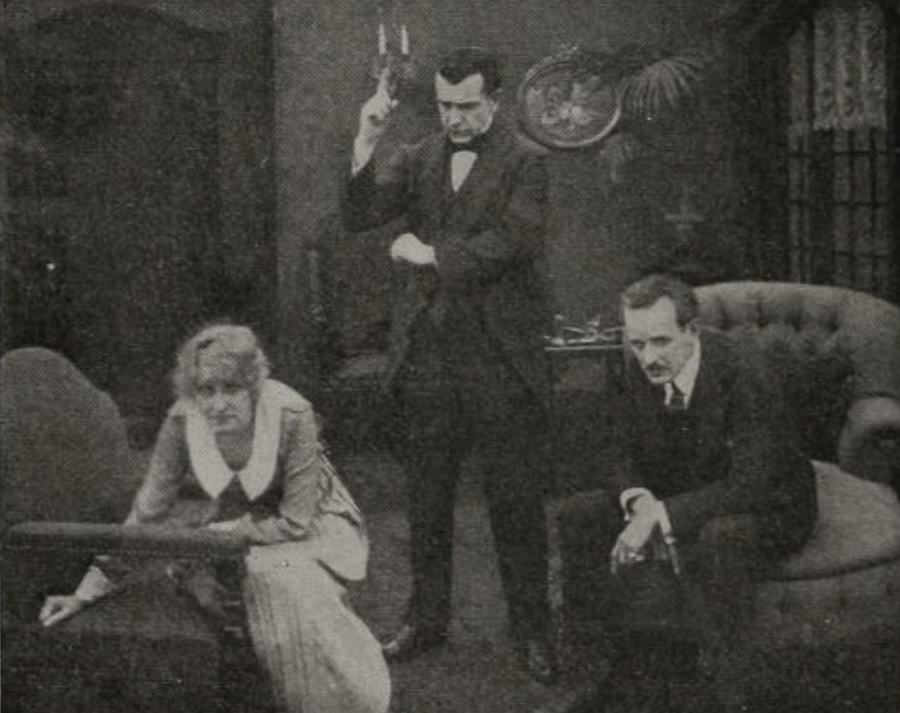
Nobody in 1922 wanted to admit how vicious The Moral Fabric could be. Trade ads sold it as a “society drama,” which to modern ears sounds like tea gowns and tremulous glances. In reality, C. Gardner Sullivan’s screenplay is a scalpel slid between the ribs of progressive marriage, twisting until the blade clicks bone. Director Frank Mills stages each act of cruelty with the unblinking patience of a taxidermist: every character pinned, stuffed, exhibited under gaslight that makes skin look waxen and eyes too alive.
Scott Winthrop—Howard Hickman in pince-nez sharp enough to slice champagne—opens the film pacing a mahogany corridor that seems to stretch into some fiscal afterlife. He is counting, not money, but minutes until Amy’s anniversary surprise. The camera lingers on his pocket watch, a throbbing mechanism that will become the film’s unofficial heart, ticking toward detonation. When Amy finally glides downstairs, Edith Reeves plays her like a hummingbird drunk on Marx and Shelley, every gesture fluttering against the cage bars she refuses to acknowledge. Their first embrace is shot in chiaroscuro: two profiles welded at the lips yet separated by a shaft of darkness wide as a continent. You already sense they kiss across a fault line.
Enter Mackley Stuart—Frank Mills himself, smuggling a messiah complex beneath a floppy Byronic collar. His liberal league meets in Amy’s sun-drenched drawing room, where stained-glass panels dapple the scene with biblical hues. Sullivan’s intertitles deliver aphorisms that sound plucked from a pamphlet left on a park bench: “The only sacred bond is the one chosen daily.” It’s hogwash dipped in holy water, but Amy drinks, convinced she has discovered a new atmosphere. The film’s genius lies in never validating her awakening; every tilt toward liberation is cross-cut with household bric-a-brac crashing—a china shepherdess topples, a clock strikes midnight—tiny omens insisting desire carries tariffs.
The anniversary confrontation arrives like a duel at dawn. Scott, bearing a necklace whose pearls gleam like shackles, finds Amy and Stuart entwined on the ottoman where he once read stock reports. Hickman’s face registers not rage but a ghastly politeness, the smile of a creditor about to foreclose. He doffs his hat, wishes them “continued felicity,” and exits. The next morning, newspapers blaze: “Winthrop Relinquishes Wife at Her Request.” Note the passive construction—Sullivan understands that patriarchy can mimic gallantry when it serves vengeance. The publicity machine, visualized by a montage of rotary presses and paper boys, becomes a Greek chorus chanting ironclad fate.
Cut to Naples: sunshine splattered with café crema, mandolins, the idle decadence Americans abroad mistake for redemption. Amy—now Mrs. Stuart—sports a gilded headband and the hunted eyes of someone double-checking every locked door. When Scott appears, all ivory suit and crocodile grin, the camera executes a slow 360° pan around the piazza, as though the city itself is a roulette wheel where every pocket spells zero. Over espresso thick as lava, Scott congratulates the couple, voice oozing honey that smells faintly of arsenic. Reeves’ performance here is microscopic: a pulse flickering at the clavicle, fingers whitening around the cup handle. She is already sliding backward through time, remembering pearl necklaces and mahogany corridors.
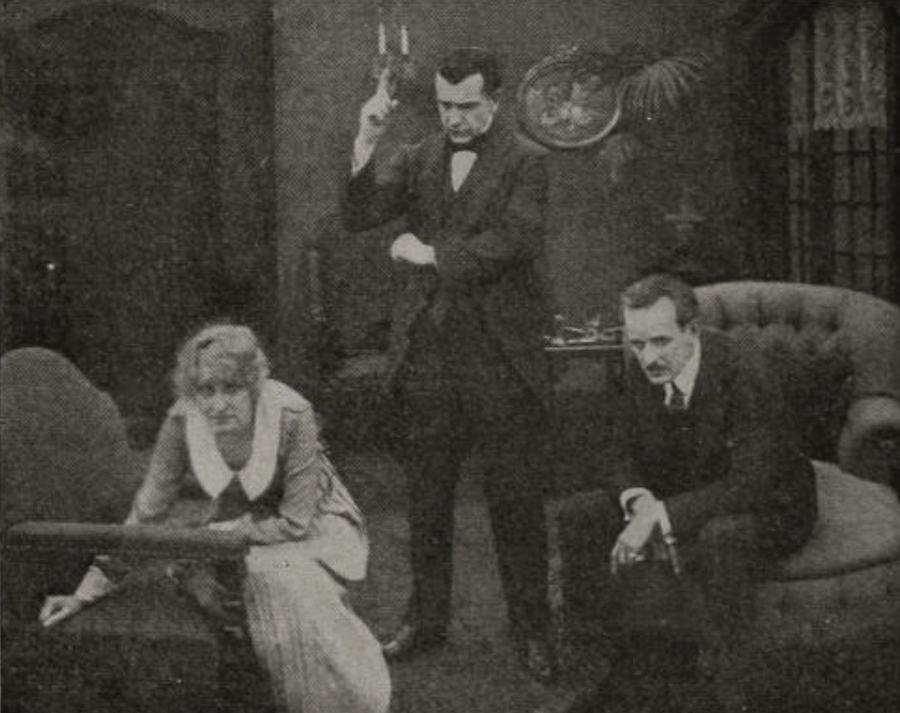
What follows is not seduction but psychological waterboarding. Scott sends Amy yellow roses (the color of old bruises), quotes her once-cherished maxims back to her in letters signed “a fellow pilgrim.” He engineers chance meetings inside museum corridors lined with crucifixion triptychs—Mills framing each reunion so saints and martyrs grimace in sympathy. Meanwhile Stuart, stripped of revolutionary swagger, devolves into a man pacing hotel suites like a tiger that forgot how to be wild. The film’s midpoint delivers a bravura sequence: a thunderstorm on the Amalfi coast, thunderclap synchronized with Amy’s gasp as she realizes she is still legally Scott’s pawn. Rain lashes the trio, sheets of water eroding the line between penitence and punishment.
Sullivan saves his most sadistic flourish for the final act. Scott lures Amy aboard a steamship bound for New York, implying reconciliation. On deck, under a sky the color of nicotine, he produces the original pearl necklace and clasps it around her throat while whispering, “Some ornaments fit only in the original setting.” Reeves totters, tears streaking kohl comets across her cheeks. Then, with a bow worthy of a maestro, Scott steps aside: Stuart stands behind him, having witnessed everything. The ship’s whistle screams; the lovers are left clinging to railings as Scott descends the gangplank, pocket watch ticking again, this time in triumph.
Does Scott believe he is restoring moral order, or is he simply a virtuoso of pain? Hickman’s opaque grin refuses the answer, and that ambiguity electrifies the film. In a coda worthy of Jacobean tragedy, Amy returns alone to the Winthrop mansion—now shuttered, furniture draped like corpses. She wanders corridors that once elongated into the future, now shrinking into mausoleum gloom. A final intertitle intones: “The fabric once rent can be rewoven only by scars.” Fade-out on her silhouette kneeling amid scattered rose petals turned the color of dried blood.
Visually, the picture borrows from German Expressionism without the funhouse angles: instead of tilted sets, moral axes skew. Cinematographer George Richter bathes interiors in amber pools, leaving peripheries ink-black so characters appear perpetually on trial. Shadows of window mullions dissect faces, suggesting souls quartered by choice. The Naples sequence, by contrast, erupts in overexposed whites—sunlight so harsh it feels accusatory, as though Europe itself collaborates in Scott’s vendetta. When the trio enters the café, the camera tilts slightly upward, making table umbrellas resemble interrogation lamps.
Performances vibrate at silent-era frequency yet feel eerily contemporary. Hickman’s micro-smile—lip corner lifting a millimeter—carries more menace than a Snidely Whiplaw mustache twirl. Reeves, burdened with making naiveté sympathetic, plays Amy as a woman addicted to epiphany, flitting from cause to cause like a moth that mistakes every flame for sunrise. Frank Mills directs himself with unflattering honesty: Stuart’s speeches on free love grow shrill once consequences bite, revealing the bully inside the bohemian.
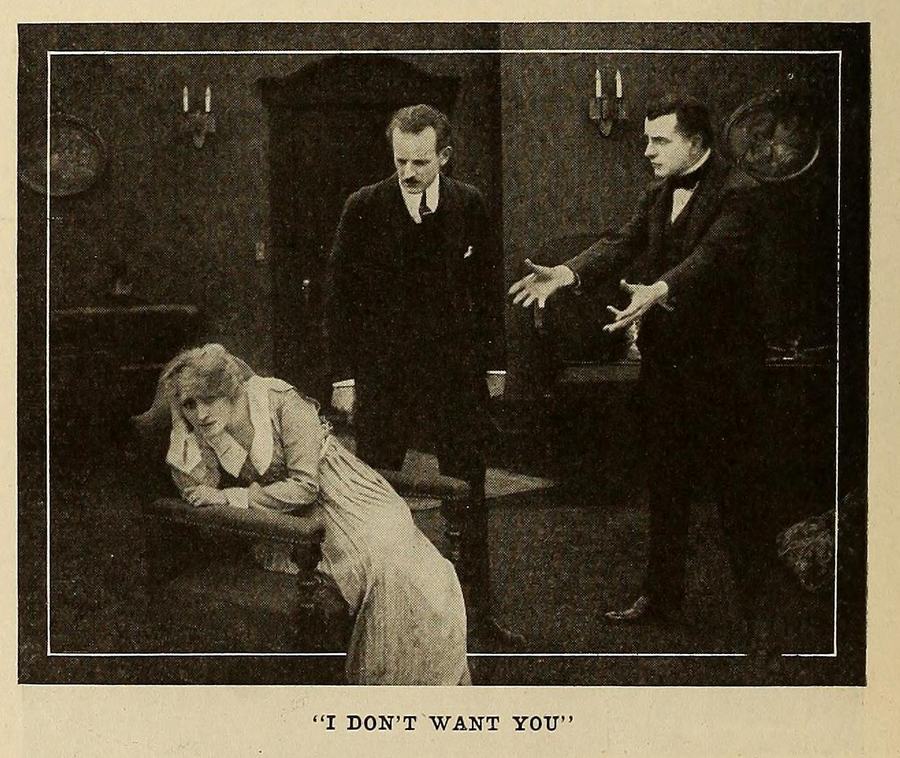
Comparisons? Fides also probed matrimonial chains but sanctified sacrifice; Les heures - Épisode 4: Le soir, la nuit romanticized nocturnal escapism. The Builder of Bridges tried to cement reconciliation after betrayal, whereas The Moral Fabric dynamites the span and watches every soul tumble into the ravine. Only Snobs matches its caustic wit, yet that film preferred social caricature; here, individual cruelty is bespoke.
Restoration-wise, the current 4K scan from a 35mm nitrate print held in the EYE Filmmuseum reveals textures previously smothered: the fuzz on Stuart’s collar, the shimmer of Amy’s lamé gown, the pinpoint reflection of a streetlamp in Scott’s monocle. A new score by Maud Nelissen—piano, viola, and musical saw—threads habanera rhythms with discordant glissandi so romance waltzes hand-in-hand with nausea. Shades of dark orange (#C2410C) dominate intertitle cards, while yellow (#EAB308) tinting accompanies Naples sunshine, and sea-blue (#0E7490) washes over night scenes, evoking the bruised Mediterranean. Viewers should stream it on a large screen; the devil lives in the high-resolution grain.
Legacy? Critics of 1922 dismissed the picture as “morbid matrimonialism.” They were half-right: it is morbidity sharpened to a teaching tool, a cautionary tale for jazz-age flappers and their sugar daddies. Yet its DNA reappears in everything from The Lady from Shanghai to Gone Girl—stories that know marriage is both contract and battlefield, and that sometimes the cruelest thing you can do to a romantic is grant their fantasy, invoice included. Sullivan’s script even prefigures modern influencer culture: relationships commodified, performed, then shredded by public opinion.
So, is Scott Winthrop a hero? An antihero? A patriarchal ghoul? The film refuses verdict, and that refusal is its radical heart. In an era when melodramas rewarded virgins and punished vamps, The Moral Fabric insists that everyone—idealist, adulterer, avenger—writhes on the same hook. Ninety minutes of velvet-gloved sadism later, the lights come up and you check your own pulse, half expecting it to echo Hickman’s pocket watch. Tick, tick—some bargains, the film whispers, can’t be annulled by any divorce court.
Verdict: mandatory viewing for anyone who still believes love is freedom and freedom costs nothing. Bring smelling salts—and maybe a priest.
IMDb 6.3
1936
Community
Log in to comment.