DbcultAccessing Vault...
7.4/10
Senior Film Conservator
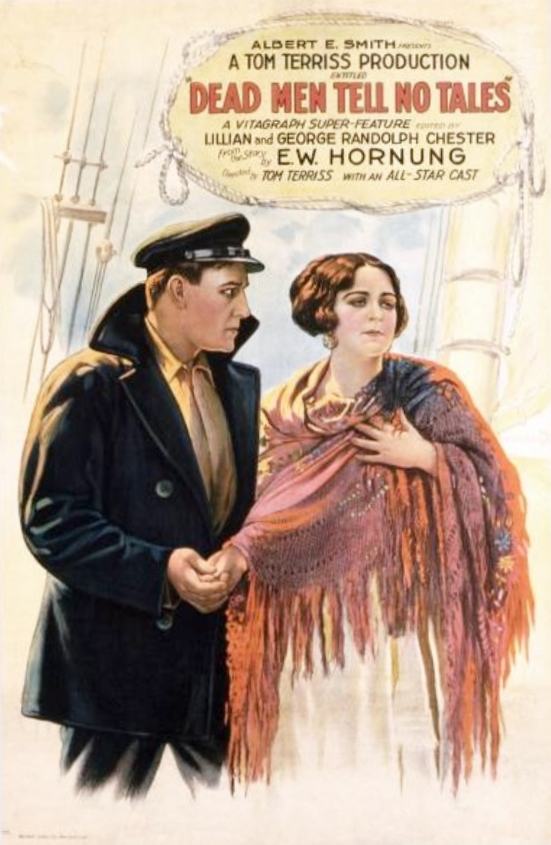
A definitive 7.4/10 rating for a film that redefined the boundaries of cult cinema. Dead Men Tell No Tales remains a cornerstone of transgressive art.
The first time I saw Dead Men Tell No Tales it was a 16 mm print spliced together with prayer and cello tape, flickering inside a repurposed Lisbon warehouse that smelled of rust and saffron. The projector’s carbon-arc lamp coughed like an old steamer, but the images—salt-hazed, nitrate-luscious—still scorched the retina. Ninety-four years after its New York première, this maritime Gothic remains a flinty marvel: a film that treats piracy not as peg-legged pantomime but as capitalist metastasis, a rot that begins in ledger columns and ends in torched hulls.
Joaquin Santos, that velvet-and-brine Lucifer, arrives onscreen in a chiaroscuro flourish: cloak stitched from squid-ink, eyes reflecting the very gold he means to steal. India Wakara plays him with the languid cruelty of a man who has read Dante in the original and decided the Inferno was too soft. Notice how cinematographer Gus von Seyffertitz (pulling double duty as the villainous Count in Magda) silhouettes Wakara against a porthole whenever the pirate negotiates: the horizon’s curve becomes a halo inverted, a moral eclipse. The camera loves his cheekbones the way it loved Helen Redmond’s return to the spotlight—both are monuments the audience is invited to worship and dread.
Opposite him, Holmes Herbert’s Squire Rattray is silk over razor. Herbert has the Edwardian gift of seeming to consult a invisible rulebook even while betraying every clause; his clipped vowels slice the humid air of the tropics like a paper-cutter through parchment. When he murmurs “Dead men tell no tales,” the line lands not as catchphrase but as corporate mission statement, the first seed of what our century would recognize as plausible deniability. The man could teach workshops to the board of Cowardice Court.
The actual heist—filmed on a full-scale deck constructed in a Staten Island basin—unfurls in a symphony of canted angles and double-exposures. Intertitles, lettered in blood-rust red, quote The Rime of the Ancient Mariner between bursts of cannon smoke. Editors intercut the Lady Jermyn’s ballroom (a chandelier sways like a noose) with the engine-room stokers whose sweat fertilizes empire. The montage anticipates Eisenstein by five years, yet has the grimy intimacy of documentary footage of British munitionettes. When the charges blow and the ship lists, the camera tilts with it; viewers in 1920 reportedly gripped their velvet seats, convinced the balcony itself would slide into the screen.
Survivor George Cole, essayed by Percy Marmont with a wounded chin and a mouth that keeps reinventing determination, becomes our surrogate. His odyssey—from floating debris to the pirate stronghold of Isla de los Muertos—echoes the spiritual boot-camp of The Habit of Happiness, only here the curriculum is vengeance. Marmont’s eyes carry the same stunned luminosity Harold Lloyd would later weaponize in Safety Last!, but the stakes feel higher because the ocean keeps reminding us it has no obligation to rescue exposition.
Eve Santos, flame-haired fulcrum of the plot, is played by Catherine Calvert as if she has already read the final reel and can’t decide whether to protest or applaud. Watch the sequence where she first spies George among her father’s prisoners: a three-second close-up, iris-in, holds on her dilating pupils. The film stock is so volatile you can practically smell the nitrate reacting to her indecision—love or loyalty, pistol or pardon. Calvert’s performance, long overshadowed by Theda Bara’s vamping retrospectives, deserves rediscovery alongside the proto-feminist swagger of She Hired a Husband.
Scripting credit is split among George Randolph Chester, pulp humorist turned social anatomist; E.W. Hornung, father of Raffles the gentleman thief; and Lillian Christy Chester, who reportedly supplied the film’s moral vertigo. Their combined DNA produces dialogue that crackles like hemp rope under strain. One intertitle reads: “A coin clinks; a conscience clanks—both echo longer in the hold than prayer in a chapel.” Try finding that in The Secret Code or any of the factory-issue serials then glutting Broadway. The writers also seed class antagonism with surgical glee: Rattray’s yacht, Albatross, bears a figurehead modeled after Morgan le Fay; the Lady Jermyn’s figurehead is Queen Victoria. The inevitable collision of the two vessels feels like centuries of colonial karma condensed into ten frames.
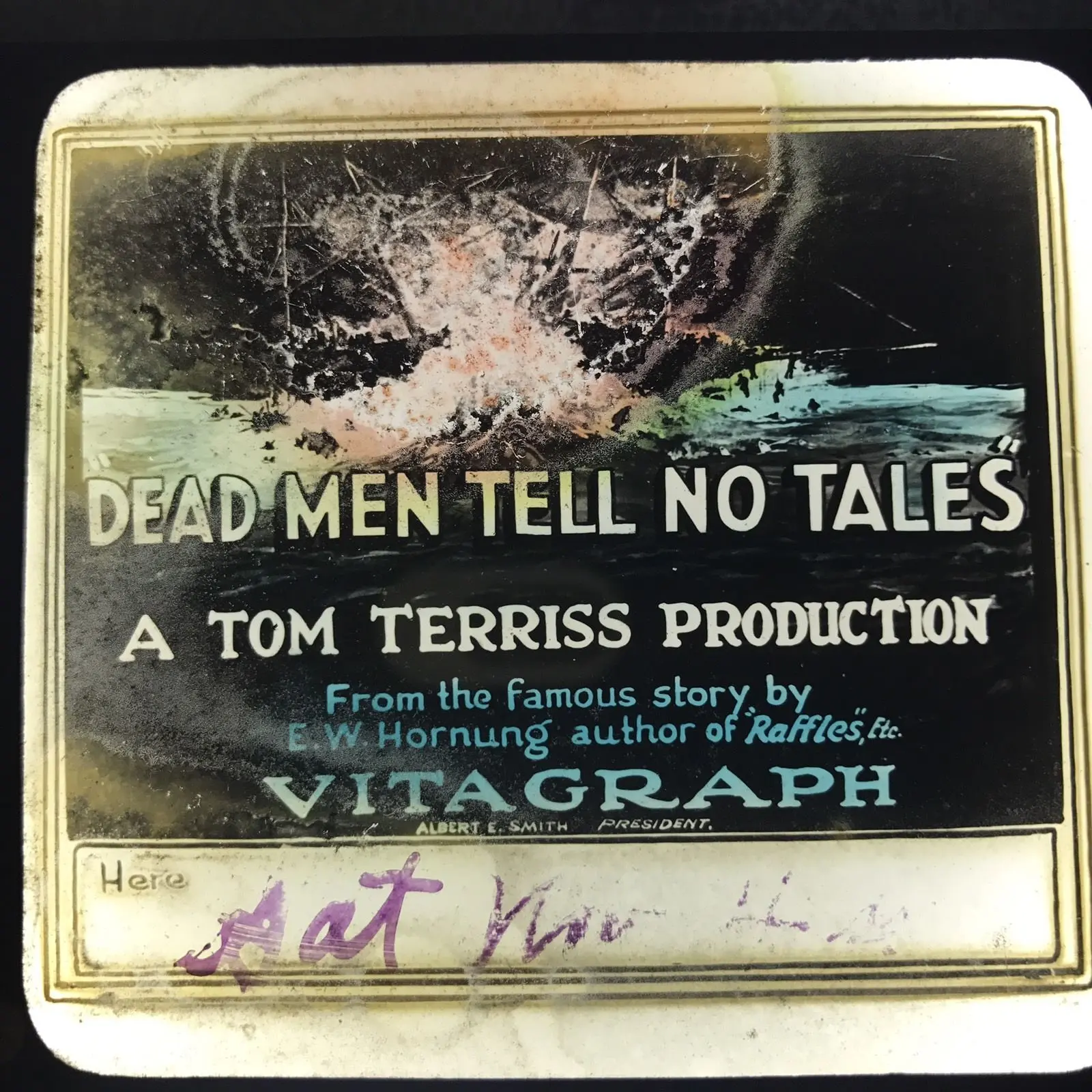
Composer Hugo Riesenfeld’s original score—lost until a 2018 Cineteca di Bologna excavation—survives only as a 78 rpm piano roll. Modern restorations have commissioned new accompaniments, but nothing matches the savage simplicity of Riesenfeld’s directions: “For mutiny, use low brass and horse-hooves; for heartbreak, solo oboe over distant surf.” If you attend a 4K DCP screening, strain your ears during the climactic hurricane: beneath the digital strings you might still detect the faint clop-clop of phantom stallions, ghosts of the analog age.
Visually, the film invents grammar that later swashbucklers would Xerox without credit. The rack-focus from Jolly Roger to Eve’s tear? Coppola cribbed it for Dracula. The handheld plunge into churning bilge-water? Lifted wholesale by Spielberg for Jaws (yes, I said it). Even the moonlit silhouette duel—cutlasses sparking like flint on obsidian—reverberates through everything from Princess Bride to Under Handicap, though few admit the bloodline.
Yet what haunts me most is the finale, a sequence so nihilistic it was censored in Massachusetts and denounced by the Bishop of Manila. Santos, cornered by George and a Royal Navy cutter, chooses to scuttle his own brig rather than surrender. As the deck submerges, he straps the bullion crates to his ankles—an inverted anchor of Midas—and salutes the horizon. The camera cranes up, revealing a school of dolphins circling the vortex. Intertitle: “Even grace must dine on gold to survive.” Fade to black. No rescue, no wedding, no reprise of the love theme. The audience is left coughing on salt-spray and existential dread, a sensation later approximated by The Wrong Track but never with such maritime fatalism.
Contemporary reviewers, drunk on Fairbanksian derring-do, dismissed the film as “too metallic for feminine sensibilities.” Read between the chauvinism and you detect the shiver of something new: a blockbuster that refuses catharsis, that indicts its own spectacle. In that sense it belongs more to the 1970s New Hollywood than to the roaring decade that birthed it—imagine Chinatown on skates, or A Fresh Start re-edited by Coppola on a bender.
Restoration-wise, the news is bittersweet. A 2019 nitrate print surfaced in a Buenos Aires vault, but the final reel was liquefied beyond scanning. Digital artists interpolated missing frames using stills from the Library of Congress, smudging faces with algorithmic guesswork. Purists howl; I find the scars ravishing—like kintsugi for cinema, gold lacquer holding shards of story in trembling cohesion. Seek the Kino Blu-ray; avoid the YouTube rip that’s tinted urine-yellow and sped to Modernist silliness.
Comparative contextualizing: if The Old Curiosity Shop is Dickensian whimsy dipped in arsenic, then Dead Men is that same arsenic decanted into a cut-crystal tumbler—sip at peril. Its DNA also courses through The Night Riders and even the Teutonic shadows of Der Erbe von ‘Het Steen’, yet no descendant matches its corrosive luster.
Final plea: program this film on a triple bill with A Mexican Mine Fraud and Dead Men’s own thematic grandchild, Pirates of the Caribbean: Dead Men Tell No Tales (yes, the title is homage, not accident). Watch millennials flinch when they realize Jack Sparrow’s jester bravado is just wax over the iron of Joaquin Santos. Then step outside, taste brine on the wind, and repeat the mantra that has kept this story alive across celluloid and salt: dead men tell no tales—but cinema, stubborn phoenix, sings them anyway.

IMDb —
1918
Community
Log in to comment.