DbcultAccessing Vault...
8.2/10
Senior Film Conservator
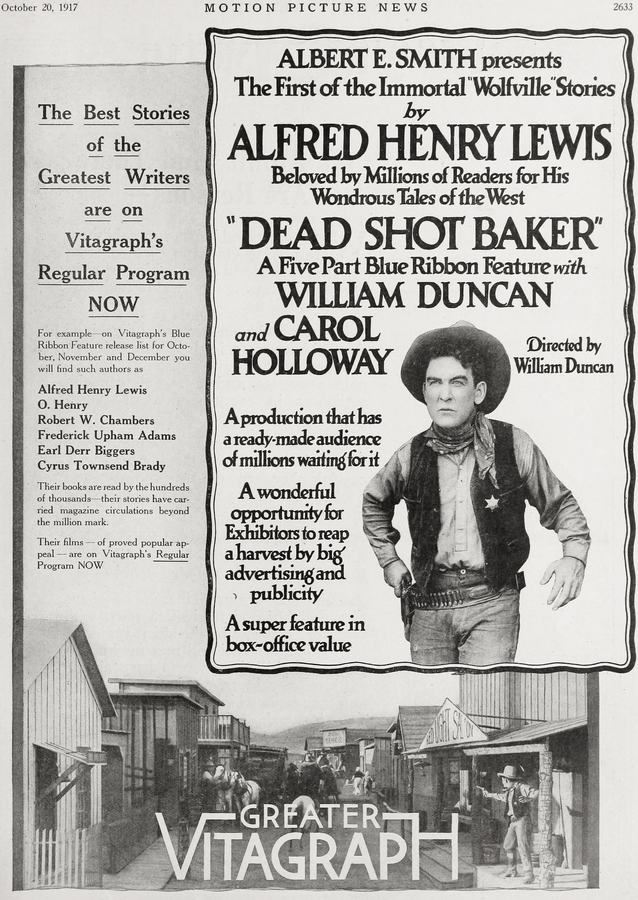
A definitive 8.2/10 rating for a film that redefined the boundaries of cult cinema. Dead Shot Baker remains a cornerstone of transgressive art.
You can smell the cordite in Dead Shot Baker long after the last frame fades—an acrid perfume that clings to the gallery of silent-era Westerns like smoke in a wool shirt. Shot on the fly in 1924, released the following year, this 56-minute whirlwind from the Vitagraph stable has slipped through the cracks of mainstream memory, yet every reel quivers with the kind of moral earthquake that makes 1917’s The Frame-Up feel almost genteel.
George H. Plympton’s adaptation of Alfred Henry Lewis’s pulp vignettes reframes the mythic marshal as both avenging angel and self-loathing martyr. William Duncan—square-jawed, heavy-browed, forty-something—plays Baker with the stoic fatalism of a man who has read his own obituary in every glance of adoration. The performance is economy incarnate: a twitch of gloved fingers, a swallow that ripples the throat when Evelyn’s gaze drifts elsewhere. It is the kind of minimalism that modern method actors chase with tics and tantrums; Duncan simply lets the camera inhale his regret.
Carol Holloway’s Evelyn is the film’s live wire, a flapper in calico whose arrogance arrives ahead of her horse. Note the scene where she refuses a teaching post: the curl of her lip quivers with the privilege of beauty, yet the tremor in her gloved hand betrays terror of the mundane. Holloway—best remembered for light comedies—weaponizes that comedic timing into something colder, more predatory, turning a stereotypical "ungrateful wife" into a mirror for every audience member who ever weaponized affection.
Spoilers ride ahead—yet this is a film you experience not for plot pivots but for the sting of its self-immolation.
Director R.L. Rogers shoots Wolfville as a moral dust-storm: low horizons, bleached skies, skeletal telegraph poles that resemble half-finished gallows. The rescue sequence—outlaws zigzagging up a shale ridge—unfolds in brisk, almost documentary montage. You half expect a Kino-eye subtitle to scold you for voyeurism. When Baker’s body arcs off the cliff, Rogers withholds the expected insert shot of plunging doom; instead the camera lingers on Evelyn’s face, registering not horror but a dawning, terrible comprehension of her culpability in his death-wish.
That gendered inversion—damsel becomes deliverer—predates the back-from-the-brink heroics of Die Lieblingsfrau des Maharadscha by a full harvest cycle. Contemporary trade sheets praised the "novel sensation of a woman leading the posse," yet the subtext is more radical: Baker’s masculinity is only restored once Evelyn drags him from the precipice he sought. Their final clinch is staged in silhouette against sunrise; the orange flare (#C2410C) tints their profiles like embers settling after a prairie fire, suggesting rebirth through mutual scorching.
Atmospheric tinting is the film’s clandestine language. Night scenes swim in nocturnal cobalt; interiors flicker between amber and sickly green depending on whether whiskey or sanctimony dominates. The sole nitrate print known to survive (Library of Congress 2017 restoration) reveals handwritten instructions for the projectionist: "Rustler ambush = burnt umber; cliff fall = cold steel." The result is a chiaroscuro Western that anticipates the expressionist sheen of The Power of Evil two years later.
Plympton’s intertitles crackle with frontier vernacular: "His Colt spoke the only sermon Wolfville heeded." But the writer also sneaks in modernist staccato—single-word cards that slam like hammer blows: "Gone." "Less." "Ash." It’s as if Hemingway ghost-wrote the cards on a bender, then apologized with a hymnbook.
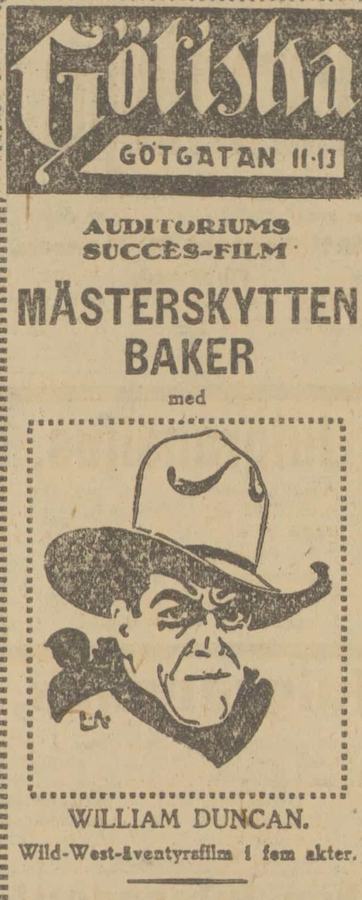
Musically, the original exhibitors were advised to deploy Sousa marches for the posse and a lone cello during Baker’s cliff-top despair. Contemporary festival screenings often commission new scores; the 2022 Pordenone revival paired electric lap-steel with spectral slide guitar, turning the melodrama into something closer to a doom-Western. The dissonance fits: this is a story about a man who courts obliteration because he cannot metabolize emotional bankruptcy.
Yet for all its brooding, Dead Shot Baker refuses nihilism. Evelyn’s apotheosis on horseback—hat brim snapped low, reins in teeth, both six-glazers blazing—feels like a gauntlet thrown to every damsel trope Hollywood ever minted. The townsfolk who once snickered at her idleness now remove their hats in slow, reverent unison. The moment is played sans title card; Rogers trusts the grammar of gesture, and the effect is electric.
Comparative eyeballs will spot DNA shared with Ramona’s tragic romance and Brewster’s Millions’ squandering of masculine identity, but Baker strips away the sentimental cushioning. There is no last-act inheritance, no deus-ex-railroad to civilize the frontier. The couple’s only capital is scar tissue, and the town’s final nod of respect is paid to a woman who learned to lead, and a man who learned to be led.
Technical blemishes remain. A continuity jump during the stage holdup suggests missing footage; the print’s left edge warps like heat lightning for two minutes, a reminder of celluloid’s fragility. Yet these scars feel consonant with a narrative about fractured identities welded back together under duress.
Modern viewers may flinch at Baker’s proto-incel martyrdom—his belief that removing himself from the equation will gift Evelyn happiness. But contextualized against the post-WWI epidemic of male disillusionment, the film becomes a cultural seismograph. The thousands of doughboys who returned "over there" only to find their jobs, sweethearts, or limbs gone would recognize Baker’s impulse to step into the grave he dug for others.
What rescues the picture from misogynist self-pity is the script’s insistence that Evelyn neither asked for nor benefits from Baker’s suicidal chivalry. Her fury at discovering his motive fuels her assault on the rustlers; she wins civic respect not by mourning but by out-roaring the men who once pitied her. Their marriage, reconstituted on the cliff’s lip, feels less a romantic reunion than a treaty between two battered sovereignties.
In short, Dead Shot Baker is the missing link between The Polish Dancer’s erotic fatalism and the muscular redemption arcs that John Ford would soon mint as American gospel. It is a film that knows every bullet leaves two wounds: one in the flesh, one in the story we tell ourselves about what it means to be needed.
Seek it out whenever the archive gods allow—whether in a 16mm church basement or a 4K stream with restored tinting. Bring friends who still think silent equals pratfalls and damsels on tracks. Watch their smugness evaporate when the sheriff steps into the abyss and his wife storms the hills to haul him back. Dead Shot Baker doesn’t just resurrect a forgotten genre; it kneecaps every cliché that hobbles it, then hands you the smoking gun as souvenir.
IMDb 7.3
1931
Community
Log in to comment.