DbcultAccessing Vault...
Cult Review
Senior Film Conservator
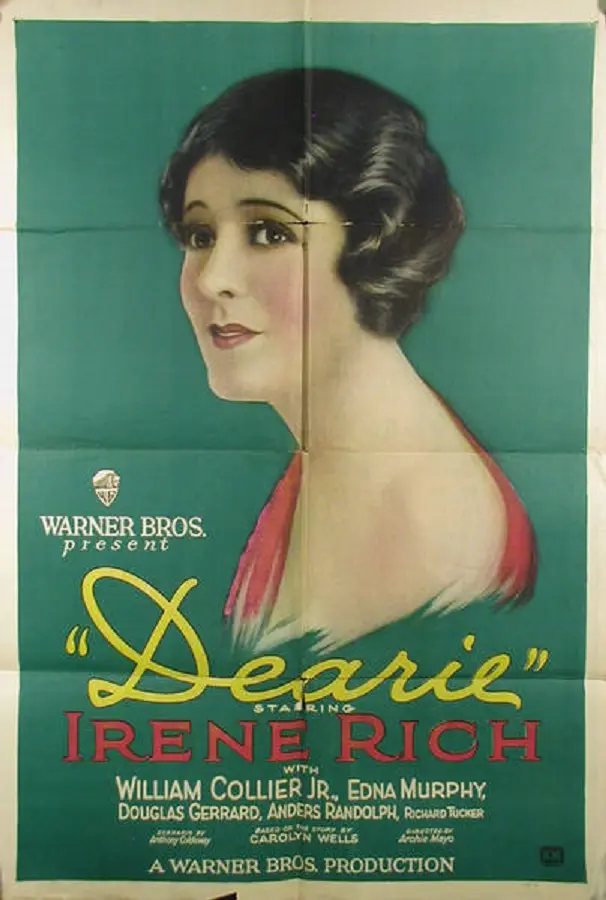
Should you invest your time in the 1927 silent drama Dearie today? Short answer: yes, but only if you have the stomach for a protagonist who is genuinely difficult to watch in his cruelty. This film is a definitive must-watch for historians of the 'maternal melodrama' subgenre and fans of Irene Rich, but it is absolutely not for those who prefer their heroes to be likable or their endings to be neatly tied with a bow.
Dearie exists in that fascinating pocket of late-silent cinema where technical proficiency was at its peak, yet the narratives remained deeply rooted in Victorian moral anxieties. It is a film that asks how much a mother should suffer for a child who gives nothing back. Unlike many films of its era that sugarcoat the relationship between parent and child, Dearie leans into the ugliness of ego and the hollow promise of the 'literary genius.'
1) This film works because Irene Rich provides a grounded, soulful anchor to a plot that could have easily drifted into camp; her facial expressions during the nightclub sequences convey a haunting mix of professional allure and personal shame.
2) This film fails because the character of Stephen is written with such unrelenting, one-dimensional arrogance that his eventual 'redemption' feels like a narrative convenience rather than a genuine character arc.
3) You should watch it if you are interested in the evolution of the 'fallen woman' trope and want to see a rare 1920s depiction of the Broadway cabaret scene as a place of both liberation and social exile.
Irene Rich was often cast as the long-suffering mother, but in Dearie, she finds a specific gear of desperation that feels surprisingly modern. When she takes the stage as 'Dearie,' the film doesn't just show us a performance; it shows us a woman performing a performance. There is a palpable tension in her posture, a sense that she is constantly looking over her shoulder. This isn't the lighthearted stage success seen in The Chorus Girl's Romance; it is a transactional sacrifice.
The cinematography in these nightclub scenes is particularly effective. The use of low-key lighting and the way the camera lingers on the faces of the male patrons creates a sense of voyeurism. Sylvia isn't just singing; she is being consumed by the gaze of a public that would shun her if they knew her real name. This duality is the engine of the film's first half, and Rich plays it with a heartbreaking subtlety. She doesn't weep in every scene; she simply hardens.
One specific moment that stands out is when Sylvia is being fitted for her stage costume. The camera focuses on her hands—trembling slightly as she touches the sequins. It is a small, humanizing detail that elevates the film above standard melodrama. It suggests that her 'sin' isn't the singing, but the loss of her identity as a 'respectable' widow. It is a nuanced take on class that we also see explored in Extravagance, though Dearie feels more intimate and claustrophobic.
William Collier Jr. delivers a performance that is, quite frankly, infuriating. As Stephen, he embodies the worst traits of the Jazz Age 'flaming youth.' He is lazy, entitled, and delusional. The script doesn't shy away from making him a parasite. While his mother is literally selling her reputation to pay his tuition, he is busy getting expelled and playing the part of the misunderstood intellectual. It is a bold choice for a 1920s film to make the male lead so utterly loathsome.
The scene where Stephen is rejected by the publisher, Samuel Manley (played with a cold efficiency by Anders Randolf), is a turning point. Stephen’s reaction isn't one of self-reflection, but of violent lashing out. When he accidentally wounds his mother in a fit of rage, the film reaches a fever pitch of domestic horror. It’s a brutal sequence. The physical injury to Sylvia is a literal manifestation of the emotional wounds he has been inflicting on her for years. It works. But it’s flawed in its execution, leaning perhaps too heavily on the 'accident' to keep Stephen technically redeemable.
The cruelty reaches its peak when Stephen discovers his mother's secret. His reaction is not gratitude for her sacrifice, but pure, unadulterated disgust. He views her through the lens of a social climber who has been 'tainted' by association. This is where the film takes a stance: it critiques the very social ladder Stephen is trying to climb. His obsession with 'respectability' is shown to be far more immoral than Sylvia’s work in the cabaret. This thematic depth is similar to the social critiques found in Glass Houses, but with a much sharper edge.
For the modern viewer, Dearie offers a fascinating look at the 'double standard' of the 1920s. Is it worth watching? Yes, specifically for the way it handles the climax. The tragedy that 'looms over the horizon' is a bit of a cliché, but the emotional payoff is earned through Irene Rich’s performance alone. If you can handle the frustration of watching a mother be treated like a doormat for eighty minutes, the final reconciliation offers a catharsis that few silent films of this period manage to achieve without feeling totally saccharine.
The direction by Archie Mayo (though often uncredited in contemporary discussions) shows a keen eye for pacing. Unlike The Moment Before, which can feel stagnant, Dearie moves with a restless energy. The transition from the quiet, dusty home of the widow to the neon-lit chaos of the Broadway club is handled with a visual flair that keeps the audience engaged. The film doesn't waste time; it moves toward its tragic conclusion with the inevitability of a train wreck.
The pacing of Dearie is its greatest asset and its biggest hurdle. The first act moves quickly, establishing the stakes and the central conflict with efficiency. However, the middle section, which focuses on Stephen's collegiate failures and his romance with Edna, feels sluggish. The film is at its best when it stays with Sylvia. Every time the camera leaves her to follow Stephen’s exploits, the tension drops. We don't care about his book; we care about her survival.
Tone-wise, the film is surprisingly dark. There is a cynicism here that predates the Pre-Code era. The relationship between Sylvia and Luigi, the club owner, is handled with a refreshing lack of judgment. Luigi isn't a villainous pimp; he is a businessman who provides Sylvia with a lifeline. Their eventual marriage feels like a pragmatic, adult conclusion rather than a fairytale romance. It’s a grounded ending for a film that deals with such heightened emotions.
The cinematography also deserves a mention for its use of shadows. In the scene where Stephen humiliates his mother in public, the shadows cast across his face make him look almost demonic. It is a clear visual indicator of his moral rot. This use of expressionistic lighting is a hallmark of late 1920s Warner Bros. productions and adds a layer of depth that elevates the material. It reminds me of the visual storytelling in My Official Wife, where the camera does the heavy lifting for the dialogue.
Pros:
- Strong thematic exploration of maternal sacrifice.
- Excellent production design for the Broadway sequences.
- A surprisingly mature take on the 'fallen woman' narrative.
- Compelling chemistry between Irene Rich and the supporting cast.
Cons:
- The male lead is almost too repulsive to tolerate.
- The ending relies on a sudden tragedy to resolve the conflict.
- Some of the college-set subplots feel dated and unnecessary.
Dearie is a film of sharp contrasts. It is a beautiful, well-acted tragedy that is occasionally marred by its commitment to a truly hateful secondary lead. Irene Rich is the soul of the picture, and her portrayal of Sylvia Darling is a masterclass in silent acting. She doesn't need intertitles to tell us she is hurting; we see it in every forced smile she gives her son.
While the film lacks the epic scale of something like Bonnie Prince Charlie, it succeeds as a domestic thriller. It is a story about the masks we wear for the people we love, and the devastating cost of those disguises. It isn't a comfortable watch, but it is a necessary one for anyone exploring the depths of 1920s cinema. It’s a film that stays with you, primarily because of the anger it evokes on behalf of its heroine.
Final thought: Sylvia Darling deserves better. The fact that the film ends with her forgiving her son is perhaps the greatest tragedy of all. But that is the nature of the genre. Dearie is a relic of its time that still manages to feel uncomfortably relevant in its depiction of toxic family dynamics. It is a quiet, devastating achievement in the art of the melodrama.
IMDb 6.5
1924
Community
Log in to comment.