DbcultAccessing Vault...
Cult Review
Senior Film Conservator
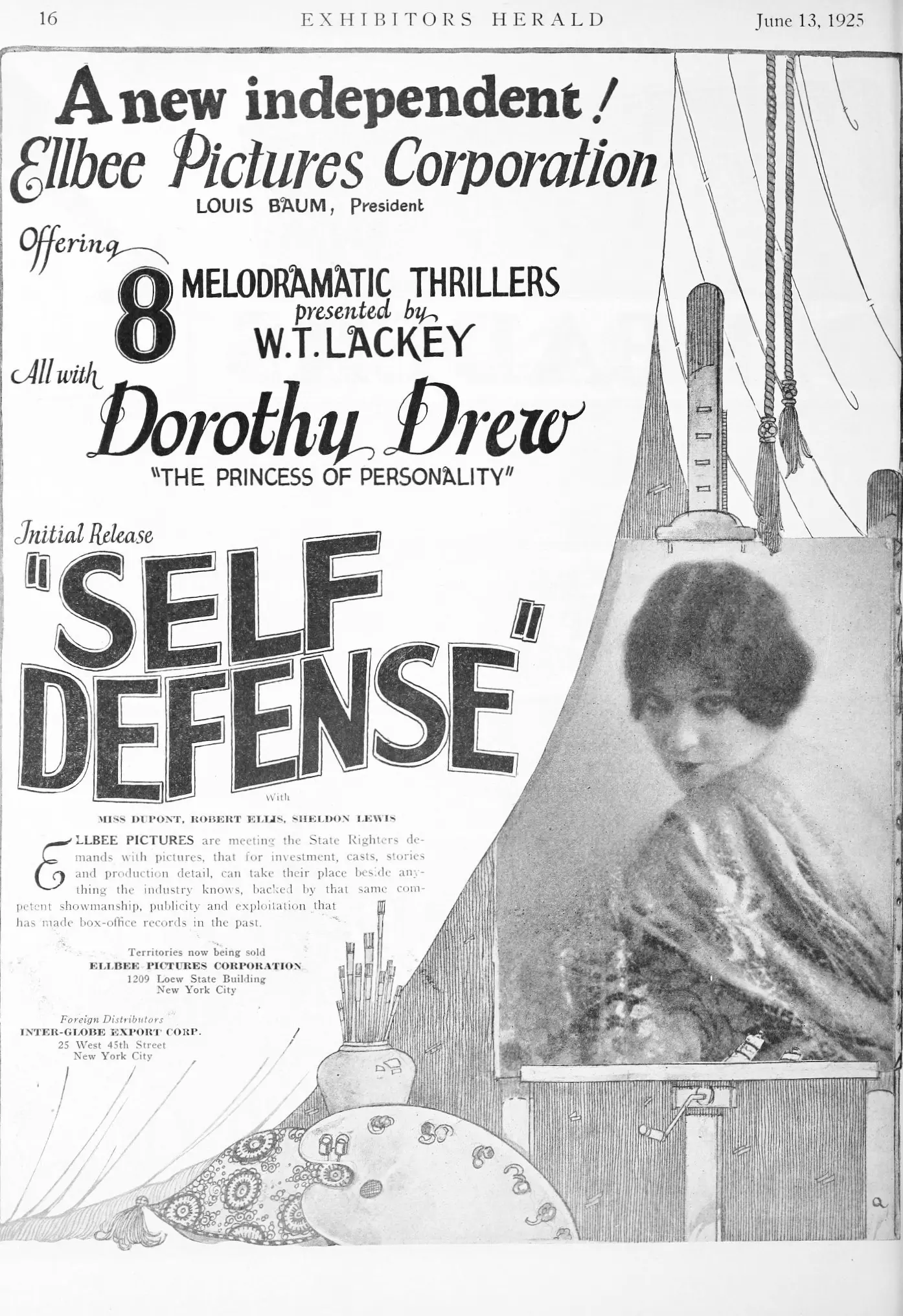
Short answer: yes, Defend Yourself is worth watching today, but with significant caveats. This silent-era melodrama, a product of 1925, will particularly resonate with cinephiles deeply invested in understanding the evolution of narrative film and those with a keen interest in historical representations of desperation and moral ambiguity. However, it is decidedly not for viewers seeking a polished, fast-paced contemporary thriller or those with a low tolerance for the often exaggerated dramatic conventions of the silent screen.
To approach Defend Yourself is to step into a particular corner of early 20th-century cinema, a world where emotional stakes are always sky-high and plot contrivances are embraced with open arms. It’s a film that demands a certain generosity from its audience, a willingness to engage with its particular brand of storytelling. This isn't a film that quietly unfolds; it’s a narrative that bursts forth with an almost aggressive energy, throwing twists and turns at the viewer with remarkable speed.
The narrative engine of Defend Yourself is fueled by desperation. Louise Nolan, played with a compelling blend of fragility and resolve by Marcella Daly, is immediately plunged into the deep end of life's unforgiving pool. Her father’s murder isn't just a plot point; it's the catalyst that forces her into the morally gray world of "The Cat's Paw," a sporting café where she performs as a masked dancer. This establishment isn't merely a backdrop; it’s a crucible, a place where societal norms are bent and survival dictates actions. The mask isn't just for performance; it's a symbolic veil over her true identity, a nod to the hidden lives many were forced to lead.
The introduction of Smiley Bill Curtain, the aptly named 'sugardaddy' and, crucially, her father's killer, injects a palpable sense of dread and injustice. John Webb Dillion embodies Curtain with an almost cartoonish villainy, yet it’s effective for the era. His presence immediately establishes a predatory dynamic, turning Louise's struggle for survival into a high-stakes game of cat and mouse – ironically, given the name of the injured dancer who further complicates matters.
The plot thickens with the arrival of Dr. Poole, the physician treating Louise's brother, who is swiftly entangled in Curtain's web of jealousy and possessiveness. It's here that the film accelerates its already rapid pace, culminating in Curtain's shocking, unsolicited marriage announcement to Louise. This moment is a stark illustration of the powerlessness women often faced, a chilling reminder of how quickly agency could be stripped away. The subsequent, almost instantaneous murder of Curtain by The Mouse feels like a sudden, violent release valve, clearing the path for Poole to whisk Louise away, securing her hand in marriage with a haste that borders on the absurd. The swiftness of this resolution is perhaps the film's most audacious narrative leap, demanding a significant suspension of disbelief.
In silent cinema, the weight of storytelling often falls squarely on the shoulders of its performers, who must convey complex emotions and motivations without the benefit of spoken dialogue. Marcella Daly, as Louise Nolan, delivers a performance that is both understated and impactful, especially considering the melodramatic context. Her wide, expressive eyes communicate a deep well of sorrow and a quiet determination. There’s a particular scene at "The Cat's Paw" where she performs, her body language subtly conveying exhaustion and resignation beneath the forced gaiety of her masked persona. It’s a nuanced portrayal that hints at the character's inner turmoil without resorting to excessive histrionics, a common pitfall of the era.
John Webb Dillion's portrayal of Smiley Bill Curtain is, by contrast, a masterclass in silent-era villainy. He doesn't just play a bad guy; he embodies a force of nature. His physicality—a sneering smile, an imposing stance, the way he dominates a frame—leaves no doubt about his nefarious intentions. Consider the moment he declares his intention to marry Louise; his almost smug self-satisfaction, conveyed through a slight tilt of the head and a possessive glance, is chilling. It's a performance that doesn't aim for subtlety but for unambiguous menace, and it largely succeeds in establishing him as a truly detestable antagonist.
Miss DuPont, as The Mouse, offers a memorable, if brief, turn that proves pivotal. Her character's explosive anger leading to Curtain's demise is a moment of raw, unbridled emotion. Her frantic movements and desperate expressions in the aftermath are a testament to her ability to command the screen in a flash. While the supporting cast, including Robert Ellis as Poole, often serve more as plot facilitators than fully fleshed-out characters, their contributions are essential in maintaining the film's brisk pace and high dramatic tension. Ellis, as Poole, projects a kind of earnest, if somewhat bland, heroism, making his swift proposal feel more like a convenient plot device than a culmination of deep romantic passion.
The directorial choices in Defend Yourself, while perhaps not groundbreaking, are effective in establishing mood and advancing the plot. The film often utilizes stark contrasts, particularly in its depiction of Louise's two worlds. The home she shares with her brother is likely shown with a certain softness, perhaps natural light, emphasizing its fragility and her dedication. In contrast, "The Cat's Paw" is almost certainly portrayed with a grittier, perhaps more shadowy aesthetic, reflecting its underworld connections and moral ambiguity. The director skillfully uses these visual cues to immediately inform the audience about the emotional and ethical landscape of each setting.
Cinematography, for a 1925 production, likely relies on clear, functional compositions, with a focus on capturing the actors' expressive faces. While elaborate camera movements might have been rare, the use of close-ups would have been crucial for conveying the intense emotions at play. Imagine a tight shot on Louise’s face as Curtain announces their forced marriage – her shock, fear, and resignation would be magnified, drawing the audience directly into her plight. Similarly, the lighting in "The Cat's Paw" scenes would likely have played a significant role, perhaps using chiaroscuro effects to highlight the clandestine nature of the establishment and the shadowy figures within it, lending a proto-noir sensibility to the proceedings.
The staging of key dramatic moments, such as the struggle leading to Poole's detention or The Mouse's vengeful act, would have been carefully choreographed to maximize visual impact. There’s a certain theatricality inherent in silent film directing, where every gesture and movement must be deliberate and communicative. This film works because its visual language, though dated, effectively communicates the heightened drama without excessive embellishment, focusing on clarity and direct emotional appeal.
One of the most striking aspects of Defend Yourself is its relentless pacing. From the initial murder to the climactic double-cross and hasty proposal, the narrative rarely pauses for breath. This isn't a film that luxuriates in character development or philosophical musings; it's a film that propels its characters from one crisis to the next with an almost frantic energy. This breakneck speed can be both a strength and a weakness. It certainly keeps the audience engaged, ensuring there's never a dull moment. The story never drags. But it also means that certain pivotal emotional shifts or character decisions feel rushed, undermining their potential impact.
The tone is unashamedly melodramatic. Every emotion is amplified, every stake is life-or-death, and every villain is irredeemably evil. This is the language of early cinema, where moral black and white often prevailed over shades of gray. The film embraces its heightened reality, expecting the audience to do the same. This can be a refreshing change of pace from modern cinema's often cynical realism, offering a direct, almost primal emotional experience. The almost instant shift from Louisa's forced marriage to Curtain's murder and then Poole's proposal is a perfect example of this. It's less about believable human reaction and more about advancing the narrative to its destined, albeit convenient, conclusion.
However, this relentless pace means that some of the more complex themes, such as Louise's desperation or the societal pressures that lead her to "The Cat's Paw," are explored only superficially. They serve as plot devices rather than deeply investigated human conditions. This film fails because its character motivations, particularly in the latter half, often feel more like convenient plot devices than organic developments, sacrificing deeper psychological realism for dramatic expediency.
Beneath the overt melodrama, Defend Yourself touches upon several compelling themes, even if they are not always fully explored. The most prominent is undoubtedly the theme of survival and desperation. Louise's entire journey is dictated by her need to support her crippled brother, a burden that forces her into a life she clearly despises. This highlights the harsh economic realities faced by many, particularly women, in the early 20th century, where limited options often led to morally compromising situations. Her masked dancing is a potent symbol of this hidden struggle, of maintaining a facade while battling inner turmoil.
Another significant theme is power and control. Smiley Bill Curtain is the embodiment of unchecked male power, using his wealth and influence to manipulate and dominate those around him. His attempt to force Louise into marriage is a chilling display of this control, a stark reminder of how vulnerable individuals, especially women, could be to the whims of powerful men. The film, in its own way, critiques this dynamic by having Curtain ultimately brought down, not by a conventional hero, but by the vengeful act of another marginalized woman, The Mouse. This unexpected twist suggests a subtext of female solidarity, albeit a violent one, against oppressive male figures.
The film also hints at the theme of justice and retribution. While the legal system is absent, a form of poetic justice is served through The Mouse's actions. Curtain, who murdered Louise's father, meets a violent end himself, suggesting a cyclical nature of vengeance. However, the almost too-neat resolution of Louise finding love and safety with Poole raises questions about the film's ultimate message. Is it truly about defending oneself, or simply escaping one bad situation into a conveniently good one? This is one of the film's more debatable aspects; Poole's sudden heroism feels less like earned salvation and more like a narrative shortcut.
You should watch it if you appreciate the raw, unfiltered emotionality of early cinema and are fascinated by how filmmakers of the era constructed tension and resolved intricate plots without the aid of dialogue. For the dedicated silent film enthusiast, Defend Yourself offers a captivating glimpse into the dramatic conventions and social anxieties of its time. It’s a film that, despite its age, still possesses a certain visceral energy, a testament to the power of visual storytelling.
However, for a casual viewer accustomed to modern narrative pacing and character depth, it might prove a challenging watch. The exaggerated performances, the reliance on intertitles, and the often simplistic character motivations can feel dated. Its swift, almost abrupt resolution to a series of high-stakes conflicts might leave some feeling unsatisfied, as if the story cheats its way to a happy ending rather than earning it.
Ultimately, its value today lies in its historical significance and its ability to transport viewers to a different cinematic era. It’s a valuable piece for understanding the evolution of film narrative, particularly how filmmakers tackled complex moral questions and dramatic confrontations without the luxury of sound. It’s also a fascinating study in how rapidly a story could unfold, a stark contrast to the more drawn-out narratives we often encounter today.
Defend Yourself is far from a forgotten masterpiece, but it is a compelling artifact that deserves attention from specific audiences. It’s a film that works best when viewed through the lens of its historical context, appreciated for its bold storytelling and the raw emotional power of its silent performances. This film works because it unapologetically embraces its melodramatic core, delivering a series of escalating, high-stakes events that keep the narrative moving at a relentless pace, a quality often underestimated in silent cinema.
However, its narrative shortcuts and a certain lack of psychological depth prevent it from truly transcending its era. This film fails because its character motivations, particularly in the latter half, often feel more like convenient plot devices than organic developments, sacrificing deeper psychological realism for dramatic expediency. The journey of Louise Nolan, from desperation to a somewhat abrupt salvation, is a testament to the dramatic flair of 1920s cinema, even if the ending feels more like a contractual obligation than an earned resolution.
For those who appreciate the unique charm and narrative conventions of silent films, Defend Yourself offers a lively, if occasionally perplexing, experience. It’s a film that demonstrates the enduring power of visual drama, even when dialogue is absent and plot twists arrive with dizzying speed. It’s a valuable piece of cinematic history, perhaps not for everyone, but certainly rewarding for the discerning cinephile.
IMDb —
1926
Community
Log in to comment.