DbcultAccessing Vault...
Cult Review
Senior Film Conservator
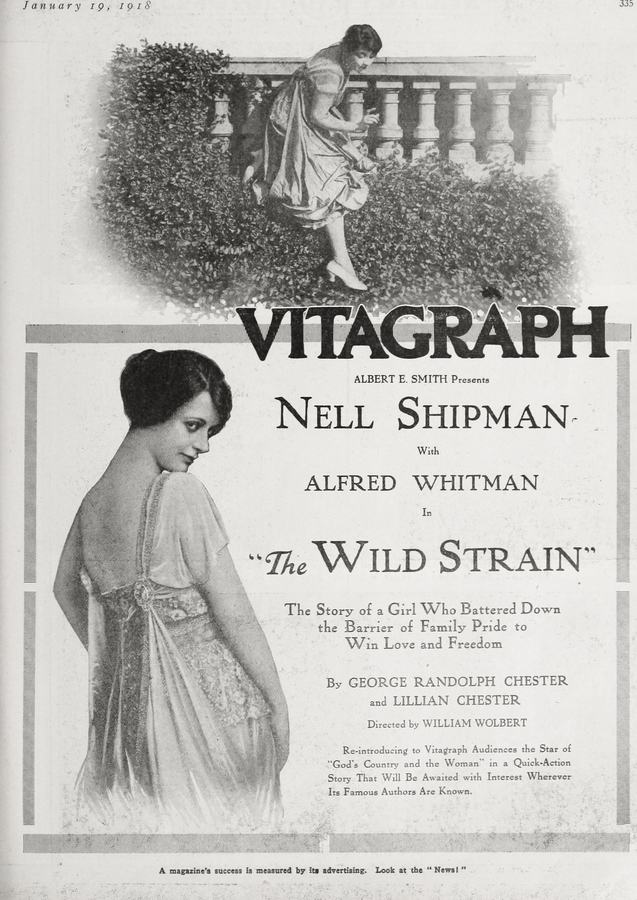
Spoilers cling like sawdust—brush them off if you crave virgin eyes.
There is a moment—midway through The Wild Strain—when the camera forgets its obligation to polite society and simply lingers on Winifred’s face as torchlight licks her cheekbones. In that quivering ember we witness the entire silent era’s manifesto: gesture as grammar, pupils as exclamation points. Rarely does a film born in 1923 feel this electrically alive, a nitrate heartbeat thrumming beneath the varnish of heritage.
Director Garfield Thompson, saddled with a screenplay stitched by no fewer than four scenarists, somehow sculpts a narrative where high-hat snobbery collides with big-top anarchy. The Hollywood mansion—all vaulted ceilings and ancestral portraiture—becomes a petri dish for generational discontent. Winifred, essayed by Nell Shipman with the sprightly irreverence of a flapper who’s skimmed Nietzsche between trapeze rehearsals, refuses to be another gilded specimen. Her rebellion is not verbal (the intertitles are deliciously barbed) but corporeal: every cartwheel across the lawn is a manifesto scrawled in muscle.
Harold Burton—Gayne Whitman channeling a specter of WASPish constipation—enters wearing privilege like cologne so cloying it wilts corsages. The first dinner sequence is a master-class in micro-aggressions: silverware clinks in polyrhythmic judgment, and the camera dollies ever so slightly to trap Winifred within a frame of cutlery daggers. You half expect the soup tureen to sprout teeth.
When the narrative relocates to the circus lot, the film’s grain itself seems to exhale. The whites flare, the blacks soften, and the air tastes of popcorn and illicit freedom. Cinematographer Robert N. Bradbury (pulling double duty as sleazy ringmaster) swaps velvet chiaroscuro for sun-bleached exuberance. Watch how he frames Winifred atop her galloping steed: the camera tilts to match the animal’s rhythm, sky and earth swapping places, morality somersaulting into spectacle.
Yet Thompson refuses pastoral nostalgia. The circus is no utopia; it’s a frayed tapestry of grifters, drifters, and the economically dispossessed. When Winifred’s bareback routine detonates the engagement, the film locates the precise vertebra where class anxiety hinges. The Burtons recoil not from athleticism but from public athleticism—sweat commodified into ticket sales.
The pivot to crime thriller could feel whiplash-inducing; instead, it’s a logical extension of a world where capital is protected by nepotism and bullets. The bank robbers—lanky silhouettes with derby hats cocked like sarcastic quotation marks—abduct Winifred for the simple crime of overhearing. Cue moonlit captivity inside a grain silo whose rusted ribs resemble a ribcage. Thompson milks shadows with Germanic expressionism: bars of moonlight slice her face into prison stripes.
Enter Harold, shedding his three-piece armor for a henley and pugilistic resolve. The rescue sequence—equal parts The Railroad Raiders and commedia dell’arte—erupts with circus recruits: jugglers hurling Indian clubs as artillery, strongmen wielding wagon axles like quarterstaffs, acrobats ricocheting off hay bales. It’s Keystone mayhem filtered through Griffithian pathos, and it works because every performer’s skillset is narrative-integrated, not ornamental.
In the denouement, the ancestral confessions arrive not as musty exposition but as absolution. The Hollywoods’ bandit forebear—whose wanted poster resembles a Modigliani by way of Toulouse-Lautrec—becomes a patron saint of beautiful rogues. Meanwhile, the Burtons’ pugilist ancestor, a bare-knuckle bard who settled disputes with left hooks, retroactively legitimizes Harold’s newfound brawling. Bloodlines, once linear and suffocating, braid into a Möbius strip where outlaw and aristocrat clasp hands.
Notice how the final tableau eschews nuptial iconography. No veil, no church, no organ wheeze. Instead, lovers reunite inside the half-struck circus ring, sawdust swirling like nebulae. The camera cranes skyward until they become silhouettes swallowed by tent peaks—two constellations choosing orbit over ownership.
Nell Shipman is revelation incarnate. She never begs for modern sympathy; she commands contemporaneous relevance. Watch her micro-shifts during the silo captivity: pupils dilating from terror to strategy, shoulders squaring from victim to architect. Gayne Whitman, saddled with the unenviable arc from fop to hero, sells transformation through gait alone—his final stride is looser, hips swiveling like a man who’s tasted dirt and found it sweet.
Among supports, Hattie Buskirk as the circus fortune-teller deserves archival resuscitation. In a single close-up—face lacquered with greasepaint, eyes reflecting kerosene flames—she channels every Cassandra of silent cinema. Ruth Handforth’s matriarchal Burton, meanwhile, weaponizes a fan the way Musketeers wield rapiers: every snap is a duelist’s parry.
Four writers rarely birth coherence, yet here the script hums with screwball dexterity. Intertitles crackle: “Love counted in banknotes is but counterfeit currency.” Thematic through-lines—ancestral guilt, class rigidity, performative femininity—braid without tangle. One suspects Lillian Christy Chester supplied the social satire, George H. Plympton the pulp propulsion, George Randolph Chester the structural elegance, and Thompson the tonal glue.
Though photographed in grayscale, the palette is sensed. The Hollywood estate drips imagined burgundy; the circus bursts with forced cobalt; the silo night pulses arsenic green. Contrast this with The Victory of Conscience, whose moral absolutism translates to stark blacks and whites, or The Spoilers, where tundra exteriors bleed into ashen moralities. The Wild Strain prefers chromatic moral ambiguity.
Winifred’s agency never devolves into hashtag-feminist anachronism; rather, she embodies the era’s seismic gender tremors. Her circus act is not escape but reclamation of bodily autonomy. When Harold arrives bloodied but victorious, she greets him not as damsel but as co-conspirator, brushing sawdust from his hair with the casual intimacy of equals.
Stacked beside Salvation Nell or Her Temptation, films that punish female appetite, The Wild Strain opts for carnivalesque absolution. Its DNA shares strands with Timothy Dobbs, That’s Me—both fuse slapstick with social commentary—but surpasses via poetic visual grammar.
Prints remain fragmentary; the third reel survives only in a Dutch archive, Dutch intertitles subtitled into pixelated English. Yet such scars enhance aura—every scratch is a lightning bolt, every missing frame an invitation to imagine. Restoration funds hover like angels; streamers lobby for 4K resurrection. Viewers lucky enough to catch 16 mm revivals report communal gasps during the bareback sequence, as if a century collapses into sawdust.
So, is The Wild Strain a curio or canon? Both and neither. It is a celluloid comet streaking across the firmament of early ’20s cinema, trailing stardust of anarchy, romance, and self-invented myth. It neither moralizes nor apologizes; it performs—recklessly, gloriously—until the tent folds and the night swallows the torchlight. And in that swallowing, we taste our own hunger for freedom, for sawdust in our shoes, for ancestors who were bandits and lovers who are equals.
Verdict: Seek it, scream for its restoration, let its wild strain infect your bloodstream.
IMDb —
1920
Community
Log in to comment.