DbcultAccessing Vault...
Cult Review
Senior Film Conservator
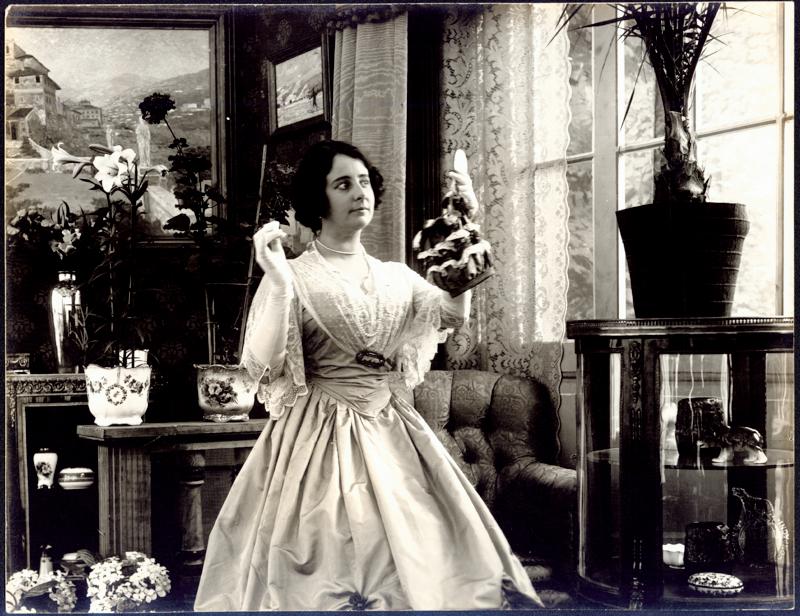
In the annals of cinematic history, certain films, particularly those from the nascent years of the medium, often exist as whispers, fragments, or tantalizing glimpses into the foundational artistry of their creators. 'Den skønne Evelyn' (The Beautiful Evelyn), a Danish silent film from the early 20th century, stands as one such intriguing artifact, not least because it bears the early writing credit of a titan of world cinema, Carl Theodor Dreyer. While direct directorial control would come later for Dreyer, his involvement even as a scenarist imbues this work with a particular resonance, inviting us to seek the nascent thematic concerns and stylistic inclinations that would later define his unmistakable oeuvre. To approach 'Den skønne Evelyn' is to embark on an archaeological dig into the very bedrock of a master's imagination, tracing the faint outlines of psychological depth and human vulnerability that would become his enduring hallmarks.
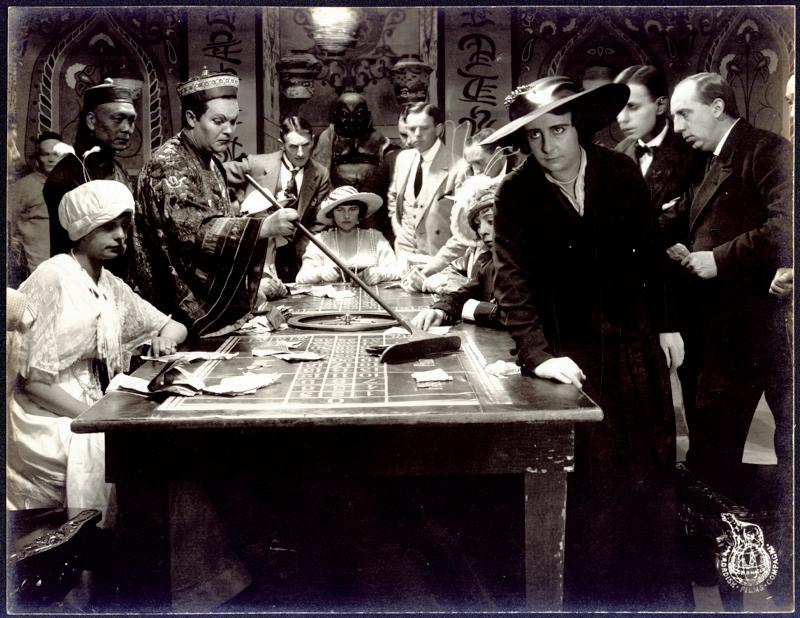
The film's premise, deceptively simple, centers on Evelyn Milton's debut as a dancer at the Empire Theatre. Yet, within this seemingly straightforward narrative lies a profound exploration of performance, identity, and the relentless gaze of the public. The stage, in Dreyer's early conception, is more than a mere platform for entertainment; it is a crucible, a space where individual souls are tested, forged, and often, irrevocably altered. Evelyn's journey, though perhaps depicted with the melodramatic flourishes common to the era, can be viewed through a proto-Dreyerian lens as a spiritual trial, a moment of intense self-exposure where the boundaries between the performer and the person blur. This thematic preoccupation with the inner life and the pressures exerted upon it by external forces would echo throughout Dreyer's later, more celebrated works, from the spiritual anguish of The Christian to the stark, almost unbearable emotional intensity of his masterpieces.
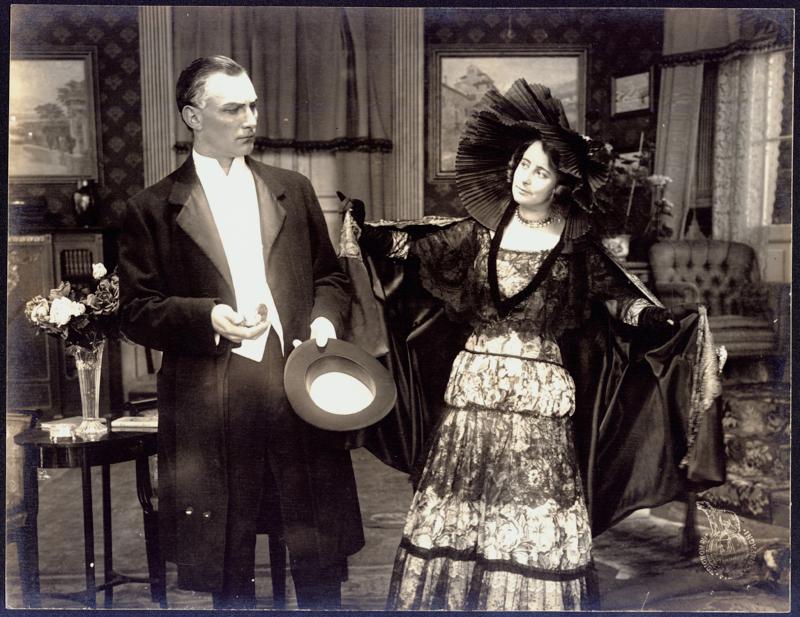
The Empire Theatre itself functions as a character in its own right, a gilded cage of ambition and illusion. Its very architecture, its hushed anticipation, the rustle of programs, the expectant faces in the darkness – all contribute to an atmosphere charged with both promise and peril. Evelyn, portrayed by the graceful Rita Sacchetto, a dancer whose real-life reputation lent an air of authenticity to the role, embodies the archetypal ingénue thrust into this intoxicating yet perilous world. Her performance is not merely a display of physical prowess but an act of profound vulnerability. The silent screen, paradoxically, often amplified the emotional nuances of its actors, relying on exaggerated gestures, facial expressions, and the power of the close-up to convey internal states. Sacchetto, therefore, was tasked with portraying Evelyn's hopes, fears, and the sheer nerve required to stand before a critical audience, all without the aid of spoken dialogue. This reliance on visual storytelling and the expressive capabilities of the human form aligns remarkably with the core tenets of Dreyer's later directorial approach, where silence and visual poignancy often spoke volumes more than words ever could.
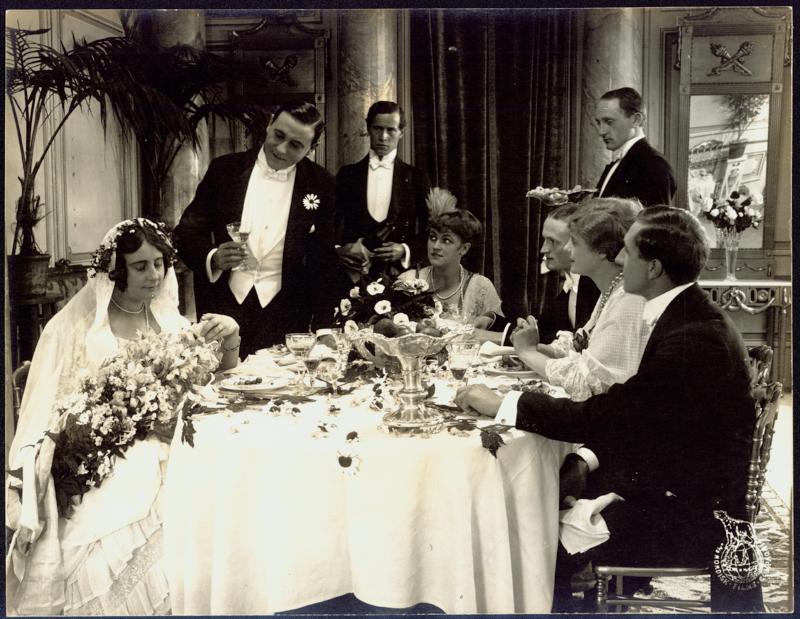
The film, even in its early, perhaps less refined form, likely explores the multifaceted relationships that define a theatrical career. The powerful impresario, potentially embodied by figures like Tronier Funder or Henry Seemann, would represent the gatekeepers, the arbiters of success, whose approval or disapproval could make or break a career. Their presence would introduce themes of power dynamics, patronage, and the often-unspoken compromises inherent in the pursuit of fame. Marie Dinesen, Peter Palludan, and Philip Bech, other notable actors of the era, would undoubtedly populate the periphery of Evelyn's world, perhaps as rival dancers, skeptical colleagues, or even hidden admirers. Each character, regardless of screen time, contributes to the intricate tapestry of the narrative, highlighting the social pressures and personal sacrifices that accompany artistic endeavor. This ensemble dynamic, where individual fates are intertwined within a larger social fabric, is another consistent thread in Dreyer's work, emphasizing the collective human experience even while focusing on singular, often tormented, individuals.
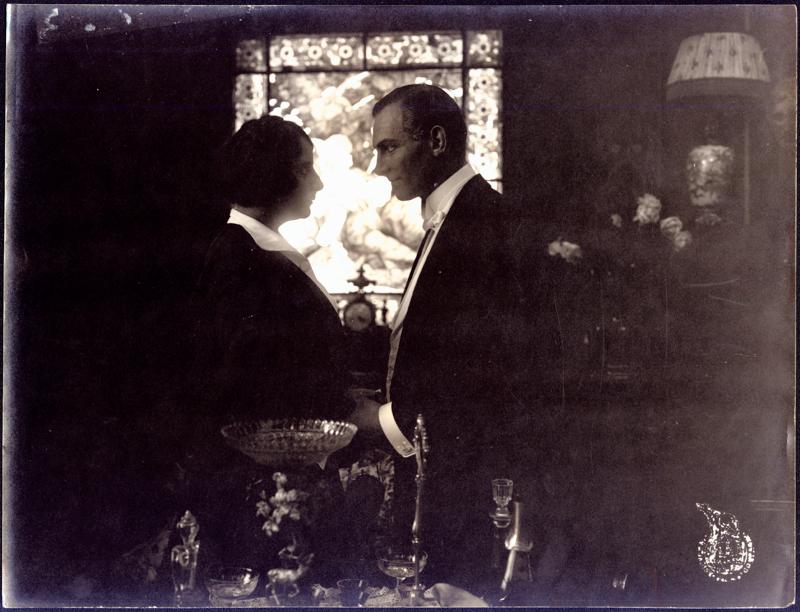
While Carl Theodor Dreyer's contribution to 'Den skønne Evelyn' was as a writer, not director, it is impossible to divorce the narrative's potential depth from his burgeoning talent. Even in these formative years, Dreyer demonstrated a profound interest in human psychology, moral dilemmas, and the often-harsh realities faced by individuals, particularly women, navigating societal expectations. His later films, such as A bánat asszonya (The Woman of Sorrow) or The Sins of the Mothers, often delved into melodramatic narratives to explore deeper spiritual and ethical questions. It is plausible that 'Den skønne Evelyn' would have featured a similar undercurrent, transforming a simple theatrical debut into a meditation on purity, temptation, and the artist's struggle for integrity in a world often driven by superficiality.
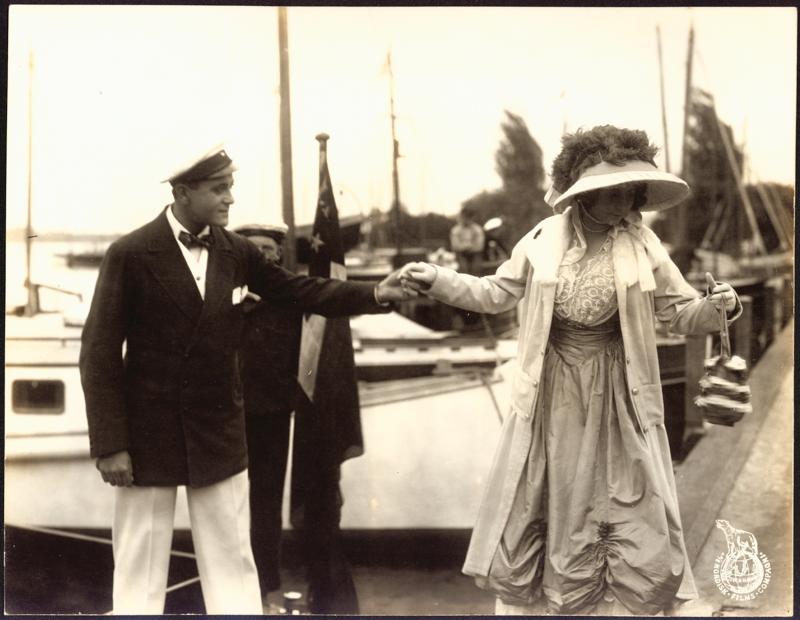
The very act of performance, with its inherent duality of presenting an idealized self while concealing the real one, is a rich thematic vein that Dreyer, even as a writer, would have likely explored with nuance. Evelyn's 'beauty' – 'skønne' – is not just physical; it implies an inner grace, a potential for artistic transcendence that must contend with the commercial demands of the theatre. This tension between art and commerce, authenticity and artifice, is a timeless struggle that resonates deeply within the artistic community. We can imagine intertitles, penned with Dreyer's characteristic conciseness and poetic flair, hinting at Evelyn's internal monologues, her silent prayers for success, or her anxieties about failure. The dramatic weight would not merely rest on the spectacle of the dance itself, but on the profound emotional journey unfolding within Evelyn, projected onto the grand canvas of the stage.
The technical limitations of silent cinema, far from being impediments, often forced filmmakers and writers to cultivate a heightened visual language and an almost balletic precision in storytelling. The absence of synchronized sound meant that every gesture, every set design, every lighting choice had to convey meaning with utmost clarity and emotional impact. In 'Den skønne Evelyn,' the visual splendor of the Empire Theatre, the intricate costumes of the dancers, and the dramatic staging of Evelyn's debut would have been crucial to establishing the film's atmosphere and narrative stakes. The use of close-ups on Evelyn's face during moments of intense emotion, or on the reactions of key audience members, would have guided the viewer's interpretation, drawing them intimately into the character's experience. This emphasis on visual storytelling, on expressing complex emotions through nuanced performance and evocative imagery, is a foundational element of Dreyer's entire filmography, from the stark realism of The Italian to the spiritual allegories of his later works.
Comparing 'Den skønne Evelyn' to other silent films of its era, one might draw parallels with the melodramatic intensity found in works like The Woman Pays, where moral dilemmas and the consequences of personal choices drive the narrative forward. Or perhaps the exploration of ambition and the allure of metropolitan life might find echoes in films like Lights of New York, even though that was a much later talkie, the underlying themes of striving for success in a glamorous yet unforgiving environment are universal. The power of silent film lay in its universal language of emotion, conveyed through the raw talent of performers and the ingenuity of its creators. The performances of Tronier Funder, Henry Seemann, Marie Dinesen, Peter Palludan, Philip Bech, and Rita Sacchetto would have been crucial in translating Dreyer's written vision into a compelling visual experience, relying on their physical presence and expressive capabilities to bring the characters to life.
'Den skønne Evelyn' offers a fascinating glimpse into the nascent stages of Carl Theodor Dreyer's career, long before he would direct masterpieces like 'The Passion of Joan of Arc' or 'Ordet.' Even as a screenwriter, his thematic preoccupations with human suffering, moral fortitude, and the search for spiritual truth are subtly present. The film, therefore, serves not only as an important document in Danish cinematic history but also as a crucial piece in understanding the evolution of one of cinema's most profound visionaries. It reminds us that even the seemingly simple narratives of early cinema were often infused with complex human emotion and philosophical inquiry, laying the groundwork for the rich tapestry of film that would follow.
The film, alongside other Danish productions of the period, contributes to a broader understanding of European silent cinema, which often explored themes of social class, morality, and the individual's place within a rapidly modernizing world. While perhaps not as widely known as some of Dreyer's later, more accessible works, 'Den skønne Evelyn' holds intrinsic value for film scholars and enthusiasts alike. It encourages a deeper appreciation for the foundational artistry that shaped the medium, demonstrating how even a modest plot, when touched by a nascent genius like Dreyer, can resonate with enduring significance. The story of Evelyn Milton's debut, therefore, becomes more than just a tale of a dancer; it becomes an allegory for the artist's eternal struggle, a testament to the power of performance, and a quiet harbinger of the profound cinematic explorations that would define Dreyer's legendary career. Its existence compels us to look beyond the surface, to seek the profound in the seemingly mundane, a lesson that Dreyer himself would teach us repeatedly through his transcendent films.
IMDb —
1933
Community
Log in to comment.