DbcultAccessing Vault...
6.8/10
Senior Film Conservator

A definitive 6.8/10 rating for a film that redefined the boundaries of cult cinema. The Silk-Lined Burglar remains a cornerstone of transgressive art.
Stepping into the shadowy, intricate world of early 20th-century cinema, one encounters a fascinating blend of nascent narrative sophistication and raw, visceral storytelling. Among these cinematic artifacts, The Silk-Lined Burglar emerges as a compelling example, a film that transcends its silent era origins to deliver a remarkably engaging tale of crime, espionage, and unexpected heroism. This isn't merely a quaint historical relic; it’s a vibrant, taut thriller that, even without spoken dialogue, communicates a profound sense of intrigue and moral ambiguity, captivating audiences then as it continues to intrigue those who delve into its depths today.
At its core, the film introduces us to Boston Blackie, a character who, even in this relatively early cinematic outing, embodies the archetype of the 'gentleman crook' with an effortless charm and an undeniable proficiency for illicit trades. Blackie is no mere thug; he is an artist of transgression, his methods precise, his demeanor suave. The narrative hooks us from the outset with an unconventional proposition: Blackie answers a want ad, not for employment in the traditional sense, but for his specialized services as a safe cracker. This peculiar solicitation comes from Doris Macon, a figure shrouded in mystery, who asserts a compelling, if ill-defined, moral imperative for acquiring the contents of a particular safe. Her conviction, delivered with an intensity that cuts through the screen, lends an immediate ethical dimension to what might otherwise be a straightforward heist.
The collaboration between Blackie and Macon forms the initial, captivating arc of the story. Their joint venture to infiltrate the heavily guarded residence, culminating in Blackie's explosive mastery over the safe, is executed with a tension that speaks volumes about the filmmakers’ understanding of suspense. The timing of Captain von Hoffmeier’s return, precisely as the safe yields its secrets, is a masterstroke of dramatic pacing, amplifying the stakes and injecting a sudden surge of adrenaline into the proceedings. This scene, devoid of sound, relies entirely on visual cues – the furtive movements, the anxious glances, the sudden appearance of the owner – to convey the frantic urgency of the moment. It’s a testament to the power of visual storytelling that such sequences remain impactful even a century later.
What truly elevates The Silk-Lined Burglar beyond a simple crime caper is the unexpected pivot into the realm of espionage. Doris vanishes with critical papers, fulfilling her stated objective, yet Blackie's opportunistic seizure of phonograph records proves to be the true game-changer. This seemingly minor detail, a choice made in the heat of the moment, unravels a far more sinister plot. The revelation that these records, when played with a specific needle, expose von Hoffmeier as a German political spy, is a narrative device both ingenious and ahead of its time. It transforms Blackie's act from mere larceny into an inadvertent uncovering of national security threats, a thematic shift that resonates with the anxieties of the era and propels the plot into an entirely new dimension. One might draw parallels to the intricate, almost Rube Goldberg-esque plotting found in contemporary thrillers like The Invisible Power, where seemingly disparate elements coalesce into a grand revelation.
The performances, particularly from the lead actors, are critical in conveying the film's complex emotional landscape without the aid of dialogue. Lillian West, as Doris Macon, imbues her character with a steely resolve and a subtle vulnerability that hints at her deeper motivations long before they are explicitly revealed. Her portrayal avoids the typical damsel-in-distress trope, presenting a woman of agency, driven by a purpose that initially appears morally ambiguous but ultimately serves a higher cause. Priscilla Dean, too, contributes to the film's dramatic weight, though her role here is more understated compared to some of her more flamboyant turns. Sam Appel, as Boston Blackie, is the undeniable linchpin. His expressions, gestures, and overall screen presence articulate a blend of roguish charm, sharp intellect, and an underlying sense of honor that defines the character. It’s a performance that builds on the established persona of the gentleman thief, a figure that audiences had come to adore in various forms, much like the compelling anti-heroes in films such as The Transgressor.
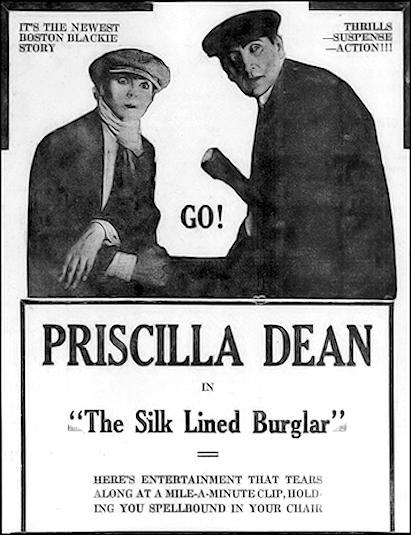
The subplot involving Doris's true allegiance – revealed as the girlfriend of a secret service agent who has been trailing them – adds another layer of sophisticated deception. This twist reframes the entire preceding sequence of events, revealing Doris not as a co-conspirator in crime, but as an undercover asset, a player in a much grander scheme of national importance. It’s a masterful narrative sleight of hand that transforms Blackie’s unwitting participation into an act of patriotic service. This kind of intricate double-crossing and concealed identity was a popular trope, seen in other contemporary thrillers, adding depth and unexpected turns, much like the intricate webs woven in Paid in Full, where characters' true intentions are often hidden beneath layers of deceit.
Fred Myton and Jack Boyle’s screenplay, despite the limitations of the silent format, crafts a narrative that is both tight and expansive. The dialogue, conveyed through intertitles, is economical yet impactful, pushing the plot forward without unnecessary exposition. The visual storytelling, however, is where the film truly shines. The cinematography, though perhaps not groundbreaking for its era, is effective in establishing mood and conveying action. The use of close-ups to capture the intensity of characters’ reactions, or wide shots to establish the grandeur of the settings, demonstrates a clear understanding of cinematic language. The direction ensures a consistent pace, building suspense gradually and releasing it with impactful climaxes.
The ultimate resolution, with Blackie’s unique talents being recognized and subsequently conscripted by the government, offers a satisfying and morally complex conclusion. It’s a trope that would become common in later espionage thrillers, but its presentation here feels fresh and innovative. The film doesn't simply redeem Blackie; it repurposes his criminal genius for a noble cause, suggesting that even the most unorthodox skills can find their place in the service of justice. This transformation from outlaw to government operative is a compelling arc, one that resonates with the audience’s desire for redemption and the triumph of good, even if achieved through unconventional means. This kind of moral evolution is also a hallmark of character-driven dramas such as The Winning of Sally Temple, where personal growth defines the narrative.
Beyond its immediate narrative pleasures, The Silk-Lined Burglar offers a fascinating glimpse into the nascent stages of the spy genre. While not as overtly political as some later films, its themes of hidden enemies, secret information, and national security were undoubtedly potent in the post-World War I era. The film taps into a collective consciousness, reflecting a world grappling with new forms of international intrigue and covert operations. The very idea of a German spy operating within seemingly respectable circles would have struck a chord with audiences, feeding into anxieties and suspicions that were very real at the time. It's a testament to the film's prescience that these themes remain relevant, albeit in different guises, in contemporary thrillers.
The film’s legacy, particularly in its contribution to the enduring appeal of the Boston Blackie character, cannot be overstated. Blackie, as portrayed here, is more than just a character; he is an embodiment of a certain kind of anti-hero, a figure who operates outside the law but adheres to his own moral code. This duality makes him endlessly fascinating. His intelligence, his resourcefulness, and his surprising capacity for good make him a character that audiences could root for, even as he engaged in technically illicit activities. This complex characterization sets him apart from more simplistic villains or heroes, allowing for a richer narrative experience. One might even compare his complex moral compass to characters in more philosophical works like Genie tegen geweld, which explores the intricacies of human nature when confronted with ethical dilemmas.
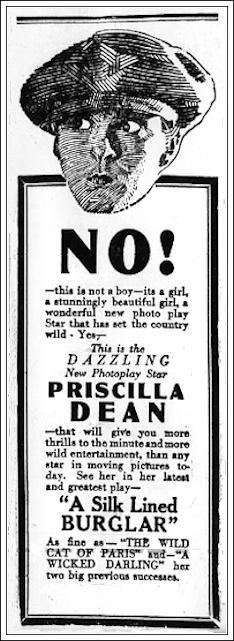
The technical aspects, while perhaps not reaching the grandeur of epic productions like The Seats of the Mighty, are nevertheless competently handled. The lighting, for instance, plays a crucial role in establishing mood, particularly during the nighttime heist sequences, where shadows and stark contrasts heighten the sense of danger and clandestine activity. The editing ensures a smooth flow between scenes, maintaining narrative coherence despite the lack of spoken dialogue. These technical choices, often subtle, contribute significantly to the film’s overall effectiveness and its ability to draw the viewer into its world. The attention to detail in the set design, though perhaps modest by modern standards, effectively conveys the various environments, from Blackie's humble lodgings to von Hoffmeier's more opulent residence.
Considering the film within the broader context of silent cinema, it stands as a robust example of popular entertainment that dared to blend genres. It’s not just a crime film; it’s a spy thriller, a character study, and a commentary on the fluid nature of morality. This genre-bending approach was a hallmark of the era, as filmmakers experimented with different narrative forms to captivate an eager public. The film’s ability to transition seamlessly from a classic heist scenario to a high-stakes espionage plot without losing its narrative footing is a testament to its well-structured screenplay and confident direction. It speaks to a period when cinematic language was rapidly evolving, and storytellers were pushing the boundaries of what could be achieved without spoken words, much like the bold narrative choices in His Wife's Good Name.
The character interactions are particularly noteworthy. The initial dynamic between Blackie and Doris is charged with a certain tension and mutual respect, a subtle dance of wills between two individuals operating on different sides of the law, yet united by a common objective. Even the fleeting moments between Blackie and von Hoffmeier, though adversarial, convey a sense of a cat-and-mouse game, a battle of wits that transcends the physical confrontation. These interactions, conveyed through nuanced acting and deliberate staging, are crucial in building the emotional and psychological depth of the film. The non-verbal communication is rich and expressive, allowing the audience to infer complex motivations and feelings, a skill honed in other silent features such as Jungeldrottningens smycke.
In retrospect, The Silk-Lined Burglar serves as a valuable historical document, showcasing not only the cinematic techniques of its time but also the cultural preoccupations. The film’s embrace of a morally ambiguous protagonist, its foray into international espionage, and its ultimately redemptive arc for its central character all speak to the evolving tastes and expectations of early 20th-century audiences. It’s a film that manages to be both a thrilling piece of entertainment and a subtle reflection of societal values. The enduring appeal of such narratives, where lines between good and evil blur, suggests a timeless fascination with characters who navigate complex ethical landscapes, a theme explored in depth in films like Under the Crescent and Everywoman.
The film’s title itself, The Silk-Lined Burglar, evokes a sense of refined criminality, a touch of elegance even in illicit acts, perfectly encapsulating the character of Boston Blackie. It suggests a world where appearances can be deceiving, where motives are often hidden beneath a veneer of respectability or, conversely, criminality. This dualism is a recurring motif throughout the film, challenging the audience to look beyond surface-level judgments. The journey Blackie undertakes, from being a wanted man to a government asset, is a testament to the power of circumstance and the recognition of latent potential. It reminds us that heroism can emerge from unexpected quarters, a sentiment echoed in classic tales of transformation like Liberty or The Heart of a Hero.
Ultimately, The Silk-Lined Burglar is more than just a historical curiosity; it is a film that holds up remarkably well as a piece of engaging storytelling. Its clever plot, well-defined characters, and effective use of silent film conventions make it a captivating watch for anyone interested in the origins of the crime and spy genres. It demonstrates that even without the complexities of sound, a truly compelling narrative, driven by strong performances and ingenious twists, can transcend the limitations of its medium and continue to entertain and provoke thought. It's a reminder that the fundamentals of good storytelling – compelling characters, escalating stakes, and unexpected turns – are timeless, proving as effective here as in more modern thrillers such as Alone with the Devil or action-packed westerns like The Raiders of Sunset Gap.
IMDb 6.5
1933
Community
Log in to comment.