DbcultAccessing Vault...
5.9/10
Senior Film Conservator
A definitive 5.9/10 rating for a film that redefined the boundaries of cult cinema. Den sorte drøm remains a cornerstone of transgressive art.
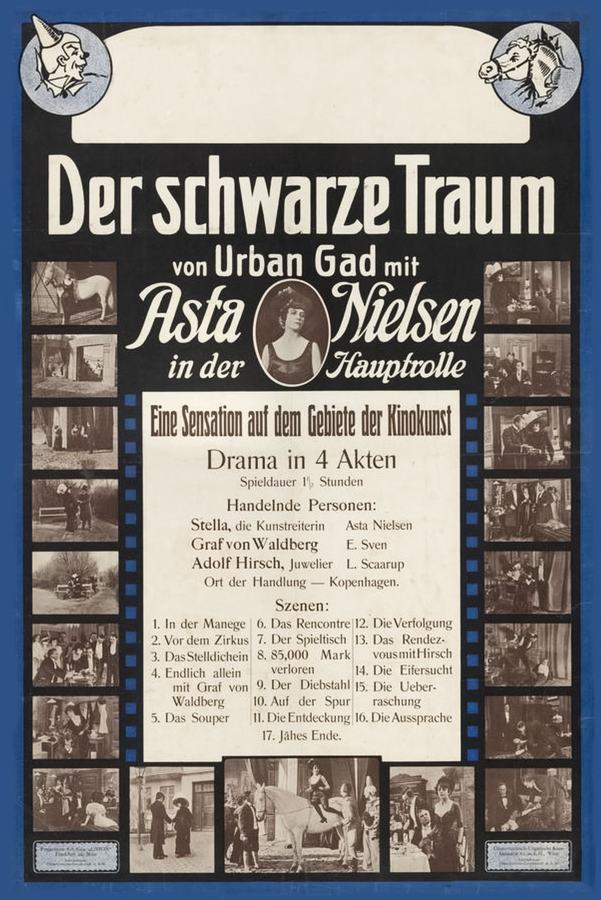
Urban Gad’s 1911 danse macabre, Den sorte drøm, is less a melodrama than a prism held up to the gaslight—every facet refracts a different shade of obsession.
Shot when cinema still wore kid-gloves, the film rips them off to reveal claws painted with nitrate gloom. Asta Nielsen’s Stella is no virginal ingénue; she is a centaur in silk, half woman, half rumor, galloping through the circuses of Copenhagen while two masculine worlds—commerce and aristocracy—wager on who will bridle her first. The lens loves the arc of her back as she vaults onto horseback: an erotic parenthesis enclosing the film’s every ellipsis of desire.
Gunnar Helsengreen’s Hirsch enters like a walking cash register, monocle winking like a gold coin. His love is weighed in carats, not kilojoules of heartbeat. When he offers Stella a brooch shaped like a horseshoe, the subtext clatters: luck for sale, submission included. Nielsen answers with a gaze so arctic it could frost the lens; the camera, cowed, cuts to Emil Albes’s Count von Waldberg, whose uniform is stitched with ancestral debt. Waldberg’s seduction is quieter—an arm around a waist, a door closed on a drawing room where Empire furniture becomes conspirator. The scene feels hot yet colorless, as though the film stock itself is blushing in grayscale.
The pivotal card duel stages capitalism’s last-act ballet. Beneath chandeliers that drip like frozen stalactites, Waldberg’s fingers tremble over poker chips the way a priest fingers rosary beads he no longer believes in. Every lost hand is a small funeral; the 85,000-crown promissory note is the coffin nailed in close-up. Gad intercuts Stella’s silhouette riding outside in the night, her whip cracking like Fate’s metronome. The montage is Eisenstein before Eisenstein, collision not linkage: the cut from Waldberg’s signature to Stella’s galloping hooves is a visual gunshot.
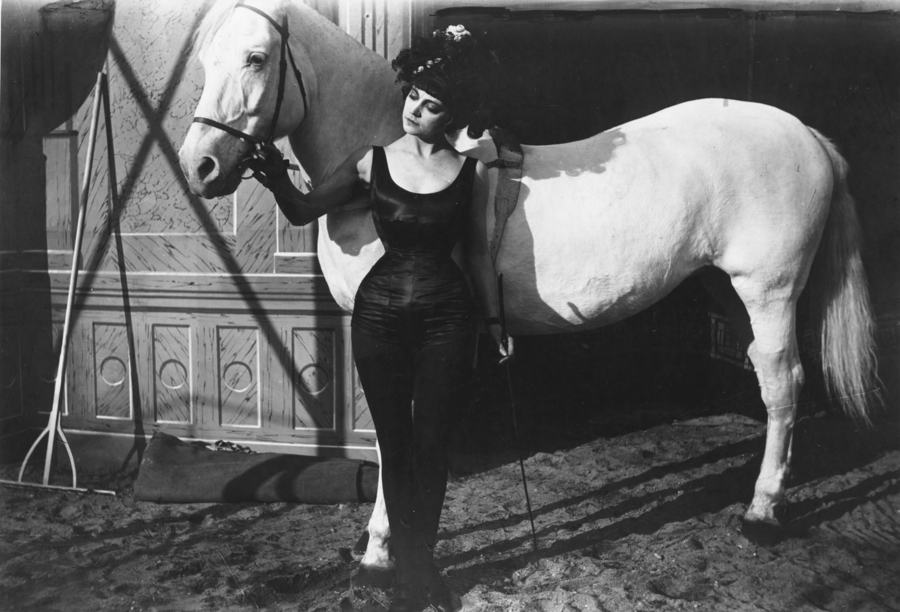
Jewel theft as sacrificial sacrament: Stella slips the necklace into her bodice while Hirsch’s reflection multiplies in a maze of mirrors, a cubist confession. The sequence is staged with the hush of sacrilege—no title card, only the soft click of clasp against skin. Later, in the fog-drunk park, she presses the loot into Waldberg’s palm like a communion wafer. Note how the mise-en-scène inverts gendered noir before noir exists: the woman as provider of contraband salvation, the man as guilt-ridden recipient.
Midnight rendezvous in Hirsch’s townhouse: staircases coil like serpents, shadows prowl in German-expressionist rehearsal. Waldberg’s pistol, an aristocratic afterthought, trembles upward; the off-screen gunpop is followed by a slow-motion collapse—Stella’s body folding like silk in wind. Her death speech is delivered not in intertitles but in Nielsen’s eyes: a silent aria of self-immolation that retroactively baptizes every stolen glance, every gallop, every circus spotlight.
Gad’s camera, usually tethered to proscenium distance, breaks free in the final tableau. It dollies inward until Stella’s face fills the frame: a lunar map of resignation. The lack of a closing intertitle feels modernist; we are abandoned to interpret the after-image, much like Waldberg abandoned to a life sentence of solvent shame.
Compare this to the bloodless docility of Birmingham or the prizefight actualities like The Corbett-Fitzsimmons Fight; cinema here graduates from spectacle to psyche. Where Life and Passion of Christ externalizes guilt via crucifix, Den sorte drøm internalizes it in the mirror’s silvered backing, where conscience and self-interest mingle.
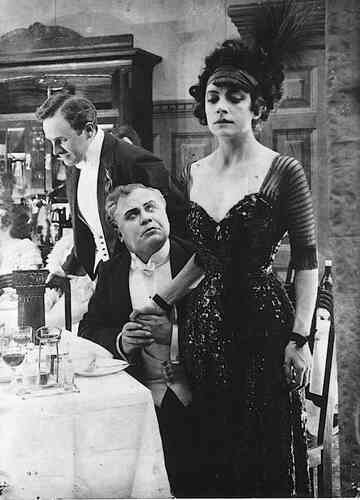
Photographically, the Danish cinematographers exploit orthochromatic stock: faces bloom like porcelain while black silk sinks into abyss. The necklace, a constellation of zircon illusions, sparkles with such lust you swear the print secretes light. Contrast this with the pastoral postcards of Trip Through Ireland; here tourism is traded for trauma.
Nielsen’s performance is a masterclass in kinetic minimalism. Watch how she dismounts: one boot lingers in the stirrup a half-second longer than needed, suggesting reluctance to re-enter gravity. That micro-pause predicts her reluctance to re-enter moral atmosphere. Meanwhile Valdemar Psilander as the secondary suitor supplies Byronic fumes—collar upturned, gaze forever mid-leap off a cliff of self-regard.
Urban Gad’s direction anticipates Hitchcock’s women-as-enigmas and von Sternberg’s erotic fatalism. The narrative spindle spins on a woman’s body as both collateral and currency, yet the film refuses to victimize her; Stella engineers the theft, dictates the terms, chooses the hour of her death. Feminist critics may debate complicity versus agency, but the camera’s rapture belongs to her, not the men who fracture around her like cheap porcelain.
Musically, contemporary exhibitors would have improvised a waltz that sours into funeral march. Today, revisit it with Mahler’s Kindertotenlied and watch the melodrama transmute into requiem. The absence of spoken word leaves space for the viewer’s internal chorus; every creak of chair, every projector whirr, becomes acousmatic accompaniment.
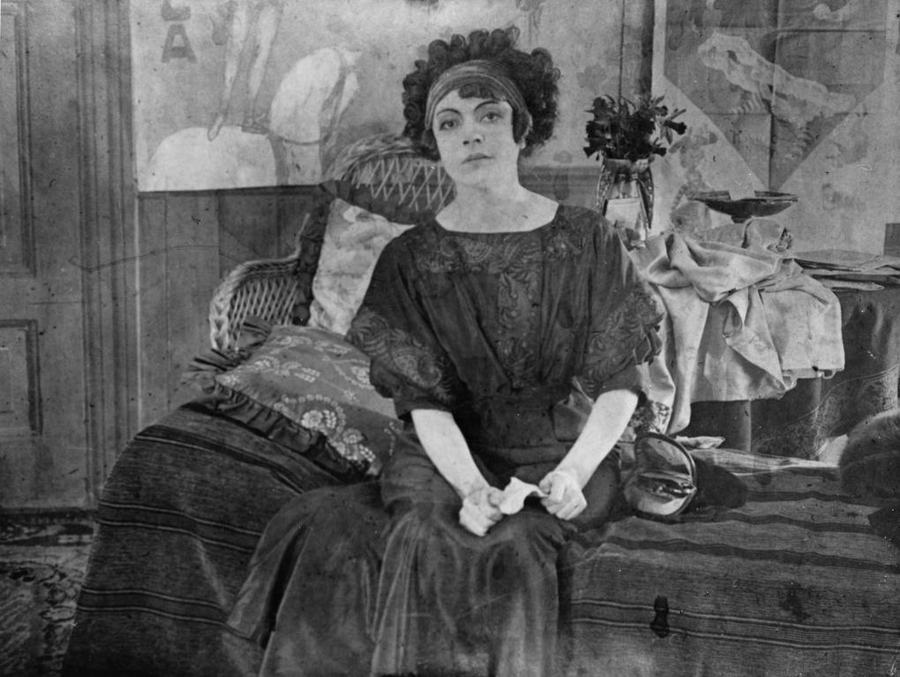
Marketwise, the 1911 Nordisk monopoly ensured global prints shipped from Copenhagen to Calcutta, making Stella’s silhouette as cosmopolitan as Coca-Cola would later be. Yet the Danish intertitles—laconic, sardonic—lose acidity in translation; English versions soften Hirsch’s lechery, turning him into mere “persistent suitor.” Hunt the restored 2015 Danish Film Institute 2K scan for the unvarnished Stumfilm cadence.
Legacy echoes? Trace Stella’s bloodline to Hamlet (1910)’s Ophelia, another woman sacrificed on the altar of male indecision, or to The Mummy’s Imhotep, whose love also defies death but not narrative punishment. Yet none gallop across the sawdust of modernity quite like Nielsen; her Stella is both rider and ridden, circus act and circus.
Critics of the time praised the film’s “moral lesson,” missing the irony that the only moral is amorality’s glitter. Trade papers worried the theft subplot would encourage female crime; instead it encouraged female ambition—audience letters begged Nordisk for “more Stella spines.” Thus cinema discovered the anti-heroine, a full decade before Hollywood flirted with vamps.
Restoration notes: nitrate shrinkage warps the final reel, creating a flutter like moth wings around Stella’s corpse—serendipitous poetry. The Desmet color tinting applied by DFI alternates between cobalt night and amber lamplight, a flicker that resembles conscience switching on and off. Home-media viewers should disable digital noise reduction; the grain is the ghost in the machine whispering 1911 anxieties.
Den sorte drøm is not a relic; it is a wound that keeps reopening every time capital woos talent, every time love is collateralized. Watch it, then look in your own mirror—Hirsch’s reflection may wink back.
Verdict: A sinister jewel whose facets reflect pre-war Europe’s impending heart failure. Essential for anyone tracing how melodrama mutated into modernism, how women on horseback outran patriarchy’s spurs—if only to die on their own syntactical terms.
IMDb 6.8
1926
Community
Log in to comment.