
DbcultAccessing Vault...
6.2/10
Senior Film Conservator
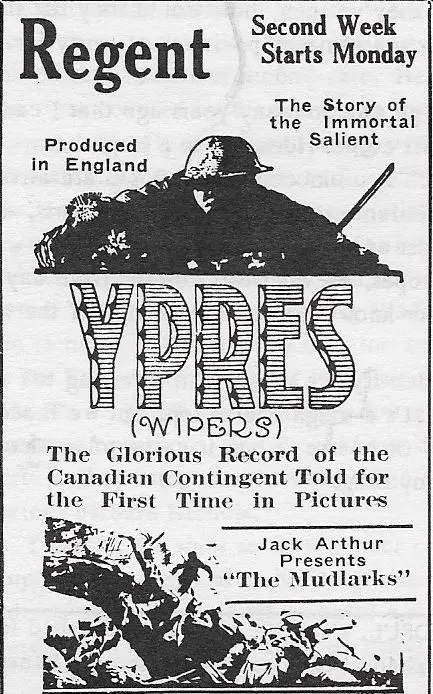
A definitive 6.2/10 rating for a film that redefined the boundaries of cult cinema. Ypres remains a cornerstone of transgressive art.
In the annals of silent cinema, few films capture the grim reality of war as poignantly as Ypres, a 1920 silent film that serves as a haunting reconstruction of the battles that took place in the infamous Ypres Salient during World War I. The film, directed and written by Walter Summers, is a testament to the director’s ability to create a sense of immediacy and authenticity that transcends the limitations of his era.
Ypres is not a film that seeks to glorify war; instead, it is a stark, unflinching document of the human cost of conflict. The opening scenes, which depict the peaceful, almost bucolic life that once thrived in Ypres, serve as a poignant contrast to the carnage that follows. The film’s cinematography, while rudimentary by today's standards, is remarkably effective in capturing the sense of loss and despair. The camera work is often static, focusing on the brutal reality of trench warfare, with a particular emphasis on the sheer scale of destruction.
The performances in Ypres are raw and unflinching, with actors delivering their lines in a way that feels almost like a recital of facts rather than emotion. This approach, while perhaps limiting, serves to heighten the sense of authenticity. Walter Summers, in his dual role as director and writer, ensures that the film’s narrative is unadulterated and direct, allowing the audience to draw their own conclusions about the horrors of war. The directing is particularly noteworthy for its ability to convey the chaos and confusion of the battlefield through a series of tightly framed shots and rapid cuts that simulate the frenetic pace of combat.
One of the most striking aspects of Ypres is its use of sound and silence. While it is a silent film, the absence of dialogue actually heightens the sense of the human cost of war. The sound effects, which are minimal but effective, serve to underscore the brutality of the battles. The use of ambient noise, such as the distant sound of artillery fire and the wails of the wounded, creates an overwhelmingly oppressive atmosphere. This approach, while perhaps anachronistic, adds a layer of realism that is both haunting and affecting.
The tone of Ypres is one of grim determination and unyielding despair. The film’s pacing is deliberate, with each battle scene building upon the previous one, creating a sense of escalating horror. This methodical approach to storytelling ensures that the audience is constantly reminded of the futility of war, and the sheer human cost of military conflict. The film’s cinematography is often static, with long takes that allow the viewer to absorb the scenes in front of them. This technique, while perhaps limiting in terms of visual flair, adds a level of intimacy and realism that is both affecting and powerful.
In the context of war cinema, Ypres stands as a masterpiece. It is a film that, despite its limitations, manages to convey the sense of loss and despair that characterized the Western Front. The performances, while perhaps lacking in emotional depth, are raw and unflinching, adding to the film’s sense of authenticity. The directing is masterful, with a keen eye for the small details that make the film feel real. The cinematography, while rudimentary, is effective in conveying the sense of loss and the sheer scale of human suffering.
For those interested in the history of cinema, Ypres is a film that is worth revisiting. It is a work that, despite its age, continues to resonate with a sense of the human cost of war. The film’s performances, directing, and cinematography all contribute to a sense of authenticity that is both affecting and powerful. While it may not be a film that seeks to entertain in the traditional sense, it is a work that is undeniably moving and thought-provoking. In a world that is often quick to forget the lessons of the past, Ypres serves as a powerful reminder of the human cost of war.
To conclude, Ypres is a film that, despite its limitations, manages to convey the sense of loss and despair that characterized the Western Front. It is a work that, while perhaps not a cinematic masterpiece in the traditional sense, is a powerful and moving document of the human cost of war. In a world that is often quick to forget the lessons of the past, Ypres serves as a reminder of the importance of remembering and understanding the cost of conflict. While it may not be a film that seeks to entertain in the traditional sense, it is a work that is undeniably affecting and thought-provoking.
In a world that is often quick to forget the lessons of the past, Ypres serves as a powerful reminder of the human cost of war. It is a work that, while perhaps not a cinematic masterpiece in the traditional sense, is a powerful and moving document of the human cost of conflict. In a time when the specter of war still looms large, Ypres is a film that is undeniably affecting and thought-provoking.
Walter Summers, in his dual role as director and writer, ensures that the film’s narrative is unadulterated and direct, allowing the audience to draw their own conclusions about the horrors of war.