DbcultAccessing Vault...
5.3/10
Senior Film Conservator
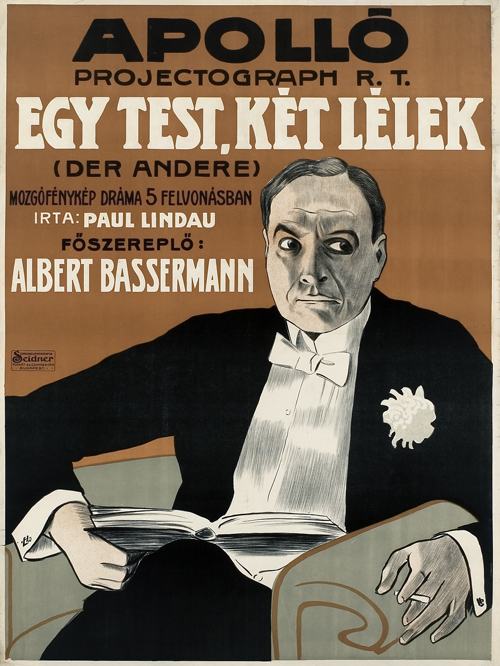
A definitive 5.3/10 rating for a film that redefined the boundaries of cult cinema. Der Andere remains a cornerstone of transgressive art.
Hallers’ horse stumbles, the camera lingers on a twitching glove, and in that quiver the entire bourgeois universe splits like celluloid on fire.
Forget the polite whodunits of early British cinema; Der Andere is a fever graph drawn by Paul Lindau, Max Mack and philosopher-critic Hippolyte Taine, a film that anticipates not only Caligari’s asylum corridors but the post-modern notion that identity itself is a black-market currency. The plot, deceptively tidy—accident, split, robbery—unfurls into a hall-of-mirrors where every polished surface reflects a different moral calculus.
Shot when Expressionism was still a rumor, the movie already revels in chiaroscuro so sharp it could shave you. Interiors of the prosecutor’s townhouse gleam with sea-blue gaslight, while the alter-ego’s clandestine rendezvous dissolve into nicotine haze. Intertitles—white lettering on obsidian—feel like subpoenas served directly to the subconscious.
Stage titan Bassermann negotiates the dual role with Shakespearean granularity: upright Hallers stands rigid as a Prussian cadaver, shoulders squared against moral entropy; the counterfeit Hallers slinks, wrists limp, eyelids half-masted in perpetual sardonic dusk. One body, two gravitational fields—watch him pivot between them without a cut, the performance predating every digital split-screen trick by a century.
Contemporary screenings added solo piano or string quartet; the jittery waltzes become the protagonist’s racing pulse, the low rumble of tympani the burglar’s heartbeat under your floorboards. Even silent, the film sounds like guilt—an achievement only The Student of Prague would rival a year later.
Der Andere refuses to paint the alter ego as mere villainy incarnate; he is the unlived life, the libido Herr Professor represses between court sessions, a ghost of potential energy. When the burglar finally strips the townhouse, the loot is almost incidental—the true theft is coherence, the illusion that identity is a stable asset.
Nelly Ridon’s fiancée senses the fissure before anyone, her glances linger like question marks; Hanni Weisse’s housemaid becomes collateral damage, dismissed on circumstantial evidence, a pre-#MeToo indictment of patriarchal convenience. Their marginalization is not narrative sloppiness but thesis: in a duel of selves, bystanders bleed first.
Cutaways to ticking clocks, gloved hands on banisters, and the burglar’s eyes reflected in a silver spoon create a dialectic of tension that Eisenstein would codify a decade later. The film’s forty-four minutes feel like a master-class in intellectual montage before the term existed.
If Oliver Twist moralizes that environment molds crime, Der Andere insists that the real slum is cerebral. Where The Redemption of White Hawk seeks spiritual absolution across racial frontiers, this Berlin tale charts damnation across synaptic crevices. And while Les Misérables externalizes justice as pursuing constable, Der Andere locks both pursuer and pursued inside one skull.
From Fight Club to Moon Knight, pop culture keeps resurrecting the doppelgänger motif, yet few iterations match the austerity of this proto-noir. The horse-crash that births the duality is cinema’s first psycho-surgery, a blunt-force lobotomy that predates surgical cinema metaphors in Ipnosi or Dante’s Inferno.
Deutsche Kinemathek’s 4K restoration from a 35mm nitrate positive reinstates the cyan tinting of night scenes and the amber glow of drawing-room decadence. Streaming on select arthouse platforms with a new score by German composer Siegfried Rössert, the film now breathes like a freshly uncorked 1913 Riesling—volatile, mineral, electric.
Der Andere is less a museum relic than a live grenade; its shrapnel—questions about volition, accountability, the fungibility of self—keeps embedding in contemporary foreheads. To watch it is to confront the uncomfortable suspicion that your most cherished convictions might be mere tenants in a property owned by someone you have never met—someone who, at this very moment, could be casing the interior of your life for valuables.
Verdict: A dark-orange ember still capable of igniting a century-old discourse on what it means to be the author—or the burglar—of your own story.

IMDb —
1919
Community
Log in to comment.