DbcultAccessing Vault...
5.9/10
Senior Film Conservator
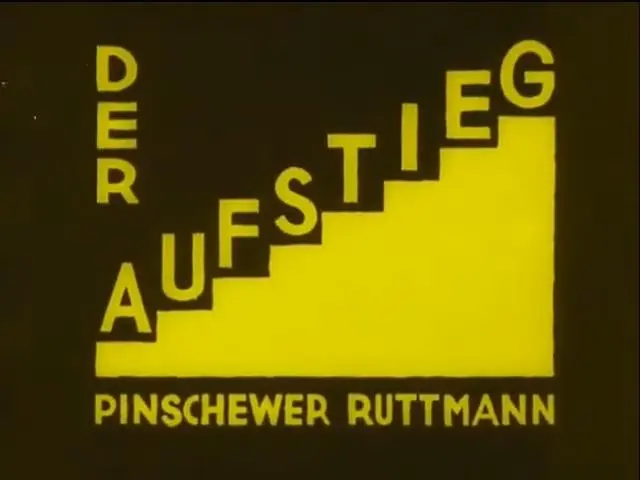
A definitive 5.9/10 rating for a film that redefined the boundaries of cult cinema. Der Aufstieg remains a cornerstone of transgressive art.
Is Walter Ruttmann’s “Der Aufstieg” worth watching today? Short answer: yes, but with significant caveats. This isn't a film you 'enjoy' in the traditional sense; it's an experience, a historical artifact, and a challenging piece of avant-garde cinema that demands a specific kind of engagement. It’s absolutely for anyone fascinated by the origins of abstract film, the early days of commercial advertising, or the genius of Walter Ruttmann, but it is decidedly not for viewers seeking narrative coherence, character development, or easily digestible entertainment.
“Der Aufstieg” is less a film and more a kinetic painting, a visual poem commissioned to promote the GESOLEI exhibition in Düsseldorf. It’s a bold, almost audacious move for a commercial, relying entirely on abstract forms and rhythmic editing to convey its message. In many ways, it's a window into the artistic and commercial sensibilities of Weimar Germany, a period ripe with experimentation and innovation.
To truly appreciate “Der Aufstieg,” one must understand its context. Commissioned by Julius Pinschewer, a pioneer of German advertising film, and directed by the visionary Walter Ruttmann, this short (barely five minutes) was designed to promote a massive exhibition. GESOLEI, an acronym for ‘Gesundheit, Soziales, Leistung’ (Health, Social Welfare, Achievement), was a grand showcase of Germany’s post-war recovery and industrial prowess. It aimed to project an image of modernity, efficiency, and progress.
Ruttmann, already known for his groundbreaking abstract films like “Lichtspiel: Opus I” (1921), was the perfect choice for such an unconventional brief. He brought to the commercial a sensibility honed in pure abstraction, eschewing literal representation for symbolic, evocative imagery. This was a radical departure from the nascent advertising films of the era, which often relied on simple demonstrations or comedic skits. Pinschewer's willingness to embrace such an avant-garde approach for a commercial product speaks volumes about the innovative spirit permeating German cinema and advertising at the time.
Ruttmann's direction in “Der Aufstieg” is nothing short of masterful in its control of abstract elements. The film opens with simple, geometric shapes – circles, squares, lines – that morph and interact, suggesting movement, growth, and construction. There's a palpable sense of organic development, despite the inorganic nature of the forms. These shapes aren't merely decorative; they are the narrative, conveying the titular 'ascent' through visual means.
The cinematography, though rudimentary by today's standards, is incredibly effective. Ruttmann manipulates light and shadow to give depth and dynamism to his abstract compositions. Consider the sequence where light streaks across the screen, mimicking the speed and energy of machinery or perhaps the very act of creation. It's a testament to his understanding of the pure visual language of cinema, demonstrating how movement and form alone can evoke complex ideas and emotions.
He employs a technique of superimposition and rapid cutting that creates a dizzying, almost hypnotic effect. This isn't just flashy editing; it's a deliberate choice to overwhelm the senses, to immerse the viewer in a flow of images that suggests progress, industry, and the bustling energy of an exhibition. It’s a proto-music video, syncing visual rhythms with an implied, internal soundtrack.
“Der Aufstieg” works because it trusts its audience to interpret abstract symbolism, creating a powerful, non-literal connection to the exhibition's themes. It fails because its relentless abstraction can alienate viewers seeking any semblance of conventional storytelling or a clear, immediate message. You should watch it if you appreciate experimental film as a historical artifact and are willing to engage with cinema purely on a visual and rhythmic level, rather than a narrative one.
The pacing of “Der Aufstieg” is one of its most striking features. It begins slowly, with deliberate, almost meditative transformations of shapes, gradually building momentum. As the film progresses, the cuts become quicker, the forms more intricate, and the overall rhythm accelerates. This carefully modulated pace is crucial to the film’s effectiveness as a commercial.
It mimics the experience of entering a grand exhibition – an initial sense of wonder, followed by an increasing immersion in its myriad displays and the bustling energy of the crowd. The tone is overwhelmingly optimistic and forward-looking, a confident declaration of Germany's resurgence. There's an almost propagandistic zeal to its celebration of industrial might and cultural innovation, all conveyed without a single word.
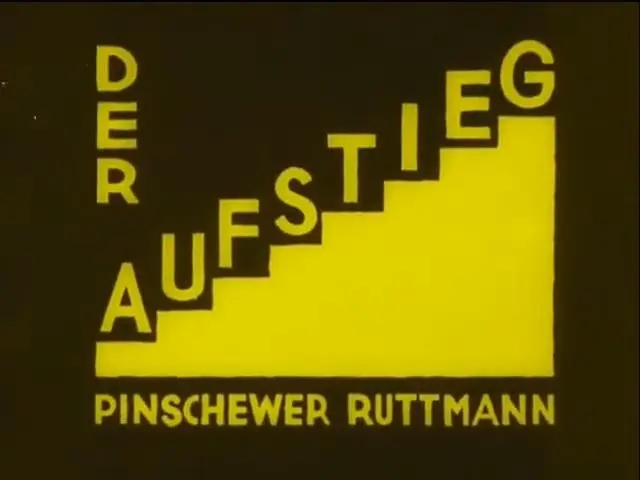
This relentless upward trajectory, visually represented by forms that literally ascend and expand, creates a powerful, if abstract, sense of hope and progress. It’s a tone that resonates with the post-WWI context, where a nation sought to rebuild and redefine itself through monumental achievements like GESOLEI. The film is, in essence, a visual anthem to the future.
Perhaps the most unconventional observation one can make about “Der Aufstieg” is its complete lack of human presence. There are no actors, no characters, no human interactions. This is a film entirely devoid of performance in the traditional sense, yet it is profoundly performative. The 'performance' here is by the light, the shapes, and the editing itself. Ruttmann's work suggests that cinema, at its core, can be a performance of pure form, a dance of light and shadow.
This absence is a deliberate artistic choice, reinforcing the abstract nature of the commercial. It shifts the focus from individual experience to collective endeavor, from the personal to the universal. It speaks to the grand, impersonal forces of industry and progress, which are the true 'stars' of this promotional piece. This approach might feel alienating to modern viewers accustomed to character-driven narratives, but it was a bold statement for its time, asserting the power of non-representational art.
While “Der Aufstieg” might seem niche today, its influence is arguably far-reaching. It’s a testament to the power of abstract visual language to convey complex ideas and emotions, a principle that underpins much of modern graphic design, motion graphics, and even brand advertising. Its ability to create mood and evoke themes without explicit messaging is something contemporary advertisers still strive for.
Compare it to more narrative-driven early shorts like The Last Laugh, which relied on the iconic performance of Emil Jannings. Ruttmann’s film offers a completely different kind of cinematic experience, one that prioritizes the abstract over the literal. It challenges the viewer to engage on an intellectual and aesthetic level, rather than an emotional or narrative one. This makes it a more timeless piece in some respects; while specific narratives can date, the power of abstract form often endures.
One strong, debatable opinion is that “Der Aufstieg,” despite its commercial origins, is a more significant artistic statement than many narrative features of its era, precisely because it pushed the boundaries of what film could be. It dared to be different, to speak in a language few understood, yet managed to convey its message with undeniable force. It works. But it’s flawed.
Absolutely, for the right audience. If you are a student of film history, particularly German Expressionism or avant-garde cinema, “Der Aufstieg” is essential viewing. It's a foundational text in the history of abstract film, offering direct insight into Walter Ruttmann's unique vision and his pioneering efforts to use cinema as a medium for pure visual art. It also provides a fascinating glimpse into the very early, experimental stages of advertising, showcasing how a commercial could be elevated to an art form.
However, it's not a film for passive consumption. Its lack of narrative, characters, or dialogue means it demands active engagement. You won't find traditional entertainment here. Instead, you'll discover a meditative, almost hypnotic exploration of form, movement, and light. It's a film that asks you to think, to interpret, and to appreciate the raw power of visual rhythm.
“Der Aufstieg” is an artifact of immense historical and artistic value, a bold declaration from a period of intense cinematic experimentation. Walter Ruttmann’s vision, though constrained by a commercial brief, transcends mere advertising to become a fascinating exploration of pure visual language. It’s a film that demands patience and an open mind, offering rewards not in character arcs or plot twists, but in the sheer dynamism of its abstract forms and its pioneering spirit.
While it won't resonate with everyone, for those willing to engage with its unique aesthetic, “Der Aufstieg” remains a vital, compelling piece of early cinema. It’s a testament to the idea that even in the service of commerce, art can find its most innovative expressions. It is a powerful reminder that the silent era was anything but silent in its artistic ambition. Give it a watch, not for entertainment, but for enlightenment into the very origins of film as a visual art form. It's an experience that lingers, long after the final abstract form fades from the screen.

IMDb 5.5
1936
Community
Log in to comment.