DbcultAccessing Vault...
2.9/10
Senior Film Conservator
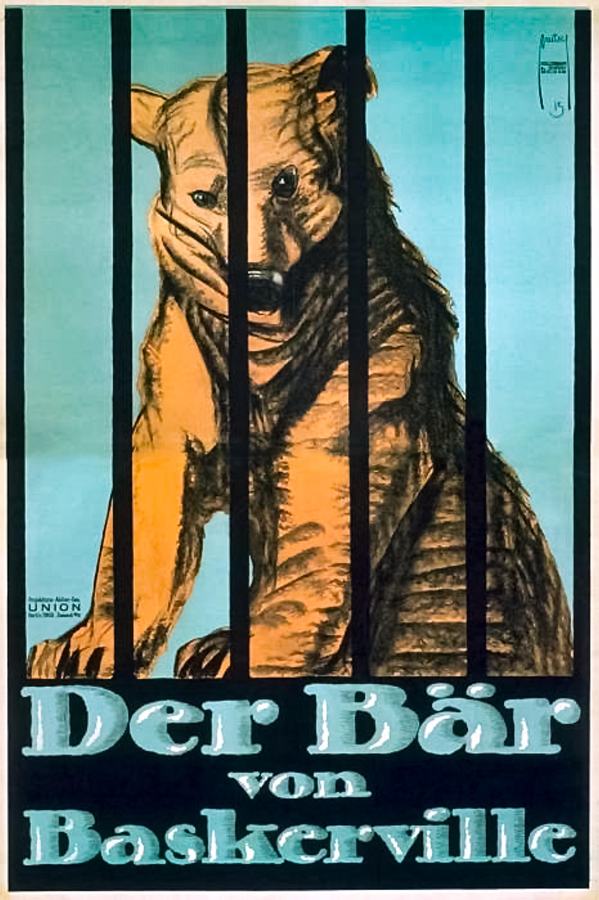
A definitive 2.9/10 rating for a film that redefined the boundaries of cult cinema. Der Bär von Baskerville remains a cornerstone of transgressive art.
Stepping into the spectral glow of Harry Piel's 1920s cinematic vision, one finds themselves immediately enveloped by an atmosphere both familiar and unsettlingly novel. Der Bär von Baskerville is not merely a film; it is a fascinating artifact, a testament to the early ingenuity of German silent cinema and a bold reinterpretation of one of literature's most enduring figures. Piel, wearing the dual hats of writer and actor, plunges us into a world where the rational mind of Sherlock Holmes confronts an ancestral curse, reimagined with a distinctly Teutonic twist. The very title, hinting at a deviation from the well-trodden path of Doyle's original, immediately signals a creative audacity that sets this particular adaptation apart.
The premise, a nobleman beleaguered by a family curse on his newly inherited estate, is quintessential Gothic mystery fodder. Yet, Piel’s rendition imbues it with a certain raw, kinetic energy characteristic of his other works. Unlike the often more measured and cerebral pace of some contemporary dramas like The Third Degree, which might lean heavily on melodramatic exposition, Der Bär von Baskerville feels more concerned with the visceral impact of its central enigma. The silent era’s reliance on exaggerated gesture and stark visual storytelling truly shines here, transforming the nobleman’s plight into a palpable, almost suffocating burden. One can almost feel the weight of his inherited dread through the expressive performances, a hallmark of acting before the advent of synchronized sound.
Piel, as the illustrious Sherlock Holmes, presents a compelling, if somewhat unconventional, portrayal. His Holmes is less the detached, almost ascetic intellectual often depicted, and more a man of action, albeit one whose actions are driven by an unparalleled mental acuity. This interpretation is perhaps a reflection of Piel’s own persona as a popular adventure film star. He brings a certain robust physicality to the role, which, while perhaps surprising to purists, injects a fresh dynamism into the detective’s investigative process. The visual language of the film often emphasizes Holmes’s keen observations through tight close-ups on his eyes or hands, suggesting the wheels of his formidable intellect turning even amidst the most chaotic scenes. The stark lighting and dramatic shadows, common in German Expressionist cinema of the period, are used here to great effect, deepening the sense of foreboding and amplifying the mystery surrounding the 'bear'.
The narrative structure, while adhering to the classic Holmesian formula of an inexplicable phenomenon eventually yielding to logical explanation, is punctuated by moments of genuine suspense. The 'bear' itself, whether a creature of flesh and blood or a manifestation of psychological terror, is masterfully kept just out of full view for significant portions of the film, building an almost unbearable tension. This deliberate obfuscation allows the audience's imagination to run wild, a potent tool in silent filmmaking. The intertitles, rather than simply conveying dialogue, are often crafted to enhance this atmosphere, employing evocative language and dramatic typography to underscore the gravity of the situation. They serve not just as textual bridges but as integral components of the film's mood, guiding the viewer's emotional response as much as the visuals do.
One cannot discuss Der Bär von Baskerville without acknowledging the sheer ambition of Piel’s dual role. To write and then embody such an iconic character requires a profound understanding of storytelling and performance. Piel’s script, while undoubtedly streamlined for the silent medium, retains the core elements of a gripping mystery: red herrings, suspicious characters, and a creeping sense of dread. His performance as Holmes is characterized by a blend of intense focus and a subtle, almost imperceptible arrogance—the justified confidence of a man who knows his own brilliance. He communicates complex thoughts and deductions primarily through facial expressions and precise movements, a testament to the highly refined acting techniques of the era. This is a far cry from the more naturalistic performances we might see in later eras; it's a theatricality born of necessity and elevated to an art form.
The film's visual aesthetic is a compelling blend of Gothic grandeur and stark realism. The inherited estate, a character in itself, is depicted with an imposing architecture that seems to breathe history and secrets. Its sprawling grounds, often shrouded in mist or dappled moonlight, become a hunting ground for both the literal and metaphorical 'bear'. The cinematography, while constrained by the technology of the time, makes expert use of deep focus and dynamic camera angles to create a sense of unease and claustrophobia, particularly within the confines of the manor. There's a palpable sense of the environment actively working against the inhabitants, a common trope in horror and mystery that Piel exploits with considerable skill. The way light and shadow play across the faces of the characters, particularly during moments of revelation or terror, is a masterclass in visual storytelling, conveying more emotion than any spoken word ever could.
Comparing Der Bär von Baskerville to other films of its period offers illuminating insights. While it doesn't possess the overt social commentary of something like The American Beauty, nor the stark, often brutal realism of early documentary-style films, it occupies a unique niche. It bridges the gap between pure adventure serials, for which Piel was well-known, and the more intricate psychological dramas beginning to emerge from German studios. The film’s pacing, while perhaps deliberate by today’s standards, would have been considered quite brisk for its time, maintaining engagement through a steady unveiling of clues and escalating stakes. The focus remains squarely on the unraveling of the mystery, with character development often conveyed through reaction and circumstance rather than lengthy soliloquies.
The supporting cast, though often overshadowed by Piel's central performance, contributes significantly to the film's overall impact. Their reactions of fear, suspicion, and bewilderment are crucial in grounding the fantastical elements of the curse within a believable human context. The silent film actor’s craft of conveying emotion without dialogue is on full display, with every wide-eyed stare, trembling hand, and dramatic collapse serving a vital narrative function. The interplay between Holmes's calm rationality and the increasingly frantic despair of those around him creates a compelling dramatic tension. This dynamic is a cornerstone of any good Holmesian adaptation, and Piel manages to capture it effectively through purely visual means.
What truly elevates Der Bär von Baskerville beyond a mere genre exercise is its willingness to play with expectations. The 'bear' itself is a brilliant conceit. It diverges from the traditional 'hound', yet maintains the primal fear associated with a monstrous beast lurking in the shadows. This choice allows Piel to explore different visual and narrative avenues, creating a creature that is perhaps even more psychologically potent due to its unexpected nature. The ambiguity surrounding the bear's true identity—is it supernatural, animalistic, or purely human in its machinations?—is sustained for much of the film, keeping the audience guessing and contributing to the pervasive sense of dread. This clever subversion of the source material demonstrates Piel's understanding of how to adapt a classic while injecting it with his unique artistic signature.
The resolution, when it finally arrives, is satisfyingly Holmesian, bringing order to chaos and reason to superstition. However, Piel ensures that the journey to that resolution is fraught with peril and suspense. The film doesn't shy away from moments of genuine peril, utilizing the dynamic action sequences Piel was known for to heighten the stakes. These sequences, while often staged with a theatricality common to the era, are nevertheless effective in conveying the physical danger faced by Holmes and the nobleman. The final reveal, while adhering to the logical framework of a detective story, still manages to retain a lingering sense of the uncanny, a testament to the film's ability to weave together the rational and the seemingly supernatural. It’s a delicate balance, and one that Piel navigates with considerable skill, ensuring that the triumph of reason feels hard-won.
In an era where cinema was still finding its voice, Der Bär von Baskerville stands as a strong example of how compelling narratives could be crafted without the aid of spoken dialogue. It showcases the power of visual storytelling, the nuance of silent acting, and the enduring appeal of a well-constructed mystery. The film's legacy lies not just in its contribution to the vast canon of Sherlock Holmes adaptations, but also in its reflection of German cinematic artistry during a highly experimental and innovative period. It's a reminder that even without sound, a film can speak volumes, evoking fear, excitement, and intellectual engagement through its images and performances. The film offers a rich tapestry for anyone interested in the evolution of genre cinema, particularly the detective story, and the unique challenges and triumphs of the silent medium.
The enduring fascination with Sherlock Holmes is clearly evident in the numerous adaptations across various media, and Der Bär von Baskerville provides a unique lens through which to view this phenomenon. Piel's decision to not only tackle such an iconic character but also to inject his own distinctive style into the narrative makes this film a compelling case study. It’s a testament to the flexibility of Doyle’s original creation that it could be reinterpreted through the lens of a German adventure filmmaker, resulting in a product that is both recognizable and refreshingly distinct. The film, in its quiet grandeur, invites viewers to appreciate the artistry of a bygone era, where every flicker of light, every dramatic pose, and every carefully chosen intertitle contributed to a rich, immersive storytelling experience. It doesn't just tell a story; it paints it with broad, expressive strokes, much like the vibrant hues one might find in a period painting, each color – the dark orange of impending doom, the yellow of flickering gaslight, the sea blue of Holmes's keen intellect – contributing to the overall masterpiece. This visual richness, combined with a tightly woven plot, ensures that Der Bär von Baskerville remains a significant, if sometimes overlooked, entry in the annals of silent cinema and detective fiction.
IMDb —
1918
Community
Log in to comment.