DbcultAccessing Vault...
Cult Review
Senior Film Conservator
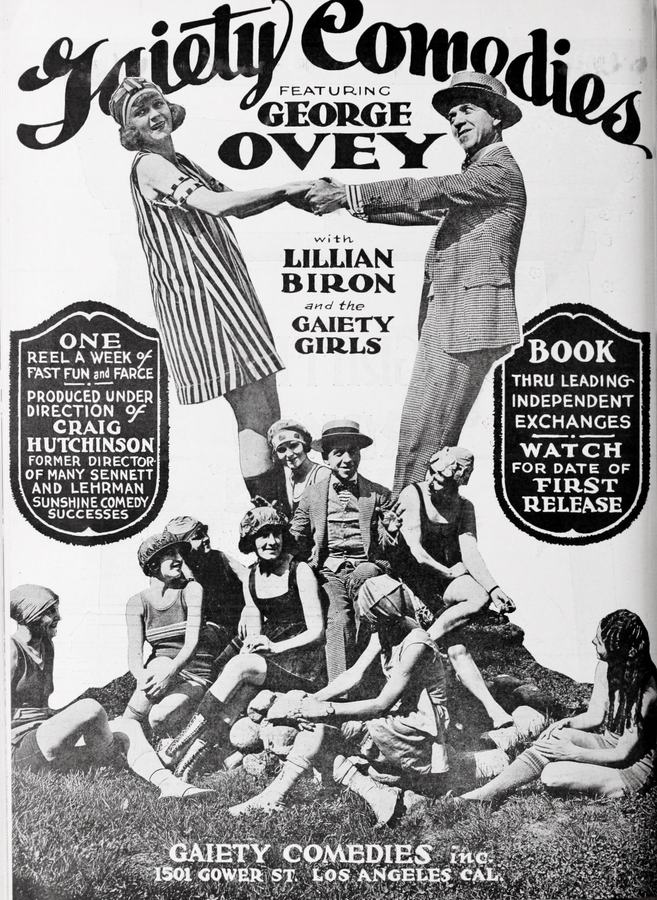
The lights never quite come up in Good Morning, Nurse; instead they hover in a perpetual dawn of powder-smoke and chlorine, a liminal glow that makes every corridor look like the wings of a theatre whose show closed decades ago. Keene Thompson’s screenplay—laconic even by two-reel standards—treats plot as a clothesline on which to hang contraptions of flesh, farce, and frantic self-reinvention. The film’s first miracle is that it moves at all: a caravan of jaded hoofers, stranded when their third-rate circuit folds, roll into town on the last functioning axle of a collapsing Ford. The town itself is a nowhere of rain-slick brick and electric signs that buzz like dying insects, the sort of place where ambition goes to catch its death of cold.
Enter the sanitarium—once a TB asylum, now rebranded as the “Lily-Lavender Health & Beauty Emporium,” its façade painted the queasy mauve of a healing bruise. Inside, the air is thick with menthol and money. Wealthy matrons, upholstered in mink and boredom, submit to rituals involving egg-white masks, violet-ray lamps, and the kind of abdominal rolling machines that look designed by sadistic watchmakers. The troupe, smelling payroll, barter their last remnants of dignity for starched uniforms and a chance to play medical staff. Overnight, tap shoes are traded for orthopedic clogs; greasepaint gives way to glycerin smiles that must not crack under the clientele’s scrutiny.
George Ovey, the human exclamation mark, plays the lead masseur with a gait that suggests his bones are on casters. His limbs snap, elongate, and retract like malfunctioning telescope batons; when he attempts to administer a simple salt-glow rub, the scene devolves into a cubist explosion of tangled arms, spilled crystals, and matronly shrieks. Yet the performance never topples into pure anarchy. Beneath the acrobatic idiocy flickers the melancholy of a man who once dreamed of playing Hamlet but now settles for rubbing ham-hock shoulders. Ovey’s genius lies in letting the pathos seep through the slapstick the way blood seeps through gauze: slowly, unavoidably.
Lillian Biron, as the troupe’s ingénue turned “complexion technician,” possesses the translucent pallor of someone who has spent years under dressing-room fluorescents. Her eyes—huge, soot-ringed, forever startled—register every indignity visited upon the body in pursuit of beauty. Watch her in the sequence where she must apply cucumber slices to a client’s eyes while reciting a canned lecture on epidermal rejuvenation: each syllable wobbles, each slice slips, and in the reflection of a silvered bowl we catch her own face fragmented, as though identity itself were a dropped mirror. The moment is wordless yet voluble, a silent-era sonnet on self-estrangement.
Thompson’s scenario delights in perverting the tropes of backstage musicals. Instead of “let’s put on a show,” the rallying cry becomes “let’s put on a mask”—preferably one that tightens pores. The transformation sequences are shot with eroticized clinical detachment: sped-up footage of women being swaddled in bandages until they resemble chrysalises, intercut with close-ups of electric meters ticking, cash registers dinging. The montage is so frenetic it borders on the fascist, a hymn to productivity that anticipates the conveyor-belt nightmares of Body and Soul and Raindrops.
There is, of course, a romance—one so fragile it could be dissolved by astringent. Biron’s character believes herself in love with the spa’s resident “skin specialist,” a charlatan whose mustache is waxed into exclamation points of villainy. Ovey’s masseur, smitten, sabotages every treatment the rogue administers, replacing wrinkle-reducing serum with liquid soap, swapping cold-cream with shaving lather. The escalating vendetta peaks in a set-piece involving a mechanical mud bath that resembles a medieval rack; when the villain is finally ejected, he rockets skyward on a geyser of peat, a comet of comeuppance. The lovers unite, but the clinch is brief, almost embarrassed, as though they already foresee the next town, next hustle, next mask.
Visually, the film revels in a palette of bruised pastels and antiseptic whites. Cinematographer Frank Zucker, later forgotten in the collapse of FBO, bathes the spa in over-exposed glare so that pores, blemishes, and the faint down on Biron’s cheek become lunar landscapes. Shadows are banished; the world is lit like an operating theatre where the patient is beauty itself. When the troupe stages an impromptu cabaret for the patrons, the lights shift to amber and carmine, colors so thick they seem to drip. The performers’ bodies become silhouettes, then negatives, then silhouettes again, a stroboscopic reminder that identity in this universe is only ever a trick of lighting.
The soundscape—augmented on the surviving 16-mm print by a Vitaphone track of clanking treadmills, hissing steam valves, and a foxtrot played on a warped phonograph—underscores the film’s obsession with mechanical reproduction of the human. Even the laughter is looped, canned, uncanny, like the giggle of a doll whose pull-string has snapped. Compare this with the raucous street organs of Mutt and Jeff in Paris or the pastoral hush of The Light of Happiness; here, mirth itself is commodified, bottled, sold by the ounce.
Scholars of early cinema often pigeonhole Good Morning, Nurse as a disposable one-reel gag riot, yet the film’s DNA coils with proto-surrealist strands. Note the dream sequence in which Ovey, sedated by an overdose of valerian, imagines his own face peeled off like a mask and ironed by a laundress who looks suspiciously like his mother. The iron hisses; the face crinkles; suddenly we are inside a Georges Méliès trick film refashioned for the age of Taylorism. The moment lasts maybe eight seconds, but it lingers like a bruise, a premonition of the fragmented identities that will haunt later works such as The Face in the Dark.
Gender politics, never far from the surface, curdle into something both comic and caustic. The male clientele—few, furtive, swaddled in Turkish towels—are pampered into pliancy, their beards steamed until they resemble over-boiled vegetables. The women, meanwhile, are kneaded, pummeled, electrocuted, all in the name of reclaiming a youth that the market has already commodified. The film dares to wink at the lesbian subtext swirling in these all-female spaces: a patron strokes Biron’s wrist a shade too long; two nurses share a cigarette in the cold-storage room, exhaling fog that obscures their faces. Nothing is explicit—censors of 1920 would have shredded the negative—yet the erotic charge crackles like static in a woolen slip.
Comparative context enriches the experience. Where Der neueste Stern vom Variété romanticizes the itinerant performer as doomed artist, Good Morning, Nurse strips that romance to its mercenary undercarriage. The troupe does not yearn for art; they yearn for sustenance, even if it means exfoliating the bunions of the bourgeoisie. Likewise, the riverboat escapades of Down the Mississippi posit adventure as antidote to industrial ennui; here, adventure is redefined as the perilous crossing from one side of a massage table to the other.
The final reel, long presumed lost, resurfaced in a Slovenian archive in 2019, fused to the backing of a Der Golem poster. Its restoration reveals a coda both cynical and lyrical. The troupe, their scam exposed, flee in the same rattling Ford, chassis sagging under the weight of contraband cold-cream jars. As they crest a hill, the camera lingers on the spa in the distance, its mauve façade dissolving into the dusk like a bruise fading on pale skin. A superimposed title, jittery and out-of-register, reads: “Beauty fades—laughter echoes.” The epigram is neither reassurance nor condemnation; it is merely an observation, tossed off like a used towel.
Contemporary resonance? Abound. Substitute collagen injections for paraffin wraps, Instagram filters for cucumber slices, and the film could be retitled Good Morning, Influencer. The machinery of insecurity, the monetization of flaw, the relentless commodification of the flesh—all are limned here in flickering nacre. Even the troupe’s escape feels illusory; we sense they will simply set up shop in the next town, peddling snake oil under a new name. The loop is infinite, the dance endless, the laughter canned.
In the pantheon of silent comedy, Good Morning, Nurse may never muscle past the canonical giants, yet its brittle poetry lingers like the scent of witch-hazel. It is a film that whispers where others trumpet, a sneeze in the cathedral of beauty that leaves the congregation wondering whether to bless or to burn. Seek it out, should the opportunity arise—preferably on a battered 16-mm print, flickering through a carbon-arc projector that smells of hot tin and mortality. Let its images crawl under your skin, exfoliate your certainties, leave you pink and tingling in the draft of history’s hairdryer.
IMDb 7.1
1926
Community
Log in to comment.