DbcultAccessing Vault...
Cult Review
Senior Film Conservator
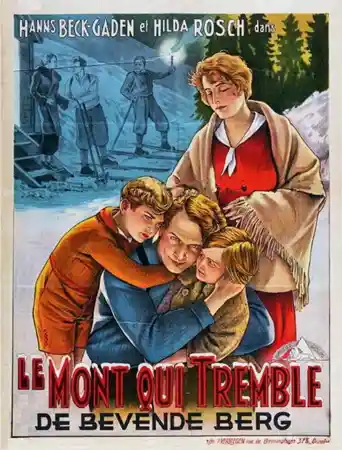
Alright, so if you're into those old silent movies, the ones where every gesture feels like a shout and the shadows do half the acting, then Der bebende Berg might just catch your eye. It’s definitely not for everyone, mind you.
If you're expecting big explosions or snappy dialogue, you’ll hate it. But if you like seeing how folks wrestled with drama back in the day, especially when nature decided to be the villain? You might find something interesting here. It’s worth a watch today, honestly, if you have the patience for it. Think of it as a quiet, tense experience rather than an action-packed one.
The whole setup is pretty straightforward: a small mining town, the kind nestled deep in the mountains, and a bunch of hardworking people. Then there's this new, ambitious mining operation. They're digging too deep, too fast, you just know it.
Right from the start, there’s this old miner, played by Bert Hanewacker, who just looks worried. He’s got these deep lines on his face that tell a whole story without a single title card. You can almost feel him sniffing the air, sensing something off.
And boy, does he have reason to worry! The boss, Hanns Beck-Gaden, is all bluster and big, sweeping hand gestures. He dismisses all the old wives' tales about the mountain. “Nonsense!” his character seems to yell with every confident stride. It’s almost comical how much he ignores the obvious.
There's a scene, pretty early on, where a tiny pebble falls from the mine ceiling, landing right at the feet of one of the younger miners. It’s such a small thing, but the way the camera holds on it for just a beat too long? You feel it. It’s that first little crack in everything.
The pacing, for a silent film, is actually quite good. It builds this slow dread. You keep waiting for the *big* shake, but the movie gives you these little shivers first. Like when the lamp on a table just barely trembles. 😳
Hanna Waag, as the worried daughter, carries a lot of the emotional weight. Her expressions are so earnest. You really feel her fear for her father. There's this one shot of her, looking up at the mountain from her tiny window, and the light hits her face just so. She looks so vulnerable, like a leaf in a storm.
The **visuals** are mostly functional, not super flashy, but they get the job done. The mine sets feel appropriately cramped and dark. When the actual tremors start, the way they shake the camera feels surprisingly effective. It’s not fancy CGI, obviously, but it works.
I noticed a couple of times the film print itself looked a bit worn, with some scratches flickering through the frame. But honestly, it kinda added to the vibe. Made it feel even more like a relic, like we were unearthing this story along with the miners.
When the mountain really starts to *move*, it’s a chaotic mess, and you're right there with them. People running everywhere. The crowd scenes have this frantic energy, even if you can tell it's just a handful of extras running in circles. It’s surprisingly convincing for its time.
There's this moment when a large beam snaps in the mine. The sound effects (that would have been played live in the theater back then) must have been *intense*. Even just watching it now, you can almost hear the splintering wood.
Bert Hanewacker's character really shines in these moments. He’s not a hero in the traditional sense, but his quiet determination to get people out. You see him guiding folks, pushing them along. His eyes are still worried, but now there’s a firmness there.
One reaction shot lingers so long on a terrified child’s face, it almost becomes uncomfortable. You really feel the helplessness.
It’s a different kind of disaster movie, really. Less about the spectacle, more about the human reaction. The fear, the hope, the sheer effort to survive.
The story takes a bit of a turn towards the end, a little more melodramatic than I expected. A sacrifice, of course. It feels a tiny bit forced, like the movie *had* to have that big emotional beat.
Still, it works well enough. You're invested in these folks by then. It reminds me a bit of the raw, human struggle you see in something like Schlagende Wetter, though perhaps a bit less gritty.
Didja notice?
So yeah, Der bebende Berg isn't going to redefine cinema, but it’s a solid, unsettling silent film. It captures that feeling of being small against something huge and uncaring. It's got its flaws, sure, but those rough edges give it character. Like a good old photograph, it tells its story clearly, even if some of the details are a little faded.
IMDb 5.6
1934
Community
Log in to comment.