DbcultAccessing Vault...
6/10
Senior Film Conservator
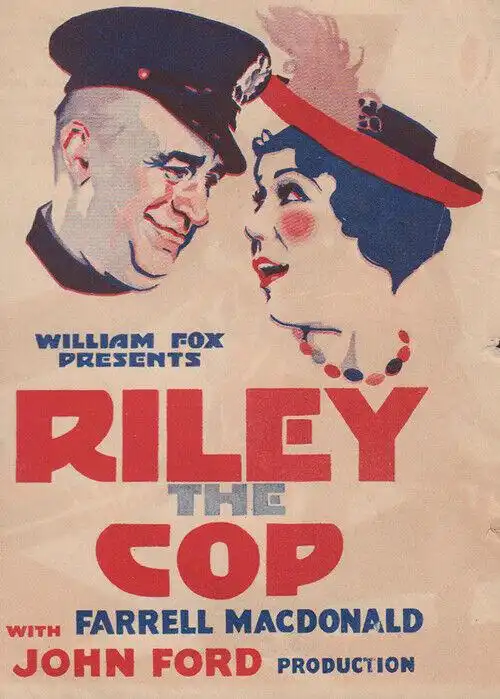
A definitive 6/10 rating for a film that redefined the boundaries of cult cinema. Riley the Cop remains a cornerstone of transgressive art.
If you are looking for the poetic, sweeping vistas of a mature John Ford western, Riley the Cop will feel like a strange discovery. It is a transitional piece of late-silent cinema that feels less like a prestige film and more like a rowdy weekend trip. It is absolutely worth watching if you have an appetite for 1920s physical comedy or want to see a master director playing around with broad humor before the talkies changed everything. However, if you demand a tight plot or a romance that feels earned, you will likely find the central conflict between the young lovers incredibly thin.
The film is essentially two movies stitched together. One is a standard, somewhat sugary melodrama about a baker following his girl to Europe. The other—and by far the better one—is a character study of a middle-aged Irish cop who discovers that life outside of his precinct is a lot more fun than he imagined. It’s for fans of character actors and those who enjoy the specific energy of the 'flapper' era, but it will likely frustrate anyone looking for a serious crime procedural.
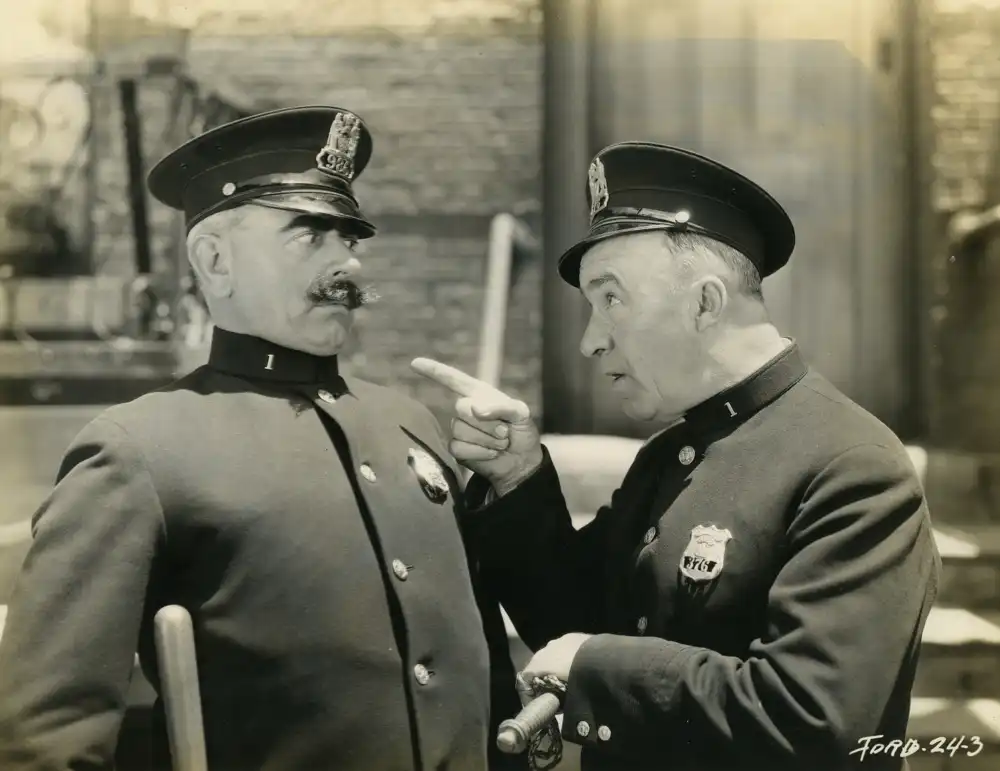
J. Farrell MacDonald carries this film on his back. Playing Officer Riley, he avoids the typical 'dumb cop' tropes of the era by leaning into a weary, human sort of frustration. There is a great sequence early on where he is trying to maintain his authority in a neighborhood that clearly views him as a fixture rather than a threat. His facial expressions—often caught in medium close-ups—convey a man who is perpetually five minutes away from a nap or a drink.
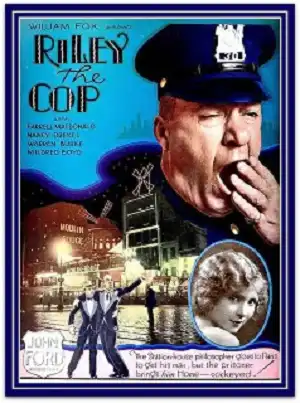
When he finally gets to Germany, the performance shifts. MacDonald’s physical acting during the Munich beer hall scenes is the highlight of the film. He doesn't just 'act drunk'; he portrays a man trying desperately to appear sober while his motor skills betray him. Watch the way he handles his police badge during these scenes—he treats it like a holy relic one moment and a nuisance the next. It’s a nuanced bit of clowning that keeps the middle act from dragging.
The film’s pacing is noticeably lumpy. The first twenty minutes in the States feel like a prologue that could have been trimmed. Once the action shifts to Europe, the movie finds its rhythm, but it’s a rhythm of vignettes rather than a driving narrative. The embezzlement plot involving Davy (Warren Burke) is treated almost as an afterthought. Burke gives a somewhat stiff performance; he lacks the charismatic spark needed to make us care whether he gets caught or not. Compared to the energetic comedies of the era, like Hard Luck, the stakes here feel remarkably low.
Louise Fazenda, playing the 'flapper' who catches Riley’s eye, provides a necessary jolt of electricity. Her scenes with MacDonald are the only times the film feels truly alive. Their chemistry is built on a shared sense of the absurd. There is a specific moment where they are dancing in a crowded hall—the camera stays relatively static, but the sheer chaos of the background extras and Fazenda’s flailing limbs creates a sense of genuine, unscripted fun. It’s a reminder that Ford, even this early, knew how to fill a frame with life.
Visually, the film is a fascinating mix. The 'wealthy' interiors of the aunt’s home are shot with a flat, almost boring symmetry that highlights the stuffiness of the upper class—a theme Ford explored with more bite in The Snob. In contrast, the German beer gardens are shot with deep shadows and a more dynamic use of light. The way the light glints off the massive beer steins and the sweaty faces of the revelers gives these scenes a tactile, messy quality that the rest of the film lacks.
There is one particularly strange edit during the chase scene in the final act where the geography of the street seems to flip entirely. It’s a moment where you can tell the production was moving fast, perhaps favoring the gag over the continuity. While some might find it jarring, it adds to the film’s loose, improvisational feel. The costumes, too, deserve a mention—specifically Riley’s transition from his stiff, buttoned-up uniform to his increasingly disheveled 'civilian' clothes in Europe. It’s a visual shorthand for his internal liberation.
The primary weakness is the script’s reliance on the 'wealthy aunt' trope. It was tired even in 1928. The scenes involving the aunt’s attempts to find Mary a suitable suitor feel like filler, lacking the wit found in other social comedies like Wealth. Every time the camera leaves Riley to check in on the young lovers, the energy of the film dips. Mary (Nancy Drexel) is given very little to do other than look distressed or hopeful, and the resolution of the embezzlement charge is handled with a wave of the hand that feels unearned.
Furthermore, the titles are a bit heavy-handed. In a film that relies so much on visual physical comedy, the dialogue cards often over-explain the jokes. We don’t need a card to tell us Riley is enjoying the beer; MacDonald’s ecstatic expression as he drains a three-liter glass tells us everything we need to know.
Riley the Cop is a minor work in the John Ford canon, but a minor Ford film is still more interesting than most of its contemporaries. It’s a movie that succeeds in spite of its plot. You watch it for the atmosphere, for the rowdy Munich sequences, and for J. Farrell MacDonald’s masterful comedic timing. It captures a specific moment in time when American cinema was looking toward Europe with a mix of curiosity and a desire to party. It’s not a masterpiece, but it’s a genuinely fun 70 minutes that doesn't take itself too seriously. If you can move past the thin romance, there is a lot of heart and a lot of beer to be found here.
IMDb 6.1
1929
Community
Log in to comment.